
Surface temperature and material mass work together differently than most outdoor design briefs acknowledge — and blue limestone entertaining Peoria projects expose that gap quickly. Your paving choice doesn’t just set an aesthetic tone; it determines whether guests linger comfortably through an Arizona evening or retreat indoors by 7 p.m. The thermal behavior of blue limestone, combined with its dense crystalline structure, creates a surface environment that actively supports social use rather than fighting it. Understanding those performance variables before you finalize your layout is what separates a genuinely functional entertainment zone from one that looks great in photographs.
Why Blue Limestone Works for Outdoor Entertaining in Arizona
Blue limestone earns its place in Arizona entertainment zones for reasons that go beyond color preference. The material’s thermal mass sits in a favorable range — dense enough to moderate temperature swings but not so absorptive that it radiates stored heat back at ankle level during evening gatherings. In Peoria’s climate, where summer days can push surface temperatures on dark concrete past 160°F, that distinction matters practically.
- Compressive strength typically ranges from 8,000 to 15,000 PSI, handling concentrated load zones like outdoor furniture legs and portable fire pit bases without surface fracture
- Thermal expansion coefficient near 4.5 × 10⁻⁶ per °F allows you to maintain tighter joint spacing than most concrete pavers without risking surface lippage over seasonal cycles
- Natural cleft or honed finishes provide friction coefficients between 0.6 and 0.8 when dry, satisfying ASTM C1028 slip resistance thresholds for pedestrian traffic zones
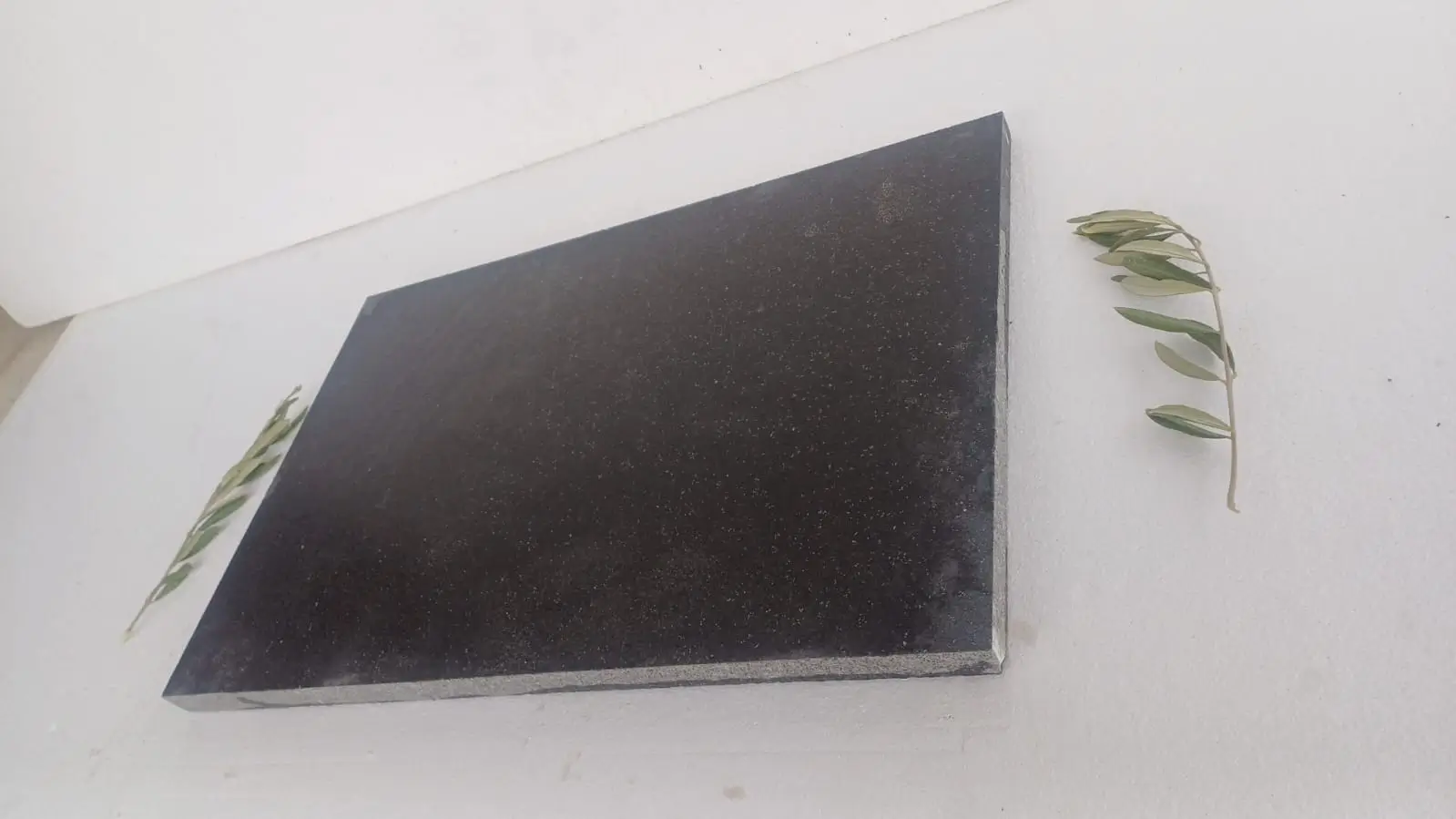
- The blue-grey tones reflect significantly more solar radiation than charcoal or black stone finishes, reducing surface heat accumulation during peak afternoon exposure
Your guests spend most of their time at ankle and knee level — the heat you feel standing is a fraction of what radiant stone surfaces emit upward from ground contact. Blue limestone’s reflectance profile addresses that radiative layer directly.
Layout and Design Principles for Entertainment Zones
The geometry of your gathering space defines how blue limestone performs as a social surface. Entertainment zones benefit from distinct zones — a core seating area, a transition corridor, and a peripheral buffer — and your paving layout should reinforce those distinctions rather than treating the entire area as a uniform surface.
Consider how your traffic patterns will load the surface. High-frequency paths between outdoor kitchen stations and seating clusters experience significantly more point load cycling than static furniture zones. In those transition corridors, specifying blue limestone pavers at 30mm nominal thickness provides a meaningful upgrade over 20mm material, particularly when your sub-base contains expansive soils common to the western Phoenix metro. Projects in Peoria frequently encounter moderate clay fractions at 12 to 18 inches below grade, which requires compacted aggregate base depths of at least 6 inches to prevent differential settlement under traffic loads.
- Zone your layout by use intensity: static seating areas can use larger format slabs (600mm × 900mm or larger), while high-traffic corridors benefit from smaller modular formats that distribute load across more joint lines
- Stagger joint patterns in traffic zones using a running bond or herringbone layout — both reduce the linear crack propagation risk that straight-stack patterns create under cyclic loading
- Keep entertainment perimeters at least 18 inches from pool coping or raised garden borders to allow independent movement between structural elements
- Integrate a 1.5% to 2% cross-slope toward drainage channels in all seating areas — standing water after monsoon events makes surfaces unusable and accelerates joint sand erosion
Blue Paving Gathering Areas in Arizona’s Climate Context
Arizona’s climate imposes two competing demands on blue paving gathering areas: resistance to intense UV degradation and the ability to shed monsoon water efficiently. Blue limestone handles the first challenge well — its mineral composition doesn’t oxidize or bleach the way some softer sedimentary stones do under prolonged UV exposure. The monsoon challenge is where your drainage design does most of the work.
The color stability of quality blue limestone across a full Arizona seasonal cycle is genuinely impressive. You’ll notice a minor shift toward a warmer grey tone in the first 6 to 12 months as surface moisture equilibrates, but the blue-black undertones stabilize after that initial weathering period. For entertainment zones where visual consistency matters, this early weathering phase is worth factoring into your reveal timeline.
- Seal with a penetrating silane-siloxane product at 6 months post-installation, after the initial weathering phase, rather than immediately after laying — early sealing traps residual moisture from installation and can cause subsurface spalling
- Reapply sealant every 2 to 3 years in Peoria’s climate; the UV intensity and thermal cycling degrade sealant chemistry faster than in temperate zones
- Avoid film-forming topical sealers on entertainment surfaces — they create a sheen that guests find visually formal and they delaminate under furniture movement
At Citadel Stone, we consistently recommend penetrating treatments for blue limestone in Arizona social spaces because they preserve the natural texture that makes the material feel appropriate for informal outdoor environments. That textural authenticity is part of what makes the stone work aesthetically in Peoria’s relaxed outdoor lifestyle context.
Base Preparation Standards for Arizona Party Spaces
The base layer under your entertainment space does more structural work than the stone itself. In Arizona party spaces where you’re combining the weight of furniture, portable outdoor appliances, and concentrated guest loads, your compacted aggregate base is the component most likely to determine long-term performance.
Your excavation depth should account for the full assembly: stone thickness, bedding layer, and compacted aggregate base, with a minimum finished depth of 9 to 11 inches below finished grade for entertainment areas. Projects in Mesa that incorporate caliche hardpan as a natural sub-base can sometimes reduce aggregate depth requirements, but that’s a site-specific call that requires test pits, not a blanket assumption.
- Use Class II base aggregate (3/4 inch crushed stone) compacted to 95% relative density — this specification resists the moisture-driven heave that fine-graded DG bases are prone to under irrigation zone saturation
- Bedding sand should be set at 1 inch nominal, screeded to tolerance — overfilling bedding depth with compressible sand is a primary cause of rocking pavers under load cycling
- Install a geotextile separation fabric between native soil and aggregate base in clay-bearing sites to prevent sub-grade fines from migrating upward and weakening the base over time
- Perimeter restraints on all entertainment areas are mandatory — unreinforced edges allow pavers to migrate laterally under furniture movement and impact loads
The Irish blue-black limestone available in Scottsdale that we supply comes in thickness grades appropriate for both the bedding-set and mortar-set methods, giving your contractor flexibility depending on whether your base preparation achieves the tolerances for sand-set installation.
Selecting Formats and Dimensions for Entertaining Areas
Format selection for blue limestone entertaining in Peoria comes down to reconciling visual scale with structural practicality. Large format slabs — 600mm × 1200mm and above — create a clean, expansive surface that reads well in photographic documentation and suits contemporary outdoor furniture arrangements. The trade-off is handling complexity during installation and the need for a flatter, more precisely prepared base.
Smaller modular formats in the 300mm × 600mm range give your contractor more tolerance for minor base variation and allow more flexible layout configurations around pools, planters, and fixed outdoor kitchen structures. For most residential entertainment zones in Peoria, a mixed-format approach works well: large slabs in the static seating core, modular sizes in transition zones and step approaches.
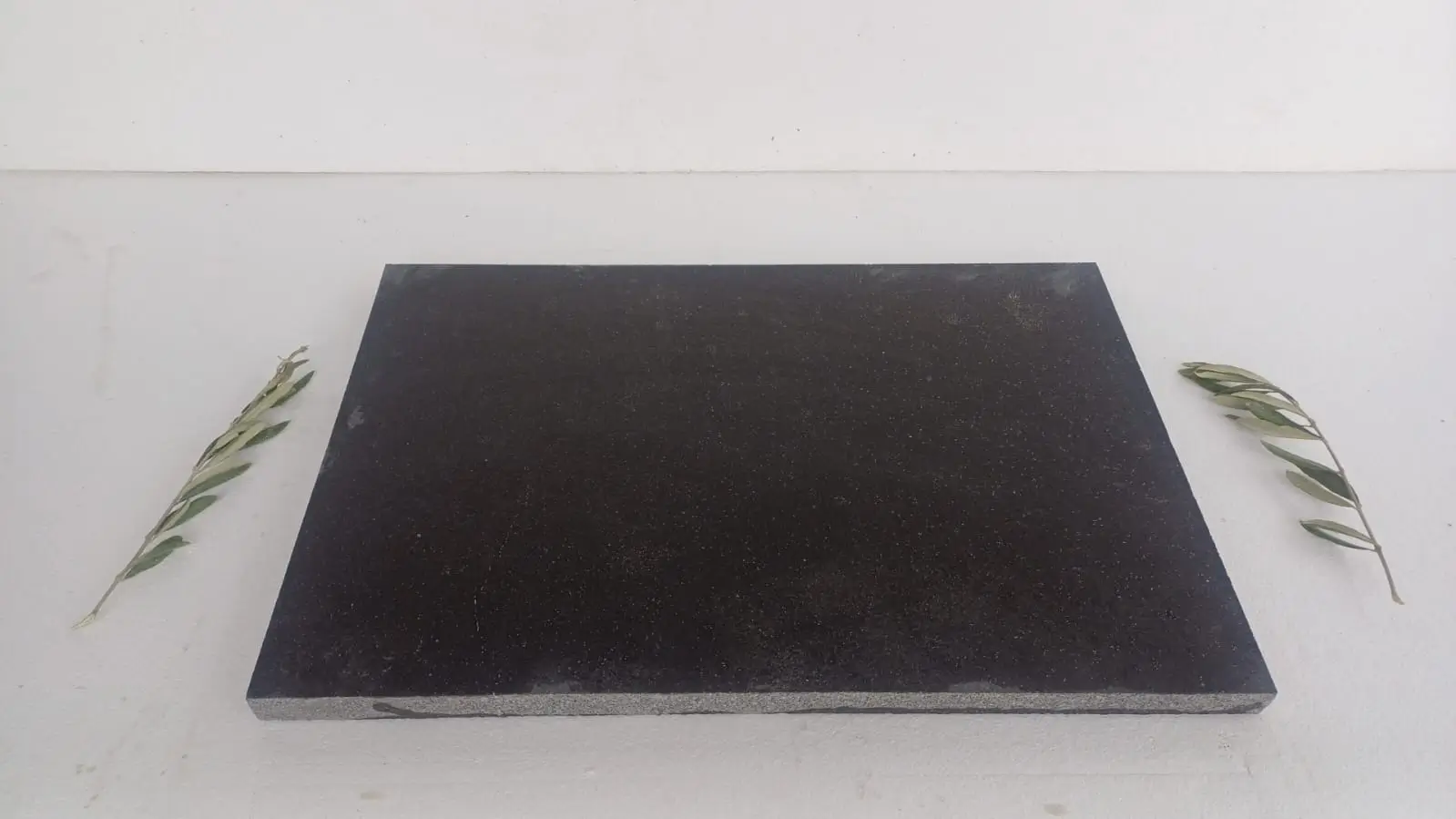
- For blue limestone paving Arizona entertainment areas, 30mm thickness is the standard residential specification — 20mm material is appropriate only for pedestrian-light applications with well-prepared, stable bases
- Irregular natural formats create interesting visual texture but require more precise jointing work and accumulate debris in uneven joints faster than calibrated sawn material
- Calibrated sawn blue limestone offers thickness tolerances within ±2mm, which is critical for sand-set installation to prevent lippage at joints
- Allow for a 5 to 8% waste factor in your material order for cut pieces at perimeter edges and around fixed features — entertainment areas typically have more obstacles than simple rectangular patios
Joint Design and Spacing for Outdoor Entertainment Surfaces
Joint spacing in Arizona’s climate needs to account for the full thermal range your material will experience — from a 28°F winter morning to 116°F summer afternoon, with the stone surface itself reaching temperatures 40 to 50°F above ambient air temperature on south-facing exposures. For blue limestone entertaining surfaces in Peoria social spaces, a 3mm to 5mm joint width accommodates the material’s thermal expansion coefficient without allowing joint movement visible to guests.
Polymeric sand is the correct jointing material for entertainment zones — standard kiln-dried sand migrates under the foot traffic, furniture movement, and high-pressure rinsing that social spaces receive. Specify a high-performance polymeric sand rated for joints up to 50mm width if you’re using irregular or rustic-finish pavers with wider joint tolerances. Your installation crew should compact and activate the polymeric sand within the same working day the pavers are set — delayed activation creates inconsistent cure depth.
- Install expansion joints every 12 to 15 feet in entertainment areas, not the 20-foot spacing common in residential sidewalk specifications — the concentrated load cycling and irrigation exposure in social zones create faster joint fatigue
- Perimeter expansion joints at transitions to fixed structures (walls, steps, pool coping) should be filled with a closed-cell backer rod and flexible polyurethane sealant, not polymeric sand
- Re-sand joints at 18 to 24 months post-installation as initial settlement and sand consolidation reduces joint fill below optimal levels
Lighting and Material Integration for Peoria Social Spaces
The visual performance of blue limestone shifts dramatically under different light temperatures, which makes your lighting strategy as important as your stone selection for entertainment zones. In Peoria social spaces, the blue-grey tonal range of blue limestone responds particularly well to warm-white LED downlighting in the 2700K to 3000K range — it draws out the stone’s natural variation and suppresses the flat, washed-out appearance that cooler lighting creates on grey-toned surfaces.
In-ground uplighting placed along paving perimeters and path transitions accentuates surface texture after dark, which adds both visual depth and functional orientation cues for guests navigating between zones. Plan your conduit routes and junction box placements before finalizing your paving layout — retrofitting electrical access through a completed blue limestone surface requires cutting and re-jointing work that rarely matches the original installation quality.
- Position low-voltage path lights at the boundary between seating zones and transition corridors rather than inside the seating area, where they create tripping hazards and compete visually with furniture
- Allow for heat dissipation clearances around any recessed ground fixture — blue limestone’s thermal mass can retain heat from fixture bodies and cause localized differential expansion at fixture perimeters over time
- Specify IP67-rated fixtures for any in-paving application — splashing from outdoor kitchen use and irrigation overspray make anything less than full submersion rating a maintenance liability
Sourcing, Logistics, and Project Planning
Material lead times for blue limestone in Arizona depend significantly on whether your supplier maintains regional warehouse stock or sources on a project-by-project import basis. The standard import cycle for blue limestone runs 6 to 8 weeks from quarry order to delivery, which creates real scheduling risk on projects with fixed completion deadlines. Citadel Stone maintains warehouse inventory in Arizona, which typically compresses that timeline to 1 to 2 weeks for standard formats and thicknesses — a meaningful advantage when contractor schedules depend on confirmed material availability.
Your truck access conditions at the delivery site affect how your material arrives and how much handling damage risk exists in the final stage. Flatbed trucks carrying palletized stone need at least 14 feet of vertical clearance and firm ground capable of supporting loaded vehicle weight without rut formation. Entertainment area installations in blue paving gathering areas often involve finished landscaping adjacent to the delivery path, so coordinating truck access before landscaping work is complete protects both the existing site work and the incoming material from avoidable damage.
- Order a minimum of 5% overage on your blue limestone paving Arizona specification — material from different production batches can exhibit minor tonal variation, so completing the installation from a single warehouse pull reduces color matching issues
- Confirm with your supplier that the material has been moisture-acclimated in warehouse conditions appropriate to Arizona’s climate — stone shipped directly from humid storage environments can show temporary surface efflorescence in Arizona’s dry air
- Schedule truck deliveries for early morning in summer months to reduce the risk of material surface temperature at delivery exceeding the installation temperature range for adhesive or mortar applications
For projects in Gilbert and other East Valley locations, our warehouse proximity allows same-week delivery in most cases, which helps contractors maintain tight installation schedules without material delays affecting project timelines.
Getting Blue Limestone Entertaining in Peoria Right
Blue limestone entertaining in Peoria works best when the specification process treats the material as a performance system rather than a finish selection. Your base preparation depth, joint spacing, drainage geometry, and sealant schedule all contribute as much to the entertainment zone’s long-term success as the stone itself. The visual qualities that make blue limestone compelling — its tonal depth, natural texture, and color stability — are durably preserved only when the structural layers underneath support them properly.
The details that separate a genuinely durable entertainment surface from one that requires expensive remediation within five years are mostly invisible once installation is complete. Joint expansion rates, sub-base compaction tolerances, and sealant chemistry aren’t features guests notice — but they’re exactly what your guests benefit from every time they use the space comfortably and without incident. As you plan color consistency across larger surface areas, Blue Limestone Paving Color Consistency for Glendale Large Projects addresses the batch management and layout sequencing strategies that keep extended installations visually cohesive. Citadel Stone stocks blue limestone slabs in Arizona that are perfect for creating floating steps.