
Drainage geometry determines whether blue limestone circular slabs in Tempe perform beautifully for two decades or become a costly replacement project within five years. Most designers focus on the visual impact of circular features — the sweep of the curve, the color contrast with surrounding material — but the spec decision that actually defines long-term performance is how water moves across and beneath the installation. Arizona’s monsoon season delivers intense, short-duration rainfall events that overwhelm drainage systems designed for gradual precipitation, and a circular slab layout creates unique hydraulic patterns that require deliberate engineering rather than standard linear-paving assumptions.
Why Drainage Defines Circular Slab Performance in Arizona
Tempe sits in a valley geography that concentrates monsoon runoff from surrounding elevated terrain, and between July and September, rainfall totals can spike dramatically within a 20-minute window. Your circular paving installation doesn’t just sit in that water — it channels it. The geometry of a circular slab naturally directs surface flow toward the perimeter edge, which means your edge detail and sub-base drainage must handle concentrated discharge rather than distributed sheet flow.
Blue limestone circular slabs in Arizona benefit from the material’s natural porosity, which typically runs between 3% and 8% depending on the quarry seam. That porosity allows limited infiltration at the surface, buying you time during high-intensity events. However, porosity alone isn’t a drainage strategy — you still need a properly graded aggregate base and a clear outlet path for water that exceeds the stone’s absorption capacity.
- Specify a minimum 2% cross-slope from the center of the circular feature toward the outer perimeter edge — this activates during short, intense monsoon bursts
- Your aggregate base should be compacted crushed granite at 4–6 inches depth minimum for residential installations, 6–8 inches for commercial centerpiece elements
- Perimeter drainage channels or French drain runs should be sized for a 10-year storm event, not average annual rainfall — Tempe’s monsoon peak flows exceed averages significantly
- Avoid closed-edge transitions where the circular slab meets a raised border without a gap — water trapping at the perimeter edge accelerates limestone deterioration
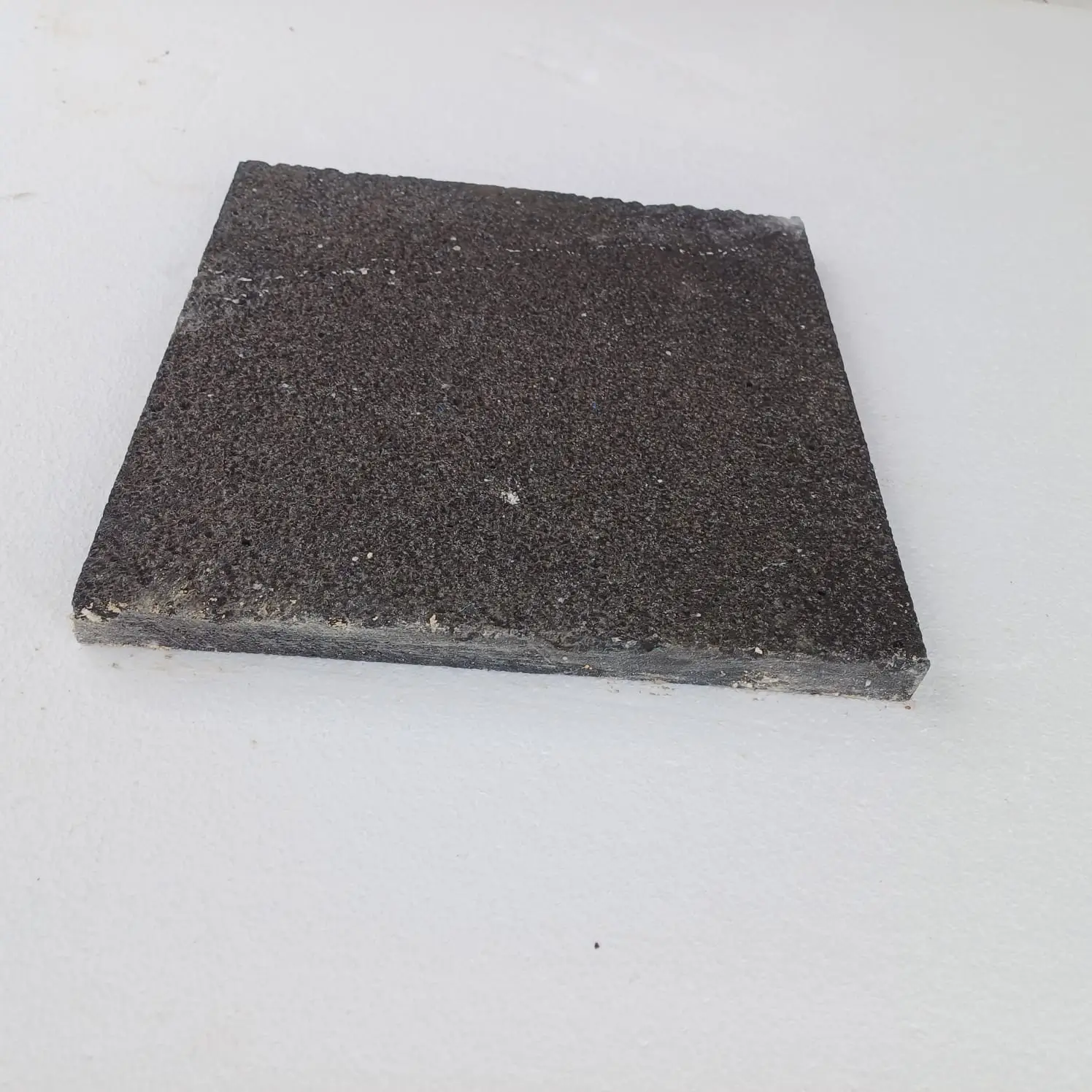
Understanding Blue Limestone Slab Curves for Arizona Conditions
The visual distinction of blue limestone slab curves in Arizona comes from the material’s blue-grey tonality, which originates from specific mineral composition — primarily calcite and clay minerals with trace iron compounds in a reduced oxidation state. That same mineralogy influences how the stone responds to prolonged moisture contact, which matters directly for Tempe’s drainage context. When water sits against the slab face longer than 48 hours, you risk surface efflorescence as mineral salts migrate outward during the drying cycle.
Curved cuts in natural limestone deserve attention during fabrication specification. A true circular slab requires radial cutting, and the cut edges expose the stone’s internal pore structure more directly than the natural cleft or sawn face. Those exposed edges need penetrating sealer applied within 24 hours of delivery — before installation, not after. Projects in San Tan Valley that use similar curved limestone features in unshaded courtyard settings have shown that sealed cut edges outperform unsealed ones by a measurable margin when post-monsoon moisture retention is measured at depth.
At Citadel Stone, we inspect cut-edge profiles at our facility before dispatch because field observations have confirmed that micro-fractures at the cut radius — invisible at first glance — become pathways for moisture infiltration that compromise structural integrity over multiple wet-dry cycles. Specifying slab thickness at 40mm (approximately 1.5 inches) for pedestrian circular features provides adequate section depth to absorb those cut-edge stresses without cracking during thermal and moisture cycling.
Circular Paving Layout and Joint Strategy
The joint pattern in a circular paving layout isn’t decorative — it’s a drainage infrastructure decision. Radiating joints from the center of a circular feature naturally create spoke-like channels that direct water outward, which aligns with your drainage geometry goal. The challenge is maintaining consistent joint width across a radiating pattern without allowing the outer joints to widen beyond 3/8 inch, where joint material becomes structurally inadequate.
Your joint compound selection needs to account for Tempe’s dual moisture stressors: monsoon saturation events followed by rapid drying under intense sun. Polymeric sand performs well in this cycle because it resists washout during sudden inflow while maintaining flexibility through the thermal contraction that follows. Standard cement-based grout tends to crack at the outer joint perimeter of circular configurations because the thermal expansion differential between the slab center and edge creates tensile stress that rigid joints can’t accommodate. Tempe round designs that use polymeric jointing consistently outperform those specified with rigid grout across the first three monsoon seasons.
- Target joint width of 1/4 inch at the center ring, allowing natural expansion to 3/8 inch at the outer perimeter ring — don’t fight the geometry
- Use polymeric jointing sand rated for Type 1 exposure (full sun, wet-dry cycling) rather than standard polymeric products designed for shaded patios
- Allow 48-hour cure on jointing compound before the first post-monsoon rain — scheduling installation outside the July–September peak window gives you that buffer
- Inspect joint depth after the first full monsoon season and top-fill any areas where sand has migrated down — this is routine maintenance, not a failure indicator
Base Preparation for Tempe Soil Conditions
Tempe’s subsurface geology presents a specific challenge: caliche layers that appear at variable depths, typically between 18 and 36 inches below grade in much of the urban core. Caliche is essentially calcite-cemented hardpan, and it creates a drainage impedance layer that can trap water above it during saturated monsoon conditions. Your circular slab installation doesn’t sit deep enough to interact directly with the caliche layer, but your sub-base drainage does — and if you haven’t accounted for it, you’ll see hydrostatic pressure build beneath the aggregate base during peak monsoon events.
The standard fix is to extend your drainage outlet pipe below the caliche layer or route it laterally to daylight before the impedance zone intercepts it. This adds cost to a circular centerpiece feature that most project budgets don’t anticipate, so surface it in your preliminary site assessment before finalizing the feature’s location. Flat areas with no natural slope to a drainage outlet are the highest-risk settings for blue limestone circular slabs in this region.
- Conduct a percolation test at the proposed installation location before committing to the design — a 24-hour infiltration rate below 0.5 inches per hour signals drainage intervention is required
- Compact your crushed aggregate base in 2-inch lifts to achieve 95% Proctor density — single-lift compaction in Tempe’s sandy-clay mix tends to leave voids that collapse under first saturation
- Install geotextile fabric between native soil and aggregate base to prevent fines migration upward into your drainage layer during monsoon saturation cycles
- Grade the finished base surface to match your slab slope specification — if the base isn’t graded correctly, shimming individual slabs to achieve drainage slope compromises your bedding layer integrity
Arizona Centerpiece Elements: Material Thickness and Load Considerations
Circular features used as Arizona centerpiece elements typically serve mixed-use functions — pedestrian focal points, seating areas, or transition zones between landscape beds and hard paving. Each use case has a different load profile, and your slab thickness specification should reflect the actual load, not a single standard dimension. Decorative pedestrian-only features can use 30mm slabs successfully, but any setting where wheeled service equipment crosses the feature requires a minimum 50mm thickness to prevent edge fracture at the point load contact zone.
Blue limestone’s compressive strength typically ranges between 8,000 and 12,000 PSI depending on the specific quarry seam, which provides adequate capacity for most landscape applications. The failure mode in field installations isn’t usually compression — it’s flexural stress at the unsupported mid-span of larger-diameter circular pieces. For any single circular slab exceeding 600mm in diameter, you need continuous bedding support across the full underside, not spot-bedding on corner points.
Checking warehouse stock levels for large-format circular pieces before finalizing your design drawings is worth the extra step. Oversized circular blue limestone slabs require specific quarry runs and may not be available in standard warehouse inventory, which can push delivery timelines out by 4–6 weeks if the size requires a dedicated order. Confirming availability early keeps your Arizona centerpiece elements on schedule without compromising the material match across the feature.
Color Performance and UV Exposure in Tempe
The blue-grey tonality that makes these slabs striking in landscape photography responds to UV exposure in a predictable way: unprotected surfaces will shift toward a lighter, chalky grey over 18–24 months of full Arizona sun exposure. That shift isn’t damage — it’s natural surface carbonation — but it does change the visual character of your centerpiece feature. Penetrating silane-siloxane sealers rated for UV exposure slow this transition significantly without creating a wet-look finish that reads as artificial in natural stone installations.
Resealing on a two-year cycle maintains both color depth and the sealer’s primary functional role: limiting water absorption during monsoon events. In Tempe’s climate, the sealer is doing double duty — protecting color in summer UV and resisting moisture infiltration during monsoon season. Projects in Yuma that have used comparable blue limestone features in full-exposure desert settings demonstrate that the color shift is most pronounced in the first 12 months and then stabilizes with consistent sealer maintenance, making the initial application timing critically important.
- Apply first sealer coat within 30 days of installation completion — this locks in the quarry-fresh color before the first UV season begins
- Use a penetrating impregnator rather than a film-forming sealer — film formers trap moisture beneath the surface during monsoon events and cause spalling as vapor pressure builds
- Clean the surface with pH-neutral stone cleaner before each resealing application — residual alkaline cleaners interact with limestone’s calcite matrix and reduce sealer bond strength
- Inspect sealed surfaces after each monsoon season for whitish haze, which signals moisture trapped during a saturation event — address this before applying the next sealer coat
Sourcing and Logistics for Tempe Circular Projects
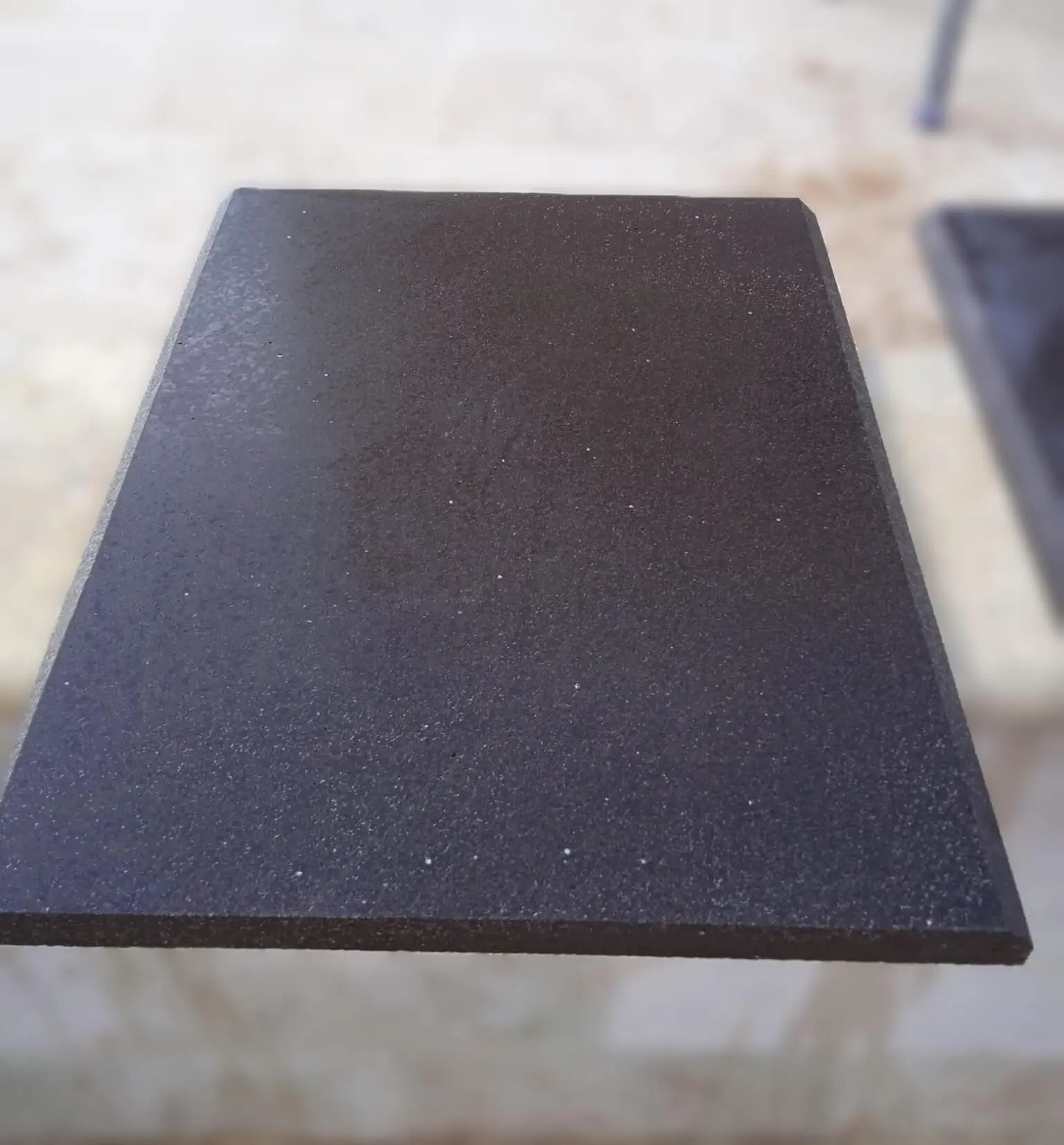
Circular slab fabrication requires a different supply chain conversation than standard rectangular or square paving orders. Your supplier needs to confirm that the stone batch used for your circular pieces comes from a consistent quarry run — color variation across a circular feature reads as a specification error in the finished installation, even when individual slabs would be acceptable in a mixed-format layout. Specifying matched batch numbers on your purchase order protects against this.
Lead time planning for blue limestone in Arizona circular slabs should account for two potential bottlenecks: the fabrication queue for circular cutting and the truck delivery logistics from the distribution point to your site. Large circular pieces require specialized crating to prevent edge chipping in transit, and if your project site has restricted truck access — narrow gates, weight-limited driveways, or low overhead clearance — you may need to coordinate smaller delivery loads, which affects your total logistics cost. At Citadel Stone, we work through these delivery constraints during the quoting stage so that site access issues don’t create surprise costs when the truck arrives.
Projects in Avondale and similar suburban Phoenix metro locations often have HOA-imposed delivery window restrictions that need to factor into your schedule planning. Confirming truck access dimensions and permitted delivery hours before placing your order avoids the coordination problems that delay installations unnecessarily. Tempe round designs benefit most from this upfront logistics coordination when large-format circular slabs are involved. You can also visit Citadel Stone’s blue black limestone facility to review slab batches in person before committing to a large circular feature order — matching color and texture before cutting saves significant rework costs.
Installation Sequencing for Monsoon Season Timing
Timing your circular slab installation relative to Tempe’s monsoon season is a practical specification decision, not just a scheduling preference. Bedding mortars and jointing compounds need adequate cure time before the first saturation event, and Arizona’s monsoon arrives abruptly — a clear forecast in the morning can precede an intense storm by early afternoon. Planning for installation completion at least 30 days before the statistical monsoon onset (typically late June) gives your bedding and jointing materials full cure time before they face their first real hydraulic challenge.
If your project schedule requires monsoon-season installation, use rapid-setting bedding mortar rated for damp conditions, adjust your joint cure expectations accordingly, and have a clear plan for protecting the installation with breathable covers if rain is forecast within 48 hours of jointing. These aren’t drastic measures — they’re standard practice for any quality stone installation in a region where the weather doesn’t follow a predictable daily pattern during peak season.
- Optimal installation window in Tempe: October through May — cooler temperatures also improve bedding mortar open time and reduce the risk of premature skinning
- If installing in summer: start work at dawn, complete bedding and jointing before 10 AM, and mist the stone surface briefly before laying to prevent rapid moisture draw from fresh mortar
- Post-installation protection is critical in the first 72 hours — even light rain on freshly jointed circular paving can wash polymeric sand from the outer joints before it has cured
- Schedule your final sealer application for a period with at least 5 consecutive dry days forecast — sealer needs to fully penetrate and cure without interruption from monsoon moisture
What Separates Strong Circular Slab Specs from Weak Ones in Tempe
The design decisions that define long-term performance for blue limestone circular slabs in Tempe come down to drainage geometry, base preparation honesty, and fabrication coordination — not just material selection. You can specify excellent blue limestone and still have a failing installation within three monsoon seasons if the drainage outlet path was undersized, the base was compacted in a single lift, or the joint compound was wrong for the exposure class. These aren’t rare failure modes — they’re the common ones, precisely because drainage engineering gets treated as a secondary concern behind the visual design.
Your specification documents should address each of these directly: perimeter drainage sizing, aggregate base depth and compaction protocol, joint compound type and cure requirements, sealer specification and maintenance schedule, and fabrication batch matching for circular cuts. A complete spec protects both the installation quality and the project relationship — everyone on the team knows what’s required before the first slab arrives on the truck.
For related sourcing context across Arizona’s blue limestone supply chain, Blue Black Natural Limestone Paving Origin Quarries for Gilbert Sourcing provides useful background on material provenance and how quarry origin affects consistency across large feature orders. Understanding where the stone comes from helps you ask better questions when specifying matched batches for circular feature work. Citadel Stone stocks limestone blue black paving in Arizona for immediate pickup or delivery.