
Freight distance from the quarry to your jobsite is the number that most Gilbert project budgets get wrong — and with blue black natural limestone quarries Gilbert sourcing decisions hinge on understanding exactly where this material originates and what that distance costs you in real dollars. The quarry origin determines not just freight pricing but also consistency between orders, lead time predictability, and your ability to inspect material before it ships. Getting clear on the supply chain behind blue black natural limestone before you commit to a project timeline is the difference between a budget that holds and one that blows past contingency reserves.
Where Blue Black Natural Limestone Actually Comes From
The distinctive blue-black coloration in this limestone category traces to high iron and organic mineral content within sedimentary formations that develop under specific geological pressure conditions. The dominant quarry locations supplying the Arizona market include operations in Portugal, Turkey, and select quarries in India — each producing material with recognizable but distinct characteristics in tone, density, and surface texture. Portuguese quarry stock tends to run darker and more consistent in color banding, while Turkish sources produce material with slightly more variation in the blue-grey range that some designers actually prefer for a more organic aesthetic.
For Gilbert sourcing specifically, the practical reality is that virtually all blue black natural limestone quarries Gilbert contractors draw from are international sources, meaning the Arizona supply chain functions through importers and regional distributors rather than domestic extraction. That matters for your budget because you’re always working with at least two freight legs — ocean freight from quarry country to a US port, then overland truck delivery to your Arizona project site. Understanding that two-leg reality shapes every timeline and cost conversation you’ll have with a supplier.
- Portuguese quarries: tighter color consistency, higher unit cost, typically 10–14 week lead time to Arizona
- Turkish quarries: broader color variation, competitive pricing, 8–12 week standard import cycle
- Indian quarries: most affordable entry point, requires tighter quality inspection protocols on arrival
- Domestic secondary sources: US-based stone yards holding imported inventory reduce lead time to 1–3 weeks at a price premium over direct import
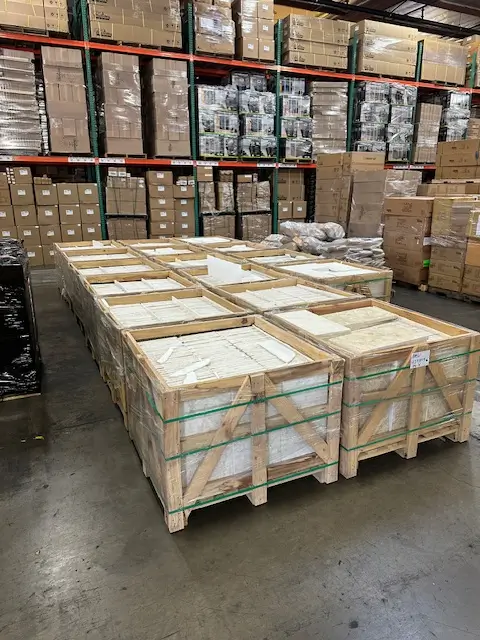
How Freight Distance Shapes Your Gilbert Project Budget
The material cost of blue black natural limestone quarries Gilbert buyers are evaluating often looks reasonable on paper — until you add the full freight stack. Ocean freight, port handling, customs clearance, inland rail or truck movement to Phoenix-area distribution points, and final-mile delivery to your Gilbert site can add 35–55% on top of the FOB quarry price depending on order volume and shipping configuration. Smaller orders hurt most because you’re rarely filling a full container, which means you pay LCL (less-than-container-load) surcharges that don’t scale well.
Volume is your primary lever for controlling landed cost. Projects that can commit to 2,000 square feet or more typically qualify for full-container pricing that brings the per-square-foot freight cost down meaningfully. For projects under 500 square feet, sourcing from a regional warehouse that already holds Arizona inventory is almost always the smarter economic decision — you trade the lower unit price of direct import for lead time savings and freight predictability that protect your overall schedule.
- Full container (FCL) orders: most favorable landed cost, requires 1,800–2,200 sq ft minimum depending on thickness
- Less-than-container (LCL) orders: 20–40% freight surcharge over FCL rates — factor this into your per-unit math
- Regional warehouse sourcing: higher unit cost but predictable 1–2 week delivery, no customs exposure
- Port delays: plan for 2–4 week buffer beyond quoted lead times in current shipping conditions
- Fuel surcharges on truck delivery: variable cost that fluctuates quarterly and should be locked in writing
Understanding the Arizona Supply Chain for Natural Limestone
Arizona’s position as an inland state without direct port access creates a supply chain reality that coastal markets don’t face. Material arriving at the Port of Los Angeles or Long Beach still needs overland transport — typically by truck — across roughly 370 miles to the Phoenix metro area before it even reaches a distribution point for Gilbert delivery. That inland leg adds cost and introduces scheduling variables that can compress your installation window if material arrives late in the season.
In Chandler, contractors have learned to pad their import lead times aggressively because the combined ocean-plus-overland logistics chain creates compounding delay risk. A two-week port delay combined with a week-long inland freight backlog can push a 10-week material lead time to 13 weeks — a gap that disrupts concrete base scheduling, subcontractor sequencing, and client commitments simultaneously. Your project schedule should treat material arrival as a probabilistic range, not a fixed date.
At Citadel Stone, we maintain warehouse inventory of blue black natural limestone in Arizona specifically to help contractors and designers avoid the worst of these supply chain exposure points. Rather than betting a project timeline on import logistics you can’t control, you can access available inventory that ships on truck within days of your purchase confirmation.
Material-to-Labor Cost Ratios That Drive Specification Decisions
Here’s a calculation that too many Arizona project budgets skip: the material-to-labor ratio for natural stone installation in the Phoenix metro currently runs roughly 40:60 in favor of labor on custom residential projects — meaning you’re spending more on installation than on the stone itself. That ratio flips the logic on value engineering. Specifying a slightly more expensive material that installs faster or requires fewer cuts is often the smarter total-cost decision than chasing a lower material price that costs you labor time.
Blue black natural paving origins Arizona contractors work with typically produces material in nominal 24×24 or 24×12 format — sizes that minimize cutting labor on standard layouts. Irregular formats or smaller module sizes increase labor cost significantly because each cut takes time and blade wear adds up fast in a material this dense. Your specification should weigh the labor cost of your chosen layout pattern against the material cost savings of alternate formats before finalizing the order.
- 24×24 format: lowest labor cost per square foot, ideal for large open areas
- 24×12 running bond: moderate labor, good aesthetic variation with manageable cut frequency
- Random ashlar: highest labor cost, requires experienced setter — budget 25–35% labor premium over grid layouts
- Thickness matters: 3cm material is more manageable for residential installs; 4cm adds weight that slows installation pace and may require two-person setting
Blue Black Natural Limestone Performance in Arizona Conditions
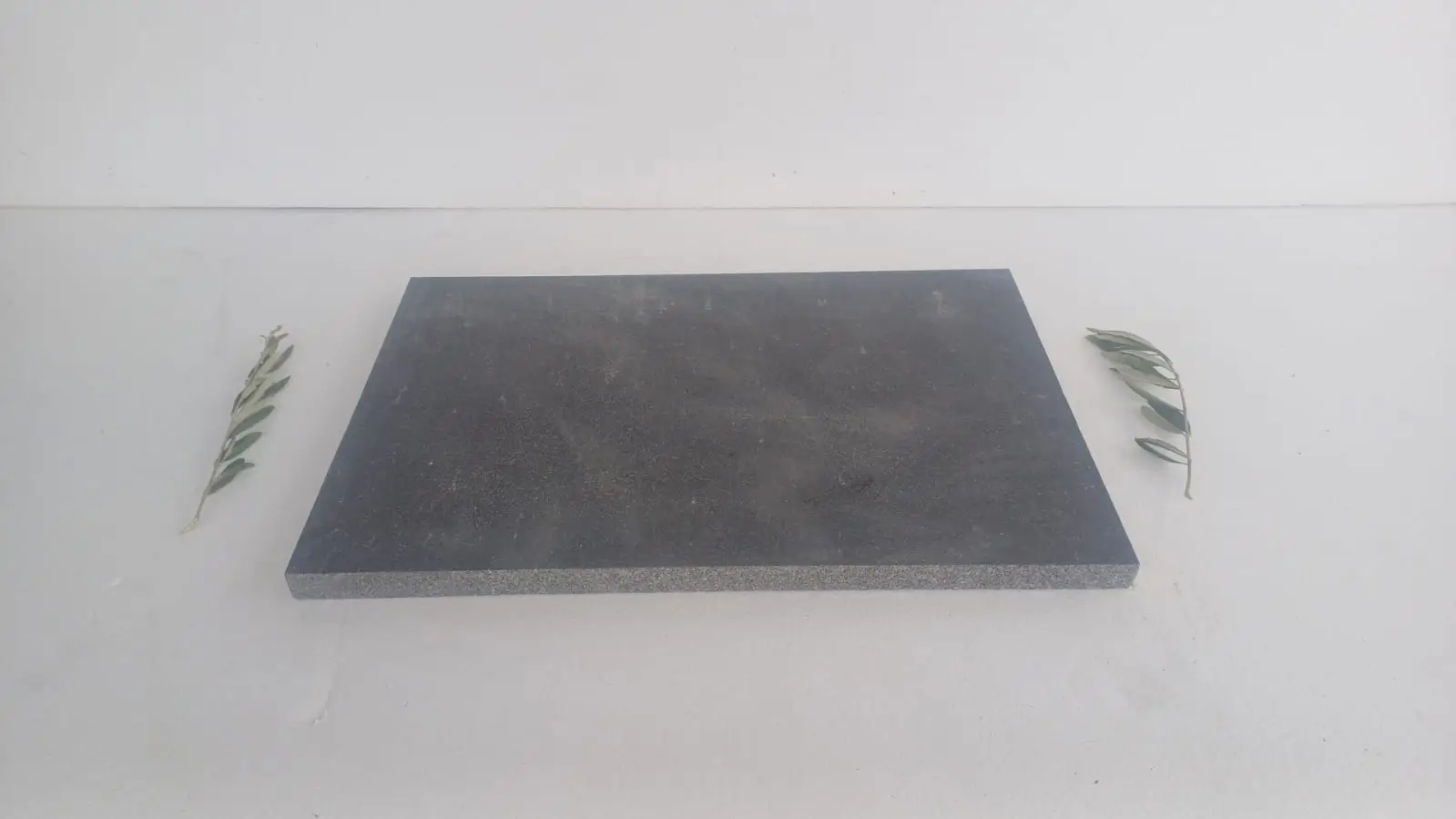
The dense crystalline structure typical of quality blue black natural limestone paving in Arizona makes it one of the better-performing imported stones in desert heat conditions. Compressive strength in the 12,000–15,000 PSI range is common for well-quarried material, which means it handles both vehicular loads and the point-load stress that furniture legs create in patio applications without surface crazing. The darker coloration does absorb more solar radiation than lighter travertine or sandstone — surface temperatures on blue-black material can run 15–25°F higher than adjacent cream-colored stones in direct afternoon sun, which matters for barefoot comfort in outdoor living spaces.
For projects in Tempe and similar low-desert zones, sealing protocol becomes a critical performance variable. Blue black limestone typically exhibits 3–6% water absorption by weight in its unsealed state — adequate for covered patios but insufficient protection for exposed pool surrounds or areas receiving irrigation runoff. A penetrating silane-siloxane sealer applied within the first 30 days of installation and reapplied every 18–24 months keeps absorption below 1.5%, which is your target threshold for long-term stain resistance in Arizona’s dust and organic debris environment.
You can review our blue limestone paving selection to assess current inventory options, thickness ranges, and surface finish availability before finalizing your specification.
Quarry Consistency and Quality Inspection — What You Need to Verify
One of the most expensive mistakes on blue black natural limestone projects is assuming color and density consistency between different production runs from the same quarry. Quarry face extraction moves through geological layers that shift in mineral composition, and what looks like the same material on a sample tile can differ noticeably when a new production run ships. The practical safeguard is requesting production batch certification with every order and pulling physical samples from the actual container before full installation begins.
Thickness tolerance is equally critical. Nominal 3cm material from some quarry locations actually ranges from 2.6cm to 3.4cm within a single pallet — a variance range that creates lippage problems when you’re setting on a standard mortar bed. Specify thickness tolerance of ±2mm maximum in your purchase agreement, and verify against the actual delivery, not the spec sheet. Your setting contractor will thank you, and you’ll avoid the scenario of re-lifting and re-setting tiles because the mortar bed can’t compensate for inconsistent backs.
- Request production batch numbers and match them across all pallets in your order
- Inspect for natural fissures — hairline fractures that are cosmetically acceptable in some contexts but structurally problematic in high-traffic or vehicular applications
- Check calibration consistency across multiple pieces from different pallets, not just a single tile
- Verify surface finish uniformity — honed and brushed finishes should be consistent across the full order
- Review for color temperature shift — some batches run warmer (more grey-brown) vs cooler (true blue-black) even from the same quarry
Regional Pricing Dynamics Affecting Gilbert Stone Sources
The Phoenix metro’s rapid construction growth over the past several years has created real pricing pressure on stone supply chains that affects Gilbert stone sources specifically. Contractor labor rates in Maricopa County have risen substantially, which shifts the total project economics in ways that pure material cost comparisons don’t capture. Sourcing decisions that save $2–4 per square foot on material but introduce scheduling delays that cost 40 hours of subcontractor time quickly become net losses when you run the full math.
Suppliers operating with regional warehouse stock provide a genuine budget advantage that isn’t always obvious from the unit price alone. Predictable delivery allows your concrete sub, setting crew, and grouting team to sequence tightly without idle time charges. In a labor market where skilled stone setters book 6–8 weeks out, a material delay that pushes your installation window doesn’t just cost delay time — it can push you to the back of a crew’s schedule and add weeks to your project completion date.
In Surprise and other high-growth West Valley communities, residential developers have increasingly shifted to pre-sourced material packages that lock in both material and labor scheduling simultaneously. That model works precisely because it removes freight uncertainty from the critical path — something that direct import ordering rarely achieves without careful planning and generous schedule buffers.
Value Engineering Your Quarry Sourcing Decisions
The quarry locations and supply chain configuration you choose effectively set your project’s floor cost — everything downstream builds on that foundation. Real value engineering on blue black natural limestone projects isn’t about specifying the cheapest material; it’s about optimizing the combination of material cost, freight cost, lead time, and installation efficiency to get the best total-project outcome per dollar spent.
One strategy that delivers consistent results: split your sourcing between a primary warehouse order for the bulk of the project area and a secondary import order for the next phase or future maintenance stock. You get the speed advantage of warehouse inventory for your immediate installation while building toward better per-unit economics on future material by participating in a direct import cycle. Our technical team advises this phased approach for projects over 3,000 square feet where the timeline allows for a two-stage delivery structure.
- Lock in freight pricing in writing before confirming installation scheduling — fuel surcharges can shift your landed cost by 8–12% without notice
- Order 8–10% overage above your net measured area to account for cuts, breakage, and future repairs from the same production batch
- Evaluate quarry locations not just on unit price but on the distributor’s ability to re-source from the same batch — continuity matters more than initial cost on phased projects
- Factor warehouse storage costs into your comparison if you’re taking delivery before your site is ready — some suppliers charge holding fees that erode the price advantage
Final Considerations for Blue Black Natural Limestone Quarries Gilbert Projects
Getting blue black natural limestone quarries Gilbert sourcing right comes down to understanding that every cost variable connects to every other one — material price, freight distance, lead time, labor sequencing, and quality consistency all interact in ways that make single-variable optimization a trap. The projects that deliver the best outcomes treat sourcing as a logistics and scheduling problem first, with material aesthetics and unit pricing as important but secondary variables. Your specification document should include quarry origin requirements, thickness tolerances, color batch documentation requirements, and delivery window commitments — not just material dimensions and finish specifications.
Verifying warehouse stock levels before committing to a contractor start date is non-negotiable. A confirmed start date without confirmed material availability puts you in the position of renegotiating with installers mid-project — an uncomfortable and expensive conversation in a tight labor market. The Arizona supply chain for blue black natural limestone is reliable when planned correctly, and unpredictable when sourcing decisions are left to the last phase of project planning. For a related perspective on how this material performs across seasonal temperature swings, Blue Black Natural Limestone Paving Frost Resistance for Chandler Winter covers thermal cycling performance considerations that complement the quarry sourcing and logistics decisions discussed here. Our blue limestone paving slabs in Arizona are perfect for creating a continuous flow from indoors to out.