
Color saturation in natural stone isn’t a fixed property — it’s a dynamic response to light angle, surface moisture, and the stone’s internal mineralogy working together. Blue black natural limestone depth Mesa projects demand more than a material selection decision; they require you to understand how this stone’s dense crystalline structure traps and refracts light differently at 7 a.m. versus 2 p.m. under Arizona’s high-angle sun. The visual impact you’re designing for depends on getting that interaction right from the base up — and drainage geometry is where that story starts.
Why Drainage Defines Color Performance in Arizona
Arizona’s precipitation pattern is deceptive. The Sonoran Desert averages 7 to 12 inches annually in most low-desert zones, but that number masks what really matters — monsoon season delivers 40 to 60 percent of that annual rainfall in concentrated storm events between July and September. In Mesa, localized storm cells can drop an inch or more in under an hour, creating sheet-flow conditions that test every joint, every slope, and every base layer you’ve specified. Your blue black natural limestone paving won’t express its full color depth if standing water is allowed to pool and penetrate, leaving mineral deposits and biological growth that dull the surface within a season.
Effective drainage design for this material starts at the sub-base level, not the surface. A minimum 2 percent cross-slope is the baseline, but limestone’s relatively low absorption rate — typically 0.4 to 0.8 percent by weight for quality blue-black varieties — actually works in your favor here. Water moves off the surface efficiently rather than soaking in, protecting that rich color saturation from internal staining caused by mineral migration. The challenge is ensuring that water has somewhere purposeful to go, which means coordinating drainage channels, edge restraints, and sub-base composition before a single paver is set.
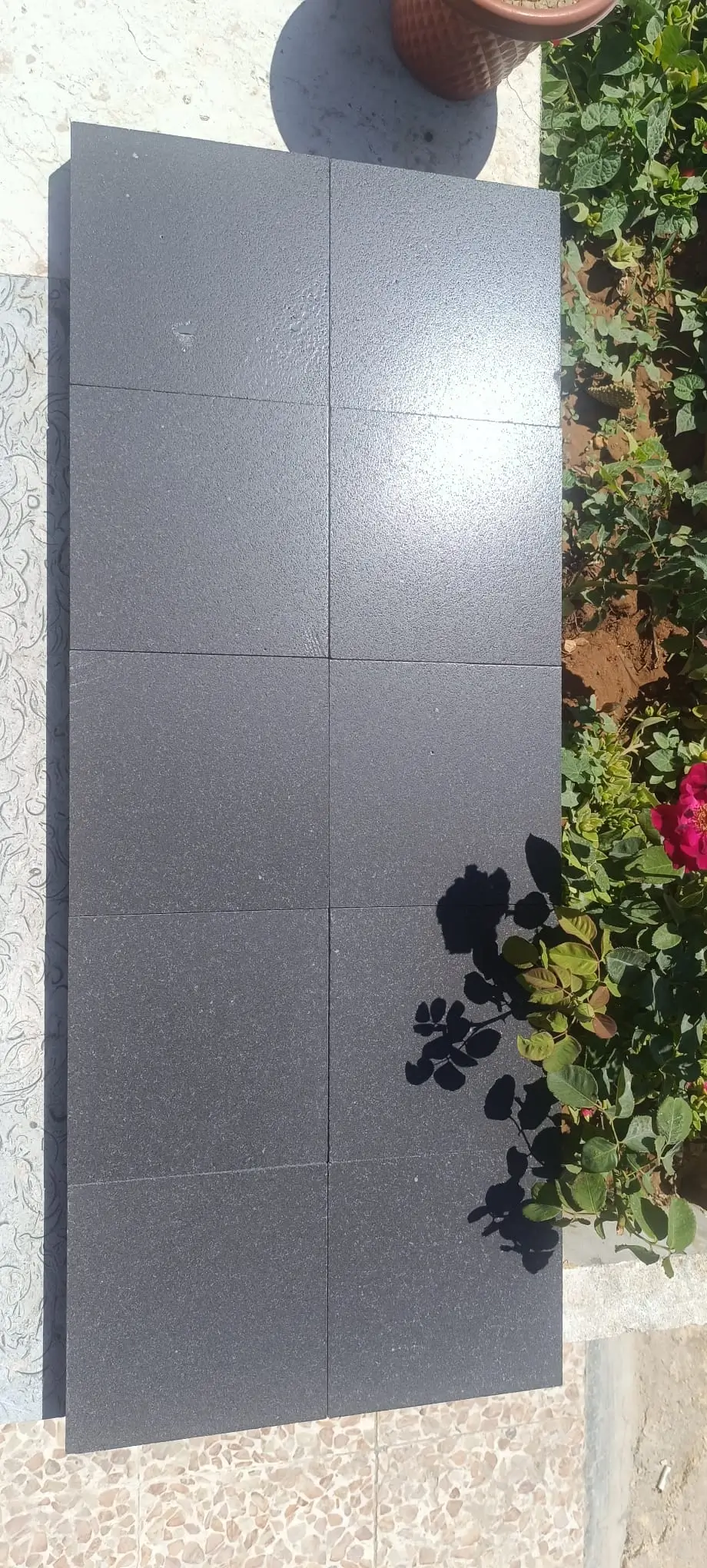
Understanding Mesa Rich Coloring and What Preserves It
The visual intensity of blue black limestone comes from a combination of iron sulfide compounds, organic carbon traces, and fine-grained calcite matrix — all of which interact with light to produce that deep, almost lacquered tone. Mesa rich coloring in this material reads differently in morning versus afternoon light, and that variation is part of the design value. Direct overhead sun at Arizona’s latitude flattens the surface somewhat, while low-angle light in the early morning and late afternoon pulls out the blue-gray undertones and creates that sense of visual depth that designers specifically seek.
Here’s what most specifiers miss: the single biggest threat to that color quality isn’t UV exposure or foot traffic — it’s efflorescence driven by moisture moving upward through the base. Calcium carbonate deposits from a poorly designed base layer will coat the surface with a white haze that no amount of cleaning fully removes without etching. Your base specification needs to address this directly, with a proper compacted aggregate layer and, in high water-table areas, a vapor-permeable leveling bed rather than a wet-set mortar that traps moisture beneath the stone.
- Use 4 to 6 inches of compacted crushed aggregate base for pedestrian applications, 8 inches minimum for vehicular zones
- Specify a 1-inch bedding layer of coarse concrete sand, screeded to grade, not mortar in areas with seasonal moisture fluctuation
- Install geotextile fabric between native soil and aggregate base to prevent clay migration into the drainage layer
- Maintain a minimum 2 percent cross-slope on all paved surfaces to direct water toward designed collection points
- Use permeable jointing sand in non-vehicular areas to allow vertical drainage through joints without undermining base stability
Color Saturation Under Arizona Conditions
Color saturation in blue black limestone isn’t static — it responds to surface condition, sealing status, and light intensity in ways that matter for your design intent. A dry, unsealed surface under Arizona’s midday sun will appear lighter and more gray-blue. The same stone after a light rain, or sealed with a penetrating color enhancer, shifts toward the deep charcoal-black tones that make this material visually compelling. Understanding that range is essential when you’re specifying for a particular aesthetic outcome.
The practical specification decision is whether to seal for color enhancement or maintain the natural dry appearance. Penetrating sealers with a color-enhancing formulation will deepen the tone by 15 to 25 percent and stabilize the color through Arizona’s intense dry season. They also provide a hydrophobic barrier that significantly reduces efflorescence risk. Plan for reapplication every 2 to 3 years in Sonoran Desert climates, where UV intensity and thermal cycling accelerate sealer breakdown faster than in temperate zones. Blue black natural limestone depth Mesa installations that maintain this reapplication schedule consistently outperform unsealed equivalents across multiple monsoon cycles.
Base Preparation for Monsoon Resilience
Arizona’s vibrant tones in blue-black natural stone are undermined faster by inadequate base preparation than by any other factor. The monsoon cycle creates a specific stress pattern that flat-rate specifications don’t capture — you have a dry season where fine-grained soils contract and create voids beneath the base, followed by rapid saturation events that cause those same soils to expand. Over three to five cycles, the base settles unevenly, joints open, and the stone surface begins to show differential movement that breaks the visual continuity of the installation.
For Gilbert and surrounding East Valley communities where expansive clay soils are common, the solution is a thicker compacted base with a stabilized sub-base beneath it — not just aggregate over native soil. Lime or Portland cement stabilization of the top 6 to 8 inches of native material reduces swell potential significantly and gives your aggregate base a stable platform that doesn’t change volume with moisture content. This adds upfront cost, but it’s the difference between a 20-year installation and one that needs releveling within 5 years.
- Identify native soil classification before specifying base depth — clay-heavy soils require sub-base stabilization
- Compact aggregate base in 2-inch lifts to achieve minimum 95 percent Proctor density
- Install positive drainage outlets at or below the base level to prevent hydrostatic pressure buildup during storm events
- Account for the drainage path from roof runoff if the paved area is adjacent to structures — concentrated roof drainage can overwhelm a surface drainage system sized only for rainfall on the paved area
Blue Black Natural Paving Intensity and Thickness Specification
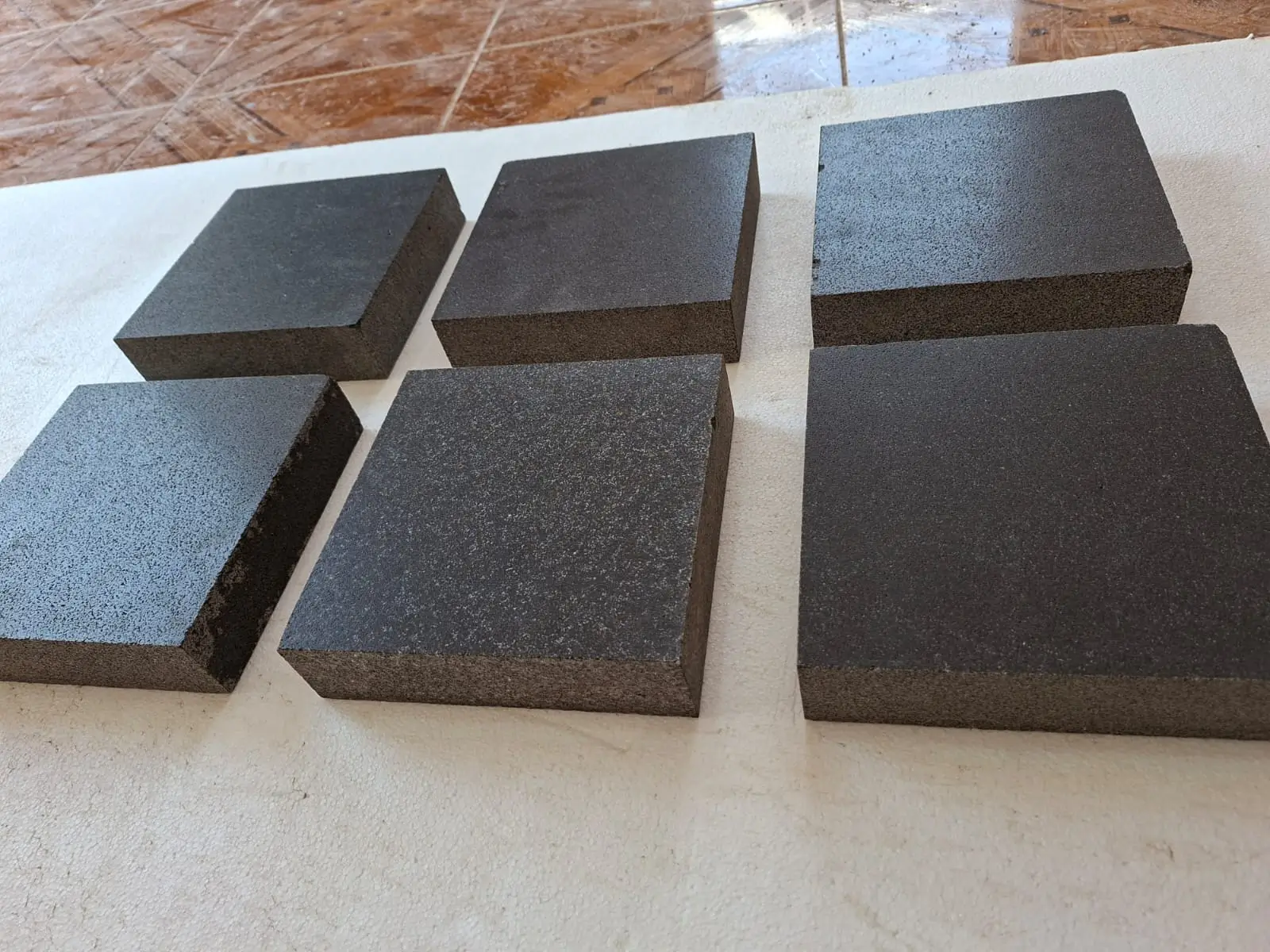
The visual weight of blue black natural paving intensity Arizona projects demand depends in part on the thickness specification you choose, and that choice has structural implications beyond aesthetics. Thicker slabs — in the 1.25-inch to 1.5-inch range — provide more material mass for the color to develop through, and they’re less prone to telegraphing base imperfections as minor flexural deflection that creates micro-cracking over time. For residential patio applications, 1.25-inch nominal thickness is the floor for blue-black limestone; for pool surrounds or areas with rolling loads, move to 1.5 inches.
For product selection and ordering, review our limestone blue black paving slabs to evaluate thickness options and surface finish variations available for Arizona projects. Surface texture matters here too — a calibrated honed finish deepens the blue-black intensity more than a natural cleft surface, while a brushed texture offers a middle ground that provides slip resistance without reducing color impact significantly. Your selection should balance the visual outcome you’re targeting with the slip-resistance requirements for the specific application.
Thermal Cycling and Joint Spacing for Arizona Installations
Arizona’s temperature swings between winter nights and summer afternoons represent a thermal range of 70 to 90°F across a 24-hour period in extreme cases. Blue-black limestone has a linear thermal expansion coefficient of approximately 4.5 to 5.0 × 10⁻⁶ per °F, which means a 4-foot-long slab experiences roughly 0.02 to 0.025 inches of dimensional change across that full temperature range. That’s manageable — but only if your joint spacing accommodates it without allowing point loading at slab edges.
The practical implication: don’t close joints tight against adjacent slabs during installation in summer months when slabs are at or near maximum expansion. Leave 3/16 to 1/4 inch joint width to accommodate contraction during winter nights and ensure jointing sand maintains full contact without locking the slab in position. In Yuma, where summer surface temperatures regularly exceed 160°F on dark-colored stone, this thermal management is even more critical — the absolute temperature range there is larger than in higher-elevation parts of Arizona, and under-spaced joints have failed within a single summer cycle.
- Maintain 3/16-inch minimum joint width for slabs up to 24 inches in any dimension
- Increase to 1/4 inch for slabs over 24 inches or in areas exposed to full sun without overhead cover
- Use polymeric jointing sand with a stabilizing binder for vehicular areas to resist washout during monsoon events
- Install expansion joints at control intervals of 12 to 15 linear feet where the paved area meets structures, walls, or changes direction
Flood Risk and Surface Drainage Design for Hardscape Areas
Arizona’s designation of large portions of the low desert as Zone AE or Zone X flood plain under FEMA mapping isn’t incidental — it reflects real episodic flood risk that affects hardscape specification in ways most residential projects don’t adequately address. Blue black natural limestone depth Mesa installations near washes, retention basins, or low-lying areas need surface drainage designed to handle 100-year storm volumes, not average annual rainfall. The difference in design flow volume between those two scenarios can be a factor of 10 or more.
Permeable base systems offer a partial solution for sites with high infiltration capacity in the native soil — they allow storm water to percolate through the base rather than creating concentrated surface flow. However, in clay-dominant soil zones common across much of the East Valley, infiltration rates are too low for permeable systems to significantly reduce surface runoff. The correct approach there is positive surface drainage with defined collection points, channel systems, and outfall connections to municipal drainage infrastructure. Verify local municipal drainage connection requirements before finalizing your design — many jurisdictions require detention, not just conveyance, for new impervious areas above a certain threshold.
Sourcing, Logistics, and Project Planning
Blue black natural limestone paving in Arizona typically ships from Mediterranean or South American quarry sources, which means lead times from overseas order to warehouse delivery run 6 to 10 weeks depending on origin, vessel schedule, and port congestion. At Citadel Stone, we maintain warehouse stock of high-demand blue-black limestone formats specifically to compress that timeline for Arizona projects — verified warehouse inventory typically allows truck delivery to your site within 1 to 2 weeks of order confirmation, which matters significantly for contractors managing tight installation windows around monsoon season.
Your ordering quantity should include a 10 percent overage for cuts, breakage during handling, and future repair stock. Blue-black limestone shows visible lot-to-lot color variation — two pallets from different quarry pulls will not match perfectly, and having extra material from the original lot available for future repairs protects the visual consistency of your installation long-term. Confirm lot consistency with your supplier before splitting orders across deliveries, and request a physical sample rather than relying on digital photography, which does not accurately represent the Mesa rich coloring depth and tone variation in this material.
- Order all material from a single quarry lot where possible to ensure color consistency across the installation
- Confirm truck access to the delivery site before scheduling — palletized limestone typically requires a flatbed with a liftgate or crane offload, not a standard delivery truck
- Inspect warehouse pallets for corner damage and color sorting before acceptance — reject mixed-lot pallets that show visible color discrepancy between individual pieces
- Store pallets on level ground under cover if installation is delayed — prolonged exposure to Arizona sun before installation can affect sealer adhesion on the top surfaces
Final Recommendations for Blue Black Natural Limestone Depth Mesa Projects
Getting blue black natural limestone depth Mesa installations right comes down to a sequence of decisions that build on each other — drainage geometry first, base specification second, thermal joint design third, and color protection last. Skip the drainage step and no amount of quality stone or careful installation will prevent the efflorescence and settlement that undermine both performance and aesthetics over time. Arizona’s monsoon hydrology is the variable most specifiers underweight, and it’s the one most likely to determine whether your installation looks as compelling in year eight as it did on installation day.
The visual payoff of this material — that blue-black intensity, the Arizona vibrant tones and color saturation that shifts with light angle through the day — is genuinely achievable in Arizona’s demanding climate when the specification is complete and accurate. Proper drainage, correct base depth for your soil type, thermal-responsive joint spacing, and a penetrating sealer on a reapplication schedule will protect everything you’ve invested in the material itself. As you develop the full scope of your Arizona stone project, related maintenance topics are worth planning for now rather than reactively — Blue Black Natural Limestone Paving Cleaning Methods for Scottsdale covers the ongoing care protocols that keep this material performing at its best across Arizona conditions. Make a statement with the deep tones of Blue Limestone Paving in Arizona from Citadel Stone.