
Blue black limestone dramatic Litchfield Park installations succeed or fail based on one decision most designers make too early — committing to a layout pattern before understanding how this material’s tonal range shifts under Arizona’s extreme sun angles. The deep charcoal-to-midnight palette that makes blue black limestone so compelling doesn’t behave the same way at 7 a.m. as it does at midday, and that variance is actually your greatest design asset if you know how to work with it. The visual drama you’re after depends less on the stone itself and more on how you position it relative to light, contrast elements, and the surrounding architecture.
Why Blue Black Limestone Commands Attention in Arizona Landscapes
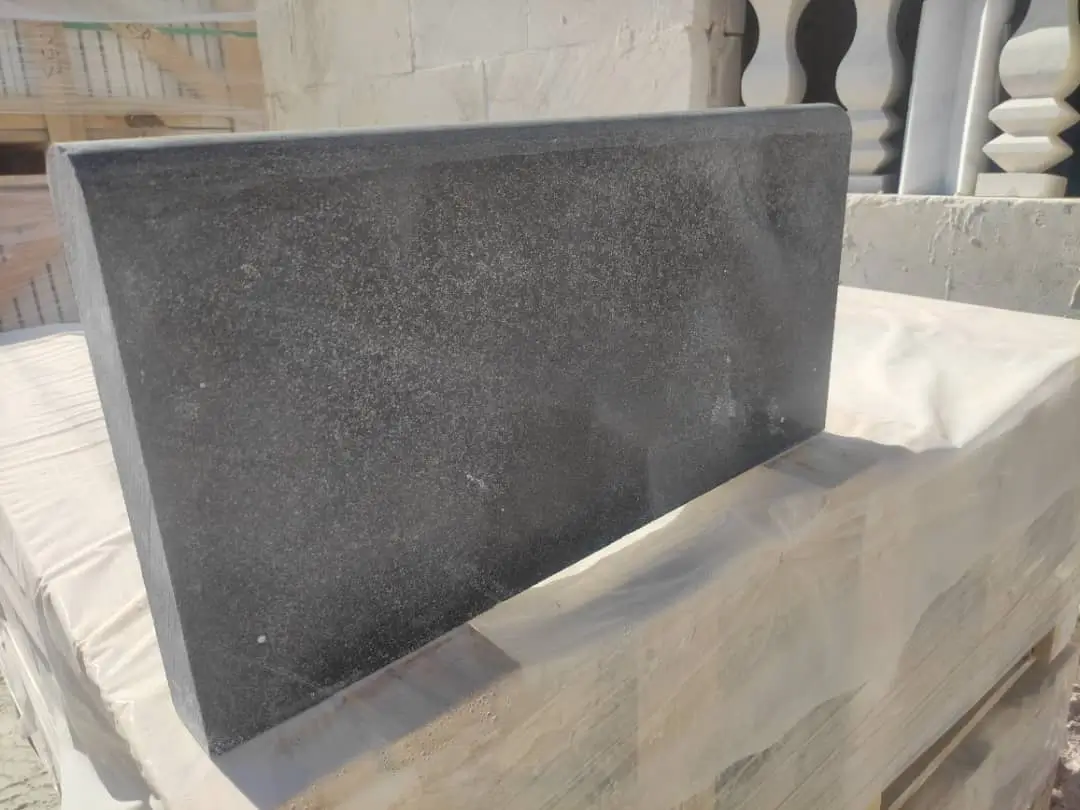
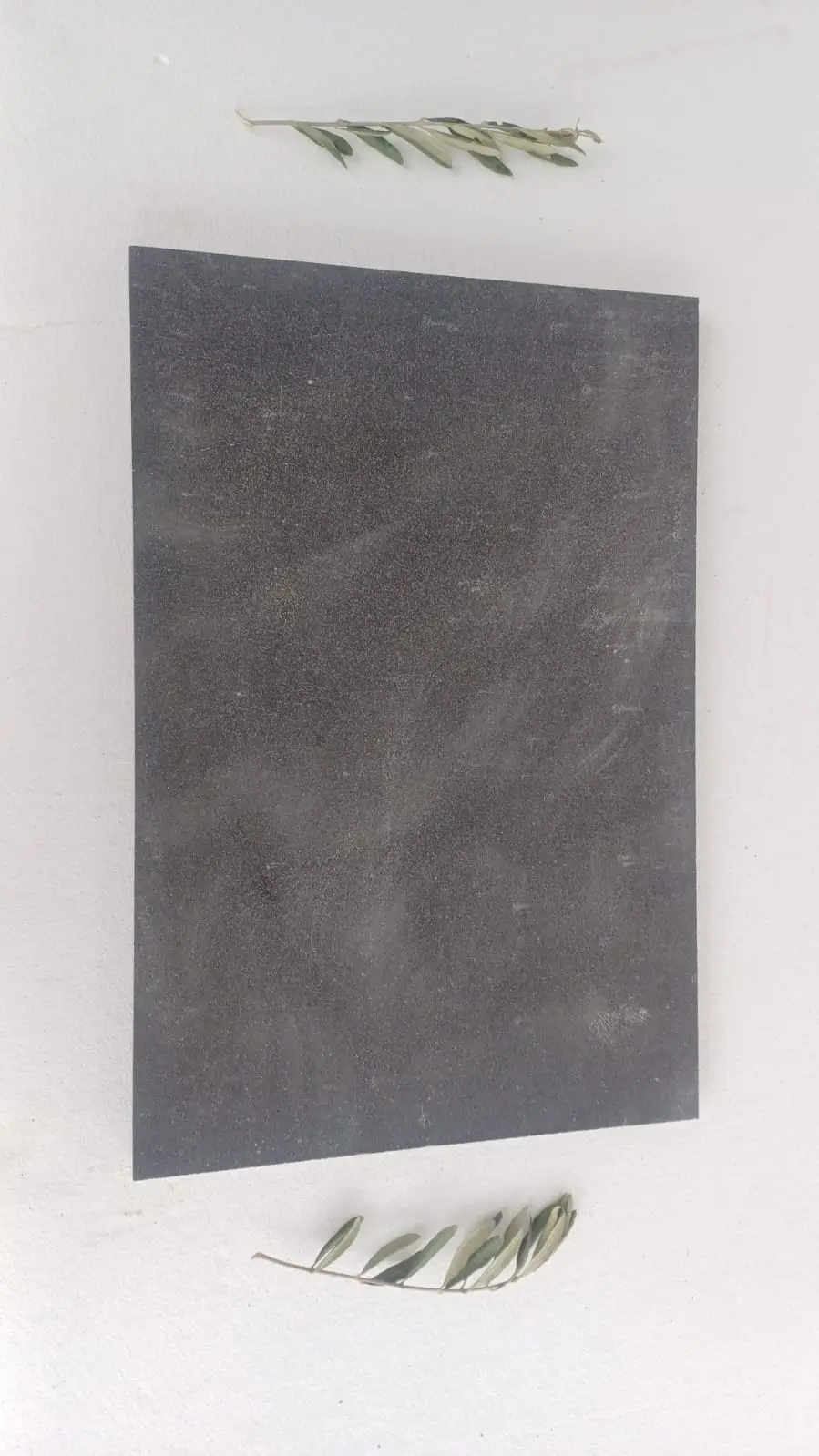
The striking appearance of blue black limestone comes from its mineralogical composition — fine-grained calcite with embedded iron compounds and organic material that produce that distinctive deep, cool palette. Unlike sandstone or travertine, which scatter light, blue black limestone absorbs and redirects it, creating a surface that reads as genuinely dark even in direct sunlight. That’s rare in natural stone, and it’s the core reason this material delivers the kind of Arizona visual drama that lighter stones simply can’t replicate.
You’ll notice the tonal depth varies across individual slabs — some pieces trend toward a blue-gray midtone, others push toward near-black. This natural variation isn’t a quality inconsistency; it’s what gives a finished installation its visual complexity. The key is understanding how to sort and sequence your slabs during layout to control where that variation concentrates and where it transitions.
- Surface texture ranges from honed (low sheen, matte depth) to sawn (raw, directional grain exposure)
- Honed finishes emphasize the blue-gray midtones and work best in partially shaded spaces
- Sawn surfaces show more tonal contrast and read more dramatically under direct Arizona sun
- Thermal finishes create a textured surface that diffuses reflection without sacrificing the dark palette
Reading Litchfield Park’s Design Context for Maximum Visual Impact
Litchfield Park’s architectural landscape leans toward a refined desert-modern aesthetic — clean lines, warm stucco, and mature shade tree canopy that creates dappled light conditions most of the year. That context matters enormously when you’re specifying a material as tonally strong as blue black limestone. The goal isn’t contrast for its own sake; it’s contrast that feels intentional and architecturally resolved.
The Litchfield Park bold design tradition in this community tends to favor materials that hold their own visually without competing with the surrounding Sonoran landscape. Blue black limestone does exactly that — it reads as a grounding element rather than a disruption. Your palette anchors the eye and lets the desert vegetation and architectural detailing carry the warmth.
- Pair blue black limestone with warm-toned coping or wall cap stone to prevent the palette from reading as cold
- In shaded areas under mature trees, the material’s blue-gray undertone becomes more visible and adds genuine depth
- Direct western exposure intensifies the dark surface appearance, which enhances drama but increases thermal mass absorption
- Cream or buff-toned grout joints create a grid pattern that frames each slab — a classic Litchfield Park bold design move
For projects in Litchfield Park, the prevailing westward orientation of rear outdoor living spaces means your blue black paving will catch the most dramatic late-afternoon light, when shadows are longest and the stone’s tonal depth is most pronounced.
Layout Patterns That Amplify Dramatic Effects
Your choice of pattern multiplies or dilutes the visual impact of blue black limestone more than almost any other design variable. A running bond pattern creates horizontal movement, which tends to read as expansive and calm — beautiful, but not dramatic. For genuine blue black paving impact Arizona designs demand, consider patterns that create visual rhythm through directional contrast.
A large-format stack bond with tight joints reads as architectural and bold — the slab grid becomes a design element itself. Alternatively, a herringbone pattern in blue black limestone creates a surface that appears to shift direction as viewing angle changes, which is visually striking in large-format outdoor living areas. The 45-degree herringbone is particularly effective because it fights the eye’s natural tendency to align with architectural boundaries, creating deliberate tension that registers as drama.
- Large-format slabs (24×24 inches or larger) maximize the visual weight of the material and reduce grout line frequency
- Smaller modular formats (12×12 or 16×16 inches) increase pattern complexity — effective in courtyards and entry approaches
- Mixed-format patterns using two slab sizes create a casual, organic rhythm that suits naturalistic Litchfield Park landscape styles
- Running bond works well for pool decks and long pathway runs where length is the dominant visual dimension
At Citadel Stone, we recommend presenting clients with a dry-lay sample of at least 16 square feet before committing to a pattern — the interaction between natural slab variation and your chosen layout reads very differently at scale than it does on a small sample board.
Contrast Pairings and Material Combinations That Work
The real leverage in a blue black limestone installation is the contrast you build around it. The material itself provides the dark anchor; your supporting choices determine whether the overall composition reads as sophisticated or simply heavy. This is where most designers either nail the Litchfield Park bold design brief or lose it.
Cream travertine coping around a pool perimeter with a blue black limestone deck is a pairing that’s proven itself repeatedly in Arizona’s West Valley because the warmth of the travertine prevents the dark stone from feeling oppressive. Similarly, buff-colored concrete block walls or sandstone-toned stucco create the tonal contrast that lets blue black limestone read at its full visual weight without overwhelming the space.
- Avoid pairing blue black limestone with cool-gray concrete — the result reads as monotone despite the value difference
- Warm brass, bronze, and aged copper hardware complement the blue-gray undertones without competing
- White or near-white vertical elements (walls, pergola columns) create the strongest contrast pairing
- Desert plant material — agave, brittlebush, desert willow — provides natural color relief against the dark stone ground plane
The broader Arizona stone design community has increasingly embraced the combination of navy blue limestone materials in Tempe with warm-tone feature walls, demonstrating that blue-spectrum limestone and desert architecture are genuinely complementary when detailed correctly.
Thermal Performance and Real-World Surface Temperatures
Here’s the detail that separates an informed blue black limestone specification from an uninformed one: dark-toned stone absorbs more solar radiation than light stone, which means surface temperatures in Arizona’s full-sun exposures will be significantly higher than what you’d measure on travertine or beige limestone. Surface temperature readings on blue black limestone in unshaded Litchfield Park installations have measured 145–160°F in peak summer afternoon conditions. That’s not disqualifying, but it is a constraint your layout and use pattern need to account for.
Zone planning should concentrate blue black limestone in areas with afternoon shade, overhead coverage, or limited barefoot traffic during summer months. Pool deck perimeters, covered patio areas, shaded entry approaches, and water feature surrounds are all ideal applications where the blue black paving impact Arizona designers want is fully realized without creating a comfort problem.
- Misting systems installed within 6–8 feet of the surface reduce ambient temperature but don’t directly cool the stone surface
- Overhead shade structures positioned to block 2–5 p.m. sun reduce surface temperatures by 40–60°F in measured conditions
- Incorporating water features adjacent to blue black limestone creates cooling through evaporation and adds a reflective contrast element
- Thermal finish surfaces run slightly cooler than honed finishes because the textured face diffuses absorbed radiation
Base Preparation for Blue Black Limestone in Arizona Soils
Dramatic visual performance starts below grade — a point that can’t be overstated for blue black limestone paving in Arizona installations. Arizona soils vary considerably across the region, and your base specification needs to respond to that variation specifically. Clay-heavy soils in the West Valley expand and contract with seasonal moisture, which translates directly into surface movement if your base isn’t designed to accommodate it.
For residential projects in Avondale, where expansive clay soils are common, a minimum 4-inch compacted aggregate base is standard, but 6 inches is the more defensible specification when you’re working with large-format slabs. The wider the slab format, the more any sub-base movement telegraphs to the surface as lippage or joint separation — both of which will undermine the clean, architectural appearance blue black limestone is specified to deliver.
- Compacted Class II aggregate base at 95% Proctor density is the minimum standard for pedestrian applications
- Geotextile fabric between native soil and aggregate prevents clay migration into the base over time
- Expansion joint spacing should be planned at 10–12 feet in large-format installations — tighter than standard concrete guidelines, specifically because of Arizona’s thermal cycling range
- Setting bed thickness of 1 inch (compacted sand or modified thinset for mortar-set applications) provides the bedding tolerance you need for slab-to-slab flatness
Sealing and Maintenance for Long-Term Visual Drama
The striking appearance that makes blue black limestone worth specifying in the first place is a maintenance commitment — one that’s straightforward if you understand what the stone actually needs. Limestone is moderately porous, and in Arizona’s dust-heavy environment, unsealed or under-sealed blue black limestone will gradually develop a milky surface haze from airborne particulate that embeds in the pore structure. That haze directly mutes the tonal depth you specified the material to provide.
A penetrating silane or siloxane sealer applied after installation and repeated every 18–24 months is the standard protocol for blue black limestone paving in Arizona. Penetrating sealers don’t add a surface film that can cloud or peel — they work within the pore structure to repel moisture and oil while leaving the stone’s natural color and texture unchanged. For pool-adjacent applications, you’ll want a sealer rated for chlorine resistance, and you should plan to reapply more frequently — annual resealing is realistic in that environment.
- Test sealer on a representative sample piece before full application — some formulations shift the surface color slightly toward a wet-look appearance
- Apply sealer in morning or evening conditions to avoid rapid evaporation in Arizona heat
- Clean the surface with a pH-neutral stone cleaner before sealing — acidic cleaners etch the surface and reduce sealer adhesion
- Joint sand stabilization should be completed before sealing to prevent sealer from locking out a joint sand top-up later
Ordering Logistics and Project Planning for Litchfield Park Projects
Getting the material right on paper is only half the work — the other half is making sure your material arrives on schedule, in the quantity you actually need, and within a quality range that matches your sample. Blue black limestone paving projects in Arizona should include a 10–12% material overage allowance to account for cutting waste at perimeter edges, pattern cuts at transitions, and the normal attrition from any natural stone shipment. Ordering short and waiting for a second truck delivery to fill gaps can introduce slab-lot variation that’s visible in a finished installation.
Citadel Stone maintains warehouse inventory of blue black limestone in Arizona, which typically reduces lead times to 1–2 weeks compared to the 6–8 week import cycle most projects face when ordering directly from overseas quarries. For projects in San Tan Valley and other East Valley areas, truck access and delivery logistics should be confirmed with your project’s general contractor before ordering — large-format slab deliveries require a level staging area and clear access, and residential job sites don’t always provide that without some advance coordination.
- Request slab selection from a consistent production batch to minimize tonal variation across your installation
- Confirm slab thickness tolerance — industry standard allows ±1/8 inch, but tighter tolerances are available and worth specifying for high-visibility installations
- Warehouse stock levels fluctuate seasonally — commit your material order before project groundbreaking to protect your timeline
- Full-pallet ordering is more cost-efficient than loose piece ordering and reduces handling damage during delivery
Water and Drainage Considerations for Blue Black Limestone Paving
Arizona’s monsoon season delivers intense, short-duration rainfall events that generate runoff volumes most drainage designs underestimate. Your blue black limestone installation needs a surface slope of at least 1/8 inch per foot directed toward designed drainage points — and that slope needs to be engineered into the base, not achieved by varying the setting bed thickness. Trying to build slope into the setting bed introduces inconsistent compaction, which leads to settlement and lippage over time.
For projects in Yuma, where alkaline soils and high water table in some neighborhoods add complexity to drainage design, a French drain perimeter system beneath the paving plane is worth including in the specification. Standing water on blue black limestone for extended periods accelerates the surface efflorescence process — soluble salts migrate to the surface and create a white deposit that partially obscures the dark tone. Proper drainage eliminates that risk before it starts.
- Slot drains or linear drains at paving low points handle monsoon surge better than point drains, which can back up in high-flow events
- Permeable joint sand that allows moderate infiltration reduces surface runoff velocity, which helps with erosion at paving perimeter edges
- Avoid directing roof downspouts across the paving surface — the channeled flow creates erosion paths in joint sand and deposits roof sediment on the stone
If your project requires detailed drainage system planning beyond standard slope-and-drain design, Blue Limestone Paving Slab Drainage Planning for Carefree Water Management addresses slab-level drainage engineering in the context of Arizona’s challenging monsoon hydrology — a complementary resource from Citadel Stone covering the same West Valley and desert-region installation conditions this article addresses.
What Matters Most for Blue Black Limestone Dramatic Litchfield Park Results
Blue black limestone dramatic Litchfield Park installations succeed when every specification decision — from slab finish selection to base depth to drainage geometry — is made in service of the visual outcome. The material’s capacity for genuine Arizona visual drama is real, but it requires an informed hand to bring out consistently. Your layout pattern, contrast pairings, shading strategy, and maintenance protocol all work together to maintain the tonal depth and striking appearance that distinguishes this stone from every lighter-colored alternative.
The specification decisions that define long-term performance in Arizona aren’t complicated, but they’re specific — and the details that matter most are the ones that rarely appear in standard product literature. Understanding how Arizona’s thermal cycling, monsoon hydrology, and soil conditions interact with blue black limestone gives your project a genuine technical foundation that protects the investment. Citadel Stone supplies blue black limestone in Arizona with the material expertise and warehouse depth that Litchfield Park design projects deserve.
Citadel Stone offers natural limestone blue black in Arizona for cladding and vertical applications.