
When you specify blast resistant stone facades Arizona installations for federal facilities, you’re navigating performance requirements that extend far beyond standard architectural specifications. Your material selection directly impacts occupant safety during explosive events, and the gap between adequate performance and catastrophic failure often comes down to details most generic specifications miss. Understanding how natural stone behaves under blast loading conditions requires you to evaluate crystalline structure, thickness tolerances, anchoring systems, and the interaction between stone mass and building envelope dynamics in ways that conventional strength testing doesn’t address.
The challenge you’ll encounter immediately is that blast resistance isn’t a simple material property you can look up in a product catalog. You need to account for how stone density, flexural strength, and fracture propagation characteristics combine with attachment methodology to create a facade system that either absorbs and dissipates blast energy or becomes a fragmentation hazard. Professional specifications for blast resistant stone facades Arizona applications demand integration with security standards that address threat levels, standoff distances, and progressive collapse prevention — factors that change your entire approach to material selection, detailing, and installation sequencing.
Threat Assessment Specifications for Stone Selection
Your specification process begins with understanding the threat level the facility must withstand. Federal requirements categorize explosive threats based on charge weight and standoff distance, and these parameters directly determine minimum stone thickness, maximum panel dimensions, and required flexural strength. When you evaluate blast resistant stone facades Arizona projects, you’re typically working with threat scenarios ranging from vehicle-borne improvised explosive devices at perimeter standoff distances to package-sized threats at building entries.
The critical specification factor you need to address is the stone’s ability to remain anchored to the backup structure during the positive pressure phase of blast loading, which typically lasts 20-80 milliseconds depending on charge size and distance. During this interval, facade panels experience outward pressures ranging from 5-50 PSI for typical design scenarios. Your stone selection must account for flexural tensile strength that prevents catastrophic fracture, but equally important is the stone’s ability to undergo controlled cracking that dissipates energy without complete panel failure.
- You should specify minimum flexural strength of 1,800-2,200 PSI for blast applications, significantly higher than standard facade requirements of 1,200 PSI
- Your maximum panel dimensions need reduction to 24-36 inches for blast zones, compared to standard 48-60 inch panels
- You must increase minimum thickness to 2.5-3.0 inches in blast-critical areas versus standard 1.25-2.0 inch facade applications
- Stone density requirements shift toward denser materials (165-175 lbs/cubic foot) that provide superior mass resistance
Federal requirements under UFC 4-010-01 mandate progressive collapse prevention, which means your stone facade system cannot contribute debris that compromises structural integrity during blast events. This shifts your specification away from large-format thin panels toward smaller, thicker units with redundant attachment systems. The performance expectation isn’t that stone remains undamaged — protective design accepts controlled damage as an energy absorption mechanism — but rather that panels remain substantially in place or fall safely without creating penetrating projectiles.
Material Properties That Determine Blast Performance
When you evaluate stone types for blast resistant stone facades Arizona installations, the conventional hierarchy of material selection changes substantially. The properties that matter most aren’t the same characteristics you’d prioritize for standard architectural facades. Blast performance depends primarily on how the stone’s crystalline structure responds to extremely rapid loading rates — shock waves that generate stress conditions thousands of times faster than static load testing.
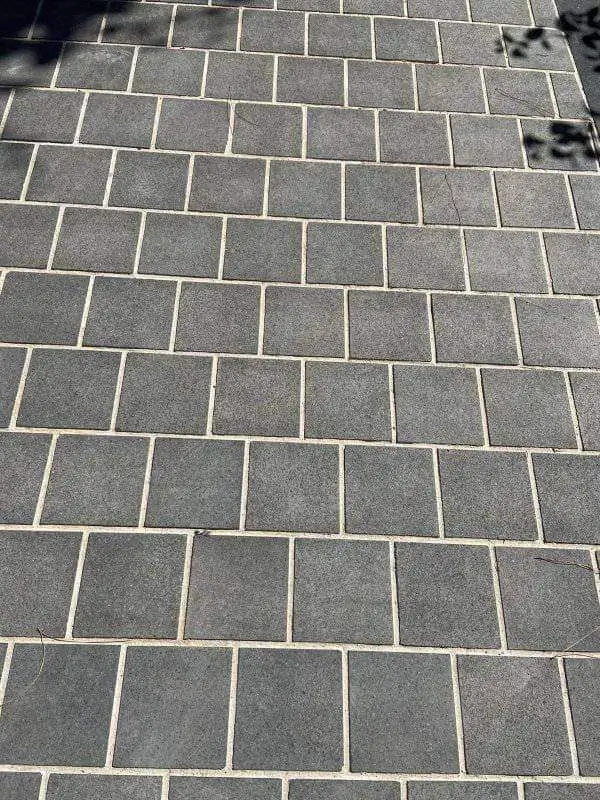
Dense, fine-grained limestones and granites perform best in blast applications because their crystalline structure allows controlled microcracking that absorbs energy without catastrophic spalling. You’ll find that coarse-grained materials with large crystal boundaries tend to fail along these planes under shock loading, creating dangerous fragmentation. The distinction becomes critical when you’re specifying for security standards that prohibit projectile generation.
Your specification should address the stone’s strain rate sensitivity — how strength characteristics change under rapid loading. Static flexural strength testing measures performance at loading rates of approximately 1,000-2,000 PSI per second. Blast loading occurs at rates exceeding 1,000,000 PSI per second. Most stones exhibit 15-30% higher apparent strength under these rapid loading conditions, but you cannot rely on this enhancement without testing that verifies the specific material’s dynamic behavior.
- Porosity must remain below 3% for blast applications to prevent internal pressure wave amplification
- Mineral composition should favor interlocking crystalline structures rather than layered sedimentary formations
- Water absorption rates below 0.40% indicate the dense structure required for blast resistance
- Compressive strength minimum increases to 18,000-22,000 PSI for blast-critical facades
The thermal properties of your selected stone interact with blast performance in ways that affect Arizona installations specifically. High surface temperatures from direct solar exposure (stone surfaces regularly reach 165-180°F in summer) create pre-stressed conditions in the material. When blast loading occurs on thermally stressed stone, you see reduced effective flexural capacity of 8-12% compared to laboratory testing at 70°F. Professional specifications account for this by either increasing thickness requirements or implementing thermal management strategies that limit peak surface temperatures.
Anchoring Systems and Energy Transfer Mechanisms
Your anchoring methodology determines whether blast resistant stone facades Arizona systems perform as intended or become the primary injury mechanism during explosive events. The challenge you face is that conventional facade anchoring — designed to resist wind loads, seismic forces, and thermal movement — operates in an entirely different loading regime than blast scenarios. Wind loading occurs over seconds, seismic over 5-20 seconds, thermal cycles over hours. Blast loading peaks in milliseconds.
The fundamental difference you need to understand is that blast-resistant anchoring must allow controlled stone movement while preventing complete detachment. Rigid anchoring systems that work well for wind resistance become failure points under blast loading because they concentrate stress at anchor locations, causing stone to fracture around anchors and separate from the building. You need ductile anchor systems that can deform 0.25-0.75 inches while maintaining connection integrity.
When you design anchor spacing for blast resistant stone facades Arizona installations, you’re working with significantly tighter spacing than standard facades. Typical architectural facades use 16-24 inch anchor spacing. Blast specifications require 8-12 inch spacing to distribute loads across the panel and prevent single-anchor overload. This density of attachment points creates waterproofing challenges that require you to integrate anchor penetrations with comprehensive drainage management.
- You should specify stainless steel anchors with minimum 60,000 PSI yield strength and 25% elongation capacity
- Your anchor embedment depth must increase to 4-6 inches in backup structure versus standard 2.5-3.5 inches
- Anchor diameter requirements shift to 3/8-1/2 inch for blast applications compared to standard 1/4-3/8 inch
- You need redundant load paths with minimum two anchors per panel edge to ensure progressive failure prevention
The backup structure behind your stone facade must be engineered as part of the blast-resistant system. You cannot simply attach blast-rated stone to conventional metal stud framing and expect protective design performance. Federal requirements mandate reinforced concrete or structural steel backup systems capable of resisting the impulse loads transmitted through anchors during blast events. Your specification must address the complete load path from stone surface through anchors into backup structure and finally to the primary structural frame.
Joint Design and Fragmentation Control
Joint width and sealant selection become critical safety engineering considerations in blast resistant stone facades Arizona specifications. During blast events, adjacent stone panels undergo differential movement as blast pressure varies across the facade surface. Your joint system must accommodate this movement without allowing stone-to-stone contact that causes edge spalling and fragmentation. Standard 3/8-1/2 inch joints prove insufficient for blast scenarios that generate 0.5-1.5 inch panel displacement.
When you specify joint widths for blast facades, you’re balancing competing requirements. Wider joints (3/4-1.0 inch) provide necessary movement capacity and reduce contact-induced damage, but they create thermal bridging concerns and visual impacts that clients often resist. The protective design mandate, however, prioritizes life safety over aesthetics, and federal requirements typically specify minimum 5/8-3/4 inch joints for blast-critical facades.
Your sealant selection must address both conventional weatherproofing and blast-induced movement. Standard architectural sealants accommodate ±25% joint movement. Blast scenarios can generate 100-200% joint width variation during the pressure pulse and subsequent rebound phase. You need high-performance polyurethane or silicone sealants rated for ±50% movement capability, and even these may require replacement after significant blast events.
- You should specify minimum 5/8 inch joint width for blast facades, increasing to 3/4 inch for threat levels above 50 PSI peak pressure
- Joint depth must equal or exceed joint width to ensure proper sealant stress distribution during extreme movement
- Backer rod selection requires closed-cell foam that won’t absorb moisture or compress under blast pressure differentials
- Your specification should include blast-rated joint reinforcement mesh at high-risk locations to contain potential spalling debris
The interaction between joints and the building’s overall blast response affects your facade detailing throughout the project. During blast events, the primary structure deflects substantially — reinforced concrete frames may experience 2-4 inch lateral displacement at upper floors. Your facade system must accommodate this building movement while maintaining stone panel integrity. This typically requires isolation joints at floor lines that separate facade zones and prevent structural displacement from overloading stone panels.
Arizona Environmental Factors in Blast Facade Performance
When you specify blast resistant stone facades Arizona installations, you’re dealing with environmental conditions that significantly affect both conventional facade performance and blast response characteristics. The combination of extreme heat, intense UV exposure, minimal humidity, and dramatic diurnal temperature swings creates pre-stressed conditions in facade materials that alter their blast response behavior in ways that laboratory testing at standard conditions doesn’t capture.
Arizona’s thermal environment subjects stone facades to surface temperatures reaching 165-180°F during peak summer conditions. This thermal loading creates expansion stress in the stone and, critically, in the anchoring system. Stainless steel anchors expand at different rates than stone (coefficient of thermal expansion for stainless steel: 9.6 × 10⁻⁶ per °F versus limestone: 4.5 × 10⁻⁶ per °F). This differential creates stress concentrations at anchor-stone interfaces that reduce effective blast capacity by 10-15% compared to testing at 70°F.
The arid climate affects protective design in another critical way — extremely low humidity (often 5-15% during summer months) removes moisture from stone that would otherwise provide internal stress buffering. Laboratory blast testing typically occurs at 40-60% relative humidity. When stone moisture content drops below 0.5%, the material becomes more brittle and prone to fragmentation under shock loading. You need to account for this by specifying slightly thicker panels or incorporating moisture management systems that maintain minimum internal moisture levels. For guidance on related protective systems, see natural stone hardscape elements in Pima County for comprehensive environmental performance strategies.
- You should increase minimum stone thickness by 0.25-0.5 inches for Arizona blast facades compared to humid climate specifications
- Your thermal expansion calculations must account for 110-140°F daily temperature swings that pre-load anchoring systems
- UV degradation of sealants accelerates 40-60% faster in Arizona, requiring you to specify premium UV-stabilized products
- Dust accumulation in joints can prevent proper sealant adhesion, necessitating pre-installation joint cleaning protocols
Testing and Verification Protocols
Federal requirements for blast resistant stone facades Arizona projects mandate testing that goes far beyond standard ASTM specifications for architectural stone. You cannot rely on compressive strength testing, water absorption measurements, and flexural strength data to predict blast performance. The material behavior under millisecond-duration shock loading differs fundamentally from static or cyclic test conditions, and safety engineering demands empirical verification through actual blast testing or validated computer modeling.
When you develop testing protocols for blast facades, you’re typically working with one of three approaches: full-scale blast testing, shock tube testing, or finite element analysis validated against previous blast tests. Full-scale testing involves constructing representative facade sections and subjecting them to actual explosive charges at specified standoff distances. This provides the most reliable data but costs $150,000-$400,000 per test series and requires specialized test facilities with appropriate blast range infrastructure.
Shock tube testing offers a more economical alternative where you mount facade specimens in a test chamber and subject them to controlled pressure pulses that simulate blast loading. This approach costs $30,000-$75,000 per test series and allows more precise control of loading parameters. The limitation you need to understand is that shock tubes generate planar pressure waves, while actual explosives create spherical blast waves with different reflection and loading characteristics at facade surfaces.
- You should specify testing at pressure levels 15-25% above design threat to provide safety margin for material variability
- Your test panels must include all anchor hardware, backup structure, and joint details exactly as specified for construction
- Testing protocols require minimum three specimens per configuration to establish statistical validity of results
- You need to verify performance under both positive pressure (outward loading) and negative pressure (suction) phases of blast events
Finite element analysis provides the most cost-effective approach when you can validate computational models against previous test data for similar materials and configurations. Advanced software packages can model stone fracture propagation, anchor yielding, and energy dissipation with accuracy within 10-15% of test results. The challenge you face is that model validation requires access to proprietary test data that material suppliers or specialty engineering firms may not readily share.
Installation Quality Control Requirements
Your installation oversight for blast resistant stone facades Arizona projects requires substantially more rigorous quality control than standard facade work. The difference between adequate blast performance and catastrophic failure often comes down to installation details — anchor embedment depth variations of 1/2 inch, improper grout consolidation around anchors, or joint width inconsistencies of 1/8 inch can compromise protective design performance in ways that aren’t immediately visible but prove critical during blast events.
When you develop installation specifications, you need to address the reality that field conditions introduce variability that laboratory testing doesn’t capture. Backup structure tolerance variations, anchor hole drilling accuracy, stone dimensional variations within ASTM tolerances, and field adjustment decisions by installers all affect the as-built facade’s blast resistance. Professional specifications anticipate these variations and incorporate inspection protocols that verify critical dimensions and installation procedures at frequencies far exceeding standard facade work.
The anchor installation process deserves particular attention in your quality control program. Each anchor must achieve minimum embedment depth, proper alignment perpendicular to the stone surface, and complete grout encapsulation without voids. You should require verification of 100% of anchors in blast-critical zones, compared to typical 10-20% sampling rates for standard facades. This level of inspection adds 8-12% to installation labor costs but provides the only reliable assurance that the system will perform as designed.
- You need to verify anchor embedment depth with calibrated depth gauges on every anchor in blast zones
- Your inspection protocol should include pull testing of 5% of installed anchors to verify minimum 3,000-pound capacity
- Joint width verification requires measurement at 12-inch intervals along every joint, with tolerance of ±1/16 inch from specified width
- You should mandate stone thickness verification on minimum 10% of delivered material using ultrasonic or direct measurement
Environmental conditions during installation affect blast facade performance in ways you need to control through specification language. Installing stone when ambient temperature exceeds 95°F or when stone surface temperature exceeds 120°F can affect anchor adhesive curing and sealant adhesion. Arizona’s intense solar heating means you’ll frequently encounter surface temperatures above these thresholds during summer months. Your specification should restrict installation to early morning hours, require shading of work areas, or mandate temperature monitoring with work stoppages when thresholds are exceeded.
Maintenance and Long-Term Performance Monitoring
Unlike standard architectural facades where maintenance primarily addresses aesthetics and weatherproofing, blast resistant stone facades Arizona installations require ongoing monitoring to ensure continued protective design performance. The factors that affect blast resistance — anchor integrity, stone crack development, joint sealant condition, backup structure attachment — can degrade over time in ways that significantly reduce the facade’s ability to resist explosive threats.
Your maintenance specification should establish inspection intervals that reflect the criticality of the facility and the degradation mechanisms active in Arizona’s environment. Federal requirements typically mandate annual detailed inspections for high-security facilities, with more frequent visual monitoring quarterly. These inspections must assess not just obvious damage but subtle indicators of potential performance degradation: hairline cracks in stone, sealant adhesion loss, anchor corrosion staining, or backup structure deterioration.
The challenge you face with blast facade maintenance is that many degradation modes aren’t visible from routine ground-level observation. Anchor corrosion occurs behind stone surfaces where you cannot see it. Backup structure connection deterioration happens at concealed attachment points. Freeze-thaw damage in stone (yes, this occurs in northern Arizona locations despite the desert climate) develops internally before surface spalling becomes apparent. Your maintenance program needs to incorporate periodic detailed inspection using rope access or aerial lifts to enable close examination of all facade areas.
- You should specify annual anchor integrity testing using non-destructive pull testing equipment on 2-5% of anchors
- Joint sealant condition requires assessment every 6 months in Arizona’s UV-intense environment with replacement intervals of 8-12 years
- Your maintenance program must include infrared thermography every 3-5 years to identify subsurface delamination or moisture intrusion
- Stone surface crack mapping should be performed annually with photographic documentation to track crack propagation rates
When degradation is identified, your maintenance specifications need to address repair methods that restore blast resistance rather than just cosmetic appearance. Crack injection with structural epoxy, anchor replacement, or stone panel replacement all require procedures that maintain the protective design integrity of adjacent areas while repair work proceeds. This often means temporary protection measures, work sequencing that limits the extent of compromised facade area at any time, and post-repair testing to verify restored performance.
Integration With Building Security Systems
Blast resistant stone facades Arizona installations don’t function as isolated protective elements — they’re components of comprehensive facility security systems that include perimeter barriers, access control, surveillance, and structural hardening. Your facade specification must address how the stone system integrates with these other security standards to create layered protection that reduces threat levels through standoff distance management, visual surveillance, and progressive defensive zones.
When you coordinate facade design with overall security planning, you need to understand how perimeter barriers affect the blast threat your facade must resist. Vehicle barriers positioned 50-100 feet from the building substantially reduce blast overpressure at the facade by increasing standoff distance. A vehicle-borne threat detonated at 75 feet generates approximately 60% lower peak pressure than the same threat at 25 feet. This standoff increase can reduce required stone thickness by 0.5-0.75 inches and allow larger panel sizes, significantly reducing facade costs.
The facade’s visual appearance affects security operations in ways your specification should address. Highly reflective or light-colored stone creates glare conditions that impair surveillance camera performance and make visual assessment of individuals approaching the building more difficult for security personnel. Dark stones minimize glare but absorb more solar heat, increasing thermal stress conditions that affect blast performance. You need to balance these competing requirements through careful stone selection and finish specification.
- You should coordinate facade material selection with security lighting design to minimize glare impacts on surveillance systems
- Your stone finish specification affects threat detection — honed finishes provide better visual backdrop for surveillance than highly polished surfaces
- Facade joint patterns should align with security zone divisions to facilitate damage assessment after incidents
- You need to integrate blast-resistant glazing specifications with stone facade design to ensure compatible performance levels
Cost Implications and Value Engineering
Specifying blast resistant stone facades Arizona projects adds significant cost compared to standard architectural facades, and you’ll face pressure to value-engineer protective design features throughout the project. Understanding where cost reduction compromises safety versus where alternative approaches maintain performance allows you to make informed recommendations that balance budget constraints with federal requirements for facility protection.
The cost premium for blast-resistant stone facades typically ranges from 180-250% compared to standard facades of similar appearance. This increase comes from thicker stone (adding $12-18 per square foot material cost), denser anchor systems (adding $8-14 per square foot), reinforced backup structure (adding $18-28 per square foot), and specialized engineering and testing (adding $35,000-$120,000 per project). For a typical 15,000 square foot facade, you’re looking at additional costs of $420,000-$780,000 compared to standard construction.
Value engineering opportunities exist in areas that don’t compromise blast performance. You can often reduce costs by limiting full blast-resistant construction to critical facade areas — typically the first two floors and areas within 50 feet of main entries — while using standard facade construction on upper floors and low-risk elevations. This zoned approach can reduce overall facade cost premiums to 120-150% while maintaining protection for highest-risk areas. Federal requirements allow this approach when threat assessment demonstrates reduced risk at upper levels due to increased standoff distances from ground-level vehicle threats.
- You can reduce costs 15-25% by specifying regional stone sources that minimize transportation expenses while meeting blast performance requirements
- Your panel size optimization within blast performance limits can reduce installation labor costs by 8-12% through fewer individual units
- Standardizing anchor hardware across the project rather than custom engineering each condition reduces procurement and installation costs 10-18%
- You should verify warehouse stock availability for standard stone sizes to avoid premium pricing for special orders or expedited production
The false economy you need to avoid is reducing stone thickness, anchor density, or backup structure capacity below tested and verified levels. These savings appear attractive (reducing stone thickness 0.5 inches saves $6-9 per square foot) but compromise protective design in ways that may not become apparent until the facade faces actual blast loading. At that point, the “savings” become catastrophic liability. Professional practice demands that value engineering maintain all performance characteristics validated through testing, even when clients pressure for cost reduction.
Citadel Stone Best building stone for sale in Arizona — Blast-Resistant Specifications
When you evaluate Citadel Stone’s building stone for sale in Arizona for high-security government installations, you’re considering premium materials engineered for extreme performance requirements. At Citadel Stone, we provide technical guidance for protective design applications that demand verification of blast resistance, ballistic performance, and progressive collapse prevention. This section outlines how you would approach specification decisions for three representative Arizona cities where security standards govern material selection and installation methodology.
Arizona’s diverse climate zones create regional variations in how environmental factors affect blast facade performance. Northern elevations experience freeze-thaw cycling that southern locations never encounter. Urban heat islands amplify thermal stress in metropolitan areas. Soil conditions vary from expansive clay to stable caliche, affecting foundation stability and facade load transfer. Your specification approach must account for these regional differences while maintaining consistent security standards across all locations.
Flagstaff Federal Installations
In Flagstaff applications, you would need to address freeze-thaw resistance as a primary selection criterion alongside blast performance. The city experiences 180-210 freeze-thaw cycles annually, and blast resistant stone facades Arizona installations at 7,000-foot elevation must withstand both explosive loading and repeated freeze-thaw stress without progressive deterioration. Your specification would require dense limestone with maximum 2% porosity and verified freeze-thaw durability through 300-cycle ASTM C666 testing. The combination of blast-resistant thickness (2.5-3.0 inches) and low porosity provides excellent freeze-thaw performance, as the reduced surface-to-volume ratio limits moisture penetration that drives freeze damage. You should verify that anchor systems use marine-grade stainless steel appropriate for the moisture exposure common in Flagstaff’s winter climate, where snow accumulation against facades creates prolonged wet conditions that accelerate corrosion in standard hardware.
Sedona Facility Considerations
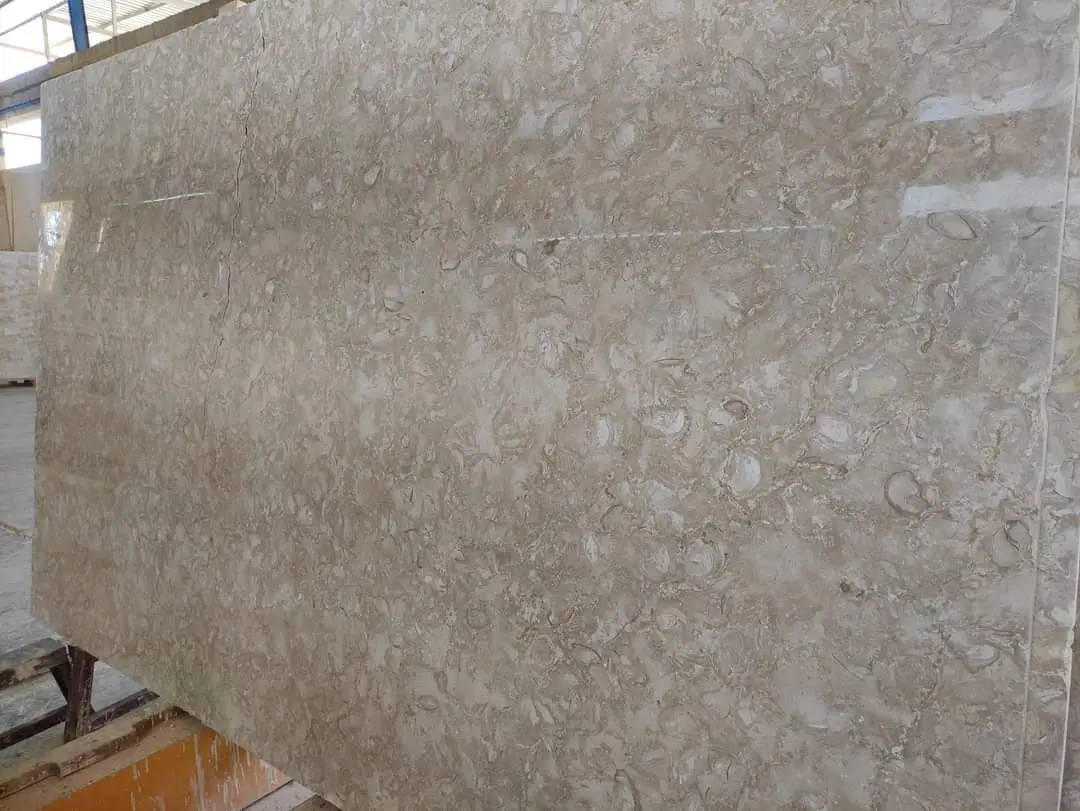
For Sedona protective design applications, you would face the additional requirement of aesthetic compatibility with stringent local design guidelines that govern material color and texture. Your blast resistant stone facades Arizona specification would need to incorporate earth-tone limestone or sandstone that meets both federal requirements for explosive resistance and city requirements for visual harmony with the natural red rock landscape. This constraint typically requires you to specify slightly thicker panels (3.0-3.5 inches versus 2.5-3.0 inches) because the sandstones that match Sedona’s aesthetic guidelines have lower flexural strength (1,400-1,600 PSI) than denser limestones (1,800-2,200 PSI). The increased thickness compensates for reduced material strength while maintaining required blast performance. You would also need to address the tourist environment’s security challenges — high pedestrian traffic near facilities requires protective design that prevents vehicle approach while maintaining welcoming public space aesthetics that Sedona’s tourism economy demands.
Peoria Metro Phoenix Security
Peoria installations in the northwest Phoenix metropolitan area would require your specification to address extreme thermal conditions and urban security threats typical of growing suburban federal facilities. Summer surface temperatures on south and west facades regularly exceed 175°F, creating thermal stress that reduces effective blast capacity 10-12% compared to laboratory testing conditions. Your protective design specification would need to incorporate thermal management through either light-colored stone selection (reflectivity 55-65%) or facade shading strategies that limit peak surface temperatures to 155°F maximum. The expansive clay soils common in Peoria create foundation movement concerns that affect facade backup structure stability — you would need to verify that structural engineers have designed the backup system with sufficient flexibility to accommodate 0.5-0.75 inch seasonal foundation movement without overloading facade anchors. At Citadel Stone, we maintain warehouse inventory near Phoenix that reduces delivery lead times for Peoria projects and allows for phased material delivery coordinated with installation sequences that optimize labor efficiency during temperature-limited work windows.
Regulatory Compliance and Documentation Requirements
Your specification package for blast resistant stone facades Arizona government projects must address comprehensive documentation requirements that go far beyond standard architectural submittals. Federal requirements under the Interagency Security Committee standards and UFC 4-010-01 mandate detailed performance verification, material certifications, testing documentation, and as-built records that become part of the facility’s permanent security infrastructure documentation.
When you prepare compliance documentation, you need to provide complete material property data verified through independent testing laboratories. Product literature and manufacturer representations don’t satisfy federal requirements — you must submit certified test reports for compressive strength, flexural strength, water absorption, freeze-thaw durability (for applicable climates), and thermal expansion coefficients. These tests must be performed on samples from the actual material lot being supplied to the project, not generic product testing from years past.
The blast performance verification documentation represents the most critical compliance element. You must provide either test reports from blast testing of the specific facade configuration being installed, or engineering analysis reports prepared by qualified blast engineers using validated finite element analysis methods. These reports must address the specific threat level defined for the project and demonstrate that the proposed facade system will meet performance criteria for that threat. Generic blast ratings or testing of similar systems don’t satisfy this requirement — the documentation must be project-specific.
- You need to submit material test reports certified by ASTM-compliant laboratories within 60 days of project award
- Your blast performance documentation must be sealed by professional engineers licensed in structural and protective design specialties
- Installation quality control records require daily inspector reports, anchor testing documentation, and photographic records of all concealed conditions
- You should prepare as-built drawings that document actual anchor locations, panel thickness variations, and any field modifications to approved details
Coordination With Specialized Trades
Installing blast resistant stone facades Arizona projects requires coordination with specialized trades beyond the scope of standard facade construction. Your specification must address how stone installation integrates with blast-resistant glazing systems, reinforced concrete or structural steel backup structures, building hardening contractors, and security systems installers. The sequencing and interface details between these trades often determine whether the completed facade performs as designed or creates vulnerabilities that compromise protective design.
When you coordinate with glazing contractors installing blast-resistant windows, you face interface conditions where stone facade meets window frames. These transitions represent potential weak points where differential blast response between stone and glazing systems can create separation, flying debris, or progressive failure. Your detailing must ensure that both systems can undergo their design displacement without impacting each other or creating gaps that allow blast pressure to penetrate the building envelope.
The backup structure installation typically occurs before stone facade work begins, but you need verification that the backup system has been constructed to specification before proceeding with stone installation. Your quality control protocol should include inspection of anchor embedment locations, verification of concrete strength or structural steel connection capacity, and confirmation that all specified reinforcement is in place. Installing a blast-resistant stone facade to a backup structure that wasn’t built to protective design standards creates a false sense of security — the facade may perform adequately, but if the backup structure fails, the entire protective design is compromised.
- You should require coordination drawings that show all trade interfaces at 1.5-inch scale minimum for detailed verification
- Your installation sequence must allow structural backup system to cure or stabilize fully before stone installation begins to prevent movement during facade construction
- Coordination with security systems installers requires maintaining continuous intrusion detection coverage even as facade construction progresses
- You need to schedule truck deliveries of stone materials outside security perimeter inspection hours to avoid conflicts with ongoing facility operations
Emerging Technologies and Future Considerations
The field of protective design continues to evolve, and you should be aware of emerging technologies that may affect how blast resistant stone facades Arizona installations are specified in coming years. Advanced materials, improved testing methods, and refined analytical techniques are changing what’s possible in facade blast protection and creating opportunities for more efficient, cost-effective designs that maintain or improve safety performance.
Fiber-reinforced stone represents one emerging technology where thin layers of composite materials bonded to stone backs provide enhanced blast resistance without increasing thickness. These systems use aramid, carbon fiber, or ultra-high-molecular-weight polyethylene fabrics that prevent stone fragmentation during blast events. The reinforcement doesn’t increase the stone’s flexural strength significantly, but it contains fracture propagation and keeps damaged stone panels substantially intact rather than generating projectiles. You’re seeing these systems specified increasingly for retrofit applications where adding facade thickness isn’t feasible due to existing building geometry constraints.
Advanced computational modeling continues to improve blast prediction accuracy and may eventually reduce the need for expensive physical testing of every facade configuration. Machine learning algorithms trained on extensive blast test databases can now predict facade response with accuracy within 8-10% of test results for many configurations. As these models gain acceptance from regulatory authorities, you may be able to specify innovative facade designs with confidence in their protective design performance based on validated analysis rather than project-specific testing. This could reduce project costs by $60,000-$150,000 while maintaining safety engineering standards.
- You should monitor developments in structural health monitoring systems that use embedded sensors to track facade condition and detect degradation before it compromises blast resistance
- Emerging hybrid systems that combine stone with metal panels or precast concrete may offer cost advantages of 25-35% while maintaining comparable blast performance
- Advanced sealant materials with shape memory properties could provide self-healing capabilities after blast events, maintaining building envelope integrity after damage occurs
- Your specification approach should incorporate flexibility for approved substitutions that employ emerging technologies validated through appropriate testing protocols
Final Implementation Strategies
Successfully delivering blast resistant stone facades Arizona government projects requires you to integrate all the technical requirements, coordination challenges, quality control protocols, and documentation demands into a coherent specification and execution strategy. The complexity of these projects means that even small oversights in specification language, contractor qualification, or inspection procedures can create vulnerabilities that compromise the protective design intent long before any blast event reveals the deficiency.
Your procurement strategy should recognize that blast-resistant facade work requires contractors with specialized experience and capabilities beyond standard facade installation. The number of qualified contractors with documented blast facade experience is limited, and you’ll likely need to prequalify bidders based on previous performance on similar security projects. This may reduce competition and increase pricing, but attempting to execute protective design work with contractors lacking appropriate experience creates unacceptable risk of installation errors that compromise safety engineering.
The project timeline for blast resistant stone facades Arizona installations extends substantially beyond standard facade work due to testing requirements, material procurement lead times for specialized anchor hardware, and more intensive quality control inspection. You should plan 18-28 weeks from design completion to substantial completion, compared to 12-16 weeks for comparable standard facades. When you develop project schedules, account for potential testing delays if initial blast verification tests don’t meet performance criteria and require design modifications and retesting. For additional protective design considerations, review Lightning protection systems for stone buildings in arid climates before you finalize your comprehensive facility protection specifications. Seismic zones specify Citadel Stone’s earthquake-rated stone masonry products in Arizona engineered systems.