
Surface texture in black natural limestone texture Litchfield Park installations is rarely the afterthought it gets treated as — it’s the single specification variable that determines whether your project passes a liability inspection ten years from now or creates a slip-and-fall hazard the first wet season. Most specifiers get the material right and then undersell the finish selection, assuming all honed or flamed surfaces behave the same across foot traffic patterns. They don’t, and the difference shows up in measurable coefficient of friction readings that range from 0.42 to 0.78 depending on how the surface was processed at the quarry and how it’s been maintained since installation.
Why Surface Texture Matters More in Arizona Than Anywhere Else
Arizona’s thermal environment puts every surface finish through a stress cycle that few other climates replicate. Black limestone absorbs significantly more solar radiation than lighter materials — surface temperatures on unshaded dark stone in Litchfield Park can reach 155°F to 165°F between 1 PM and 4 PM in July. That heat creates two simultaneous challenges: thermal expansion at the joint level and surface moisture evaporation that strips away any residual traction benefit from early-morning humidity.
You’ll want to evaluate your finish selection against both static and dynamic friction requirements. The Americans with Disabilities Act references a minimum dynamic coefficient of friction (DCOF) of 0.42 for level interior surfaces, but for outdoor Arizona applications exposed to pool splash, irrigation overspray, or monsoon runoff, a DCOF above 0.60 is a more defensible specification. Flamed black limestone surfaces typically test between 0.65 and 0.72 fresh from processing — a figure that shifts downward to roughly 0.58 to 0.63 after two years of foot traffic without resealing.
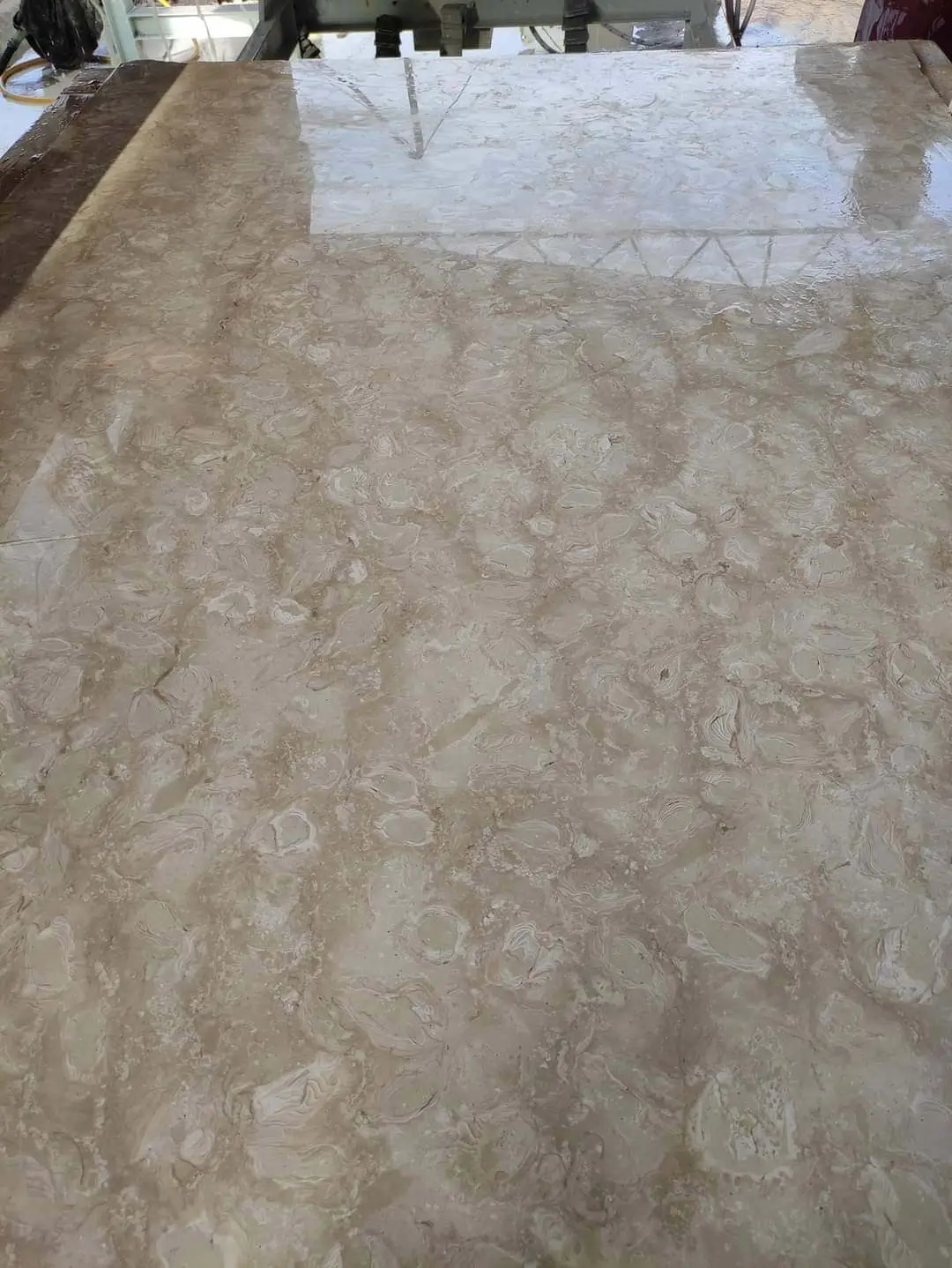
Texture Finish Options for Black Natural Limestone Texture Litchfield Park Projects
The finish you select for black natural limestone texture Litchfield Park outdoor applications isn’t just aesthetic — it’s a structural safety decision with long-term maintenance consequences. Four finishes dominate Arizona specifications, and each performs differently once the monsoon season arrives.
- Flamed finish: Achieved by rapid high-heat torch application that causes the surface crystals to burst and roughen; delivers the highest initial DCOF and maintains texture even as the surface weathers; the preferred choice for pool surrounds and entry approaches
- Bush-hammered finish: Mechanical texturing that creates a uniform pitted surface; DCOF ranges from 0.60 to 0.68; excellent for commercial walkways where maintenance access is limited
- Brushed or sandblasted finish: Softer texture than flamed; DCOF typically 0.52 to 0.62; appropriate for covered patios and interior-adjacent transitions where barefoot traffic is common
- Honed finish: The smoothest option, with DCOF often falling between 0.40 and 0.50; suitable only for vertical cladding, interior applications, or shaded covered areas with no slip exposure
For pool decks and outdoor entertaining areas in Litchfield Park, the flamed finish on black natural limestone paving is the specification that holds up across seasonal temperature extremes. The flamework also opens the surface pore structure slightly, which improves drainage and reduces standing water time — a detail that matters enormously in monsoon conditions where water can sheet across a patio in minutes.
Litchfield Park Surface Grip Performance Under Wet Conditions
Litchfield Park surface grip requirements are shaped by the region’s dual climate reality: extended dry periods followed by intense short-duration rain events. Stone surfaces that read as perfectly adequate in dry conditions can become genuinely hazardous within 90 seconds of rainfall onset, particularly if the surface has accumulated dust, pollen, or fine particulate matter — which in this part of the West Valley happens constantly from haboob activity alone.
Testing shows that uncoated black limestone with a flamed finish retains a DCOF above 0.55 in wet conditions, while a sealed honed surface can drop below 0.38 in the same conditions. That gap represents the difference between a compliant surface and a liability exposure. Your specification should explicitly call out the finish type, the sealer type (penetrating vs. topical), and the re-application schedule — typically every 24 to 36 months depending on foot traffic volume.
- Penetrating sealers preserve the natural surface texture and maintain DCOF values within 0.03 to 0.05 of unsealed readings
- Topical film-forming sealers can reduce DCOF by 0.10 to 0.18 and should not be used on any horizontal surface with slip exposure
- Anti-slip additive sealers are an option for retrofit situations where an existing honed surface needs traction improvement without full resurfacing
- Annual cleaning with a pH-neutral cleaner prevents biofilm accumulation that can reduce friction values by up to 35% on any surface type
Thermal Expansion and Joint Spacing for Black Limestone in Arizona
Black limestone’s thermal expansion coefficient runs approximately 4.8 to 5.6 × 10⁻⁶ per °F. In Litchfield Park’s climate, where the delta between a January night at 38°F and a July afternoon at 118°F represents an 80-degree operational swing, that coefficient translates to meaningful cumulative movement across a large installation. A 20-foot run of limestone will expand and contract roughly 0.10 to 0.12 inches through a full seasonal cycle — not dramatic on its own, but critical when multiplied across dozens of field joints.
The joint spacing guidance most installation crews follow — 1/8-inch joints on 16-inch-square pavers — was developed for mild-climate applications and doesn’t transfer cleanly to Arizona. Your specification should call for 3/16-inch minimum joints on any exterior installation, expanding to 1/4 inch where the installation abuts a fixed structure like a wall footing or pool bond beam. Polymeric sand rated for high-heat applications (those tested above 140°F) is non-negotiable here — standard polymeric sand formulations soften and lose joint integrity at the surface temperatures these installations regularly reach.
Base Preparation Requirements for Arizona Soil Conditions
Your base preparation standard for black natural limestone paving in Arizona needs to account for the expansive soil profiles common across the West Valley. Litchfield Park sits on alluvial deposits that include clay-bearing strata at varying depths — typically encountered between 18 and 36 inches below grade. These clays respond to moisture uptake from irrigation systems, and a single drip irrigation line running beneath a paved area can introduce enough moisture cycling to cause differential settlement across your installation over a three- to five-year period.
In Avondale, clay-bearing subgrades have been documented causing 0.5 to 1.5 inches of differential settlement in poorly prepared stone installations within just 18 months — a failure mode that is entirely avoidable with a proper 6-inch compacted Class II aggregate base topped with a 1-inch crushed granite setting bed. Geotextile fabric at the subgrade interface is worth specifying whenever your site investigation reveals moisture-sensitive soils within 30 inches of finish grade.
- Minimum 6-inch compacted aggregate base for pedestrian applications; 8 inches for vehicular or mixed-use areas
- Compaction to 95% Modified Proctor density — verified by field testing, not assumed
- 1-inch crushed granite setting bed (not sand) for superior drainage and stability in high-heat conditions
- Geotextile separation layer where expansive soils are present within 30 inches of finish grade
- Positive 1.5% minimum slope away from structures for drainage — increase to 2% in high-runoff zones
Black Limestone Natural Traction in Arizona’s Outdoor Environments
Black limestone natural traction Arizona projects depend on is not a fixed property — it’s a dynamic condition that changes with surface temperature, dust accumulation, moisture film thickness, and finish degradation over time. Understanding this helps you write a maintenance specification that actually protects the installation’s safety performance, rather than just its visual appearance.
For pool deck applications, barefoot traction is the governing condition. Wet-foot DCOF testing per ANSI A137.1 uses a specific measurement protocol that simulates foot traffic under wet conditions, and any horizontal surface near water should meet a minimum DCOF of 0.42 under that standard. Flamed black limestone consistently exceeds this threshold when properly maintained, but the critical variable is resealing timing. A surface that was DCOF 0.67 at installation can fall below 0.42 after four years without maintenance — a fact worth documenting in your project handoff package so the property owner understands their ongoing responsibility.
For commercial projects in San Tan Valley, municipal and HOA specifications increasingly require documented DCOF testing at installation and at two-year intervals — a trend worth noting when you’re advising clients on long-term maintenance budgets. At Citadel Stone, we recommend building that re-testing cost into the initial project budget conversation so clients aren’t surprised when the first maintenance cycle arrives.
Thickness Selection and Load Capacity for Residential and Commercial Use
Thickness selection for black natural limestone texture Litchfield Park applications comes down to understanding your point load conditions before you write the specification. Residential pedestrian applications can be served adequately by 3/4-inch to 1-inch nominal stone, but that range has almost no tolerance for error in base preparation or for point loads from furniture legs, planters, or equipment. Moving to 1.25-inch nominal — a modest cost increase — nearly doubles the flexural strength and removes most of the breakage risk from normal residential use.
Commercial applications, driveway approaches, and any surface exposed to vehicular tire loads should be specified at 1.5-inch minimum, and 2-inch nominal where truck access is possible. Delivery trucks, pool service vehicles, and landscape equipment regularly access residential rear yards in Litchfield Park communities, and a 3/4-inch stone that handles foot traffic perfectly will fracture under a 4,000-pound vehicle load on an inadequately supported section. Your specification should explicitly exclude vehicular loading if you’re specifying thinner stone, or upgrade the thickness if exclusion isn’t practical.
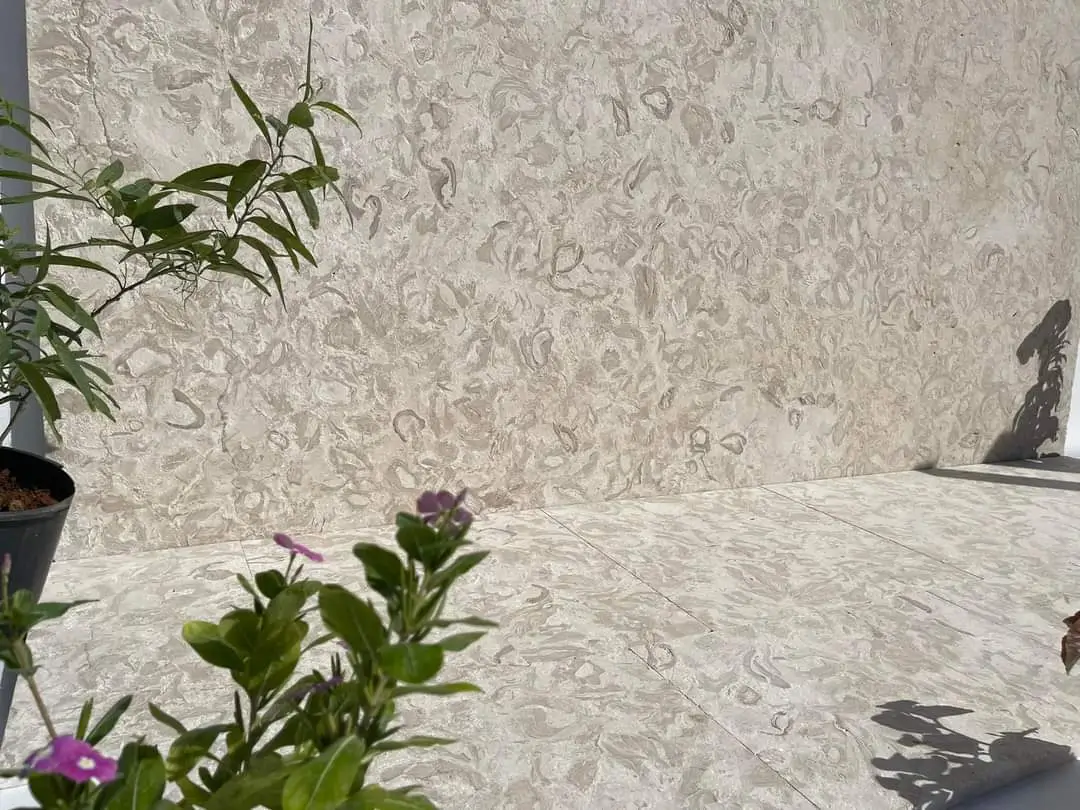
Textured Safety Specifications and Arizona Secure Surfaces Compliance Standards
Textured safety requirements for outdoor surfaces in Arizona commercial projects reference ANSI A137.1, ADA Standards for Accessible Design, and increasingly, local municipal amendments that expand slip-resistance requirements to residential common areas. For projects in planned communities — which describes most of Litchfield Park’s residential development — HOA design guidelines often layer additional requirements on top of code minimums. You should request the community’s design standards package before finalizing your finish specification, not after.
The interaction between Arizona secure surfaces requirements and black limestone’s natural performance characteristics is genuinely favorable when the right finish is selected. Flamed and bush-hammered finishes on black limestone meet or exceed the DCOF thresholds referenced in all current Arizona secure surfaces standards, without requiring aftermarket anti-slip coatings that add maintenance complexity and can alter the material’s visual character. That’s a specification advantage worth communicating clearly to clients who default to assuming natural stone requires compromise on safety.
- ANSI A137.1 DCOF minimum 0.42 for level wet locations — flamed black limestone typically tests 0.65 to 0.72
- ADA accessible routes require firm, stable, slip-resistant surfaces — black limestone with flamed or bush-hammered finish satisfies all three criteria
- Pool deck regulations in Arizona municipalities typically reference a separate slip-resistance standard; verify the specific standard with your AHJ before finalizing specifications
- Annual inspection documentation is recommended for any commercial installation where slip liability is a concern
Ordering, Warehouse Stock, and Project Lead Times
Logistics planning for black natural limestone paving in Arizona projects is where many contractors lose schedule ground unnecessarily. Imported black limestone — which includes most of the premium-grade material used in high-end Litchfield Park projects — has typical lead times of six to eight weeks from overseas quarry to job site when ordered through standard import channels. Planning around that timeline is essential for any project with a fixed completion date.
Citadel Stone maintains warehouse inventory in Arizona, which can reduce your effective lead time to one to two weeks for stocked items. It’s worth verifying current warehouse stock levels before you commit your client to an installation timeline — finish and thickness combinations sell through quickly during the spring building season, and a single truck delivery that arrives two weeks late can push a project completion by four to six weeks once installer scheduling is factored in. For projects in Yuma and other western Arizona markets where contractor availability is tighter, that schedule compression can be genuinely costly.
You can review our limestone black natural paving options to confirm current availability and thickness ranges before committing to a project specification — it saves a revision cycle when you know what’s actually in stock versus what needs to be ordered.
Getting Black Natural Limestone Texture Litchfield Park Specifications Right
Treating surface finish, joint geometry, and base preparation as a single integrated system — rather than three independent decisions — is what separates a durable black natural limestone texture Litchfield Park installation from one that shows distress after year five. The finish you specify determines safety performance. The joint spacing determines how the installation handles Arizona’s thermal extremes. The base preparation determines whether both of those decisions hold up over a 20-year service life.
Your maintenance specification is as important as your installation specification — document the sealer type, re-application interval, and DCOF re-testing schedule in the project closeout package so the property owner has a clear roadmap. Projects that include that documentation perform measurably better over time because the maintenance actually happens. If your project scope extends beyond this application, Natural Black Limestone Paving Organic Integration for Carefree Landscapes covers how black limestone performs in naturalistic landscape settings across Arizona — a useful reference point for projects where the design intent blends hardscape and planted areas. We offer budget-friendly cheap black limestone paving in Arizona.