
Black limestone water features in Mesa deliver something most desert water installations fail to achieve — visual depth that compounds with the reflective quality of water rather than competing with it. The material’s dense crystalline structure, with compressive strength typically exceeding 15,000 PSI, means it handles the constant wet-dry cycling that destroys softer stones within five to seven years. What separates a lasting installation from a costly replacement isn’t the stone choice alone — it’s understanding how thermal mass, surface porosity, and hydraulic pressure interact across Mesa’s climate extremes.
Why Black Limestone Performs in Water Feature Surrounds
The material’s performance in aquatic environments comes down to its absorption coefficient. Quality black limestone sourced from dense-bedded formations runs between 0.3% and 0.8% water absorption by weight — low enough to resist the freeze-thaw damage that degrades more porous alternatives, yet porous enough to maintain a natural surface texture that reads as stone rather than polished slab. You’ll notice this texture distinction most around fountain surrounds where barefoot traffic is common.
Field performance data on black limestone water features across Arizona climates shows that honed finishes at 400-grit produce a slip resistance rating (DCOF Acutest) above 0.42 when wet — the threshold most commercial specifications require. A flamed finish pushes that number above 0.55, which gives you a meaningful safety margin for splash zones where surface saturation is continuous. These aren’t interchangeable choices — your finish selection should follow your splash geometry, not your aesthetic preference alone.
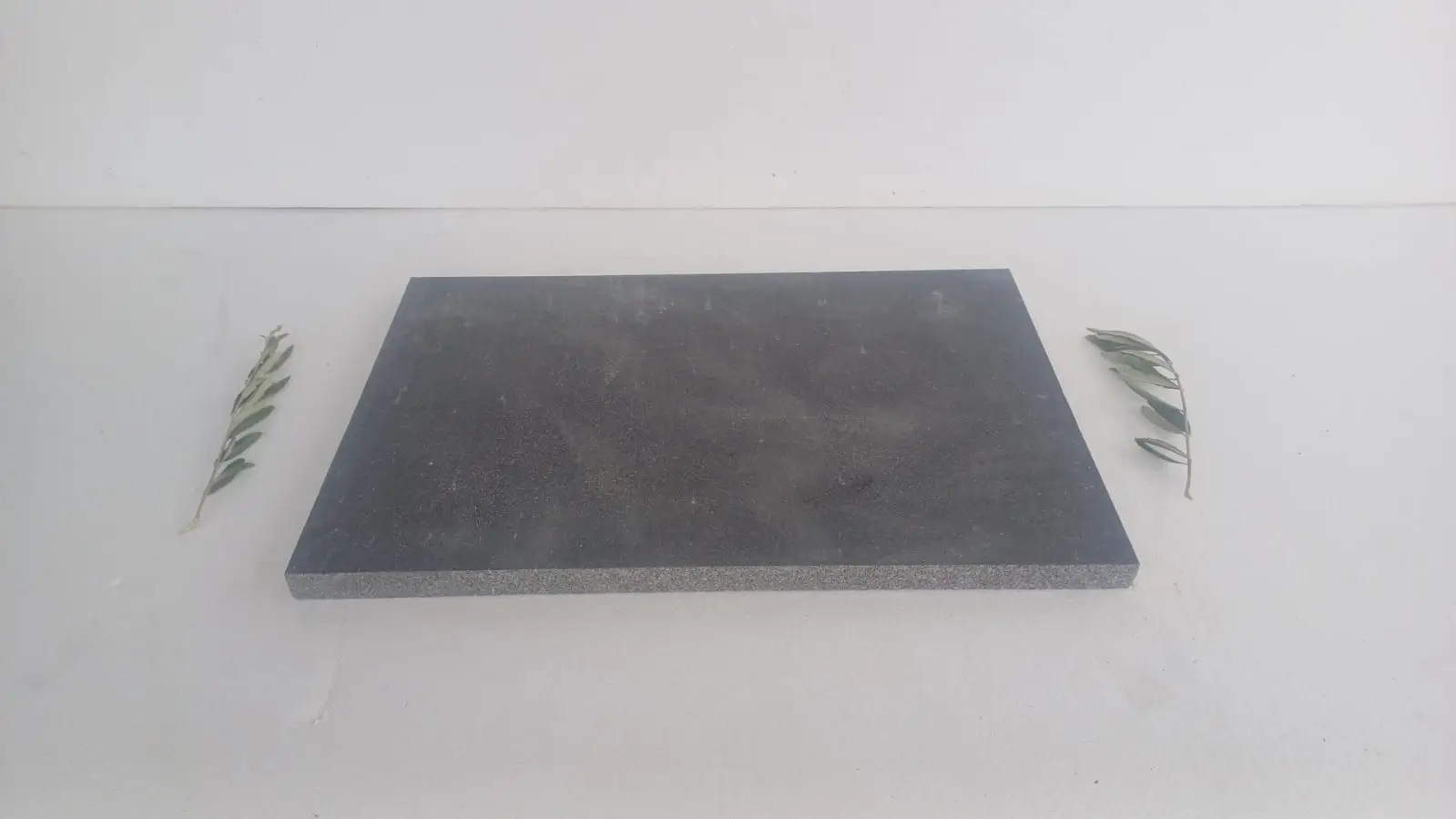
Design Approaches for Mesa Water Feature Surrounds
The surround geometry matters as much as the stone itself. You have four primary surround configurations to consider for residential and commercial water feature design, and each one creates a distinct experiential quality in Arizona’s high-contrast light environment.
- Flush-to-grade surrounds, where the black limestone meets the water surface at the same plane, create mirror-like continuity — especially effective at dusk when reflected sky coloring merges with the stone’s near-black tone
- Raised coping surrounds with a 2-to-3-inch overhang create depth shadow lines that intensify the visual weight of the water element and provide a natural edge for seated use
- Cascading tier surrounds, using stepped black limestone ledger panels at 4-inch vertical increments, allow water to sheet across the stone face — a configuration that maximizes acoustic output while keeping the stone continuously wet, which actually stabilizes its surface temperature
- Dry-edge surrounds with a gravel or decomposed granite transition buffer between the stone and planted areas — the preferred approach for black paving aquatic elements in Mesa residential settings where irrigation overspray can compromise joint stability
Your water feature design should account for evaporation rates before finalizing surround width. In Mesa’s low humidity and high-temperature months, an uncovered fountain can lose 1.5 to 2 inches of water per week, which means the surround stone experiences repeated wet-dry cycling concentrated at the water line. Specifying a 3-inch-wide wet band of flamed finish at that interface, transitioning to honed field stone beyond it, is a detail that protects the installation and looks intentional.
Material Selection Criteria for Aquatic Environments
Not all black limestone performs the same way in permanent wet environments. The distinctions that matter most involve density, iron content, and vein structure — three variables that won’t appear on a basic product spec sheet but will show up in your installation within three to five years.
- Density above 160 lbs/cubic foot ensures the stone resists subsurface moisture migration, which is the primary driver of spalling in aquatic surround applications
- Low iron content (below 2% by composition) prevents the orange-rust staining that appears at water line contact zones on iron-rich black stones — a common complaint on projects that specified general-category black limestone without verifying mineral composition
- Consistent vein orientation in the slab means predictable behavior under thermal cycling — stone with irregular vein patterns can develop stress fractures along those lines when temperature differentials exceed 40°F, which happens routinely on Arizona mornings from November through February
- Thickness matters differently for water features than for standard paving — 1.25-inch nominal thickness is the minimum for cantilevered coping, while 0.75-inch is acceptable for surround field areas with continuous mortar bed support
At Citadel Stone, we evaluate black limestone stock at the warehouse level for each of these criteria before it ships. The difference between a compliant slab and a problem slab isn’t always visible at the surface — you need to examine the cut face and test absorption before committing to a full project quantity. Our technical team advises customers to request sample cuts rather than surface chips for any water feature application, because the cut face reveals the vein structure and density that surface inspection misses.
Installation Specifics That Determine Longevity
The installation variables for black limestone water feature surrounds differ meaningfully from standard paving specs. Mortar composition, joint width, and slope gradient all require adjustment for the continuous moisture environment.
Your mortar bed should use a Type S mix or a polymer-modified thinset with a minimum bond strength of 400 PSI. Standard Type N mortar is too porous for permanent wet conditions — moisture migrates through it and undermines the bond at the stone interface within two to three wet seasons. You’ll also want to back-butter each slab fully, achieving 95% coverage rather than the 80% minimum that passes for dry paving applications.
- Joint width for water feature surrounds should hold at 3/16 inch minimum — tighter than this and you lose the expansion accommodation that prevents edge chipping as the stone cycles through thermal expansion
- Slope at 1/8 inch per foot minimum toward a drain or away from the water feature basin prevents standing water on the surround surface, which is the primary cause of efflorescence and biological growth on black stone
- Epoxy grout performs better than cement-based grout in wet-zone applications — it resists staining, doesn’t absorb moisture, and maintains color consistency against the black stone background
- Expansion joints every 10 to 12 feet (not the standard 15 to 20 feet recommended for dry paving) account for the additional thermal stress from the temperature contrast between continuously wet and dry stone zones
For projects in Gilbert, where soil expansion from montmorillonite clay is particularly pronounced in lower-lying areas, you’ll want to extend your compacted aggregate base to a minimum of 6 inches and consider a geotextile separation layer before the base course. Clay movement under a water feature surround is amplified by irrigation proximity — the clay absorbs and releases moisture unevenly, which translates directly into slab movement if your base isn’t thick enough to bridge it.
Your specification for black limestone water features in Mesa should reference obsidian black limestone materials for sourcing guidance on density-verified, low-iron stone suitable for permanent aquatic contact zones.
Sealing Protocols for Wet-Environment Black Limestone
Sealing protocols for black limestone in water feature surrounds differ from standard paving maintenance because the sealant must handle continuous lateral moisture pressure rather than intermittent rain exposure. A penetrating silane-siloxane sealer at 5% to 7% concentration is the correct starting point — it bonds with the silica matrix of the stone rather than forming a surface film that moisture can undermine from below.
Apply sealer to bone-dry stone only. This sounds obvious, but in practice it’s the most commonly skipped step on water feature installations where the contractor completes the masonry work and wants to seal before the client walk-through without allowing adequate dry time. Stone adjacent to a filled basin needs a minimum of 72 hours of dry conditions before sealer application — and in Mesa’s summer months when ambient humidity drops below 15%, that window is comfortable. In the cooler winter months with higher relative humidity, extend that to 96 hours to ensure the substrate moisture content is below 4%.
- First sealer application within 30 days of installation completion, then annually for the first three years
- Transition to biennial applications after year three if surface sheen and water beading remain consistent
- Water-line zones (the bottom 2 inches of coping stone above the water surface) should receive a separate epoxy-based sealer application annually regardless of the broader maintenance schedule — this zone experiences the highest stress concentration
- Test sealer compatibility on a sample piece before full application — some black limestone formulations react with amine-based epoxy sealers to produce a temporary gray haze that resolves in 30 days but alarms clients unnecessarily
Arizona Climate Performance Across Seasons
The thermal performance of black limestone water features in Arizona is a two-season story with distinct characteristics. During summer months when ambient air temperatures reach 110°F-plus, the continuously wetted stone surface runs 25 to 35°F cooler than adjacent dry paving — a measurable comfort benefit in the microclimate immediately around the water feature. This temperature differential is large enough to affect how you orient seating areas relative to the installation.
The detail that matters most in winter is the morning temperature spike. In December and January, Mesa nights drop to 40-45°F, and the stone cools accordingly — but once direct sun hits the dark surface at sunrise, it absorbs radiant energy rapidly. Surface temperature on black limestone can rise 30°F in the first 90 minutes after sunrise. That thermal velocity creates a stress differential between the sun-exposed surface and the cooler underside, which is why expansion joint specification for water features requires tighter spacing than standard desert paving.
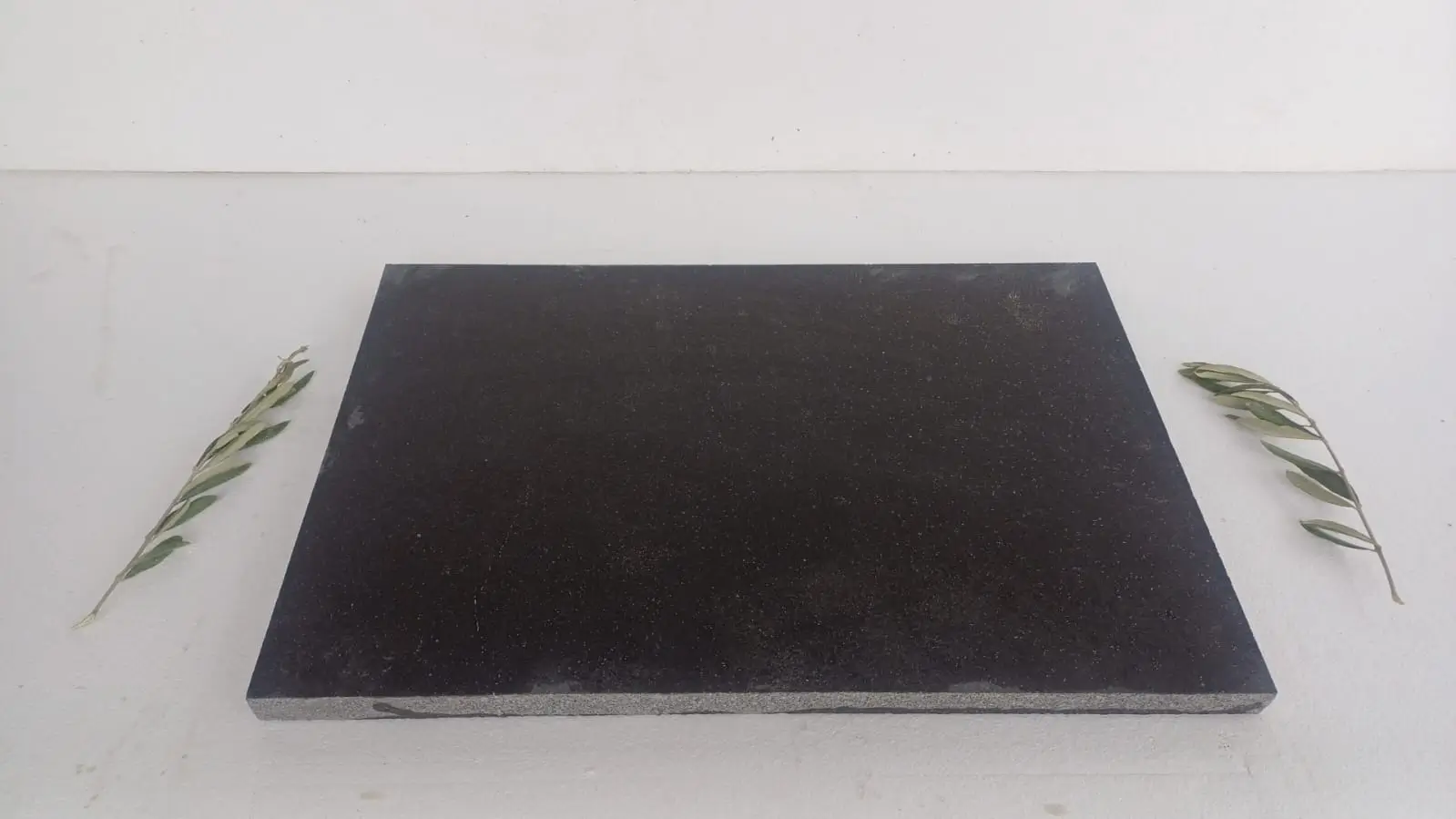
- Thermal expansion coefficient for quality black limestone runs approximately 4.5 to 5.0 × 10⁻⁶ per °F — lower than concrete at 6.0, which means the stone moves less but still moves
- In Arizona’s monsoon season, rapid temperature drops from convective storms can create a 20 to 25°F surface temperature change in under 10 minutes — a thermal shock scenario your jointing system must accommodate
- Black limestone water features in exposed western or southwestern orientations accumulate more thermal stress than shaded north-facing installations — factor orientation into your expansion joint frequency
Water Feature Design for Arizona Peaceful Spaces
The acoustic and visual qualities that make black limestone water features so effective in Arizona peaceful spaces come from the material’s interaction with moving water. A honed black limestone surface creates a near-mirror reflection when the water is still, and a diffuse, texture-catching depth when water is in motion. These qualities shift through the day as sun angle changes — a design characteristic you can use deliberately by orienting the feature toward the afternoon light direction for maximum visual drama during outdoor living hours.
Consider the role of scale in achieving genuine tranquility. Oversized water features with large limestone surround areas create sensory presence that some settings call for — hotel courtyards, large residential estates — but for the typical Mesa backyard, a compact fountain surround with 18 to 24 inches of black limestone coping on each side concentrates the visual and acoustic experience rather than dispersing it. The stone’s color depth makes a modest feature read as substantial in a way that lighter material cannot. Mesa fountain surrounds benefit particularly from this compact, high-impact approach when space is at a premium.
- Mesa fountain surrounds in 12-by-12-inch tile format create a geometric formality that suits contemporary architecture and allows precise alignment with pool coping or patio boundaries
- Larger format slabs — 24 by 24 inches or 24 by 48 inches — reduce joint lines and create a more monolithic appearance around the water element, particularly effective for reflection pools
- Irregular edge profiles on black limestone coping, achieved through hand-tooling rather than machine cutting, introduce an organic quality that contrasts productively with the precise geometry of rectilinear fountain basins
Projects in Yuma contend with some of the most intense UV exposure in the continental United States, and the advice for water feature surrounds there is consistent — black limestone’s dark tone doesn’t fade or chalk under UV stress the way pigmented concrete does. The color stability comes from the mineral composition rather than applied color, which means you’re not fighting a maintenance battle to preserve the aesthetic over time. This same durability makes black paving aquatic elements in Arizona a sound long-term investment across the region’s most demanding climates.
Planning, Supply, and Project Logistics
Ordering black limestone for water feature surrounds requires more lead time consideration than standard paving projects because the material specifications are tighter. You need density-verified, low-iron stone in consistent thickness — and that combination isn’t always available in general-inventory quantities at short notice.
Citadel Stone maintains warehouse inventory of black limestone paving in Arizona, which typically compresses your procurement timeline to one to two weeks versus the six to eight week import cycle for special-order stone. That warehouse inventory depth means you can specify with confidence rather than ordering excess material to buffer against supply gaps. For water feature surround projects, order 12 to 15% above your calculated coverage area — the additional allowance covers cut waste at curved basin edges, which runs higher than straight-edge paving cuts.
- Verify truck access to your delivery site before finalizing order logistics — black limestone in 24-inch-plus formats typically ships on standard pallets that require a flat truck approach without sharp turns, which some residential properties with curved driveways cannot accommodate
- Request thickness-sorted pallets when possible — slabs within 1/16-inch tolerance of your specified thickness install more cleanly and produce flatter finished surfaces than mixed-tolerance material
- Plan your installation sequence so the delivery arrives within two days of your installation start date — storing black limestone outdoors on a job site without pallet cover exposes it to dust and hard water spotting that requires additional cleaning before installation
Beyond the water feature itself, Arizona properties often incorporate complementary evening lighting that transforms these installations after dark. For a different but related dimension of black limestone specification, Black Limestone Paving Lighting Integration for Scottsdale Evenings covers how lighting geometry interacts with the stone’s surface finish to extend the experiential quality of these features well beyond daylight hours.
Your Action Plan
Black limestone water features in Mesa succeed when the specification decisions upstream of installation are precise — material density, finish selection, mortar composition, expansion joint frequency, and sealing protocol each contribute to a performance outcome that either holds for 20-plus years or degrades within five. The design decisions covered here aren’t sequential steps so much as an interconnected specification matrix where each choice constrains and informs the others. Your finish selection affects your sealing protocol; your surround width affects your thermal stress pattern; your basin orientation affects how the stone reads through the day.
Start your specification with the material quality threshold — density above 160 lbs/cubic foot, water absorption below 0.8%, low iron content — and work outward from there through finish, joint geometry, and sealer selection. That sequence keeps you from making aesthetic decisions that create performance liabilities. For black limestone paving in Arizona water feature applications, the technical fundamentals and the design quality you want are not in tension — they reinforce each other when specified in the right order. Citadel Stone has the largest slabs of black limestone slabs in Arizona.