
Doing a thorough black limestone supplier comparison Scottsdale buyers can actually rely on means looking beyond sample photos and price sheets — the variables that determine long-term satisfaction live in lead times, batch consistency, and how a supplier handles a short-delivery call two days before your pour date. Most procurement problems on Arizona projects don’t start at installation; they start during vendor selection, when buyers treat all suppliers as interchangeable because the stone looks similar in a catalog. It doesn’t work that way in the field, and the differences become expensive quickly.
What Scottsdale Buyers Actually Need From a Black Limestone Supplier
The demand profile for black limestone in Scottsdale is unusually specific. You’re typically working with large-format outdoor applications — pool surrounds, covered patios, driveway approaches — where surface temperature, slip resistance after wet feet, and color consistency across multiple pallets all matter simultaneously. A supplier who excels at small residential sample orders but struggles to hold batch color within acceptable delta-E tolerances across a 2,000-square-foot job is a liability, not a resource.
Your evaluation criteria should be structured before you make a single phone call. Suppliers respond differently depending on whether you come in asking sharp, specific questions or vague ones. The sharper your questions, the more you learn about operational competence from the first conversation.
- Batch consistency documentation — can they show you color variation tolerances between pallets from the same quarry run?
- Slab thickness tolerance — what’s their acceptable range, and do they measure it at the warehouse before shipping?
- Lead time commitments — are quoted lead times based on current warehouse stock or on inbound container scheduling?
- Minimum order quantities — does their MOQ align with your project scope, or will you be over-ordering to hit a threshold?
- Delivery logistics — do they handle truck dispatch directly, or do they broker freight to a third party?
A Scottsdale Vendor Evaluation Framework That Actually Works
Scottsdale vendor evaluation should operate on a tiered scoring model rather than a gut-feel comparison. Tier one covers non-negotiables: does the supplier stock the specific nominal thickness you need (typically 20mm or 30mm for exterior applications), and can they deliver to your Scottsdale job site within your project window? Suppliers who can’t clear tier one shouldn’t receive any further evaluation time.
Tier two digs into operational performance. Request references from contractors who’ve ordered multiple times — not one-time buyers. A supplier’s behavior on a second or third order tells you far more than how carefully they handled the first one. You’re looking for consistency, not performance under scrutiny.
- Ask for a delivery reliability percentage from their last 20 orders — delays beyond 72 hours of committed date should be flagged
- Request their return and replacement policy in writing before ordering, not after a problem occurs
- Clarify whether crating, pallet protection, and corner guards are standard or add-on costs for truck delivery
- Verify that their quoted price includes the same finish grade across all pallets — some suppliers mix honed and calibrated grades without disclosure
Projects in Scottsdale carry a specific aesthetic expectation — the architecture skews toward clean desert modernism where black limestone’s deep, flat tones work exceptionally well, but any color inconsistency between adjacent slabs reads harshly against minimalist design. Your supplier’s quality control process at the warehouse is what stands between a uniform installation and one that needs remediation.
Comparing Sources: What Actually Separates Black Paving Suppliers in Arizona
The black paving supplier selection Arizona landscape includes domestic distributors holding imported stock, regional brokers who order on-demand from coastal importers, and direct-import specialists with dedicated warehouse inventory. Each model has trade-offs that directly affect your project risk profile.
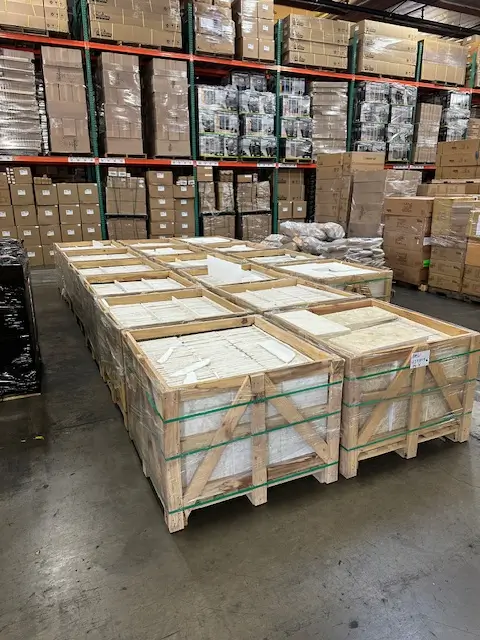
Domestic distributors with warehouse inventory offer the fastest lead times — typically 5 to 10 business days for standard orders — but their selection depth and ability to match a specific quarry origin are limited. If color consistency across a long-running project matters to you, confirm that they can commit to the same quarry source for reorders, not just the same product SKU.
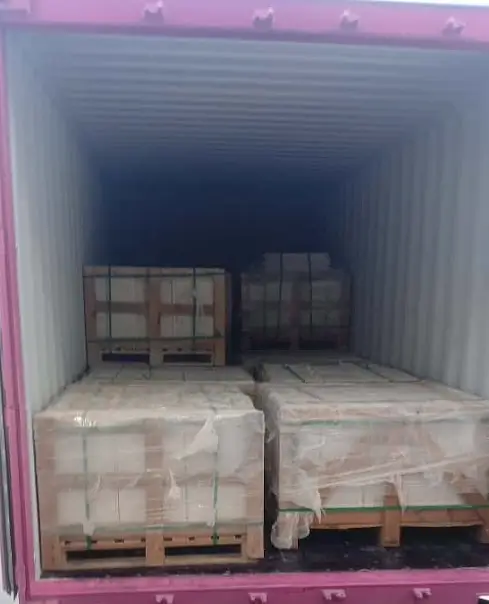
- Regional brokers typically quote 4 to 8 week lead times tied to container vessel schedules — plan accordingly if your project timeline is fixed
- Direct-import specialists often provide the deepest quarry-origin transparency but require larger volume commitments to access their best pricing tiers
- Arizona best suppliers in any category maintain buffer stock — ask specifically how many square feet of your material they have on hand today, not what’s on order
- Suppliers who can’t answer the current stock question immediately are almost certainly operating without warehouse inventory — they’re brokers in practice regardless of how they present themselves
At Citadel Stone, we maintain direct sourcing relationships that let us verify quarry-run batch data before material ships — that’s not something every supplier along the distribution chain can offer, and it matters when you’re matching to an existing installation or specifying across multiple project phases. For buyers running a careful black limestone supplier comparison Scottsdale procurement teams rely on, that quarry-origin transparency is a meaningful differentiator.
Technical Performance Criteria You Must Verify Before Ordering
The technical side of comparing sources doesn’t end at aesthetics. Black limestone’s thermal behavior in Arizona’s desert climate is worth understanding quantitatively before you commit to a supplier — because not all black limestone performs the same way under identical conditions, and the differences trace back to density, porosity, and surface finish.
Porosity directly controls absorption rate, which drives both sealing requirements and long-term stain resistance. Specify limestone with water absorption below 0.5% per ASTM C97 for outdoor Arizona applications. Above that threshold, you’re looking at a sealing schedule of every 18 to 24 months rather than every 36 months — a meaningful maintenance cost difference over a 20-year installation life.
- Compressive strength should exceed 12,000 PSI for driveway and heavy-use applications — request the test certificates, not just the spec sheet claim
- Slip resistance ratings matter especially for pool surrounds — verify DCOF (Dynamic Coefficient of Friction) values above 0.42 for wet conditions per ANSI A137.1
- Surface finish consistency across a pallet matters as much as the average value — ask for the finish tolerance range, not just the target specification
- Thermal expansion coefficients for dense black limestone typically run between 4.5 and 6.0 × 10⁻⁶ per °F — this drives your expansion joint spacing calculation, which should not be imported from a generic spec
For projects where you’re working with our natural black paving slabs, technical documentation is available at point of specification — not as an afterthought. That kind of documentation transparency is a reliable indicator of supplier competence across the board.
Delivery Logistics: What Arizona Projects Demand From Suppliers
Delivery logistics don’t get enough attention during the Scottsdale vendor evaluation process, and that oversight creates avoidable problems. Arizona’s summer heat creates a narrow installation window for exterior flatwork — once surface temperatures exceed 110°F, mortar and adhesive setting times compress significantly, which means material needs to be on-site and acclimated before conditions become difficult. A supplier who misses a delivery date by four days in June can functionally push your installation to the following season.
Your truck access conditions at the job site should be part of your supplier conversation from the start. Pallet weight for full-depth black limestone orders can run 3,000 to 4,500 pounds — a standard liftgate delivery truck needs a clear approach path and a hardened surface to set the pallet without it sinking. In residential neighborhoods where landscape grading is in progress, this is a real constraint.
- Confirm whether the supplier’s truck fleet includes boom delivery for sites without crane access or elevator access for multi-level projects
- Clarify the delivery window commitment — a 6-hour delivery window is operationally useless on a job site; 2 hours is the professional standard
- Understand the policy for damaged pallets discovered at delivery — you need photo documentation rights and a written replacement timeline before the truck leaves
- Ask whether partial pallet orders ship on the same truck schedule as full pallet orders — some warehouse operations batch small orders, adding 3 to 5 days
Price Comparison: Looking Beyond the Per-Square-Foot Number
The per-square-foot price is the number every buyer asks for first and the one that tells you the least about total project cost. Your actual delivered cost includes freight, crating, pallet return charges, waste factor adjustments, and the cost of remediation if the material doesn’t match your spec. A supplier quoting $8.50 per square foot with $400 in freight and no crating protection may land more expensive than a $9.25 quote that includes insured delivery and factory-verified batch matching.
Waste factor is where the math gets overlooked most often. Field cutting for irregular spaces and pattern layouts typically generates 8 to 15% waste. A supplier who quotes exactly your coverage area is setting you up for a short-delivery scenario on job day three. Always order to a 12% overage minimum, and verify the supplier’s return policy for surplus unopened pallets before you calculate your order quantity.
- Request itemized quotes — freight, material, and any handling surcharges broken out separately — so you can compare apples to apples across vendors
- Verify whether quoted pricing holds for 30 days or changes with container pricing fluctuations — import-dependent suppliers often have volatile pricing windows
- Factor in reorder risk: if you run short mid-project, a supplier with warehouse stock can fulfill within days; a broker may take 8 weeks — price the risk accordingly
- Ask about volume break pricing at your actual project scope, not the supplier’s standard published tiers
Regional Performance Context: Phoenix and Tucson Project Differences
Arizona’s geography creates meaningful performance differences that should influence your black limestone supplier comparison Scottsdale evaluation — specifically around how you spec the material for projects in different elevation bands and soil profiles. Buyers sometimes apply a single spec across all their Arizona projects and then wonder why outcomes vary.
In Phoenix, the soil profile is predominantly sandy loam with localized caliche deposits that create unpredictable load distribution if not addressed during base preparation. Your base spec needs to account for variable bearing capacity, which means your material thickness tolerance requirement tightens — a thinner slab over an inconsistent base is your highest failure risk in the Phoenix metro.
The climate profile in Tucson introduces slightly higher annual rainfall and a broader diurnal temperature swing than Scottsdale, which affects both your joint sealant selection and your first-year maintenance schedule. Black limestone at Tucson elevations will see more thermal cycling per year than comparable Scottsdale installations — joint sand compaction rates differ accordingly, and your first re-sanding typically comes at 9 to 12 months post-installation rather than 18.
- Scottsdale’s pool-centric outdoor living culture means you’ll encounter more black limestone specified in continuous wet environments than in other Arizona markets
- Phoenix’s urban heat island effect means surface temperatures on dark stone can reach 160°F to 175°F in peak summer — barefoot comfort requires a matte or brushed finish, not a high polish
- Tucson’s slightly higher clay content in some soil zones demands greater base depth than the same application in Scottsdale’s sandy soils
Questions to Ask Every Supplier Before You Commit
Any serious black limestone supplier comparison Scottsdale process sharpens considerably when you know which questions separate operationally capable suppliers from distributors who are good at marketing and slow at execution. These aren’t adversarial questions — they’re the same ones any competent contractor would ask before signing a material supply agreement.
Citadel Stone fields these kinds of specification questions regularly, and the depth of detail a supplier provides in response tells you most of what you need to know. A supplier who answers every question with a brochure reference rather than a direct operational answer is signaling that their back-office capability doesn’t match their front-office presentation.
- What quarry region does your current black limestone stock originate from, and can you guarantee the same source for a reorder within 90 days?
- How do you handle a claim for thickness variation that falls outside the ASTM C568 tolerance band — replacement, credit, or dispute?
- What is your current warehouse stock level for my required material, and how long before that inventory turns over?
- Can you provide a certificate of conformance with each pallet order for the technical spec values I need?
- What is your on-time delivery rate for the last calendar quarter, and how do you define on-time?
- Do you carry commercial general liability insurance, and will you provide a certificate for my project file?
Supplier Selection: Making the Right Call for Your Scottsdale Project
The black limestone supplier comparison Scottsdale process rewards buyers who treat it as a structured professional evaluation rather than a price-comparison exercise. Suppliers who perform under pressure — short timelines, reorder requests, damaged-goods claims — are suppliers worth establishing long-term relationships with, and the only way to identify them is to ask the right questions before the first purchase order is issued.
Your project’s outcome is directly connected to your supplier’s operational depth. Material quality, delivery reliability, technical documentation, and post-sale accountability are the four pillars that determine whether your installation goes smoothly or turns into a month-long problem-management exercise. Price is one input into that equation — not the determining variable. For time-sensitive project planning, the Black Limestone Paving Purchase Timeline for Phoenix Project Planning provides a useful sequencing framework developed around the same sourcing principles that apply to Scottsdale procurement schedules. Our Black Limestone Paving Arizona stock is constantly replenished.