
Thermal cycling is the silent force behind every failed stepping stone installation in Arizona — and black limestone stepping stones grass Mesa projects expose this dynamic more clearly than almost any other application. The temperature swing from a winter night at 28°F to an afternoon high pushing 85°F creates cumulative micro-stress at every joint interface, and that stress compounds over years until you’re looking at cracked faces and heaved stones. Understanding exactly how that cycle works — and designing your pathway spec around it — is what separates a 25-year installation from one that needs rebuilding before the decade is out.
How Thermal Cycling Shapes Black Limestone Performance
Black limestone carries a thermal expansion coefficient in the range of 4.4 to 5.8 × 10⁻⁶ per °F, which sounds modest until you run the math on a 57°F swing across a 24-inch stepping stone. You’re looking at dimensional movement of roughly 0.006 to 0.008 inches per stone per full cycle. Individually, that’s trivial. Cumulated across a 40-foot lawn pathway that cycles once every day from October through March, you’re generating enough cumulative movement at each joint to erode the sub-base contact surface gradually.
What makes Mesa’s climate particularly demanding isn’t the peak heat — it’s the frequency of cycling. Unlike Flagstaff, where Flagstaff‘s true freeze-thaw events concentrate in winter months, Mesa’s elevation and desert climate create high-amplitude day-night swings throughout fall, winter, and spring. Your black limestone stepping stones grass Mesa installations are cycling thermally nine months of the year, not three. The cumulative fatigue load on mortar beds and joint sand is proportionally higher.
Field data on black limestone stepping stones in Arizona consistently shows that installations without adequate joint accommodation fail at the perimeter stones first — specifically the corner contacts where two directional expansion forces intersect. Specifying a minimum 3/8-inch joint filled with polymeric sand rated to ±15% movement gives the stones room to breathe without creating gaps that collect debris or trip hazards.
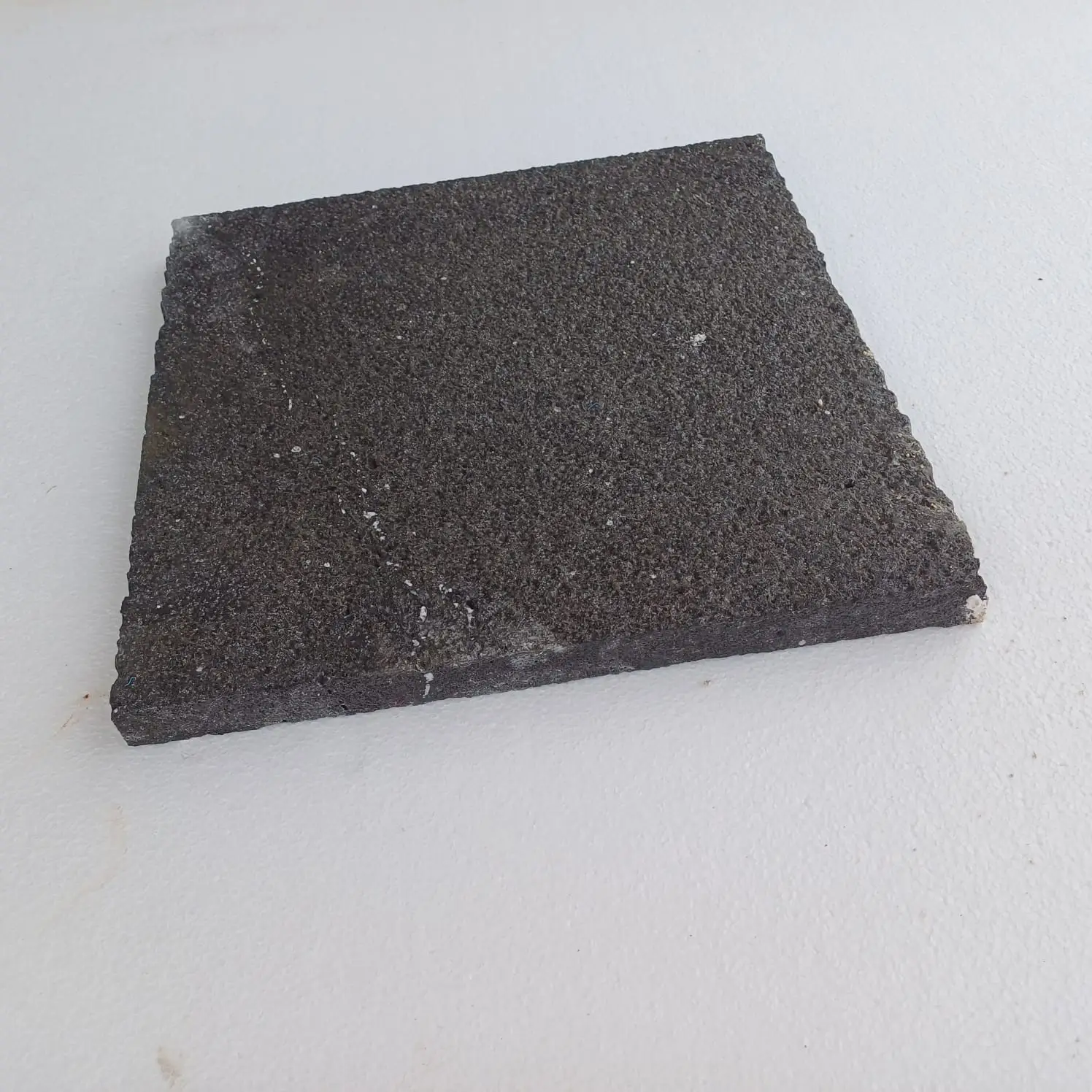
Base Preparation for Mesa Lawn Pathways
Your base system is doing two jobs simultaneously in this climate: providing structural support for point loads and accommodating the vertical movement that thermal cycling drives from below. A standard 4-inch compacted aggregate base works in stable soil zones, but Mesa lawn pathways frequently sit over expansive clay or caliche combinations that shift independently of the surface treatment.
For Mesa lawn pathways where black limestone stepping stones will be set in grass, the recommended base build-up runs deeper than most contractors initially quote:
- Excavate to 8 inches below finished grade to give you room for base layers without sinking the stone too deep into turf
- Install 4 inches of 3/4-inch compacted crushed aggregate, achieving minimum 95% Proctor compaction — critical for preventing differential settlement across stones
- Add 1 inch of coarse concrete sand, screeded flat and not compacted, as a bedding layer that self-levels under load
- Set black limestone at a minimum 1-3/4-inch thickness — the 1-1/4-inch material you’ll see at big-box stores won’t handle the thermal stress or foot-traffic loads reliably in this climate
- Maintain a 1/8-inch per foot cross-slope to direct moisture away from the stone undersides
The slope specification matters more than most installation guides acknowledge. Standing moisture under a stepping stone that sits flush with turf grade creates the worst-case scenario for thermal cycling damage — the moisture expands as soil temperature drops at night, generating upward pressure that rocks the stone off its bedding plane. You’ll notice the failure first as a wobble, then as edge chipping.
Selecting the Right Stone Thickness and Format
Thickness selection for black limestone grass stepping stones comes down to a straightforward performance threshold: 1-3/4 inches is the practical minimum for residential lawn paths, and 2-inch nominal material is the professional recommendation when the pathway crosses soil with moderate expansion potential. The extra 1/4 inch isn’t about compressive strength — black limestone easily exceeds 8,000 PSI in that dimension — it’s about flexural resistance across unsupported spans between bedding contact points.
Format selection shapes how well the installation handles integrated routes across a lawn. Irregular flagging creates natural-looking paths but introduces more variability in bedding contact area, which means more joint variation and more thermal movement inconsistency. Cut stepping stone formats — typically 18×18, 18×24, or 24×24 inches — give you predictable joint spacing and uniform thermal expansion behavior across the run.
- 18×18 format: Best for informal winding paths through turf, allows tighter step spacing
- 18×24 format: Versatile proportions that match standard walking stride across most of a path’s length
- 24×24 format: Formal appearance, requires careful layout to prevent awkward stride gaps on curved routes
- Irregular flagging: Appropriate for naturalistic designs, but requires a more experienced setter to achieve consistent bedding contact
For Arizona yard circulation routes that see regular foot traffic from multiple family members, the 18×24 cut format provides the most reliable combination of natural appearance and predictable thermal performance. The longer axis runs parallel to the path direction, which aligns the dominant expansion dimension with the joint placement that’s easiest to manage.
Joint Spacing and Thermal Expansion Calculations
Here’s what most installation guides miss entirely: the joint spacing recommendation for stepping stones set in grass needs to account for both thermal expansion of the stone AND seasonal moisture variation in the surrounding turf zone. Turf root systems retain moisture and expand the soil immediately surrounding each stone, adding a secondary movement driver that’s independent of the stone’s own thermal response.
For black limestone stepping stones grass Mesa installations, the practical joint specification runs as follows. Between cut stones, maintain a minimum 3/8-inch joint and fill with a polymeric sand that specifies a ±15% movement accommodation — not the standard ±8% products that dominate the retail market. For irregular flagging, joints can run wider, but anything beyond 1-1/2 inches starts creating a trip hazard that building officials in most Arizona municipalities will flag on inspection.
At Citadel Stone, we recommend running a quick thermal expansion check before finalizing joint specs: multiply the stone length in inches by the expansion coefficient (use 5.5 × 10⁻⁶ as a conservative middle value) by the maximum expected temperature swing. For a 24-inch stone in Mesa with a 65°F swing: 24 × 5.5 × 10⁻⁶ × 65 = approximately 0.0086 inches of movement per cycle. Your joint needs to absorb that movement without generating cracking stress at the stone edges — polymeric sand does this, rigid mortar does not.
Grass Integration Techniques for Arizona Yard Circulation
The grass-to-stone interface is where black limestone stepping stones grass Mesa installations either look professionally finished or like an afterthought. Getting that interface right requires you to think about the interaction between turf root systems, irrigation cycles, and the stone’s thermal movement simultaneously.
Set your stones approximately 1/2 inch proud of the turf grade — not flush and not significantly raised. That 1/2-inch elevation keeps the stone surface draining cleanly after irrigation while leaving the upper edge of the stone accessible to mowing equipment. Flush-set stones get grass growing over the edges within one growing season, which traps moisture at the joint and accelerates the freeze-thaw micro-cracking that’s the primary long-term failure mode in Arizona yard circulation applications.
You can access detailed support for layout planning and stone selection through Citadel Stone’s stepping stone facility, where technical staff can review your specific Mesa lawn configuration and recommend appropriate thickness and joint specifications before you commit to a material order.
For turf species common in Mesa — bermuda grass and tall fescue hybrids being the dominant residential choices — the root encroachment timeline differs. Bermuda roots aggressively probe joint sand within 60 to 90 days of installation; specify a polymeric sand with a non-organic binder compound to slow this penetration. Tall fescue is somewhat less aggressive but presents more upward heave pressure in zones where irrigation maintains constant soil moisture. These grass integration considerations apply equally across Arizona yard circulation projects of every scale.
Sealing and Maintenance in Arizona’s Cycling Climate
Sealing black limestone in Arizona serves a different primary purpose than it does in wetter climates. You’re not primarily managing water infiltration — Mesa averages under 8 inches of annual rainfall. Your sealing objective is preventing the thermal-driven moisture cycling from creating micro-crystalline salt deposits within the stone’s pore structure. Desert soils carry dissolved mineral salts, and as moisture migrates upward through the base into the stone and then evaporates on the warm surface, it deposits those minerals inside the pores. Over years, the crystal growth pressure fractures the stone from within.
A penetrating impregnating sealer applied to the underside before installation is a detail most residential specs skip but field experience strongly supports. Sealing the bedding face reduces upward moisture migration by 60 to 70%, which directly reduces the salt crystallization risk over the stone’s service life. For the top surface, a penetrating silane-siloxane sealer applied after installation provides UV stability without the hazardous slip characteristics of film-forming products.
- Apply initial sealer within 30 days of installation, after any efflorescence has been cleaned and neutralized
- Reapply top-surface sealer on a 24-month schedule minimum — shaded path sections may extend to 36 months
- Test sealer effectiveness by dropping water on the stone surface — if it doesn’t bead, reapplication is overdue
- In Sedona, where Sedona‘s red iron-rich soils can stain lighter stone tones through upward migration, an additional base-layer sealer application is worth specifying from the start
- Avoid acid-based cleaners on black limestone — the natural dark tones can shift permanently with improper cleaning chemistry
The maintenance schedule matters more in cycling climates than in stable ones. Citadel Stone maintains warehouse inventory of compatible sealing products and replacement stones in Arizona, which means you won’t face a 6 to 8 week lead time if a section needs spot repair or a stone needs replacement after a severe weather event.
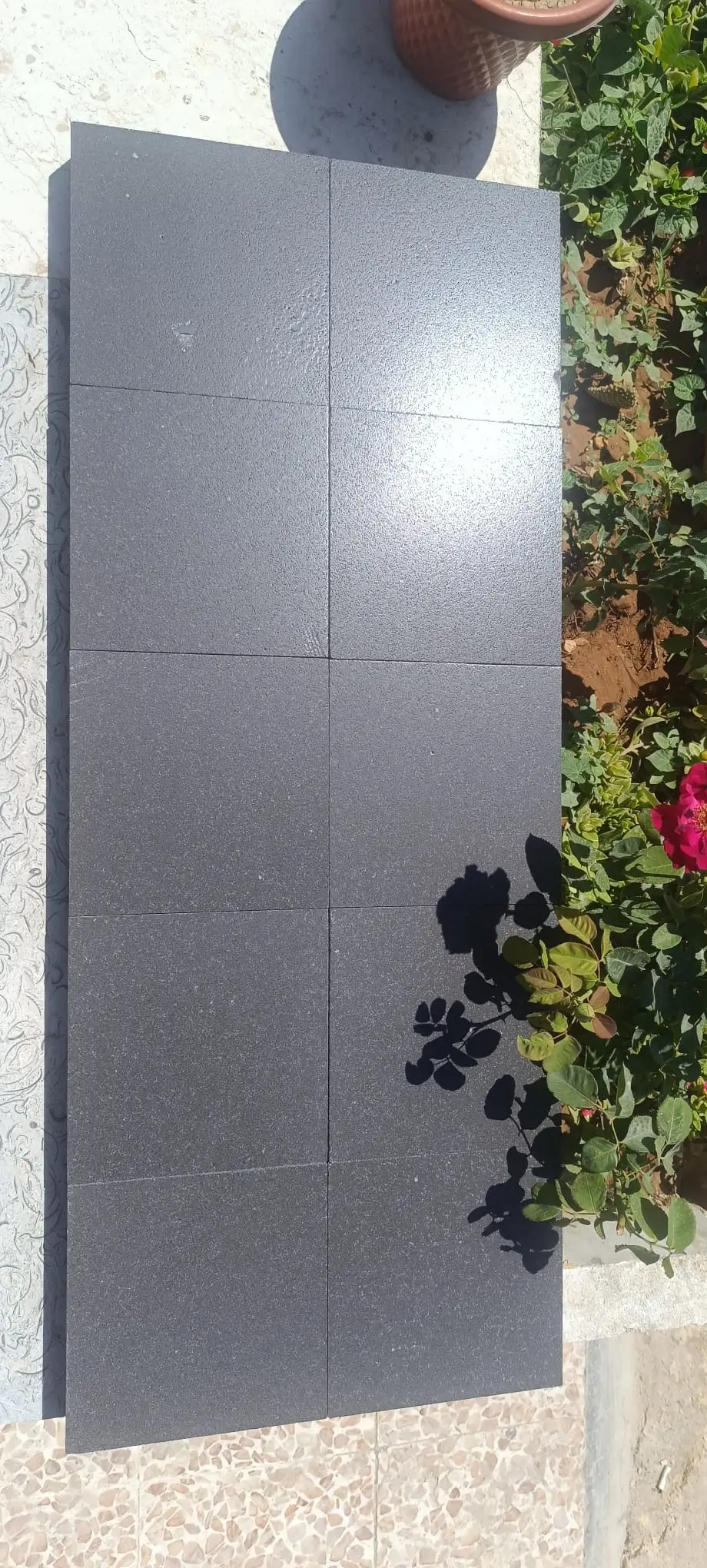
Layout Planning and Step Spacing for Mesa Paths
Your layout geometry determines how natural the path feels in daily use and how well the installation handles thermal movement over its lifespan. Step spacing for adult walking stride runs between 22 and 26 inches center-to-center for a comfortable, natural pace. Tighter spacing — under 18 inches — forces a shuffling gait that most users find awkward and that actually increases slip risk because users aren’t fully committing their weight to each stone.
For Mesa lawn pathways serving Arizona yard circulation between entry points, side gates, and outdoor living areas, a gentle curve adds visual interest without complicating installation. Curved routes do require you to account for the angular joint variation — as stones offset on a curve, the effective joint width varies from the nominal specification. Plan for a maximum 1-inch variation and maintain that minimum 3/8-inch joint on the tight side of every curved section.
Peoria projects tend to incorporate longer straight-run paths between home entries and detached garages, and Peoria‘s flat topography makes precise grade control more achievable — you can maintain that consistent 1/8-inch-per-foot drainage slope without complex cuts or shimming. The flat terrain does increase the risk of pooling at path termination points, so plan your end conditions with positive drainage outlets built into the design.
- Mark out your path route with marking paint before excavation — walk it several times at natural pace to confirm spacing feels right
- Dry-lay all stones before final bedding to check layout, joint consistency, and visual balance across the full run
- Account for 3 to 5 percent waste factor on cut stone and 8 to 10 percent on irregular flagging for field cuts and breakage
- Confirm truck access to your delivery point before ordering — full pallets of 2-inch black limestone run 2,800 to 3,200 pounds and require a flat, stable delivery surface within reasonable forklift reach
Common Installation Failures and How to Prevent Them
The installation failures that show up repeatedly on black limestone grass stepping stone projects trace back to a small set of repeated errors. Understanding them before you break ground is more valuable than any troubleshooting guide after the fact.
Insufficient base compaction is the most common root cause of early failure on Mesa lawn pathways. Compaction testing gets skipped on residential projects because it adds cost and time, but a base that hasn’t achieved 95% Proctor density will settle differentially under thermal cycling. The heaviest stones settle slightly more than lighter ones, creating trip edges within two to three seasons. A compaction test on the finished base layer runs well under $150 and eliminates this variable entirely.
- Bedding sand that’s too thick — over 1-1/4 inches — creates a floating condition where stones can pivot under foot traffic, cracking the bedding sand bridge and creating an unstable surface
- Setting stones with insufficient bedding contact — less than 80% contact area between stone and bedding sand — creates stress concentrations that thermal cycling exploits, fracturing stones along natural grain lines
- Using rigid mortar joints in a grass-set application where ground movement is guaranteed — polymeric sand is always the correct specification for turf-adjacent stepping stone installations
- Neglecting edge restraint at path terminations — without positive edge containment, the end stones migrate laterally over time as the thermal cycling pumps them incrementally outward
- Skipping the pre-installation moisture check — bedding sand installed over saturated sub-base traps moisture and becomes the primary freeze-damage vector even in Mesa’s relatively mild winter conditions
The truck delivery logistics deserve advance planning on tight residential lots. Coordinate with your stone supplier on pallet weights and delivery vehicle type — a flatbed truck versus a boom delivery truck requires very different site preparation for unloading without damaging lawn areas adjacent to the path route.
Getting Black Limestone Stepping Stones Grass Mesa Specifications Right
Designing black limestone stepping stones grass Mesa paths to perform reliably over decades comes down to treating thermal cycling as the primary engineering constraint, not an afterthought. Every specification decision — base depth, joint width, stone thickness, sealer type — should be filtered through the question of how it handles repeated daily temperature swings across Arizona’s long cycling season. Get that framing right and the rest of the technical decisions follow naturally from sound principles.
The material itself is well-suited to this application when properly specified. Black limestone’s density and pore structure give it better freeze-thaw resistance than many lighter-toned stones, and its thermal mass moderates the surface temperature spikes that make some hardscape materials uncomfortable to walk on barefoot in afternoon conditions. The dark toning also holds color stability better than iron-rich stones that can shift dramatically under UV exposure and mineral salt cycling. For related stone applications across Arizona properties, Black Limestone Stepping Stones Zen Garden for Scottsdale Meditation Spaces explores how this same material performs in a different but equally demanding Arizona context — a useful reference when extending your black limestone specification from Mesa lawn pathways to other areas of the property. Citadel Stone’s limestone bullnose steps in Arizona enable safe, elegant transitions Arizona designers trust completely.