
Getting black limestone slab thickness right for Tempe vehicle support areas isn’t a matter of rounding up to the nearest inch and hoping for the best — the structural calculus is more nuanced than that, and the consequences of underspecifying are expensive. Black limestone slab thickness in Tempe projects needs to account for Arizona’s thermal cycling, the compressive loads of passenger vehicles versus heavy delivery trucks, and the specific subgrade conditions you’ll encounter across the Salt River Valley. The thickness decision you make at specification stage is the one variable that most directly determines whether your installation performs for two decades or develops stress fractures within five years.
Why Thickness Is a Load-Path Decision, Not Just a Style Choice
The structural logic behind black limestone slab thickness in Tempe starts with understanding how load travels through the stone into the base system. Point loads from vehicle tires concentrate stress in a surprisingly small contact patch — typically 30 to 50 square inches per tire at standard inflation pressure — which means a 2-inch slab sitting on a soft substrate behaves very differently from that same slab over properly compacted aggregate. The stone itself has excellent compressive strength, often exceeding 12,000 PSI for quality black limestone, but flexural strength is where the performance gap opens between adequate and excellent.
Your specification decisions need to address bending stress, not just compression. A slab spanning a soft spot in the base material bends rather than compresses, and black limestone — like all natural stone — tolerates compressive load far better than it tolerates flexural tension. This is why Tempe load-bearing slabs for vehicle areas almost always require thicker profiles than what you’d use for a pedestrian patio, even when the surface aesthetic looks identical.
Standard Thickness Ranges for Vehicle Areas in Arizona
For passenger vehicle driveways in Arizona — the most common application — black paving depth in Arizona starts at a minimum of 2 inches nominal, though 2.5 inches gives you a meaningful safety margin when working with natural stone where thickness tolerances can vary by 3 to 5mm across a single piece. For occasional delivery vehicle access, push that minimum to 3 inches. Areas that will see regular heavy vehicle traffic — anything over 10,000 lbs GVW — need 3.5 to 4 inches of stone paired with a structurally engineered base.
- Passenger vehicles (standard driveway): 2 to 2.5 inches minimum nominal thickness
- Light commercial vehicles (vans, pickup trucks): 2.5 to 3 inches with 8-inch compacted base
- Occasional heavy delivery: 3 to 3.5 inches with 10-inch engineered base
- Regular heavy vehicle access or RV parking: 3.5 to 4 inches with 12-inch reinforced base
- Forklift or warehouse equipment: consult a licensed structural engineer before proceeding
These ranges assume a properly compacted class II aggregate base. If your Tempe project site has fill material, expansive soils, or disturbed earth, treat the subgrade as the controlling variable and increase base depth before increasing stone thickness — adding base material is cheaper than sourcing thicker stone on short notice from warehouse inventory.
Tempe Soil Conditions and What They Mean for Base Design
Tempe sits on a mix of sandy loam and caliche-influenced desert soil, which is actually more favorable for paving than the expansive clay soils you encounter in parts of the Phoenix metro. That said, don’t assume uniform conditions across your site. Areas near the Salt River floodplain or reclaimed fill zones can present compressibility issues that don’t show up until a loaded vehicle passes over them repeatedly.
The AZ Structural Engineering Guidelines call for a minimum CBR (California Bearing Ratio) of 10 for residential paving subgrades, but vehicle area thickness specifications should target CBR 15 or higher before you set a single paver. Have your geotechnical report in hand before finalizing thickness — a $600 soil test can save you from a $15,000 slab replacement. Projects in San Tan Valley and similarly sandy suburban areas sometimes encounter pocket clay lenses beneath what appears to be stable desert soil, which is precisely why subgrade testing matters even when the surface looks uniform.
- Confirm subgrade CBR with a geotechnical report before specifying base depth
- Target 95% Proctor compaction on all fill material below the aggregate base
- Allow a minimum 4-inch compacted sand-set bed or mortar setting layer over the aggregate base
- Slope the finished surface at 1.5 to 2% away from structures to manage Arizona’s monsoon drainage load
Thermal Expansion and Joint Design in Arizona Heat
Tempe’s temperature swings — regularly 110°F in summer and dipping to the mid-30s in winter — impose thermal expansion and contraction cycles that directly affect how you detail joints in vehicle area slabs. Black limestone has a thermal expansion coefficient in the range of 4 to 5.5 × 10⁻⁶ per °F depending on the specific quarry material and density. Over a 4-foot slab run, that produces roughly 0.03 to 0.04 inches of movement between summer peak and winter low — small numbers individually, but cumulative stress across a full driveway installation becomes significant.
Expansion joints every 12 to 15 feet in vehicle-loaded slabs are the appropriate interval, tighter than the 18-to-20-foot spacing sometimes cited for pedestrian applications. Black limestone paving slabs in Arizona perform far better with slightly more frequent joint breaks than with standard pedestrian spacing. The darker material absorbs more solar radiation than lighter stone, which means surface temperatures regularly exceed ambient air temperature by 20 to 30°F — a factor that amplifies thermal movement beyond what your climate data tables would suggest at first glance.
Fill those expansion joints with a polyurethane-based flexible sealant rated for temperatures up to 180°F, not a standard cementitious joint filler. Standard grout in expansion joints will fail within two to three monsoon seasons under vehicle load cycling.
Black Limestone Material Density and Structural Performance
Not all black limestone behaves identically under load, and the density variation matters more than most specs acknowledge. Quality black limestone for vehicle area thickness applications should have a bulk density of at least 160 lbs per cubic foot and an absorption rate below 0.5% — tighter than the 0.75% sometimes acceptable for pedestrian stone. Lower absorption means less moisture infiltration, which directly reduces spalling risk during Arizona’s dramatic temperature swings.
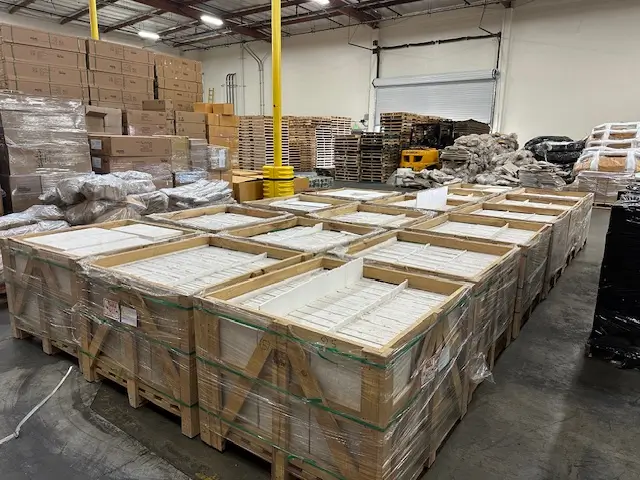
Browse our black limestone paving inventory to see density and absorption specifications for the materials we stock — these numbers should be on your submittal sheet before the material leaves the warehouse. At Citadel Stone, we test incoming material batches against density and absorption thresholds before releasing stock for structural vehicle area projects, because the field consequences of a marginal batch are significant once the material is installed and loaded.
- Minimum density: 160 lbs/ft³ for vehicle area applications
- Maximum absorption: 0.5% (ASTM C97 test method)
- Minimum compressive strength: 8,000 PSI; prefer 12,000 PSI or better
- Flexural strength: target 1,200 PSI minimum for 2-inch slab under vehicle load
- Request mill certificates or third-party test data from your supplier before accepting material
Installation Variables That Affect Effective Slab Performance
Thickness on paper and thickness in performance are two different things when installation variables aren’t controlled. The biggest field failure mode in Tempe vehicle area projects isn’t material quality — it’s inconsistent setting bed depth. A 2.5-inch slab on a setting bed that varies between 1 inch and 3 inches across the same panel creates localized stress concentrations exactly where you can’t see them. Your installer needs to maintain setting bed depth within a quarter-inch tolerance across the entire installation area.
Surface temperature during installation matters more than most schedules allow for. In Tempe summers, concrete and masonry substrates can reach 150°F surface temperature by mid-morning. Setting mortar on a substrate above 90°F accelerates curing in ways that reduce bond strength and increase shrinkage cracking. Schedule your vehicle area slab work for early morning starts, and shade any sections waiting to be set. This isn’t just a comfort consideration for the crew — it’s a structural performance decision that directly affects black limestone slab thickness performance over time.
Projects in Yuma where summer surface temperatures push even higher than Tempe have shown that afternoon mortar work in exposed vehicle areas produces measurable bond strength reductions compared to morning work under the same conditions. Early starts and shaded staging aren’t optional on Arizona vehicle area stone projects — they’re specification requirements if you want the full performance life out of the installation.
Sealing Requirements for Vehicle-Loaded Black Limestone
Sealing black limestone in vehicle areas is non-negotiable in Arizona, but the product selection matters as much as the application. A penetrating impregnating sealer with a solids content above 15% is the correct choice — not a topical coating sealer. Topical sealers in vehicle areas will delaminate from tire friction and heat within a single Arizona summer — it’s one of the most common and preventable failures in residential black paving depth installations across the state.
- Use a penetrating impregnating sealer rated for natural limestone, solids content 15% or higher
- Apply initial seal before grouting, then reseal after grouting to ensure full penetration
- Reapplication schedule: every 2 years for vehicle areas versus every 3 to 4 years for pedestrian surfaces
- Avoid silicone-based sealers — they prevent moisture vapor transmission and can cause subsurface pressure buildup in monsoon season
- In vehicle areas, test slip resistance after sealing — wet coefficient of friction should remain above 0.6 per ANSI A137.1 standards
The sealing schedule for black limestone paving slabs in Arizona also needs to account for petrochemical exposure in driveways. Engine oil, brake fluid, and tire rubber compounds are aggressive solvents that penetrate unsealed limestone quickly and permanently stain the matrix. Reseal vehicle area black limestone annually in the first two years to build up adequate impregnation depth, then shift to a biennial schedule once the stone is fully saturated.
Ordering Logistics and Lead Times for Vehicle Area Projects
Thickness specification and material availability don’t always align on the same timeline, especially for the heavier gauge stone required for vehicle areas. Standard 1.25-inch and 1.5-inch landscape slabs move quickly through warehouse stock, but 3-inch and thicker black limestone for vehicle load applications often requires advance ordering. Plan for a 2-to-3-week lead time from warehouse to your Tempe job site for standard vehicle-area thicknesses, and 4 to 6 weeks if you’re specifying premium dense-cut material at 3.5 inches or thicker.
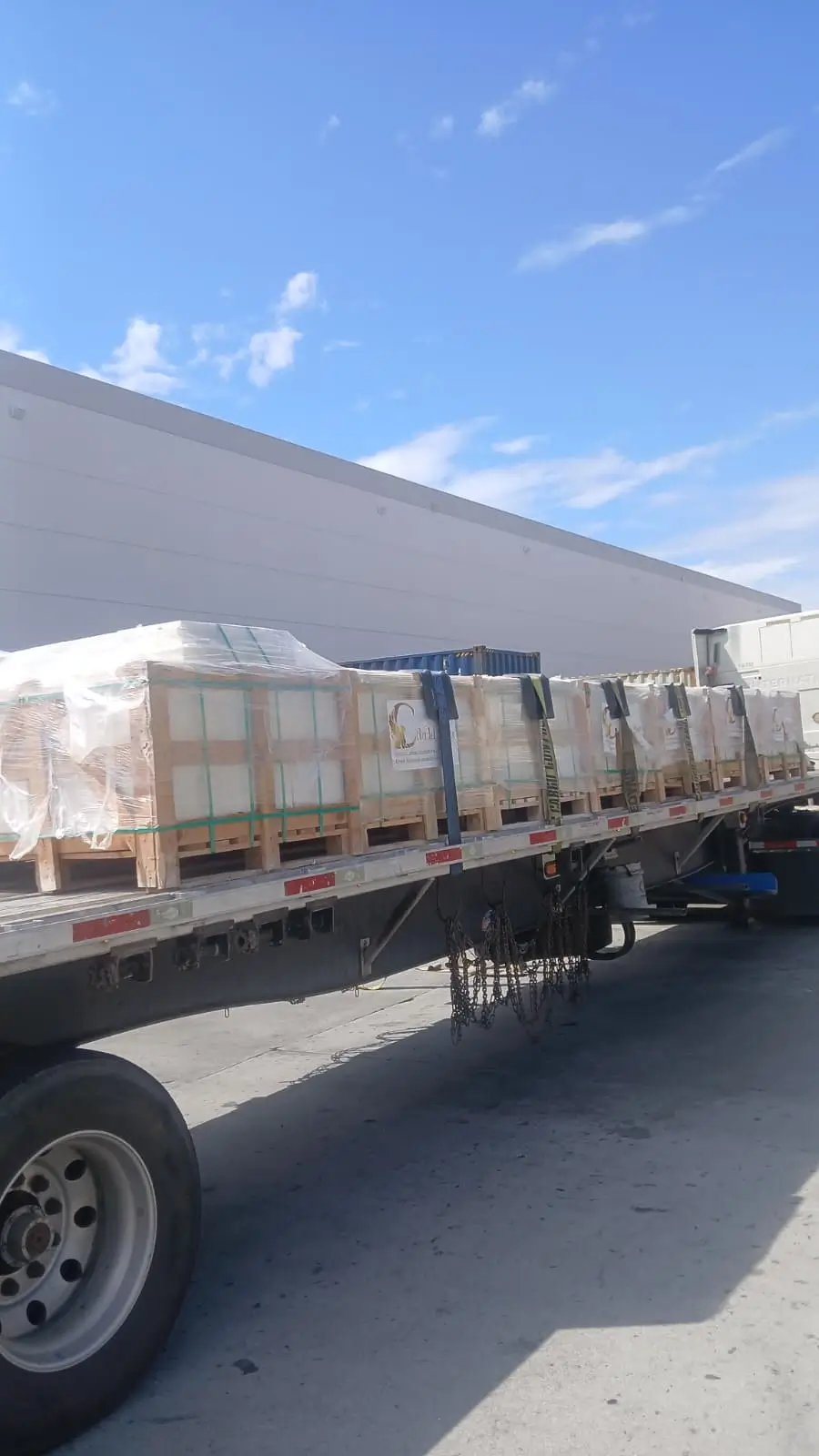
Truck delivery scheduling also affects your project timeline in ways worth planning around. Full pallet loads of 3-inch black limestone run heavy — a standard pallet of 30 square feet at 3 inches thick weighs approximately 750 to 850 lbs — and your delivery site needs truck access that accommodates a flatbed or boom truck without damaging finished landscaping or existing hardscape. Projects in Avondale and other newer suburban developments sometimes have site access constraints from ongoing construction traffic that complicate stone delivery scheduling, so confirm your truck access window before you finalize your delivery date.
Citadel Stone maintains warehouse inventory across multiple Arizona thickness grades, which means we can often supply vehicle-area black limestone on a 1-to-2-week turnaround rather than waiting for import cycles. Confirm current stock levels with our team before locking in your installation schedule — availability changes seasonally and your contractor will thank you for the accurate lead time.
Your Action Plan for Black Limestone Slab Thickness in Tempe
The specification decisions that define black limestone slab thickness in Tempe vehicle support areas come down to three non-negotiable inputs: confirmed subgrade bearing capacity, verified material density and absorption data, and honest load classification for the vehicles that will actually use the surface. Miss any one of those inputs and your thickness number is a guess, not a specification. Get all three right and you’re engineering a 20-to-25-year installation rather than scheduling a replacement.
Your contractor’s execution discipline — setting bed consistency, installation temperature control, and sealing protocol — determines whether the specification performs as designed. The thickness you specify is the ceiling on performance, not a guarantee of it. Build quality control checkpoints into your project schedule: base compaction testing, setting bed depth verification at 25% installation intervals, and a post-installation slip resistance measurement before the surface opens to vehicle traffic. Tempe load-bearing slabs perform at their rated capacity only when each of these variables is controlled from subgrade preparation through final sealing.
As you finalize your Tempe vehicle area project, reviewing comparable commercial applications can sharpen your specification decisions where residential and commercial loading scenarios overlap. Black Limestone Paving Commercial Applications for Gilbert Businesses covers how similar black limestone materials perform under commercial load requirements, which is worth reviewing if your project involves any mixed-use access or shared driveway scenarios. Citadel Stone brings you the best natural black limestone in Arizona.