
Structural loading is the specification variable that separates a successful black limestone rooftop Paradise Valley installation from a costly retrofit — and it’s the calculation most designers skip when they’re focused on the aesthetic payoff. Rooftop terraces impose concentrated loads on structural decks that were often designed for occupancy, not dense stone material. Black limestone paving slabs in the 1.25-inch nominal thickness range run 13 to 16 pounds per square foot, and once you add setting bed mortar, that figure climbs to 22 to 28 psf depending on your system. You need to confirm your engineer of record has signed off on that load before a single slab leaves the warehouse — not after the deck is poured and the stone is already on site.
Why Black Limestone Works for Rooftop Terraces
The thermal mass argument for dark stone on a rooftop is more nuanced than it first appears. Black limestone absorbs heat during the day, which sounds like a liability in Arizona — but elevated rooftop terraces benefit from nighttime radiative cooling in ways that ground-level patios don’t. Once the sun drops below the horizon in Paradise Valley, that stored heat releases quickly into the clear desert sky, and the surface becomes genuinely comfortable within 45 to 60 minutes of sunset. You’re designing a space that performs in the evening, and for most clients in this market, that’s exactly when the terrace gets used.
The material also offers something that lighter stones don’t — visual drama against an Arizona skyline. The contrast between a polished or honed black slab surface and the warm ochre of McDowell Mountain ridgelines at dusk is a design relationship that photographs exceptionally well and reads as intentional architectural design rather than a material default. Your black slab rooftop design Arizona project benefits from that relationship every time someone steps onto the terrace at golden hour.
- Compressive strength typically exceeds 12,000 PSI, making black limestone appropriate for heavy outdoor furniture and point loads from planters
- Coefficient of thermal expansion ranges from 4.5 to 6.2 × 10⁻⁶ per °F, lower than concrete and highly compatible with standard rooftop expansion joint systems
- Honed finishes achieve a slip resistance rating between 0.55 and 0.65 COF dry, meeting ANSI A137.1 requirements for exterior pedestrian surfaces
- Slab density in the 165 to 175 lb/ft³ range allows precise structural load calculations without the variability you encounter in some softer sedimentary stones
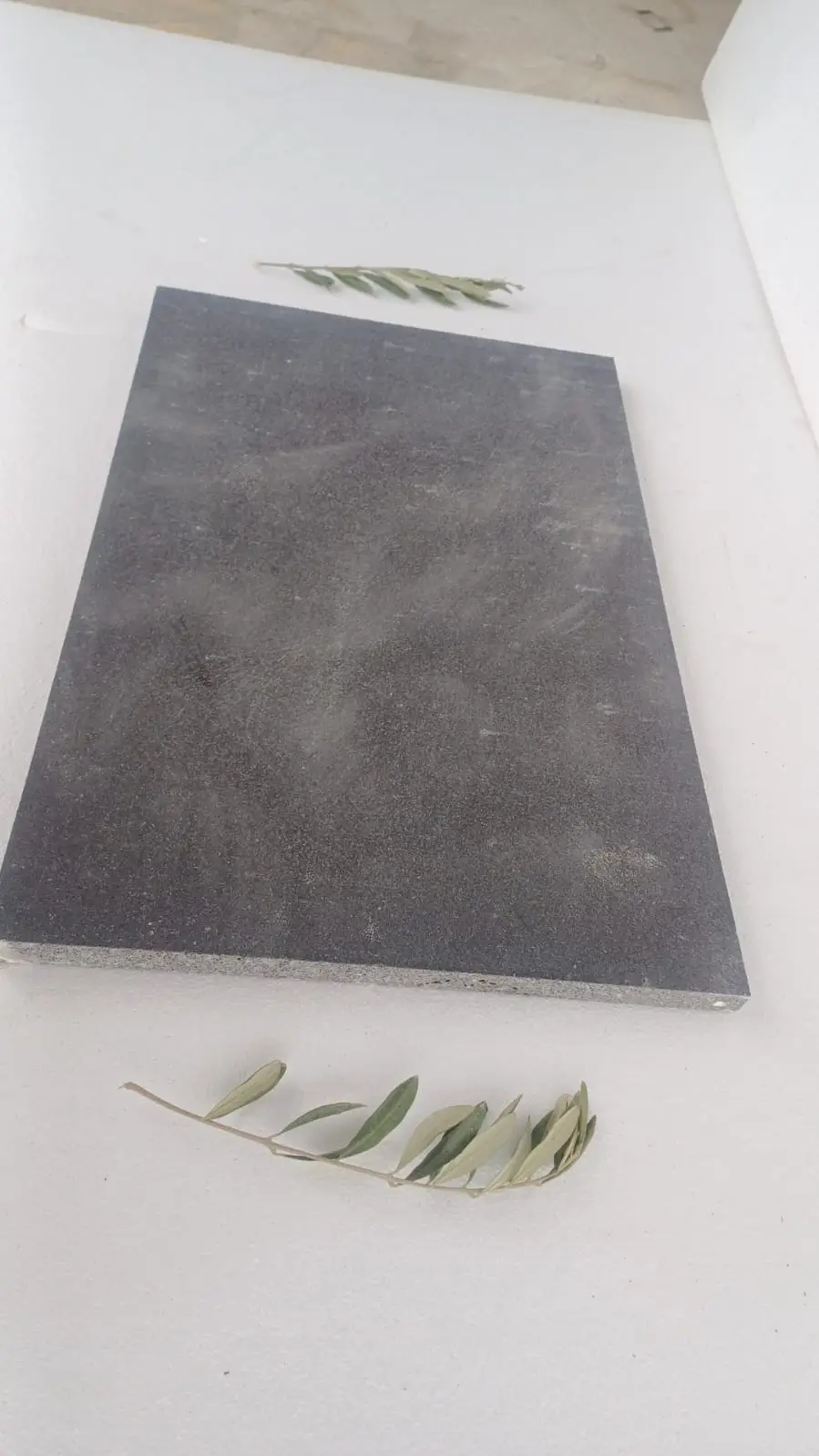
Rooftop Structural Requirements You Can’t Overlook
Elevated outdoor spaces require a fundamentally different specification mindset than grade-level paving. The deck membrane beneath your stone system is doing double duty — it’s the waterproofing layer for the occupied space below and the substrate for your paving system above. Any penetration, any incompatible adhesive, or any differential movement between the slab and the membrane creates a failure pathway that’s expensive to find and more expensive to fix.
Your setting system needs to be membrane-compatible first and stone-compatible second. For black limestone paving slabs in Arizona, a fully bonded mortar bed over a protection board layer gives you the rigidity the stone requires without transmitting movement directly to the membrane. Pedestal systems are increasingly popular on high-end rooftop terraces because they decouple the stone from the membrane entirely — maintenance access, drainage, and future replacement all become manageable rather than surgical.
- Verify deck deflection limits with your structural engineer — L/360 is the standard minimum, but stone systems perform better at L/480 or tighter
- Rooftop drains should be designed for a 100-year storm event, not the standard 25-year calculation used for grade-level hardscape
- Flashing details at parapet walls must allow for stone thermal expansion without compressing the membrane — minimum 3/8-inch expansion gap at all vertical transitions
- Confirm that your waterproofing membrane manufacturer approves the specific adhesive or mortar system specified for your black limestone paving slabs in Arizona
Thickness Selection for Rooftop Black Limestone
Thickness selection on a rooftop project isn’t just about structural adequacy — it’s about managing the total system weight while maintaining the slab’s ability to bridge minor substrate irregularities. For Paradise Valley terrace paving applications where the visual standard is exceptionally high, you’ll want slabs in the 1.25-inch to 1.5-inch range as a starting point.
Thinner slabs in the 3/4-inch range are tempting from a weight reduction standpoint, but they telegraph any substrate imperfection directly to the surface. Black limestone’s mirror-like honed finish is unforgiving — lippage above 1/32 inch is visible to the naked eye under low-angle evening light, and that’s exactly the lighting condition your clients will experience most often on a Paradise Valley rooftop. Spend the extra 3 psf on adequate thickness and avoid the costly grinding correction later.
At Citadel Stone’s black limestone slab facility, material is inventoried in consistent thickness lots — this matters more on rooftop projects than anywhere else, because thickness variation within a lot forces compensating mortar bed adjustments that introduce lippage risk across large format slabs.
Joint Spacing and Thermal Expansion on Arizona Rooftops
Rooftop surfaces in Paradise Valley reach 160 to 180°F on the top face of exposed dark stone during peak summer afternoon conditions. That’s not an estimate — it’s a measured reality that drives your joint spacing calculation more than any other single variable. The thermal differential between the top and bottom face of a black limestone slab can exceed 40°F during rapid cloud cover transitions, which creates a temporary bowing stress that accumulates fatigue in the mortar bond over multiple seasons.
Field performance on black limestone rooftop installations in Arizona consistently shows that expansion joints at 10 to 12 feet on center outperform the 15 to 20-foot spacing you’ll find in generic stone paving specifications. In Sedona, where elevation adds a freeze-thaw dimension that Paradise Valley doesn’t have, that spacing tightens further to 8 to 10 feet — the day-to-night temperature swing at 4,350 feet creates stone movement that low-desert specifications simply don’t account for.
- Use compressible backer rod and ASTM C920 sealant in all expansion joints — standard grout will fail within two Arizona summers
- Color-match your sealant to the stone to maintain the clean visual field that black slab rooftop design Arizona projects demand
- Interior joints between slabs should be 3/16 inch minimum — tighter joints in large-format black limestone create edge chipping risk during thermal cycling
- Perimeter expansion joints at parapets and walls require a minimum 1/2-inch gap, not the 3/8-inch standard used for interior paving
Drainage Design for Elevated Outdoor Spaces
The drainage slope calculation on a rooftop terrace has to satisfy two competing masters — your structural membrane needs minimum 1/4 inch per foot to prevent ponding, but your design geometry often fights against consistent slope in a large format slab field. The solution most experienced specifiers use is a slope-to-drain layout where the stone field maintains a 1.5 to 2 percent grade toward concealed linear drains, rather than relying on the membrane slope alone.
Pedestal systems offer an elegant answer here. You can set the rooftop membrane at its required drainage slope, then adjust individual pedestal heights to create a level stone surface above. The void space between the membrane and the underside of your black limestone paving slabs becomes a drainage plane, channeling water to overflow points without relying on surface slope. For Arizona skyline views projects where a perfectly level slab field is the expectation and the panoramic vista is the primary design driver, this system is worth the additional cost.
Projects in Flagstaff face an added complexity — seasonal snow load combined with freeze-thaw cycling means your rooftop drainage system has to handle both liquid water and meltwater infiltration simultaneously. A drainage plane system with minimum 1.5-inch clear void and positive overflow capacity to all four sides of the terrace handles both conditions effectively at that elevation.
Sealing and Maintenance for Black Limestone Rooftop Installations
Black limestone’s porosity varies depending on the quarry source — and this matters because highly porous black limestone will show water migration patterns as tide lines on the surface during rain events. That’s aesthetically unacceptable on a high-end Paradise Valley terrace paving installation. Your specification should require a minimum water absorption rate test per ASTM C97 before material ships, with a maximum of 0.5 percent by weight for rooftop applications.
Penetrating impregnating sealers in a silane-siloxane formulation are the professional standard for black limestone on elevated outdoor spaces. They maintain the stone’s natural appearance without surface film buildup, and they don’t create the slip hazard that topical sealers introduce in a wet condition. Apply two coats on a clean, dry surface — ideally at ambient temperatures between 50°F and 85°F — which means early morning application during Arizona summers is not optional, it’s mandatory. Surface temperatures above 95°F cause the sealer to flash before it can penetrate, leaving a surface residue that whites out the dark stone and requires labor-intensive correction.
- Initial sealing should occur after installation is complete and grout joints have cured a minimum of 28 days
- Resealing intervals on Arizona rooftop black limestone run 18 to 24 months — UV intensity at elevation accelerates sealer breakdown faster than low-desert installations
- Avoid acid-based cleaners entirely — they attack the calcite matrix of limestone and create micro-roughness that traps soiling and dulls honed finishes permanently
- pH-neutral stone cleaner with a soft-bristle scrub is the correct maintenance protocol between sealing cycles
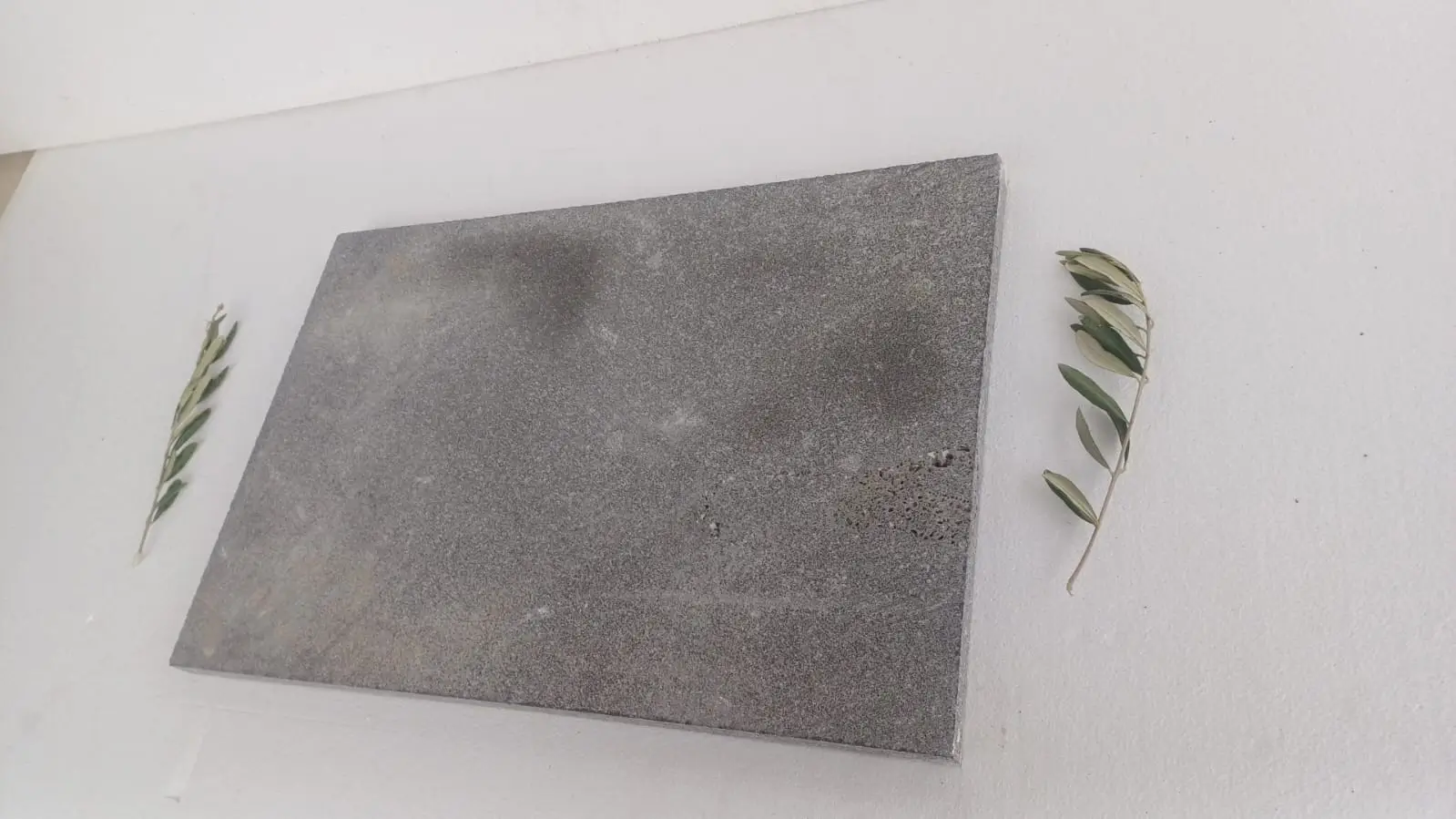
Project Logistics and Supply Chain Considerations
Rooftop delivery is where black limestone rooftop Paradise Valley projects encounter logistical variables that don’t exist on grade-level jobs. Your truck access situation on a rooftop terrace project is rarely straightforward — crane lifts, hoist systems, and stairwell passes all introduce handling risk for large-format stone that needs to arrive at the terrace with zero surface damage. Black limestone’s honed finish scratches from stone-on-stone contact, and once that finish is compromised on a rooftop, you’re facing a spot-polishing operation with limited equipment access.
Coordinate with your supplier early on delivery sequence and packaging. Full-pallet crane lifts work well when the crane has clear access and the roof structure is rated for the staging weight — confirm both before the truck arrives on site. Citadel Stone’s warehouse team can stage materials in smaller lot sizes for hoist delivery when full-pallet crane access isn’t feasible, which reduces the per-piece handling risk considerably.
Projects in Peoria and other Valley communities with established HOA and community access restrictions often need delivery windows coordinated weeks in advance. Building that lead time into your project schedule — rather than assuming truck delivery is flexible — prevents the costly scenario of stone sitting in a staging yard while you negotiate access approvals. Warehouse stock availability from a local Arizona supplier reduces your exposure on that timeline dramatically compared to relying on import shipments with 6 to 8-week lead times.
Finish Selection and Design Intent for Rooftop Terraces
The finish you select for black limestone rooftop Paradise Valley projects does more than determine aesthetics — it drives slip resistance performance, maintenance frequency, and how the surface reads under different lighting conditions throughout the day. Honed finishes in the 120 to 400-grit range give you the sophisticated matte-satin appearance that reads well against Arizona skyline views without the maintenance burden of a high-polish surface that shows every water spot and footprint.
Flamed or brushed finishes are worth serious consideration for rooftop terrace areas that receive wet exposure from pool overflow or outdoor kitchen splash zones. The textured surface achieves COF ratings above 0.65 wet, which provides a meaningful safety margin on a surface where wet slip events carry significant liability. The trade-off is a more casual aesthetic character that may not align with the refined design language most Paradise Valley terrace paving projects require.
- Honed 240-grit is the professional sweet spot for black limestone rooftop — refined enough for high-end aesthetics, textured enough for safe dry-foot performance
- Avoid polished finishes in any rooftop zone that receives irrigation overspray or morning dew accumulation — the COF wet drops below 0.40, creating a genuine hazard
- Leathered finishes offer a middle ground — natural texture with a sophisticated character that conceals minor surface scratches better than honed alternatives
- Consistent finish specification across the entire terrace, including border and transition pieces, prevents the visual discontinuity that reads as an error in high-end installations
Getting Your Rooftop Black Limestone Specification Right
Specifying black limestone rooftop Paradise Valley projects correctly comes down to understanding that every decision made at the material selection stage has downstream consequences in structural engineering, waterproofing compatibility, thermal performance, and maintenance accessibility. The material itself is exceptional — the failure points are almost always in the system design around it, not in the stone. Your joint spacing, your setting system selection, and your structural load documentation need to be resolved before anything else moves forward.
The aesthetic reward for getting this right is substantial. Black limestone on an elevated outdoor spaces terrace in Paradise Valley creates a design statement that’s genuinely difficult to replicate with any other material — the combination of refined surface character, thermal performance in the evening hours, and visual contrast with the Arizona landscape is a specification win that clients remember long after the project closes. For a complementary dimension of Arizona stone project design, Black Limestone Paving Slab Accent Inlays for Peoria Custom Design explores how accent inlay detailing can extend the material language of your terrace into surrounding hardscape elements. Citadel Stone stocks premium black limestone paving slabs in Arizona, sourced and quality-checked specifically for demanding rooftop terrace applications.