
Substrate condition determines everything about a black limestone resurfacing Cave Creek project — and most renovation failures trace back to decisions made before a single slab ever arrives on the truck. Resurfacing isn’t just about laying new material over old; it’s about understanding what the existing base can actually support after years of Arizona’s thermal cycling and monsoon saturation. The gap between a 10-year resurfacing job and a 25-year one often comes down to joint spacing, drainage geometry, and the porosity profile of the stone you specify.
Why Black Limestone Suits Cave Creek Renovations
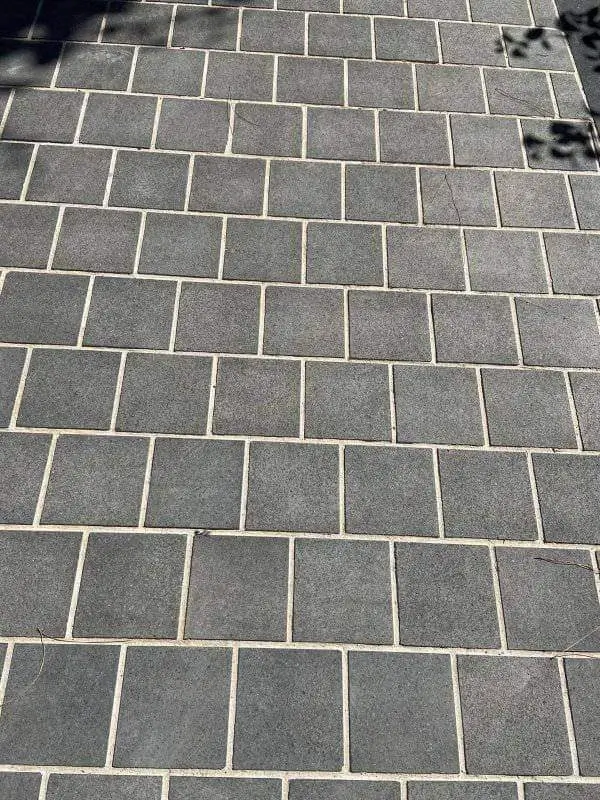
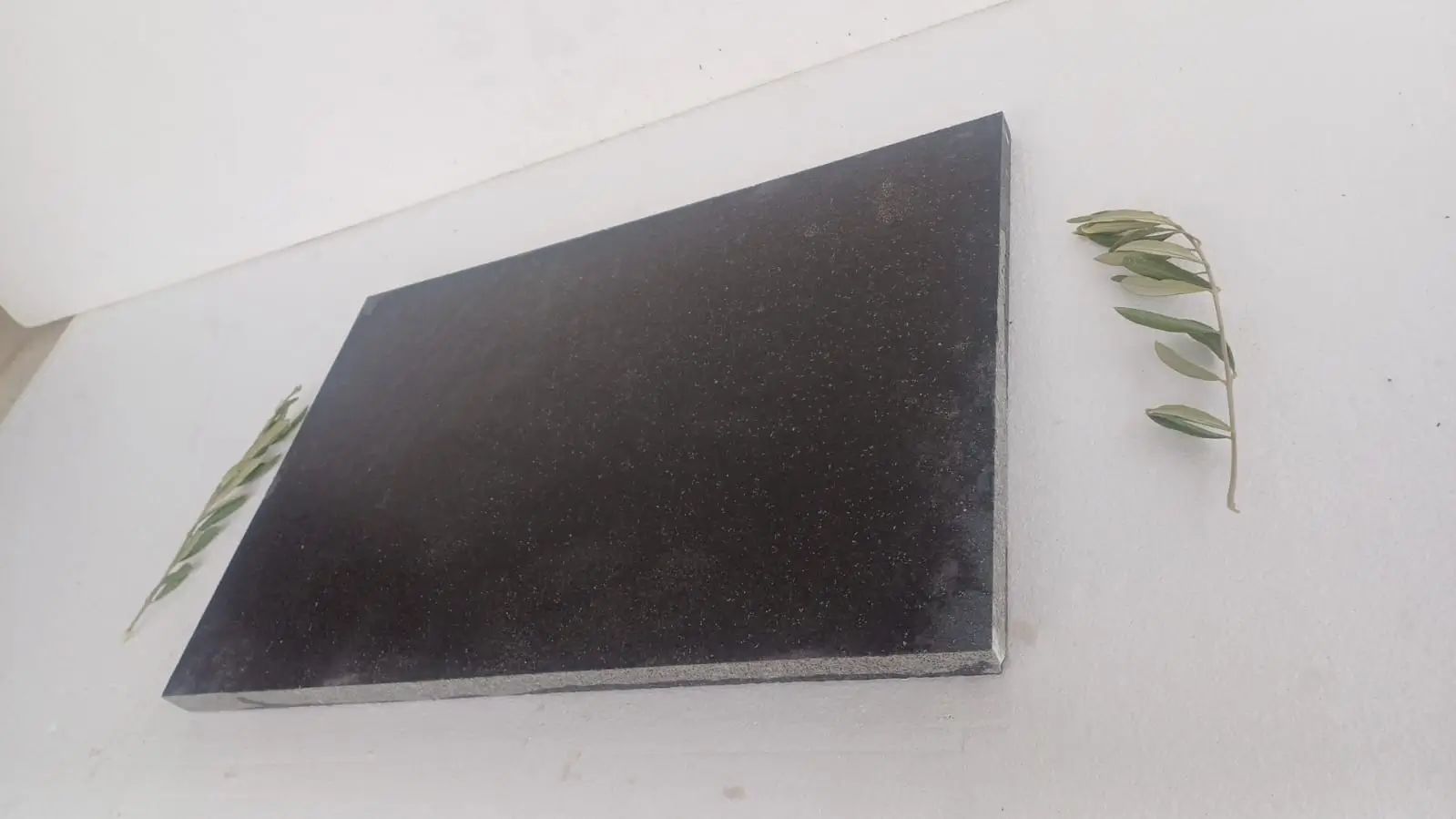
Cave Creek’s high-desert aesthetic creates a natural design context for darker stone — the rugged terrain, native vegetation, and architectural character of the area all lean toward materials with depth and tactile variation. Black limestone delivers exactly that, with a surface that gains character over time rather than degrading visually. The material’s density — typically in the 160–165 lb/ft³ range — also means it handles the point loads common in outdoor renovation scenarios without the micro-cracking you’d see in softer alternatives.
Beyond aesthetics, black limestone paving slabs in Arizona perform well thermally in a counterintuitive way. The darker surface does absorb more solar radiation initially, but the stone’s thermal mass moderates heat release after sunset, creating more comfortable evening surfaces than lighter concrete alternatives in comparable conditions. Factor that thermal mass characteristic into your seating area orientation during the design phase — it’s one of the less obvious reasons Arizona modernization projects increasingly specify this material.
- Compressive strength typically ranges from 12,000 to 15,000 PSI, exceeding most exterior concrete applications
- Natural cleft and honed finishes offer surface variation that hides minor settling better than polished alternatives
- The material’s interconnected pore structure allows controlled moisture movement without hydrostatic pressure buildup
- Dark pigmentation comes from mineral composition, not surface treatment — meaning color depth is permanent
Assessing Your Existing Surface Before Resurfacing
Your starting point for any black limestone resurfacing Cave Creek project is a thorough substrate evaluation — not a visual inspection, but a systematic structural assessment. Tap-testing every existing paver or slab to identify hollow spots takes time, but it tells you exactly which areas have lost bond and which sections of subbase have shifted. Skipping this step means you’re resurfacing over a problem you haven’t solved.
Drainage is the second evaluation priority. Cave Creek’s monsoon events deliver intense, short-duration rainfall that overwhelms poorly sloped surfaces. You need a minimum 1.5% cross-slope to move water efficiently — 2% is more reliable in practice. Check existing slope with a long level and a tape measure before committing to the resurfacing approach. In projects around Chandler, where clay content in native soil creates heave pressure during saturation events, even properly installed surfaces can shift enough to reverse drainage slope over a 5–7 year period.
- Tap-test all existing slabs systematically — hollow sound indicates bond failure beneath
- Measure cross-slope at multiple points to confirm drainage geometry is still functional
- Check joint condition — deteriorated joint sand allows sub-base washout during monsoon events
- Look for efflorescence patterns, which reveal where moisture is consistently migrating through the existing base
- Identify any tree root encroachment within 10 feet of the project boundary
Base Preparation for Black Limestone Installation
The base specification for black limestone resurfacing Cave Creek differs from new construction in one important way: you’re working with a partially compromised system. Your aggregate base may have consolidated unevenly over the years, and the moisture content at depth can vary significantly across a single project area. Excavating to confirm actual base depth — not assumed depth — is a non-negotiable step before you commit to a bedding approach.
For most Cave Creek resurfacing scenarios, a compacted Class II aggregate base of 4–6 inches is sufficient when the existing subgrade is stable. If you’re encountering the decomposed granite subgrade typical of the area, you can often leverage its natural compaction characteristics as a structural asset rather than replacing it entirely. A 1-inch bedding layer of coarse sand or crusher fines goes over the compacted base, screeded to a consistent depth before slab placement. At Citadel Stone, we recommend specifying black limestone paving slabs in Arizona at a minimum 1.25-inch thickness for renovation projects where the base may have minor variability — the additional thickness provides a meaningful tolerance buffer for outdoor refreshing work on older substrates.
Slab Sizing and Joint Spacing in Arizona Heat
Cave Creek’s temperature range — regularly swinging from 35°F winter nights to 110°F summer afternoons — creates thermal expansion demands that your joint specification must address directly. Black limestone expands at approximately 4.8 × 10⁻⁶ per °F, which is lower than concrete but still meaningful across large format slabs. For 24×24-inch slabs, you’re looking at a linear expansion of roughly 0.035 inches across a 75°F temperature swing — enough to cause edge lifting if joints are undersized.
The field standard of 3/16-inch joints works for many climates, but in Cave Creek conditions you should be specifying 1/4-inch minimum for slabs 18 inches or larger. For large-format slabs — 24×48 or 36×36 — move to 3/8-inch joints and use a polymeric sand with a high-temperature rating above 140°F. Standard polymeric sands can soften and lose structural integrity at surface temperatures that black limestone reaches on August afternoons. In projects across Tempe, where similar thermal conditions apply in urban heat island zones, this joint sizing approach has consistently outperformed the 3/16-inch standard over multi-year observation.
- Minimum joint width: 1/4 inch for slabs 18 inches or larger in Arizona conditions
- Large-format slabs (24×48 or larger): specify 3/8-inch joints with high-temperature polymeric sand
- Expansion joints at perimeter and every 10–12 feet in large continuous fields
- Perimeter expansion joints must be filled with compressible backer rod and polyurethane sealant, not mortar
Selecting Finish Types for Arizona Outdoor Spaces
Your finish selection carries both safety and maintenance implications that become more pronounced in a renovation context where the material needs to perform consistently across changing use patterns. Natural cleft black limestone provides the highest inherent slip resistance — DCOF values typically above 0.60 — making it the default recommendation for pool surrounds, entry approaches, and any surface that sees wet-foot traffic. Honed finishes offer a refined aesthetic but drop DCOF readings to the 0.42–0.55 range, which is acceptable for dry-use patios and walkways but marginal for pool deck applications.
Brushed and leathered finishes represent a useful middle ground for Cave Creek renovation projects. They deliver more visual refinement than natural cleft while maintaining DCOF values in the 0.55–0.65 range. The texture also reduces the mirror-finish heat glare that polished black stone produces in direct Arizona sun — a practical comfort consideration your clients will notice immediately. For black slab renovation Arizona work that prioritizes a contemporary look without sacrificing safety, the leathered finish is worth specifying as the standard rather than an upgrade.
You can explore our natural black limestone available to review finish options alongside thickness specifications before finalizing your renovation material order.
Sealing Protocols for Black Limestone in Cave Creek
Sealing black limestone paving slabs in Arizona serves a different primary function than it does in humid climates. Here, you’re not primarily managing water intrusion — you’re managing UV degradation and the slow leaching of mineral binders that Arizona’s alkaline groundwater can accelerate. An impregnating penetrating sealer with silane-siloxane chemistry is the correct specification, not a topical film-forming sealer that traps vapor beneath the surface.
The application window matters more than most specifications acknowledge. Sealing newly installed black limestone before the stone has fully dried — typically 48–72 hours in Cave Creek’s low humidity — traps residual moisture that compromises sealer adhesion. Field testing with a moisture meter to confirm readings below 0.5% before sealer application prevents this failure mode entirely. Resealing intervals in Cave Creek conditions should run every 24–36 months, not the 48–60 month intervals that work in cooler climates. The UV index at Cave Creek’s elevation accelerates sealer breakdown faster than most product data sheets acknowledge.
- Specify penetrating silane-siloxane sealer — not topical film-forming products
- Confirm moisture content below 0.5% before application using a calibrated moisture meter
- Apply in cooler morning hours — sealer applied to surfaces above 90°F flashes before proper penetration
- Resealing interval: every 24–36 months in Cave Creek conditions
- Test sealer efficacy annually with water bead test — if water absorbs rather than beads, reseal immediately
Logistics and Delivery Planning for Cave Creek Projects
Cave Creek’s semi-rural road network creates delivery constraints that affect project scheduling more than most contractors anticipate. Narrow roads, private easements, and limited turnaround areas mean you need to confirm truck access before finalizing your material order — not after it’s loaded and en route. A flatbed truck carrying 4,000 lb of black limestone slabs needs a 40-foot straight run to offload safely, and that’s not always available on Cave Creek’s smaller residential parcels.
Warehouse stock levels directly affect your project timeline. Citadel Stone maintains Arizona warehouse inventory specifically to reduce the 6–8 week import lead times that off-the-shelf ordering creates. Confirming warehouse availability for your exact slab size and finish before committing to an installation schedule prevents the costly situation of having a prepared base exposed to weather while waiting on material. For Surprise and other outer metro projects, lead times from warehouse to delivery site typically run 3–5 business days when stock is confirmed on hand. Outdoor refreshing projects on a tight seasonal timeline — particularly those targeting the fall installation window before winter — benefit most from early material reservation.
- Confirm truck access dimensions before ordering — measure available turnaround and approach clearances
- Reserve warehouse stock at least 3 weeks before planned installation start
- Schedule delivery for early morning to avoid afternoon heat that accelerates bedding material dry-out
- Account for staging area on-site — black limestone slabs in larger formats require flat, stable stacking surfaces
Maintenance Expectations for Long-Term Black Limestone Performance
Realistic maintenance planning separates clients who are satisfied with their black limestone resurfacing Cave Creek investment from those who feel disappointed by year five. Black limestone in Arizona conditions is a low-maintenance material — but not a zero-maintenance one. The distinction matters for setting client expectations accurately and for designing a maintenance schedule into your renovation handoff documentation.
The primary maintenance task is joint sand replenishment. Monsoon events wash fine joint material out of gaps over time, and the resulting loose joints allow slab movement that accelerates surface unevenness. Plan for joint sand top-up every 2–3 years as a standard maintenance item, not an exception. Polymeric sand used in the original installation hardens after activation, but annual inspection with a thin probe confirms whether voids have developed beneath the hardened surface layer. Catching sub-surface voids early — before they create trip hazards — keeps your maintenance costs predictably low versus reactive repair. Cave Creek paving updates on existing installations regularly reveal this exact pattern: surfaces that received biennial joint inspection outlast comparable installations by 8–12 years.
Getting Your Black Limestone Resurfacing Cave Creek Specification Right
Black limestone resurfacing Cave Creek projects reward methodical specification and penalize shortcuts in base evaluation and joint sizing. The material itself is exceptionally durable when installed correctly — you can realistically project 20–25 year performance from a well-executed renovation. The variables that determine whether you reach that projection are all in the preparation and specification phase, not the stone selection itself. Your substrate assessment, drainage geometry, joint width, and sealing protocol define the outcome more than any material quality difference between suppliers. Arizona black slab renovation work done at this specification level consistently outperforms the generic renovation approach by a significant margin, and your clients will recognize that difference within the first monsoon season. Beyond Cave Creek, if you’re exploring related Arizona stone applications, Black Limestone Paving Slab Rooftop Terraces for Paradise Valley Views offers useful context on how this material performs in elevated, high-exposure Arizona environments with distinct structural considerations. We create stunning contrasts with limestone paving black in Arizona.