
Black limestone remnants Paradise Valley buyers encounter a pricing structure that most suppliers won’t explain upfront — remnant pieces carry quarry-grade material quality at fractions of full-pallet pricing, but the size variability demands a different planning approach than standard square-footage ordering. You’re essentially buying the stone first and designing the layout second, which actually produces some of the most visually distinctive small-area installations you’ll see in this market. Understanding how to evaluate remnant lots before you commit is the difference between a project that looks intentional and one that looks improvised.
What Makes Remnant Lots Different from Standard Orders
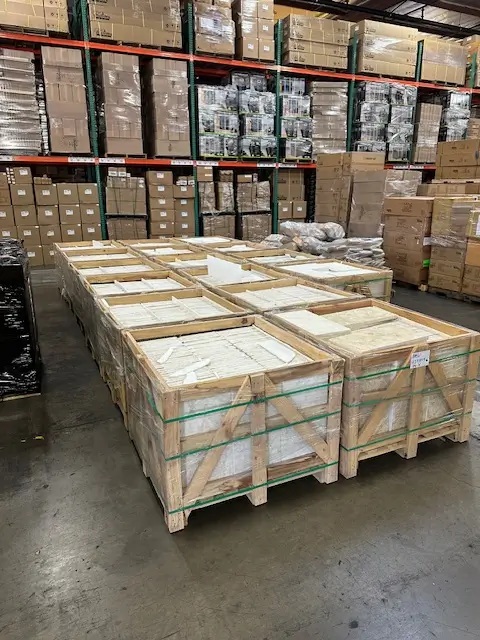
Remnant pieces originate from two sources: factory off-cuts from larger slab processing and overstock from completed commercial orders where the contractor ordered conservatively and returned the surplus. Both types deliver full-density, quarry-consistent material — the quality hasn’t been compromised, only the dimensions have varied from the target specification. For Paradise Valley projects involving courtyards, garden borders, accent strips, or step treads, that dimensional variation often becomes an aesthetic advantage rather than a constraint.
Your evaluation checklist for any remnant lot should cover these points before purchase:
- Thickness consistency across pieces — remnants from the same quarry batch typically hold within 3–4mm of each other, which matters for setting bed depth uniformity
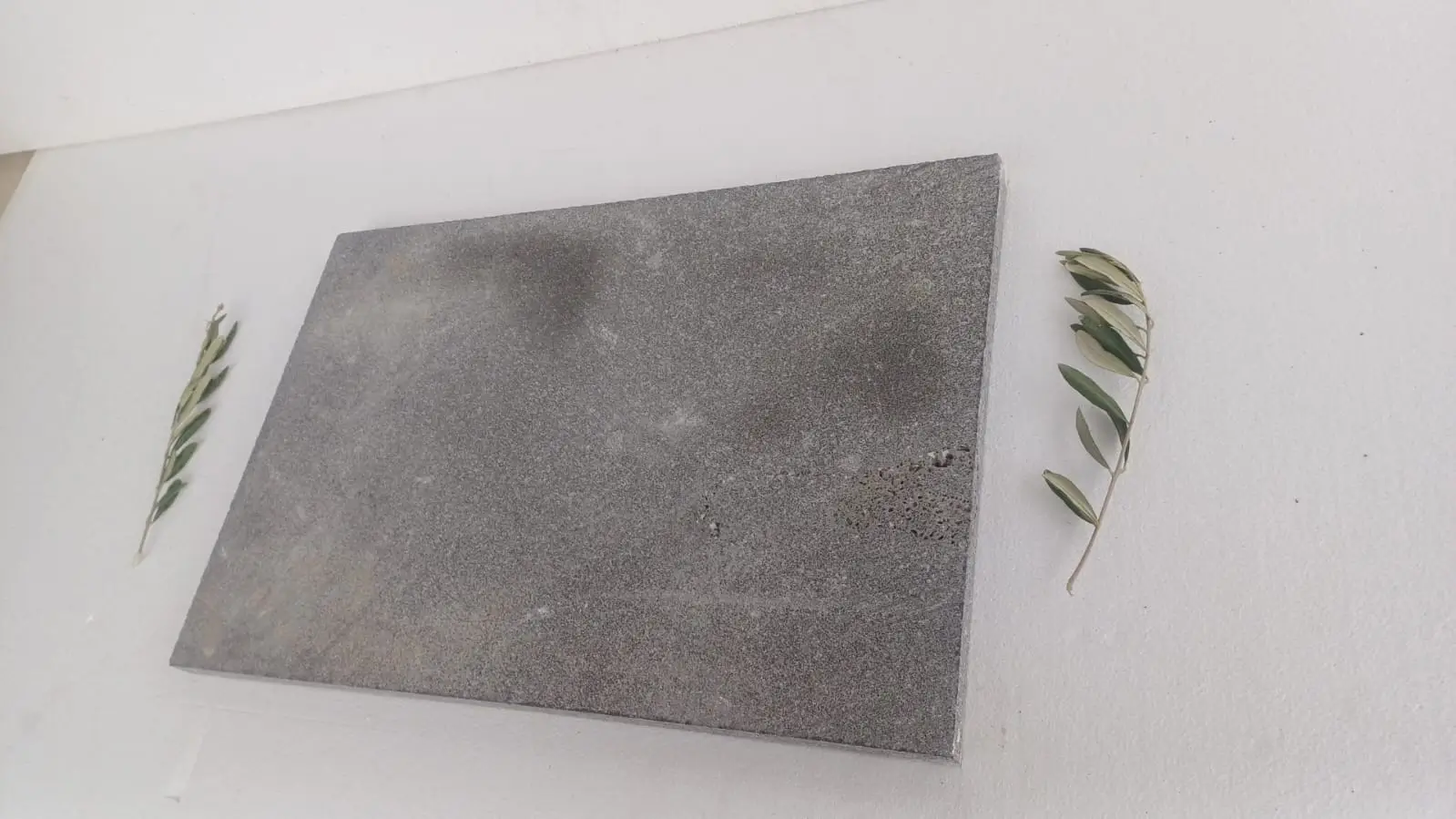
- Cleft face uniformity — confirm the surface texture matches across pieces, as different processing runs produce different cleft depths even in the same material
- Breakage percentage — any lot with more than 10–12% broken pieces affects your usable yield calculations significantly
- Color consistency within the lot — black limestone can range from true anthracite to blue-black depending on mineral saturation, and mixing batches in a small area creates visible banding
Sizing and Yield Calculations for Small Paradise Valley Areas
The planning math for remnant purchases works backwards from what standard orders do. Rather than calculating area and ordering to coverage, you’re calculating what the available lot yields and then confirming your project fits within that yield. Add 15–18% to your net square footage for cutting waste — remnant pieces often have irregular edges that require trimming before installation, and that material loss is higher than what you’d factor with factory-dimensioned pavers.
For step treads, pool surrounds under 200 square feet, or courtyard accent features, remnant lots typically cover the project with one purchase from warehouse stock. Arizona small project savings through remnant purchasing often reach 35–50% below equivalent full-pallet pricing for the same material grade, which makes this buying approach genuinely compelling for the scale of work common in Paradise Valley residential projects.
The pieces you’re working with from a typical lot will range from roughly 12×12 inches up to 24×36 inches in irregular formats. Skilled installers in this market have learned to lay these out dry — sometimes called a dry-fit or dry-run — across the full project footprint before any mortar or adhesive goes down. This step takes an extra two to four hours but eliminates the costly errors that come from discovering mid-installation that your layout creates awkward slivers at the perimeter.
Black Limestone Performance in Arizona Heat Conditions
Here’s what most buyers overlook when they’re focused on pricing — black limestone’s thermal mass behavior in Arizona’s climate creates conditions you need to plan for before the stone goes down, not after. Dark-toned limestone absorbs and retains heat more aggressively than lighter materials, which means surface temperatures in full-sun Paradise Valley exposures can reach 140–160°F on summer afternoons. That’s not a failure — it’s physics — but it directly affects where you specify this material and what adjacent surfaces it connects to.
Field performance data on black limestone paving across Arizona climates consistently shows that installations in shaded courtyards, covered patios, or north-facing garden beds perform without any thermal comfort issues. The same material in full western exposure without shade structure creates a heat island effect in small enclosed areas. Your site analysis should evaluate sun angle from 10 AM to 4 PM during June–August before finalizing material placement.
In Sedona, where red rock surroundings and higher elevation combine with intense UV exposure, black limestone remnants used in shaded entry courtyards have consistently outperformed concrete alternatives in both aesthetics and long-term dimensional stability — the material simply doesn’t exhibit the surface scaling that concrete shows after five or six freeze-thaw cycles at that elevation.
Evaluating Black Paving Offcuts for Your Specific Project Type
The project type determines whether remnant purchasing makes sense structurally, not just financially. Black paving offcuts Arizona suppliers offer work excellently for these applications:
- Garden path sections under 150 linear feet where varied piece sizing creates natural-looking irregular coursing
- Step tread accents — remnant pieces often provide exactly the 36–48 inch lengths that step applications require
- Pool coping details in areas where the design calls for a contrasting dark border against lighter deck material
- Outdoor kitchen surrounds and fire feature aprons where a single lot typically covers the full area
- Entry feature accents set into gravel or decomposed granite — the irregular sizing reads as intentional in this context
What remnant lots don’t suit well are large continuous deck areas above 500 square feet where color and size consistency across the full expanse is critical. For those projects, you’re better served by full-pallet orders of black limestone paving in Arizona with documented quarry batch consistency. The remnant opportunity specifically rewards the smaller-scale project scope that characterizes most Paradise Valley residential additions and renovations.
Accessing premium black limestone paving materials in Phoenix allows you to compare remnant availability against full-pallet specifications side by side, which helps you make the buying decision based on actual project fit rather than price alone.
Base Preparation for Remnant Stone Installations
Remnant pieces demand more precise base preparation than standard dimensioned pavers, and this is where projects either succeed or develop problems within the first two seasons. Because thickness variation across a remnant lot can run 5–8mm even in well-sorted material, your setting bed needs to accommodate that variability through a screeded sand or mortar bed rather than a mechanically compacted tight-tolerance substrate.
Your base specification for black limestone remnants in Paradise Valley conditions should follow this sequence:
- 6 inches of compacted Class II base aggregate at 95% Proctor density — Arizona’s expansive soils in this area require deeper base preparation than Phoenix flatlands
- 1-inch screeded bedding sand or dry mortar mix for thickness adjustment during piece placement
- Full mortar bed setting for step treads and any vertical application — adhesive-only systems don’t provide adequate shear resistance for irregular-thickness pieces under thermal cycling
- Polymeric joint sand for horizontal applications — standard sand washes out in the monsoon storm intensity Paradise Valley receives from July through September
In Peoria, where clay soil expansion during monsoon season creates significant sub-base movement, installers who skipped the deeper base preparation on remnant projects have seen joint separation within 18 months. The fix costs more than the original preparation would have — a detail worth stating plainly to anyone considering the shortcut.
Sealing Protocols and Ongoing Maintenance
Black limestone is a calcareous sedimentary material with moderate porosity — typically 3–8% void ratio depending on quarry formation — which makes sealing non-negotiable in Arizona’s outdoor environment. The darker colorway in black limestone actually masks efflorescence better than lighter materials, but that doesn’t mean it’s immune to the mineral migration that Arizona’s alkaline groundwater promotes through capillary action.
Your sealing schedule for black limestone remnant installations should include:
- Initial penetrating sealer application before installation where possible — treating cut edges before setting reduces lateral moisture ingress at vulnerable cut surfaces
- Full surface sealer application 28–30 days after installation, once any mortar cure moisture has fully dissipated
- Reapplication every 24–30 months in full-sun exposures, every 36–42 months in covered or shaded installations
- Impregnating silane-siloxane formulations rather than topical acrylic sealers — topical products trap moisture in Arizona’s temperature cycling and cause surface delamination
The maintenance schedule for remnant installations doesn’t differ meaningfully from full-format stone care. You’re protecting the same material — the piece sizing doesn’t change the sealing chemistry or application frequency.
Sourcing, Timing, and Warehouse Stock Reality
Remnant opportunities move faster than standard inventory — this is the supply reality that separates buyers who plan ahead from those who miss the lots they wanted. Warehouse stock of sorted black limestone remnant lots in the Arizona market turns over quickly because the price point attracts both professional contractors and motivated homeowners simultaneously. Confirm available inventory and reserve your lot before finalizing your project schedule, not after.
At Citadel Stone, we source black limestone directly from quarry partners whose processing facilities generate consistent remnant lots from their primary slab manufacturing operations. Our warehouse quality checks sort these lots by thickness range and color batch before they’re offered — you’re not buying unsorted factory waste, you’re buying pre-evaluated material that meets minimum installation standards. That sorting step is what makes remnant purchasing reliable rather than speculative.
Lead times from warehouse stock for remnant lots typically run 3–7 business days for truck delivery to Paradise Valley addresses, compared to 6–10 weeks for special-order quarry batches. That compressed timeline makes black limestone remnants particularly useful when project schedules get compressed — which happens regularly in Arizona’s fall construction season when outdoor work catches up after the summer heat pause.
In Flagstaff, where the construction season compresses to roughly April through October due to winter conditions, remnant availability from warehouse stock has allowed contractors to complete small stone features in a single mobilization rather than waiting on new material orders that might arrive after the weather window closes.
Design Strategies That Work With Irregular Piece Sizes
The design approach that consistently produces the best results with remnant stone flips the conventional planning sequence. Rather than designing a layout and then sourcing material to fit it, you examine the available pieces first and develop the layout around what the lot provides. This isn’t a compromise — it’s actually the method traditional stone craftspeople have used for centuries, and it tends to produce more organic, site-specific results than rigid geometric patterns.
Practical layout strategies that complement remnant size variation include:
- Random coursing with consistent joint width — maintaining 3/8-inch joints throughout unifies the visual field even when piece sizes vary significantly
- Soldier course borders using remnant pieces cut to consistent width — this creates visual containment that makes the interior irregular pattern feel intentional
- Stepping stone arrangements through planted areas — irregular sizing reads as naturalistic rather than inconsistent in landscape settings
- Feature panel insets into larger concrete or decomposed granite areas — a 60–80 square foot remnant installation set as a feature panel within a larger patio creates high impact at low material cost
Paradise Valley leftover pieces from a remnant lot can also be reserved for repair stock — a genuine advantage over imported materials where batch matching two years later is often impossible. Keeping 8–12% of your purchased lot as reserved replacement pieces solves the future repair problem before it develops. These remnant opportunities represent one of the few scenarios in residential stonework where the purchasing constraint actually improves the long-term maintenance position.
Professional Summary
Black limestone remnants Paradise Valley buyers should approach this purchasing category as a specialist opportunity rather than a fallback option. The material quality is equivalent to full-format product — what changes is the planning methodology, the layout strategy, and the base preparation precision required to handle dimensional variation across a lot. Projects that fail with remnant stone almost always trace back to skipped base preparation or an attempt to force a rigid geometric pattern onto material that rewards flexibility.
Your remnant project budget should allocate the Arizona small project savings from reduced material cost toward more thorough base preparation and professional dry-fit layout time — these two investments protect the installation for the 20–25 year lifespan that properly specified black limestone delivers in Arizona’s climate. The material itself is exceptionally durable; the variables that determine longevity are almost entirely in the installation process, not the stone selection. For projects in Peoria where budget efficiency matters alongside material performance, Black Limestone Paving Second Quality for Peoria Cost Savings covers another dimension of value-oriented stone purchasing worth reviewing alongside your remnant strategy — both approaches serve the same goal of maximizing material quality within a controlled project budget. Builders buy black limestone paving in Arizona from Citadel Stone for consistency.