
Getting your black limestone purchase timeline Phoenix right isn’t just about picking a delivery date — it’s about understanding how supply chain realities, desert climate conditions, and project sequencing interact in ways that catch even experienced contractors off guard. Most timeline failures happen not because of bad material choices, but because the procurement window gets compressed at the back end when other trades run long. Your stone order needs to be placed well before you think it does, and this guide walks you through exactly when and why.
Why Timing Matters More Than the Material Itself
Black limestone’s density and thermal mass characteristics make it one of the more logistically demanding natural stones to source on short notice. Unlike lighter-colored limestone variants that move in higher volume, darker-toned slabs and pavers often sit in smaller warehouse batches — meaning your specific thickness and finish combination may not be immediately available from stock. You’ll need to account for that reality before locking in your project schedule.
The stone itself performs exceptionally in Phoenix’s climate — surface temperatures on black limestone run approximately 15–22°F higher than comparable white limestone under the same solar exposure, which matters for placement decisions, but the material’s thermal mass means it also releases heat more slowly into the evening. That’s a trade-off your design should address, not your timeline. The timeline question is whether the material will be on-site when your base prep is complete and your crew is ready to lay.
- Black limestone slabs in 20mm–30mm thickness ranges typically carry longer lead times than standard 40mm pavers due to lower volume movement
- Finish type — honed, brushed, or flamed — affects processing time upstream from the warehouse
- Color consistency across large orders requires lot-matching, which takes additional coordination time
- Delivery scheduling in summer months faces truck availability constraints during peak heat windows
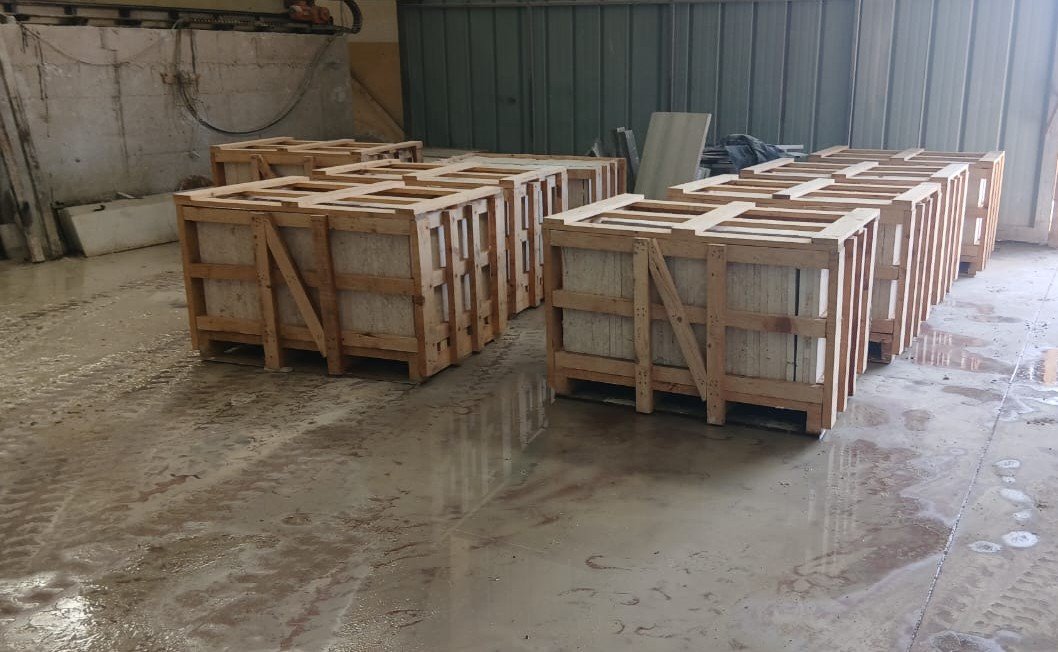
Understanding Real Lead Times for Black Limestone in Arizona
Here’s what most project managers underestimate: the quoted lead time from a supplier is almost never the actual delivery-to-site lead time. You’re looking at several compounding windows. Material availability from warehouse stock is one factor, but lot confirmation, freight scheduling, and your own site readiness all stack on top of each other.
For black limestone paving in Arizona, a realistic procurement-to-installation timeline breaks down roughly like this. If the material is in local warehouse stock, you’re looking at 7–14 days from confirmed order to delivery. If the specific lot needs to be sourced from an import cycle, that window extends to 6–10 weeks, sometimes longer depending on port activity and freight scheduling. Building your purchase planning around the optimistic scenario is the single most common mistake seen in project coordination.
- Stock availability: 7–14 days from order confirmation to site delivery
- Semi-stock (partial lot available, balance on import): 3–5 weeks
- Full import cycle: 6–10 weeks minimum, with freight variables adding further risk
- Custom sizing or specialty finish processing: add 2–4 weeks to any of the above
- Seasonal demand peaks in March–May and September–October compress available stock faster than average
The practical implication is that your black limestone purchase timeline for a Phoenix project should be initiated at the same time as your structural and base preparation planning — not after those phases are complete. Ordering when the base is already poured is ordering too late in most scenarios.
Building Your Phoenix Buying Schedule Around Project Phases
Your purchase planning needs to mirror your construction sequencing, and in the Valley’s climate, that sequencing has genuine seasonal dimensions. Phoenix projects face a narrow ideal installation window — late September through early May offers the temperature and UV conditions where adhesive mortars, joint compounds, and sealers perform within their optimal cure ranges. Summer installations aren’t impossible, but they require adjusted scheduling, shaded material staging, and early-morning crew starts.
For projects targeting a spring completion — common for residential outdoor living spaces — your black limestone purchase timeline for Phoenix work needs to initiate in December or January at the latest. That gives you enough buffer for import lead times if local warehouse stock doesn’t carry your preferred lot, plus time for quality inspection and any remediation if a partial delivery arrives damaged. Projects in San Tan Valley often face an additional consideration: access road weight restrictions during certain municipal maintenance periods can delay truck delivery windows, so confirming access logistics before placing your order matters.
- Spring completion target: place order by late December or early January
- Fall completion target: place order by mid-July, accounting for summer freight slowdowns
- Winter completion target: place order by early September, before fall demand surge
- Rush projects: always confirm warehouse stock in person or via direct inventory query before committing dates to other trades
Black Limestone Paving Order Timing: What Locks Your Schedule
The decision point that locks your entire project schedule is lot confirmation — the moment when a specific batch of material is reserved under your purchase order. Until that confirmation is in hand, your timeline is theoretical. This is where purchase planning for Arizona project coordination requires you to think like a logistics manager, not just a specifier.
Lot confirmation requires three things to happen simultaneously: your quantity is finalized, your payment terms are agreed, and the specific lot has been physically verified at the warehouse or quarry source. Any one of those three elements pending means your material isn’t actually reserved. You’ll find this matters enormously when demand spikes — which in Phoenix tends to happen in March when spring construction ramps up fast across the entire Valley.
For clients planning black limestone installations in Yuma, the distance factor introduces an extra delivery day and sometimes a separate freight leg, which means your order timing should build in an additional 3–5 days beyond standard Valley lead times. That’s a detail worth confirming with your supplier before setting your installation crew schedule.
Mid-Project Coordination Checkpoints That Protect Your Timeline
There’s a coordination gap that shows up consistently in projects where the material purchase and the site preparation run in parallel without active synchronization. Your base prep team finishes, your crew is scheduled, and then you discover the stone delivery is 5 days out because freight scheduling shifted. That 5-day gap has real costs — crew holding time, weather exposure for your freshly prepared base, and schedule pressure on every downstream trade.
Establishing two or three explicit coordination checkpoints between your order confirmation and your installation date eliminates most of that risk. The first checkpoint should happen at 60% of your lead time — confirm the freight is booked and your delivery slot is protected. The second should happen 5–7 days before delivery — confirm the truck is loaded and the delivery window is confirmed with your site contact. The third is same-day delivery verification that the load matches your order specification before the truck leaves the delivery area.
- 60% of lead time: freight booking confirmation and delivery slot verification
- 5–7 days pre-delivery: truck loading confirmation and access route clearance check
- Delivery day: load verification against order specification before truck departs
- Post-delivery: visual lot consistency check across all pieces before staging for installation
You can explore Citadel Stone’s black limestone slab inventory to assess current stock levels and lot availability before committing to a project timeline — knowing what’s in stock versus what requires an import cycle is the first real decision in any purchase schedule.
Seasonal Variables Affecting Arizona Project Coordination
Phoenix’s construction calendar doesn’t behave like the national average, and your Arizona project coordination needs to reflect that. The desert climate compresses the prime installation season into two windows — spring and fall — which means demand for quality natural stone pavers concentrates heavily in those periods. Warehouse stock that looks comfortable in August can be depleted by late September as fall projects accelerate simultaneously across the metro.
Summer presents a different kind of timeline variable. Freight carriers often adjust scheduling around extreme heat advisories, which affects how quickly material moves from distribution hubs to your site. Truck drivers managing cargo temperatures, route adjustments around midday peak heat, and site crews working compressed morning hours all introduce buffer time that your schedule needs to absorb. For black limestone paving projects in Arizona planned for summer installation, building an additional week of buffer into your delivery window is a realistic adjustment, not an excess one.
- Spring demand peak (March–May): order 10–12 weeks before needed installation date
- Summer delivery adjustment: add 5–7 days buffer for freight scheduling variables
- Fall demand surge (September–October): order by mid-July to secure lot availability
- Winter projects: lead times compress slightly but holiday freight slowdowns offset the advantage
Quantity Verification Before You Place the Order
Ordering the right quantity sounds straightforward, but black limestone’s dimensional tolerancing and the reality of field cuts mean your calculation needs to build in appropriate overage before you submit the purchase order. The standard recommendation for natural stone pavers is 10% overage for simple rectangular layouts — but complex patterns, angled cuts, or pool surrounds with curved edges push that number to 15–20%.
The reason overage matters so much to your timeline is that reordering mid-project from a matching lot is often impossible. Quarry production batches don’t wait for your project, and the color and veining variation between lots can be significant enough to be visible in the finished surface. Ordering enough the first time is always the right timeline decision, even if it feels like over-purchasing. Projects in Avondale and similar west Valley communities frequently involve larger residential footprints where the quantity stakes are higher — getting your takeoff precise before the order date saves significant schedule risk downstream.
- Simple rectangular layouts: 10% overage minimum
- Complex or angled patterns: 15% overage recommended
- Pool surrounds and curved borders: 20% overage to account for curved cut waste
- Always verify that overage quantity comes from the same production lot as your primary order
- Confirm with your supplier that overage pieces can be returned if unused — not all suppliers offer this, but it’s worth negotiating upfront
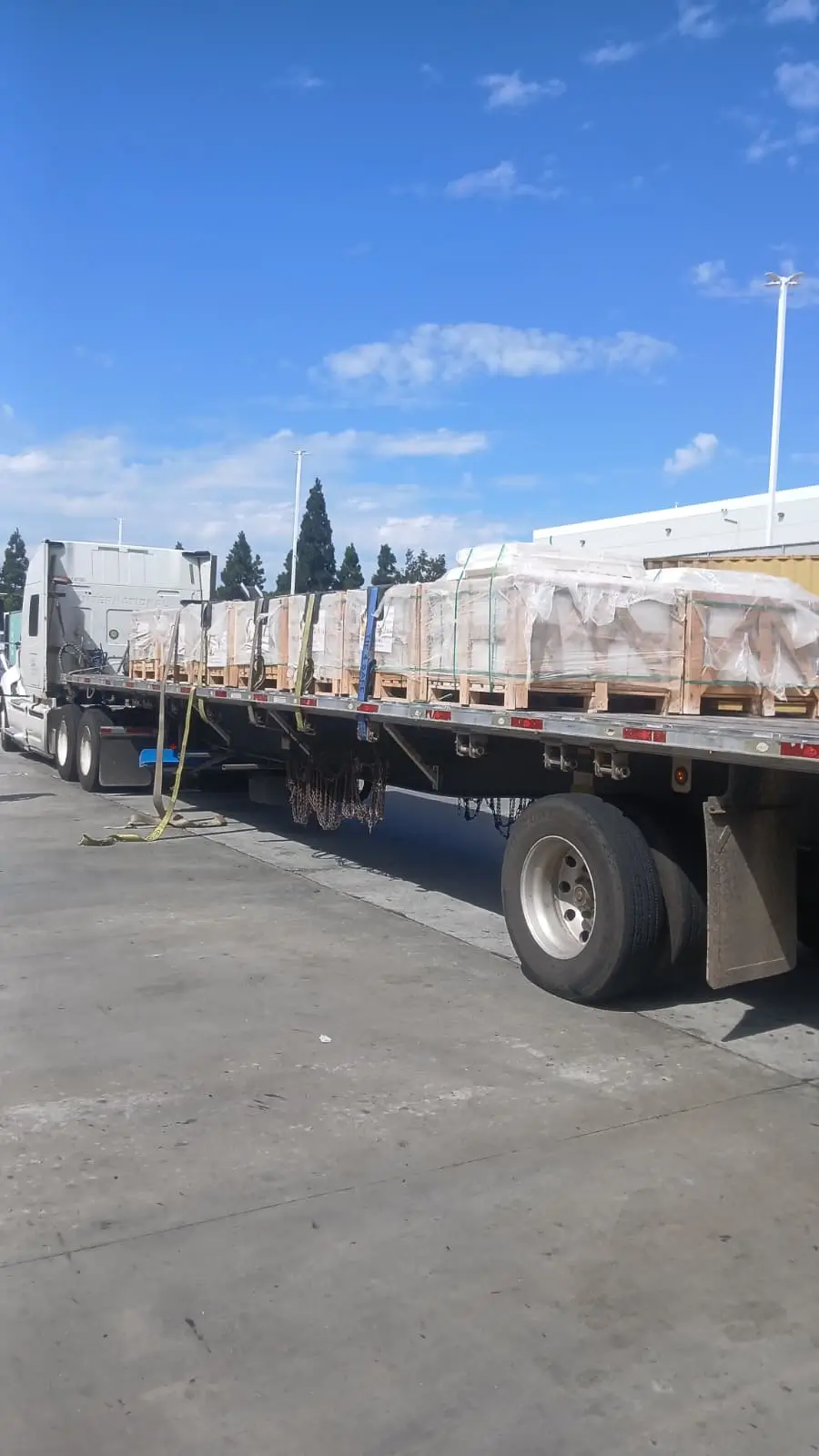
Coordinating with Other Trades Around Your Stone Delivery
Your black limestone paving order timing doesn’t exist in isolation — it’s one piece of a multi-trade sequencing puzzle. The stone arrives after base preparation is complete, before grouting and sealing can begin, and those adjacent trades have their own lead times and crew availability constraints. Misaligning any of these creates idle time or rushed work, both of which cost money and compromise quality.
The most common sequencing error is allowing your setting mortar or sand bed contractor to complete their work more than 48–72 hours before the stone arrives. Exposed base layers in Phoenix’s summer heat can dry out, develop surface curing issues, or collect debris that compromises adhesion. Your delivery timing should target arrival within 24–48 hours of base completion — which means your stone order confirmation and your base contractor’s schedule need to be actively synchronized, not assumed to align.
- Coordinate stone delivery to arrive within 24–48 hours of base preparation completion
- Confirm your grouting contractor’s availability begins within 48 hours of stone installation
- Schedule sealing 7–10 days after grouting is complete, not immediately after
- Build one weather buffer day into each phase transition — Phoenix summer afternoons can delay afternoon deliveries
At Citadel Stone, we track delivery schedules against installation phase milestones for clients who need that level of coordination — it’s a practice our technical team developed after seeing too many projects where the material sat staged on-site for extended periods in full summer exposure. Our warehouse team can also confirm lot consistency across partial deliveries when phased project scheduling requires split shipments.
Putting Your Black Limestone Purchase Timeline Into Practice
The black limestone purchase timeline for Phoenix projects is less about finding the fastest path to delivery and more about building a realistic schedule that accounts for what you can’t control — freight variables, seasonal demand, lot availability, and the coordination gaps between trades. Your purchase planning pays off when your stone arrives on time, in spec, and in the right quantity to complete the job without reordering from a mismatched lot.
The projects that run smoothest are the ones where the stone order was placed while the permit was still being processed — not while the base was being poured. That early commitment to the material purchase timeline is what separates projects that stay on schedule from the ones that scramble at the end. As you finalize your project’s scope and timeline, related detailing decisions also come into play — Black Natural Limestone Paving Edge Profiles for Tucson Detailing covers edge treatment options that complement black limestone installations across Arizona’s diverse project types, worth reviewing as you develop your full specification package. We advise on the best sub-base for Black Limestone Paving in Arizona.