
The thermal mass equation for black limestone pergola Tucson installations shifts dramatically once you factor in shaded surface conditions — and most specifications miss this entirely. Under a pergola or shade structure, black limestone doesn’t accumulate the same radiative heat load as an exposed patio, which changes your thickness requirements, joint spacing, and sealing schedule. Understanding exactly where those numbers land is what separates a spec that performs through decade two from one that starts showing stress fractures by year five. This breakdown covers every variable that determines long-term performance for black paving under Arizona shade structures.
Why Black Limestone Works Under Pergolas in Arizona
The counterintuitive reality of black limestone under a pergola is that shading neutralizes its biggest liability. In full Arizona sun, dark stone surfaces can hit 160°F or higher — a legitimate concern for barefoot traffic and long-term dimensional stability. Under a pergola, however, that surface temperature drops to the 90–110°F range depending on shade coverage, which puts black limestone squarely in the same thermal performance bracket as lighter materials. You get the visual depth and contrast of a dark surface without the full radiant heat penalty.
Black limestone paving in Arizona under shaded structures also demonstrates notably lower thermal cycling stress. The material expands and contracts less aggressively when it isn’t swinging between 75°F at night and 160°F at midday. That reduced cycling range extends joint integrity significantly — field performance data on covered installations shows joint sand retention rates 30–40% better than equivalent exposed installations after three summers.
For covered outdoor spaces in Chandler, where the combination of urban heat island effect and intense solar radiation pushes uncovered surface temps to extremes, black limestone under a pergola delivers the sophisticated aesthetic homeowners want without the thermal management problems of a fully exposed dark surface.
Thickness and Structural Specs for Pergola Flooring
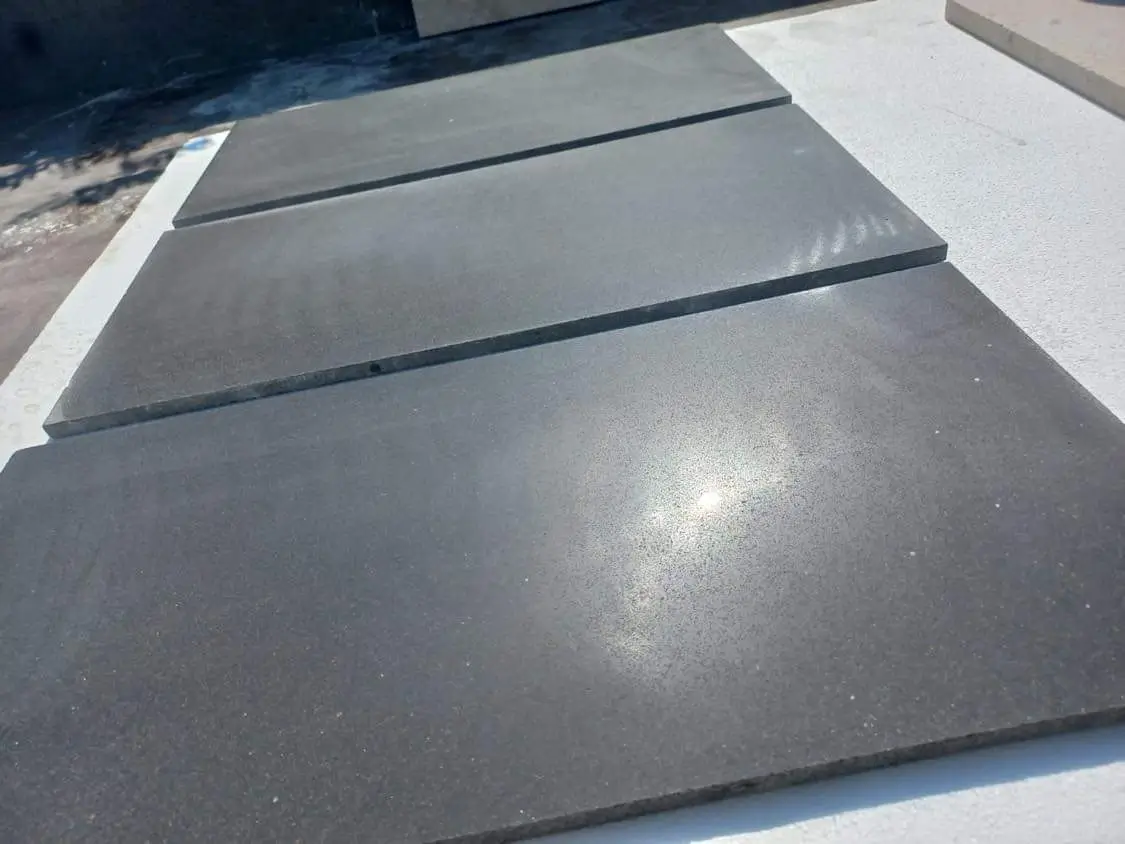
Pergola flooring sees a concentrated load profile that differs from general patio use. Post footings create point loads, furniture legs create recurring localized pressure, and the psychological enclosure of a covered space often increases foot traffic density. For black limestone pergola Tucson applications, the minimum recommended thickness is 1¼ inches for pedestrian-only areas on a properly prepared base. For spaces that will see wheeled furniture, heavy planters, or secondary structures, move to 1½-inch nominal thickness.
- 1¼-inch thickness handles standard pedestrian loads when set over 4 inches of compacted decomposed granite base
- 1½-inch thickness is the correct specification for pergola floors adjacent to outdoor kitchens or spa features where point loads are higher
- 2-inch nominal stock provides a safety margin for installations where soil preparation depth was limited by existing site conditions
- Tensile strength across the 12,000–15,000 PSI range typical of quality black limestone means thickness is primarily a deflection concern, not a crush-resistance issue
- Your base preparation quality matters more than stone thickness — a well-compacted base under 1¼-inch stone outperforms a poor base under 2-inch stone every time
What often gets overlooked is the pergola structure’s drainage shadow. The area directly under the roofline gets minimal rainfall, which means the base stays drier and more dimensionally stable than exposed areas. You can typically reduce base depth by half an inch compared to fully exposed installations without sacrificing performance — but only if the pergola drainage is managed so water doesn’t pool at the perimeter drip line.
Base Preparation for Arizona Shaded Surfaces
Base preparation for Tucson covered areas follows different logic than exposed patio work. The reduced moisture cycling under a pergola means your base won’t experience the same volume change from seasonal wet-dry cycles — but it also means any drainage failure is slower to reveal itself. Compaction standards don’t change: you still need 95% modified Proctor density throughout the aggregate base. What changes is your drainage geometry.
Slope your base toward the pergola perimeter at a minimum 1.5% grade — slightly steeper than the standard 1% for open patios. Water that migrates under the structure edge during rain events needs a clear path out. In areas where the existing grade runs flat or toward the structure, you’ll need to establish positive drainage before any base material goes down. Skipping this step creates a situation where water collects under the most protected section of your installation and stays there.
- Minimum 4-inch compacted aggregate base for residential pergola floors on stable soil
- 6-inch base where site soil is sandy, silty, or shows signs of past settling
- 1.5% minimum slope throughout the base layer, directed away from the pergola structure
- A 1-inch setting bed of coarse concrete sand, screeded to ±⅛-inch tolerance, provides the final leveling layer
- Geotextile fabric between native soil and aggregate base prevents migration on sandy Tucson substrates
Joint Spacing and Thermal Expansion Under Shade
The shaded environment of a pergola structure does change your expansion joint calculations in a meaningful way. Black limestone has a thermal expansion coefficient around 4.7 × 10⁻⁶ per °F — and under a pergola in Tucson, the operational temperature range runs roughly 40°F (winter night) to 110°F (peak summer shade temperature), a swing of about 70°F. Compare that to a fully exposed surface where the swing can reach 120°F or more, and you’re working with significantly less thermal movement to accommodate.
For standard 18×18 or 24×24 field pavers under a pergola, maintain 3/16-inch joints filled with polymeric sand. Expansion joints — full-depth, flexible material — belong at 12-foot intervals rather than the 8–10 feet recommended for exposed black paving under structures in Arizona. The reduced thermal cycling earns you that extra spacing, which translates to fewer visual interruptions in the finished surface. At the perimeter where the pergola flooring meets the post footings, maintain a ¼-inch minimum flexible joint to allow differential movement between the mass of the stone field and the structural concrete.
Projects in Tempe benefit from this reduced joint frequency because urban infill sites often have tighter aesthetic expectations — a pergola floor with fewer expansion breaks presents a cleaner finished surface that suits the dense residential character of the area.
Sealing Black Limestone in Covered Arizona Spaces
Sealing protocols for black limestone pergola Tucson installations differ between covered and exposed applications in ways that matter for your long-term maintenance budget. UV degradation is the primary driver of sealer breakdown on exposed surfaces — you’re typically resealing every two to three years outdoors. Under a pergola, UV exposure drops dramatically, which extends sealer life to four to six years for penetrating impregnator sealers on Arizona shaded surfaces. That’s a significant reduction in lifecycle maintenance cost.
For these installations, use a solvent-based fluoropolymer impregnator rated for natural limestone. Water-based acrylics work adequately on lighter stones but can slightly alter the surface reflectance of dark limestone in ways that become visible as the sealer ages unevenly. The penetrating impregnator enters the stone’s pore structure — typically 8–12% open porosity in quality black limestone — and deposits a hydrophobic barrier without forming a surface film. No film means no peeling, no trapping of moisture, and no surface sheen variation as the product ages.
- Apply first sealer coat within 72 hours of installation completion, after joints have fully cured
- Two-coat application at six-hour intervals provides complete pore penetration on new stone
- Use a low-pressure pump sprayer and back-brush to work sealer into joints — roller application misses joint depth
- Reapplication interval under pergola shade: every 4–6 years versus 2–3 years for exposed surfaces
- Test sealer performance annually with a water bead test — if water soaks in within 5 minutes, reseal that zone
At Citadel Stone, we recommend testing sealer products on a sample piece of your specific stone lot before full application. Black limestone from different quarry beds can vary in absorption rate, and a sealer that works perfectly on one batch may require a longer dwell time on another.
Slip Resistance for Covered Outdoor Spaces
Covered areas create a specific slip-resistance challenge that open patios don’t share to the same degree. Under pergola roofing, moisture from condensation, misting systems, and foot traffic carrying in dew builds up without the rapid evaporation that direct sun provides. This keeps the surface at higher moisture levels for longer periods each morning, which directly affects dynamic coefficient of friction.
For Tucson covered areas used for dining, entertaining, or pool adjacency, specify black limestone with a minimum DCOF of 0.60 per ANSI A137.1, which corresponds to a brushed or sawn finish rather than a polished or honed surface. A natural cleft finish also meets this threshold and provides the most authentic limestone aesthetic. The Surprise market in the northwest Valley has seen strong demand for covered outdoor living spaces where brushed black limestone creates a contemporary, resort-style finish that also meets commercial-grade slip-resistance requirements — a combination that works well for high-use family spaces.
Polished finishes are appropriate only for areas under fully weatherproof pergola roofing where rain intrusion is genuinely impossible. For open-sided pergolas with slatted or partial roofing — the vast majority of residential installations — a brushed or sawn finish is the correct specification for black paving under structures in Arizona, regardless of the visual appeal of a polished surface.
Material Sourcing and Lead Times for Tucson Projects
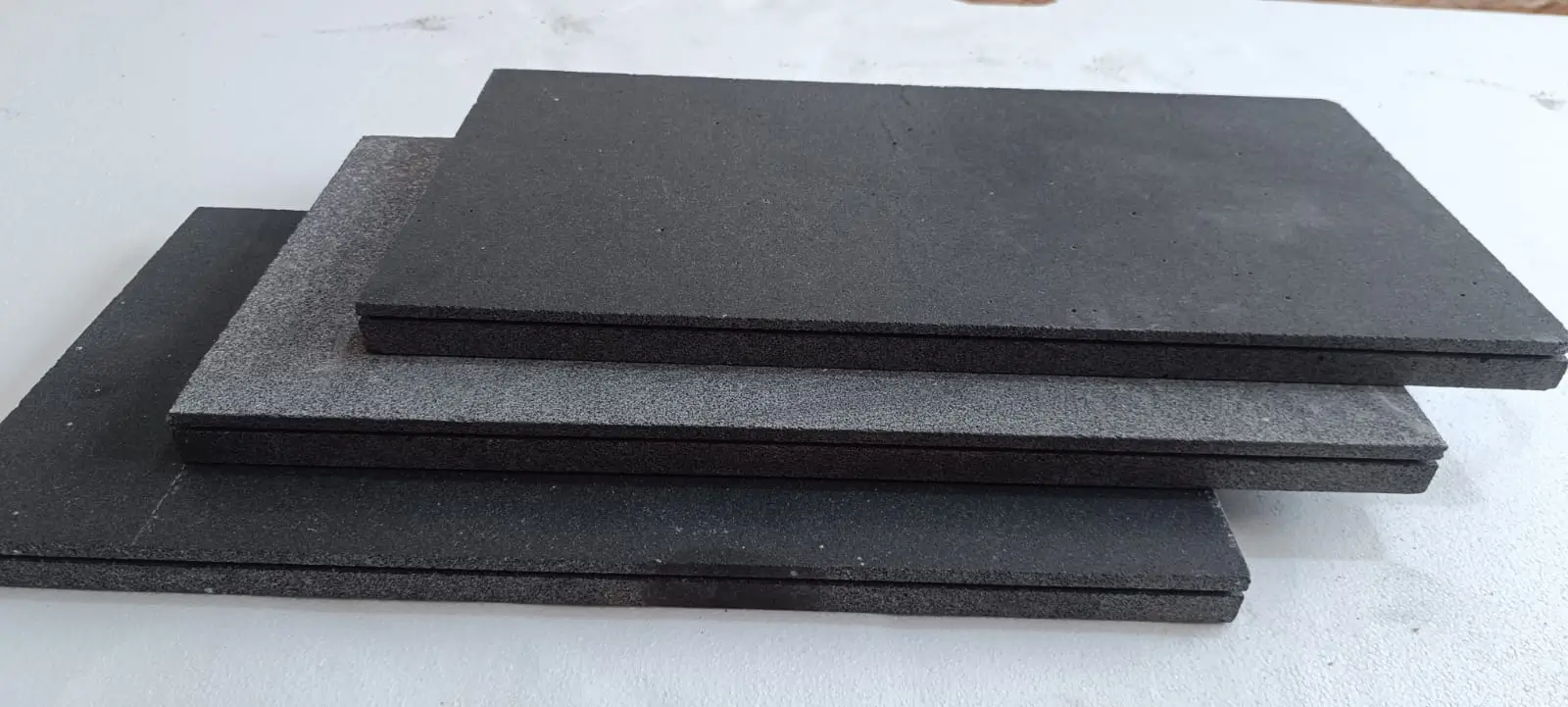
One practical factor that affects black limestone pergola Tucson project timelines is material availability from domestic warehouse stock versus import lead times. Quality black limestone — particularly the dense, low-iron varieties that hold consistent color under Arizona’s UV index — typically sources from quarries in Brazil, India, or China, with import cycles running 8–12 weeks from order to delivery. For projects with firm installation windows, this means your material purchase order needs to go out well ahead of site preparation.
Citadel Stone maintains Arizona warehouse inventory of black limestone in standard sizes, which compresses that lead time to 1–2 weeks for most residential project volumes. Verifying warehouse stock levels before finalizing your project schedule prevents the common situation where a contractor is ready to install and material is still three weeks out from the port. For pergola flooring quantities — typically 200–600 square feet for residential applications — warehouse availability is rarely a bottleneck when you confirm inventory early in the planning process.
- Standard residential pergola floor quantities: 200–600 SF, well within typical warehouse stock levels
- Order 10% overage for cuts at pergola post footings, irregular perimeter edges, and pattern adjustments
- Confirm stone lot consistency at time of order — mixing lots mid-project creates visible color variation in black limestone
- Truck delivery scheduling for Tucson sites typically requires 24–48 hours notice for tailgate delivery; crane or pump service requires separate logistics coordination
- Store pallets on level ground under cover to prevent edge chipping during staging
The value black natural limestone options available for Arizona projects cover the full range of finish types and thicknesses appropriate for pergola flooring, making material matching straightforward from a single supplier source.
Pattern Layout for Pergola Flooring Aesthetics
The enclosed visual frame of a pergola structure amplifies pattern choices in ways that open patio layouts don’t. Under a pergola, the eye is drawn downward by the overhead structure, making the floor the dominant visual element of the space rather than a supporting background. This changes how pattern layout decisions affect the finished aesthetic.
For black limestone pergola Tucson installations, a running bond or stacked joint pattern in a single large format — 24×24 or 24×48 — reads as intentionally architectural under a pergola. Smaller formats like 12×12 or random ashlar can work but require precise joint alignment to avoid a busy appearance in the confined visual field. Diagonal layouts add energy to the space but require significantly more cuts at the perimeter and at post footings, adding material waste and labor time to the project budget.
- 24×24 stacked joint: cleanest presentation, minimal cuts, works with most pergola proportions
- 24×48 running bond: creates a directional quality that suits elongated pergola footprints
- Random ashlar (mixed sizes): high visual interest but requires careful planning around post footing locations
- Diagonal 45°: dramatic effect, 15–20% additional material waste, reserve for square or near-square footprints
- Center the layout on the pergola’s visual axis, not the mathematical center of the slab — these are rarely the same point
Getting Your Black Limestone Pergola Specification Right
The specification decisions that determine whether a black limestone pergola Tucson installation performs beautifully for 20 years or starts showing stress within five come down to four things: base preparation quality, joint spacing calibrated to the shaded thermal range, finish selection matched to your actual moisture exposure, and material sourced from a consistent stone lot. None of these are complex individually — the challenge is executing all four correctly within the constraints of a real project timeline and budget.
Consider how the pergola roof type, drainage geometry, and intended use pattern interact before locking in thickness and finish decisions. A covered outdoor kitchen floor takes a different spec than a dining pergola, and both differ from a lounge area adjacent to a pool. Getting those distinctions right in the specification phase saves you from field-adjusting decisions under time pressure. For projects that span multiple Arizona stone applications, Black Limestone Paving Minimalist Design for Prescott Modern Homes provides a complementary perspective on how black limestone performs across different Arizona architectural contexts and design approaches — useful reference material when a single project brief covers more than one outdoor zone. Our black natural limestone paving in Arizona is frost resistant for Northern AZ climates.