
Black limestone monochrome Chandler projects demand a level of specification precision that most design briefs gloss over — the contrast ratio between your darkest stone and your lightest architectural element determines whether the finished space reads as intentional sophistication or visual chaos. Getting that calibration right in Chandler’s desert environment means working with thermal mass, albedo values, and material consistency simultaneously, not treating them as separate line items. Your palette decisions here aren’t just aesthetic choices; they’re performance decisions that affect surface temperature, glare management, and long-term maintenance cycles.
Why Black Limestone Anchors Monochrome Design in Chandler
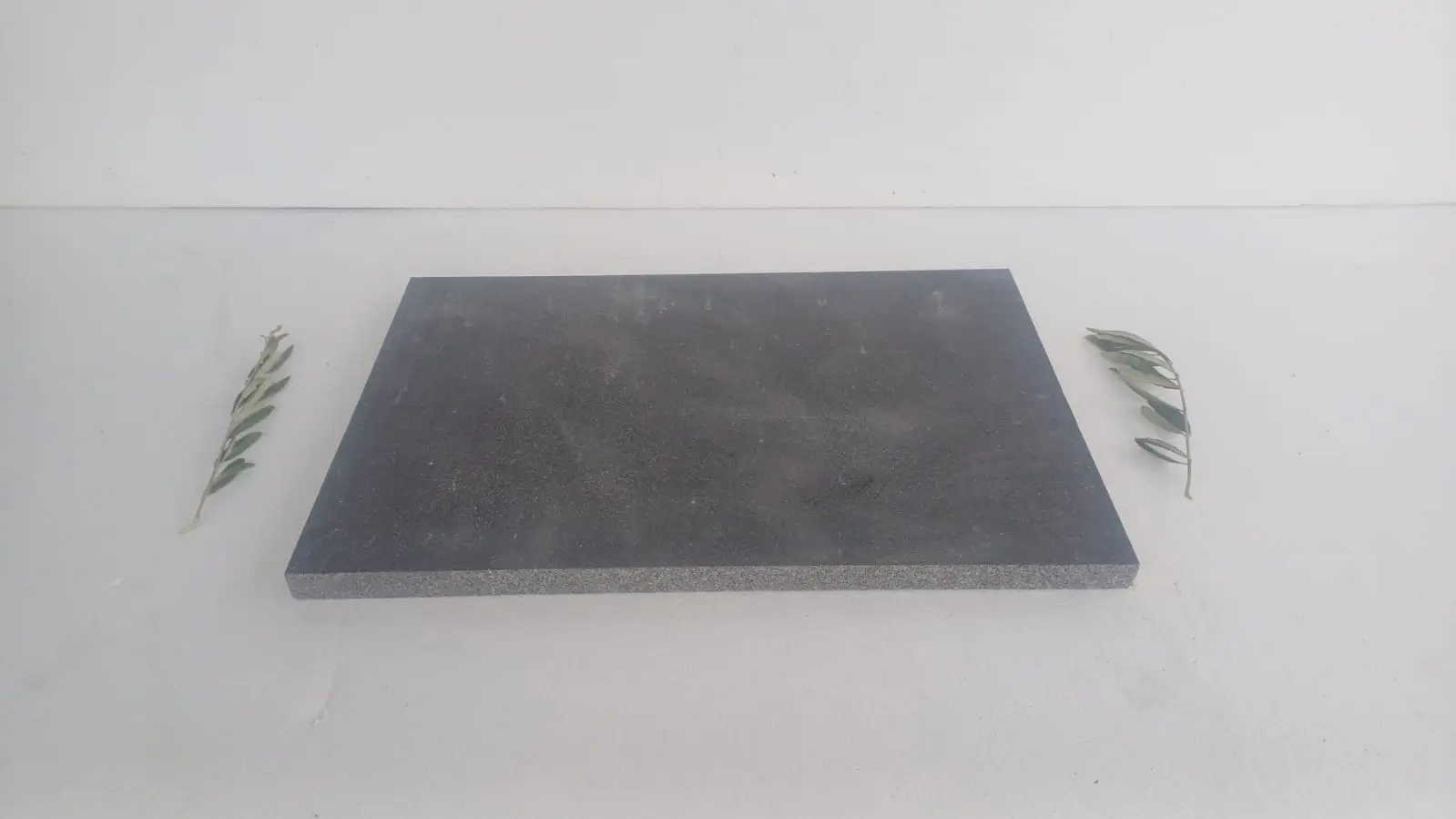
The visual logic of a monochromatic design scheme depends on material consistency — every element in the palette needs to hold its tone under varying light conditions, and black limestone does this with a reliability that most dark-colored pavers can’t match. Pigmented concrete fades unevenly, dark porcelain tiles can shift toward blue or brown undertones under Arizona’s intense UV, but black limestone’s color depth comes from its mineralogy, not a surface treatment. You’re working with a material whose darkness is intrinsic, which means your monochrome Chandler color scheme won’t drift over five or ten years the way synthetic alternatives will.
The density of quality black limestone — typically in the range of 160–165 lbs per cubic foot — also gives it a visual weight that anchors outdoor compositions. Lighter materials can feel tentative in large-format monochrome applications, but black limestone grounds the design. Pair it with white render, pale aggregate, or bleached timber, and the contrast creates exactly the kind of Arizona refined palette that the contemporary residential market demands.
Understanding Monochromatic Design for Arizona Refined Palettes
Monochromatic design in Arizona isn’t the same as monochromatic design in the Pacific Northwest or the Southeast — the light intensity here changes everything. Chandler averages over 300 sunny days per year, and under that kind of solar exposure, a true monochrome palette reads differently at 7am, noon, and 6pm. Your specification has to account for how the tonal range within your black-to-white continuum performs across those lighting shifts.
For Arizona refined palettes, the most successful black limestone monochrome schemes use a minimum of three distinct tonal values: a deep anchor tone (your black limestone field), a mid-tone transition element (charcoal or dark grey coping or edging), and a light reflective element (white or cream rendered walls, pale gravel, or white limestone accents). This three-tier tonal structure prevents the visual flatness that collapses a scheme in bright light.
- Deep anchor tone: black limestone pavers in 24×24 or 24×48 formats for field areas
- Mid-tone transition: charcoal bluestone or dark basalt for edging and coping details
- Light reflective element: white limestone or pale aggregate to define the tonal range
- Avoid adding warm-toned materials — terracotta, sandstone, or tan gravel will break the scheme’s coherence immediately
- Restrict accent plantings to dark green or silver-grey foliage to maintain palette discipline
Projects in Flagstaff face a different lighting scenario than Chandler — the higher elevation and cooler, more diffused light means the same black limestone reads slightly warmer and softer in tone. If your scheme needs to read consistently across multiple Arizona properties, evaluate samples under site-specific light conditions, not just showroom lighting.
Surface Temperature and Thermal Performance for Black Limestone
Here’s the detail that most monochrome design briefs skip entirely: black limestone absorbs significantly more solar radiation than lighter materials, and in Chandler’s summer heat, that translates to surface temperatures that can exceed 140°F on unshaded runs during peak hours. That’s not a reason to avoid the material — it’s a reason to design your layout intelligently. You’ll need to integrate shade structures, pergola coverage, or strategic canopy planting over any black limestone areas intended for barefoot use.
The thermal mass benefit of black limestone also means it retains heat into the evening, which is genuinely useful in Chandler’s shoulder seasons when nighttime temperatures drop sharply. A patio that releases stored heat from 6pm onward extends your usable outdoor season by four to six weeks at each end of the year. That’s a real performance advantage worth factoring into your black limestone monochrome Chandler specification, not just a talking point.
- Unshaded black limestone can reach 140–150°F surface temperature in direct Chandler summer sun
- Shaded applications reduce peak surface temperature by 30–40°F
- Thermal mass benefit extends usable outdoor season in spring and fall
- Specify a minimum 1.25-inch thickness for exterior applications — thinner formats crack under thermal cycling
- Allow for thermal expansion gaps of at least 3/8 inch at fixed boundaries
Black White Paving Arizona: Getting Contrast Ratios Right
The black white paving Arizona design approach works best when you resist the temptation to introduce grey as a blending agent. Grey reads as indecision in a monochrome scheme under Arizona light — it dilutes the contrast and softens the visual impact you’re trying to achieve. Commit to the full contrast range and let the architecture and landscaping provide the tonal nuance.
Pattern orientation matters as much as material selection. In a classic monochromatic design scheme, running your black limestone pavers in a linear direction — either straight-lay or running bond — and using a contrasting white limestone or pale coping to define the perimeter creates a clean graphic quality that photographs well and ages gracefully. Basket-weave and herringbone patterns can work, but they introduce a visual complexity that competes with the palette’s simplicity.
For your project’s layout planning, you can explore competitively-priced black limestone slabs in formats that suit both linear and mixed-pattern applications across Arizona’s diverse project types.
Material Selection and Finish Options for Monochrome Schemes
Finish selection on black limestone for a monochromatic design scheme is where most projects either succeed or overcomplicate themselves. Your three realistic finish options for exterior applications in Chandler are honed, flamed, and brushed — each reads differently within a monochrome palette and affects how the Chandler color scheme performs over time.
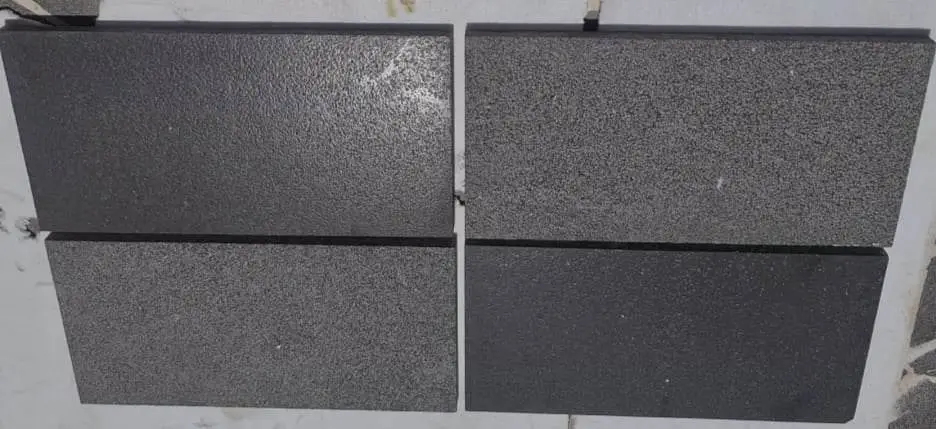
- Honed finish: smooth, matte surface that absorbs light evenly and maintains the deepest black tone — best for covered or partially shaded areas where slip resistance is managed through drainage design
- Flamed finish: textured surface with slightly reduced colour depth, increases slip resistance to DCOF above 0.42 for wet conditions, suitable for pool surrounds and exposed areas
- Brushed finish: lightly textured with softer edges, good compromise between visual depth and grip, works well for pathway applications
- Avoid polished finishes in exterior Arizona applications — they become dangerously slippery when wet and UV exposure dulls the sheen unevenly within 18 months
Honed black limestone is your strongest aesthetic choice for the monochrome Chandler design context — its even light absorption prevents the patchy appearance that can develop on textured surfaces when mineral variation in the stone creates differential reflection. The limestone black paving in Arizona that holds its visual consistency over decades is almost always a honed or lightly brushed format, not polished.
Base Preparation and Installation Variables
Chandler’s expansive clay soils require a more robust base preparation than many installer specs account for. You’re looking at a minimum 6-inch compacted aggregate base for pedestrian applications, and 8–10 inches for vehicular-rated installations. The clay expansion coefficient in Maricopa County soils can reach 0.08 in/in under saturation, which means an inadequately prepared base will translate soil movement directly into your limestone surface within two to three monsoon seasons.
Bedding layer specification deserves particular attention in monochrome black limestone schemes because grout joint colour is visible and any base instability shows up as uneven joint lines before it manifests as cracked stone. Your bedding layer should be a 1-inch screeded sand or dry-pack mortar bed — never more than 1.5 inches, or differential settlement becomes unavoidable. Set your limestone black paving in Arizona installations in sections no larger than 15 feet without a designated expansion joint, regardless of what the standard spec sheet suggests.
- Minimum 6-inch compacted aggregate base for pedestrian use in Chandler clay soils
- 8–10 inch base depth for any vehicular or heavy load application
- 1-inch screeded sand or dry-pack mortar bedding layer maximum
- Expansion joints every 15 feet at maximum, and at all fixed boundary interfaces
- Joint grout colour selection: specify dark grey or charcoal grout — never white or cream, which will visually fragment a monochrome black scheme
Sealing for Monochrome Colour Consistency
Sealing limestone black paving in Arizona isn’t optional — it’s the mechanism that maintains the colour depth and consistency your monochrome scheme depends on. Unsealed black limestone in the desert environment develops an oxidised grey surface haze within 12–18 months as mineral salts migrate to the surface. That haze destroys the tonal contrast that makes the monochromatic design work and undermines the entire Chandler color scheme.
Specify a penetrating impregnator sealer with a colour-enhancing formulation — these products deepen the black tone without creating a surface sheen that alters the finish appearance. Apply the first coat within 24 hours of installation, and plan for reapplication on a two-year cycle in Chandler’s UV-intensive environment. In Sedona, the red iron oxide dust that accumulates seasonally creates an additional maintenance consideration — a sealer with good stain resistance is worth the cost premium in that environment, and the reapplication cycle may need to shorten to 18 months.
- Apply penetrating impregnator sealer within 24 hours of installation completion
- Use colour-enhancing formulation to maintain tonal depth
- Reapplication cycle: every 2 years in Chandler, every 18 months in more exposed or dusty environments
- Avoid topical sealers — they peel under Arizona UV and create maintenance problems that outweigh any aesthetic benefit
- Test sealer compatibility on a sample piece before full application — some sealers shift black limestone toward green or brown undertones
Ordering, Logistics, and Material Planning for Black Limestone
Material consistency is the hidden specification challenge in monochrome design — if your project requires multiple deliveries, stone from different quarry batches can show subtle tonal variation that becomes visible when installed adjacent to each other. Your best protection is to order your full project quantity from a single warehouse consignment, confirmed as a matched lot before the first truck delivers to site.
At Citadel Stone, we source our black limestone in matched batches and can hold warehouse stock for staged deliveries, which is particularly useful on larger Chandler projects where slab storage on-site creates logistics problems. Coordinating truck delivery timing with your installation crew’s schedule typically allows you to receive material in two to three staged drops without breaking the batch consistency that a black white paving Arizona scheme demands. Lead times from warehouse to Chandler are typically 3–5 business days for in-stock formats, significantly shorter than the 6–8 week import cycle you’d face ordering direct from overseas.
Projects in Peoria and the broader northwest Valley often benefit from consolidated truck deliveries that cover multiple project addresses in a single route — worth discussing with your supplier if you have concurrent projects in that corridor.
Getting Your Black Limestone Monochrome Specification Right
The black limestone monochrome Chandler aesthetic rewards the specifiers who treat it as a complete system — palette, finish, base, sealing, and joint detailing all working in the same direction — rather than a collection of individual product decisions. Your tonal calibration, your shade strategy, your grout colour, and your sealing protocol all contribute to whether the scheme reads as deliberately sophisticated or accidentally dark. The material itself is capable of exceptional longevity and visual impact; what separates the successful projects from the disappointing ones is the precision of the surrounding specification decisions.
As you develop your Arizona stone project program, other water and reflective surface applications can complement your monochrome scheme in unexpected ways. Black Limestone Paving Water Feature Surrounds for Mesa Tranquility explores how the same material family performs around water features — a consideration worth reviewing if your Chandler project includes a pool, fountain, or reflecting element within the monochrome composition. We are the innovative supplier of limestone black slabs in Arizona.