
Black limestone minimalist Prescott design decisions come down to a precise tension between visual weight and spatial restraint — and most specifiers get the balance wrong before they ever order a single pallet. The deep charcoal surface of black limestone doesn’t just read as a color choice; it anchors space in a way that lighter stones simply can’t replicate, creating a gravitational center that pulls every surrounding element into alignment. Prescott’s high-desert elevation and its mix of mid-century modern and contemporary architecture make this pairing unusually effective — but only when your specifications honor the material’s thermal behavior and the region’s temperature swings.
Why Black Limestone Works for Minimalist Design
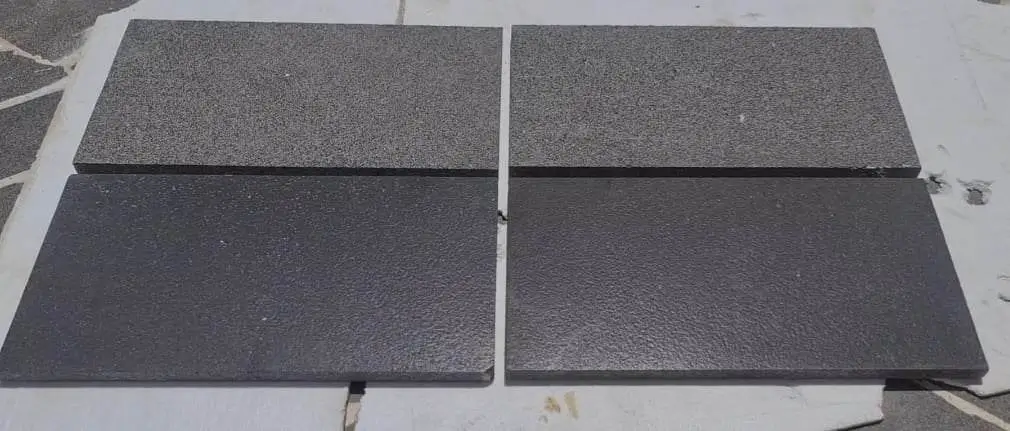
Minimalist outdoor spaces succeed when every material does multiple jobs simultaneously — and black limestone in Arizona delivers on that requirement better than most alternatives. The stone’s dense surface compresses visual noise. A terrace paved in uniform black limestone pavers reads as a single uninterrupted plane, which is exactly what a minimalist composition needs to function architecturally. The moment you introduce pattern variation or mixed tones, that plane fragments and the design effort unravels.
The material’s natural variation in vein structure also works in your favor here. Unlike polished black granite, limestone carries subtle surface movement that prevents the flatness from feeling artificial. You get depth without decoration — which is the core promise of Arizona understated design done well. That combination of tonal control and tactile restraint is what makes black limestone minimalist Prescott applications so compelling in contemporary builds.
- Dense, uniform tone reads as a continuous surface plane rather than a collection of individual units
- Natural vein variation adds visual depth without introducing decorative complexity
- The material’s matte finish reduces glare, which supports the quiet, resolved quality minimalist outdoor spaces require
- Dark tones recede visually, making surrounding architecture, planting, and water features the focal points
- Consistent coloration across a surface eliminates the patchwork effect that undermines spatial continuity
Thermal Behavior at Prescott’s Elevation
Prescott sits at roughly 5,400 feet above sea level, and that elevation changes the performance calculus for black limestone in ways that low-desert specs don’t account for. You’re dealing with a 40–55°F diurnal temperature range on most days — mornings that stay genuinely cool well into late spring, afternoons that push into the 90s, and nights that drop sharply even in summer. That thermal cycling is harder on natural stone joints than sustained high heat because it creates repeated expansion and contraction rather than a single stress event.
Black limestone absorbs more solar radiation than lighter stones — surface temperatures on an unshaded installation can run 15–25°F above ambient air temperature during peak afternoon hours. That’s a meaningful number when you’re calculating joint width. You should specify expansion joints at 12-foot intervals maximum for black limestone minimalist Prescott installations rather than the 15-foot standard used in Phoenix basin projects. The extra joint frequency is invisible in a well-laid minimalist installation, but its absence shows up as cracked corners within three to five years.
- Spec joint widths at 3/16 to 1/4 inch minimum for full-sun exposures at Prescott elevation
- Use a flexible polymeric sand rated for 50°F+ temperature cycling rather than standard rigid jointing compounds
- Allow material to acclimate on-site for 24–48 hours before installation — temperature differentials from truck delivery to installation surface create pre-stress in the stone
- Avoid installation during the hottest part of the day — setting bed adhesion is compromised when substrate temperatures exceed 90°F
Clean Lines: Arizona Specification Principles for Black Limestone
Achieving black paving clean lines in Arizona requires attention to format consistency before anything else. The most common mistake is ordering multiple size formats and attempting a stacked bond or running bond that introduces grout line variation. In a minimalist design, the grout lines are design elements — they need to be as intentional as the stone itself. A single-format large-slab approach (24×24 or 24×48 nominal) with consistent 3/16-inch joints delivers the geometric discipline that minimalist composition demands.
Surface finish matters equally. Honed black limestone reads cleaner than brushed or tumbled because the consistent micro-texture doesn’t compete with the stone’s tonal depth. For Sedona-influenced modern design where warm red rock backdrops surround the property, the contrast between the matte black horizontal plane and the surrounding warm landscape is most effective when the surface finish is controlled and uniform. A brushed finish introduces texture variation that softens the edge — sometimes desirable, but counter to strict minimalist clean-line specifications. This is where Arizona understated design principles prove their value: controlling every surface variable produces results that hold their visual integrity across seasons.
Base Preparation for Arizona Soil Conditions
Prescott’s soil profile varies significantly depending on which part of the Quad Cities area you’re working in. Granitic decomposed granite soils drain excellently and provide a stable sub-base; clay-heavy soils in lower-lying areas expand and contract seasonally in ways that will telegraph directly to your limestone surface within two seasons if the base isn’t engineered properly. You need a geotextile separation layer between subgrade and your compacted aggregate base in any soil with plasticity index above 12 — which covers a substantial portion of Prescott Valley residential sites.
The base specification for black limestone paving in Arizona should be a minimum 6-inch compacted Class II aggregate base for pedestrian applications, and 8–10 inches for driveways or any surface that sees vehicular loading. Compact in 3-inch lifts to 95% Proctor density. Skipping lift compaction and doing a single pass on a thick base layer is the single biggest cause of premature settling in Arizona minimalist paving installations — it’s the kind of shortcut that looks fine on day one and fails visibly by year three.
- Install geotextile fabric over native soil before placing aggregate base on sites with expansive clay content
- Minimum 6 inches compacted Class II aggregate for pedestrian surfaces; 8–10 inches for vehicle-rated areas
- Compact in 3-inch lifts — never place more than 3 inches of loose material before compacting
- Allow base to settle 24 hours after final compaction before placing setting bed
- Verify base flatness with a 10-foot straightedge — tolerance of 3/16 inch before setting bed placement
Sealing and Maintenance for Black Limestone in Arizona
Here’s what often gets overlooked in minimalist design discussions — the sealer you choose directly affects the visual result, not just the performance outcome. A glossy sealer on black limestone introduces unwanted reflectivity that conflicts with the matte, grounded quality minimalist outdoor spaces depend on. You should specify a penetrating impregnator sealer with zero sheen modification, applied in two thin coats rather than one heavy coat. Heavy single-coat application on black limestone creates an uneven sheen that’s almost impossible to correct without full stripping and reapplication.
For projects around Flagstaff and northern Arizona at higher elevations, freeze-thaw performance becomes a sealing criterion that doesn’t apply in the low desert. You need a sealer rated for freeze-thaw cycling — the freeze-thaw expansion coefficient for water in limestone pores is enough to spall surface material over multiple seasons in unsealed or improperly sealed installations. A silane-siloxane blend rated for 30+ freeze-thaw cycles is the right specification for elevations above 4,500 feet. Reseal every two years minimum, or annually if the surface sees heavy foot traffic or pooled water after rain events.
For projects that require consistent dark toning across large surface areas, you may want to review how carbon black limestone paving in Pima County handles material uniformity requirements — the selection and quality control principles translate directly to Prescott project specifications.
Limestone Paving Black in Arizona: Format and Thickness Options
Limestone paving black in Arizona projects comes in several thickness categories, and the minimalist design objective should drive your thickness decision as much as the structural requirement does. For ground-level terrace installations with proper base engineering, 3/4-inch to 1-inch nominal thickness delivers the refined slab aesthetic that contemporary minimalist design requires. Thicker formats — 1.25 to 1.5 inches — read as more substantial and tactile, which can work beautifully in exterior courtyard applications where the stone’s visual weight is part of the design intent.
The format dimension question is equally important. Oversized formats (24×48 or 30×60) reduce the number of grout lines visible in a given surface area, which amplifies the seamless-plane effect that defines black paving clean lines in Arizona installations. The trade-off is handling complexity during installation — larger formats require two-person placement and a mortar setting bed with back-buttering on both stone and substrate. Your installer needs to be experienced with large-format natural stone. An inexperienced crew working with 24×48 black limestone slabs will produce lippage and joint inconsistency that destroys the clean-line aesthetic immediately.
- 3/4 to 1-inch nominal thickness for refined, slab-aesthetic terrace applications with engineered base
- 1.25 to 1.5-inch thickness for applications requiring visual weight or pedestrian-heavy traffic zones
- 24×24 minimum format for strict minimalist clean-line results — smaller formats introduce too many joint lines
- 24×48 and larger formats require back-buttering and two-person placement — verify installer experience before specifying
- Running bond layout at 1/3 offset provides structural integrity while maintaining the linear, disciplined look
Prescott Simple Elegance: Contextualizing Black Limestone in Regional Architecture
Prescott’s architectural landscape is genuinely layered — you have historic Victorian structures in the Courthouse Plaza area, mid-century ranch homes in the surrounding neighborhoods, and a growing wave of contemporary minimalist builds that take cues from both Sonoran desert modernism and Pacific Northwest restraint. Black limestone minimalist Prescott applications work most effectively in the contemporary and transitional categories, where the stone’s clean geometric language reinforces the architectural vocabulary rather than conflicting with it.
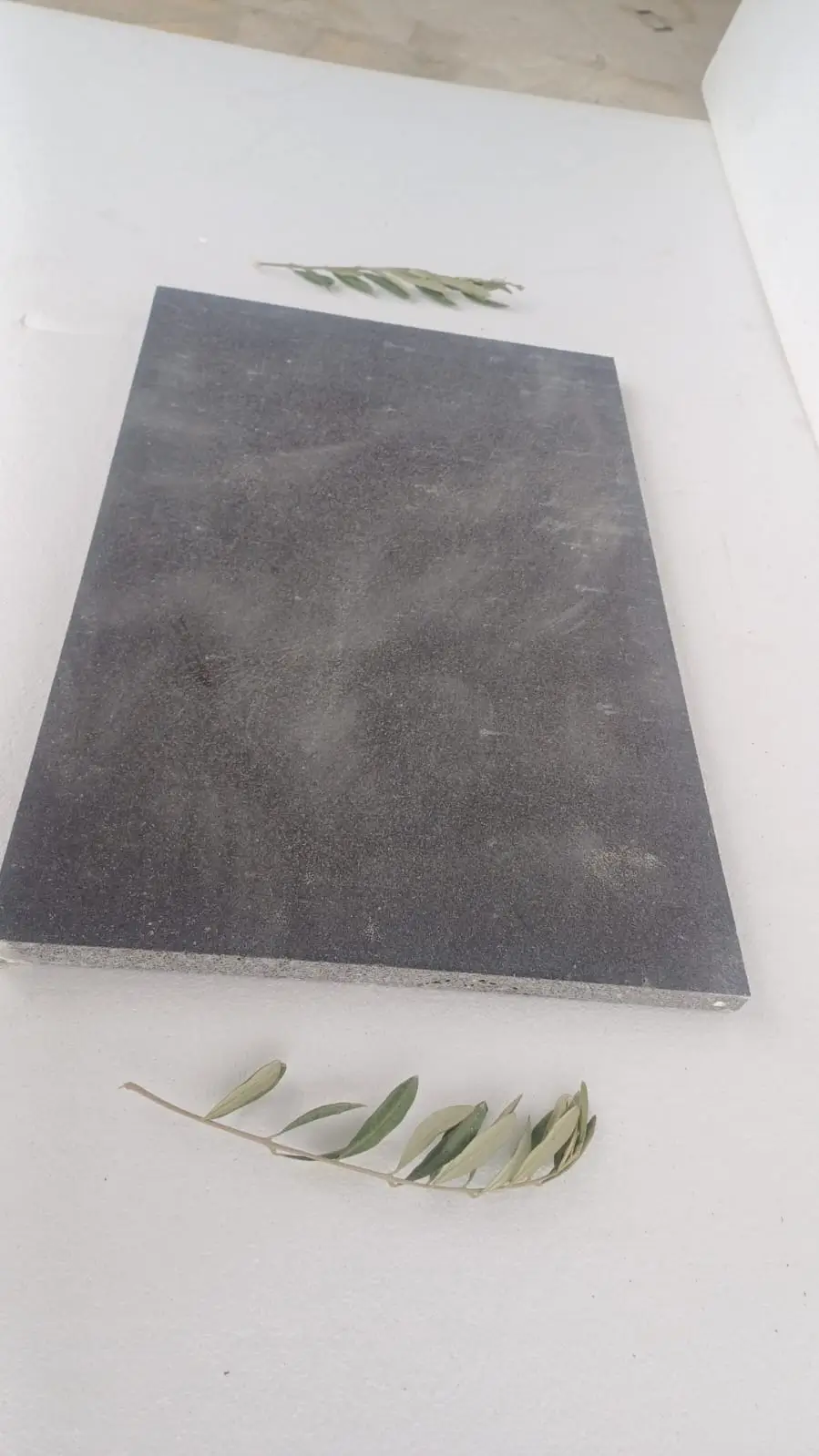
Prescott simple elegance, in practical terms, means editing rather than adding. The material does the heavy lifting when you let it — a black limestone terrace against a white or warm-gray stucco wall needs nothing else to complete the composition. The moment you introduce decorative tile borders, mixed stone inlays, or pattern complexity, you’re working against the material’s natural strength. Restraint in detailing is what separates a genuinely elegant installation from one that merely uses expensive materials.
In Peoria and other rapidly developing communities across the metro region, the minimalist design trend has pushed demand for black limestone applications significantly — but the design execution quality varies widely. The installations that hold up visually over time are consistently the ones that committed to a single material, a single format, and a single finish rather than combining multiple elements in an attempt to add visual interest. That discipline — the Arizona understated design approach at its most effective — is what produces Prescott simple elegance rather than visual noise dressed in expensive stone.
Ordering, Logistics, and Project Planning Considerations
Your project timeline needs to account for material lead times realistically. Black limestone in large formats isn’t a stocked commodity in most regional supply yards — it’s typically a warehouse-to-project fulfillment that requires 2–4 weeks from confirmed order to site delivery depending on current warehouse inventory levels. Citadel Stone maintains Arizona warehouse stock of black limestone in the most common formats, which can compress that lead time significantly on well-planned projects, but you should never build your construction schedule around same-week delivery assumptions for natural stone.
Order a minimum 10% overage on your calculated square footage — not 5%, which is the standard recommendation for uniform tile work. Natural stone from a single quarry batch will have subtle tonal variation between pallets, and you want the ability to blend from multiple pallets during installation to distribute any variation evenly across the surface. Having enough overage also protects you if cut waste runs higher than estimated, which happens consistently with large-format material on sites with non-rectangular geometry. Truck delivery logistics for large-format limestone also require confirmed site access — confirm your access path width and overhead clearance before scheduling delivery, particularly on hillside Prescott lots with restricted driveway geometry.
- Plan 2–4 week lead time for black limestone in large formats; verify warehouse availability at order placement
- Order 10% overage minimum — blend pallets during installation to distribute tonal variation evenly
- Confirm truck access dimensions before scheduling delivery — standard flatbed delivery trucks require 12+ feet of clearance width
- Store delivered material on a flat, covered surface; do not stack more than 4 pallets high regardless of storage duration
- Inspect each pallet at delivery before signing the bill of lading — document any damage immediately
Getting Black Limestone Minimalist Prescott Specifications Right
Getting black limestone minimalist Prescott specifications right means resolving the thermal, structural, and aesthetic variables before any material arrives on site. The decisions that define long-term performance — joint spacing calibrated to Prescott’s diurnal range, base depth matched to local soil conditions, sealer selection that preserves the matte visual quality — are made on paper, not in the field. The installations that deliver genuine Prescott simple elegance twenty years from now are the ones where every specification was deliberate, every format decision served the design intent, and every installation detail was executed without compromise. As you plan your broader Arizona stone project, the principles of material consistency and tonal control covered here connect naturally to large-scale applications — Black Limestone Paving Color Consistency for Marana Large Areas explores how those same quality control principles apply when you’re working across expansive surface areas that demand uniform results. We are passionate about natural black limestone paving in Arizona.