
Stock levels for Black Limestone Inventory Phoenix projects shift faster than most contractors expect — and the gap between “available” and “available in your required thickness and finish” is where most sourcing plans fall apart. Understanding what’s actually sitting in a Phoenix-area warehouse versus what requires a 6–8 week import cycle determines whether your project stays on schedule or stalls at a critical phase. The variables that separate reliable sourcing from expensive delays come down to a handful of specification decisions you’ll want to lock in before you make that first call.
What In-Stock Really Means for Black Limestone
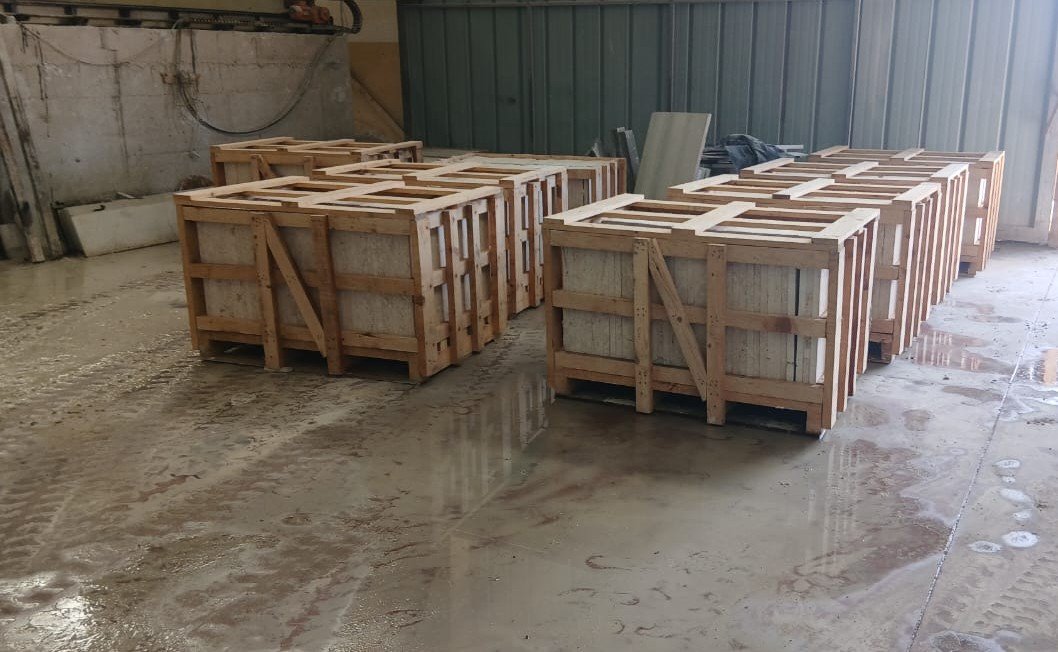
The phrase “in stock” gets used loosely in the stone trade, and it costs contractors real money. Warehouse availability for black limestone slabs in Arizona typically breaks into three tiers: full pallets in standard dimensions, partial inventory in specialty sizes, and stock allocated to pending orders that hasn’t shipped yet. You need to ask specifically which tier you’re working with before you factor it into a project schedule.
For most Phoenix-area projects, the most consistently available format is 24×24-inch slabs in 1.25-inch nominal thickness. These move through warehouse inventory quickly precisely because they’re the most-requested size — which means you should confirm quantity on hand rather than assuming Phoenix stock availability. Thicker formats (1.5-inch and 2-inch nominal) tend to have shorter warehouse windows and may require lead time even when described as “in stock” in a supplier’s catalog.
- Confirm slab count per pallet and total pallets on hand before committing to a schedule
- Ask whether listed inventory is allocated or unallocated — allocated stock is effectively unavailable
- Request the warehouse receiving date — recently arrived material may still need quality inspection before release
- Verify finish consistency across pallets if your project requires visual uniformity across a large field area
Thickness, Finish, and How They Affect Stock Availability
Your finish selection has a direct impact on what’s available for immediate purchase. Honed black limestone — the most common finish specified for residential and commercial hardscape in the Phoenix metro — tends to carry the deepest inventory because demand is predictable. Brushed and flamed finishes, which are preferred for high-traffic exterior applications because they provide better slip resistance, usually carry shallower stock levels.
For projects in San Tan Valley, where new construction timelines are tight and project sequences don’t allow much buffer, specifying a honed finish in a standard dimension gives you the highest probability of finding immediate purchase options. Flamed finishes require you to either find a supplier with that specific inventory or accept a processing lead time on top of shipping logistics.
- Honed: deepest Arizona stock levels, consistent availability in standard sizes
- Brushed: moderate availability, usually requires 1–2 week notice for full-pallet quantities
- Flamed: shallowest inventory, best sourced with 2–3 weeks of lead time minimum
- Sandblasted: typically a custom-order finish — not a warehouse staple for black limestone
Sizing Your Order Correctly for Phoenix Conditions
Thermal expansion is a real variable in Phoenix’s desert climate, and it affects how you calculate your order quantity. Black limestone exhibits a thermal expansion coefficient in the range of 4.5–5.5 × 10⁻⁶ per °F, which sounds modest but becomes significant across large field areas when surface temperatures regularly push past 140°F on summer afternoons. You’ll want to factor a 10–12% material overage into your order — not just for cuts and waste, but to accommodate the expansion joint frequency required in Phoenix’s climate zone.
What often gets overlooked is the relationship between slab thickness and thermal mass. Thicker slabs store more heat, which can be an asset for projects where evening radiant warmth is desirable, but it also means the slab surface takes longer to cool after sunset. For pool surrounds and patio applications where barefoot comfort after 7 PM matters, your client may prefer a 1.25-inch format over a 2-inch slab — and that preference should inform your inventory target from the start.
At Citadel Stone, we recommend calculating your net square footage, adding your overage, and then converting to full-pallet quantities rather than ordering by the piece. Partial pallets almost always cost more per square foot and may not ship on the same truck as full pallets, which fragments your delivery schedule unnecessarily.
Lead Times and What Arizona Ready Supply Actually Looks Like
Arizona ready supply for black limestone slabs breaks into two categories: domestic warehouse stock and import cycle material. Domestic warehouse inventory — material already in Arizona — typically delivers within 5–10 business days depending on truck availability and delivery zone. Import cycle material requires 6–8 weeks minimum from order confirmation, sometimes longer depending on origin country, port congestion, and customs clearance timelines.
The practical implication for Phoenix projects is that your sourcing window needs to open 8–10 weeks before your installation start date if you’re relying on imported material, or 2 weeks before if warehouse stock is confirmed available. Contractors who treat stone procurement like drywall procurement — ordering a week before install — are the ones who end up substituting materials or pushing project dates. Black slab in-stock options Arizona suppliers carry do exist, but they move quickly during the fall and spring construction surges.
- Warehouse-held Arizona stock: 5–10 business day delivery standard
- Import cycle material: 6–8 weeks minimum, 10–12 weeks in high-demand periods
- Partial pallet availability may ship faster but at a cost premium
- Fall (September–November) and spring (February–April) see the highest demand and shortest available inventory windows
How to Verify Phoenix Stock Availability Before Committing
There’s a right way to check Phoenix stock availability and a way that wastes everyone’s time. The right way starts with a specific request: material name, finish, nominal thickness, dimensions, and quantity in square feet. A supplier who can’t give you a same-day answer on exact piece count and pallet status isn’t actually operating from live inventory data — they’re quoting from a catalog.
You’ll also want to request the material’s current lot or batch designation. Black limestone is a natural stone, and color variation between quarry batches is real. Projects in Avondale that have stretched across multiple delivery windows — where initial material shipped from one lot and the reorder came from another — have ended up with visible tonal inconsistency across the finished field. Locking a single lot at time of order confirmation prevents this problem entirely.
- Request piece count and pallet count, not just square footage availability
- Confirm lot or batch consistency across all pallets in your order
- Ask for warehouse receiving date to ensure material has cleared inspection
- Get written confirmation of allocation before finalizing your project schedule
Mid-Project Reorders and the Case for Buffer Stock
Reordering mid-project is the scenario every experienced project manager tries to avoid with black limestone, and for good reason. Natural stone inventory is not a continuous production line — a particular lot can be exhausted and the next shipment may arrive with slightly different veining density or base color tone. By the time you realize you need additional material on a live project, the original stock is often gone.
The professional standard for black limestone projects is to order 10–15% above your calculated net area at the start, hold that buffer stock in your delivery schedule, and return unused full pallets after project completion if the supplier offers that arrangement. This approach costs slightly more upfront in carrying and potential restocking, but it eliminates the much larger cost of a mid-project material mismatch. For our black limestone available in Arizona, verifying return policies at time of order gives you the flexibility to order confidently without permanently over-committing your budget.
Truck logistics are another reason to consolidate your order upfront. Splitting a project into multiple truck deliveries adds coordination complexity, increases the risk of site damage during multiple access events, and almost always costs more in total freight than a single full-load delivery.
Black Limestone Slabs for Commercial Phoenix Projects
Commercial applications introduce a layer of specification rigor that residential projects don’t always require. For commercial Phoenix projects — retail plazas, hospitality hardscape, office campus entries — you’ll typically need certified material documentation including country of origin, ASTM C503 compliance data, and slip resistance ratings per ASTM C1028 or DCOF AcuTest protocols. Not all warehouse-held inventory ships with this documentation automatically; you’ll need to request it specifically at time of order.
Black limestone slabs ordered through commercial channels in Arizona also need to meet thickness tolerances tighter than residential spec. Commercial projects commonly require ±1/16-inch thickness tolerance rather than the ±1/8-inch standard for residential supply. Confirm this with your supplier in writing before the material leaves the warehouse — retrofitting compliance documentation after delivery is a paperwork headache that rarely ends cleanly.
- Request ASTM C503 compliance documentation for all commercial orders
- Specify DCOF rating requirements upfront — wet-area thresholds differ from dry-area minimums
- Confirm thickness tolerance specification in writing: ±1/16 inch for commercial vs. ±1/8 inch for residential
- Verify country of origin documentation if the project has government or institutional sourcing requirements
Delivery Logistics Across the Phoenix Metro
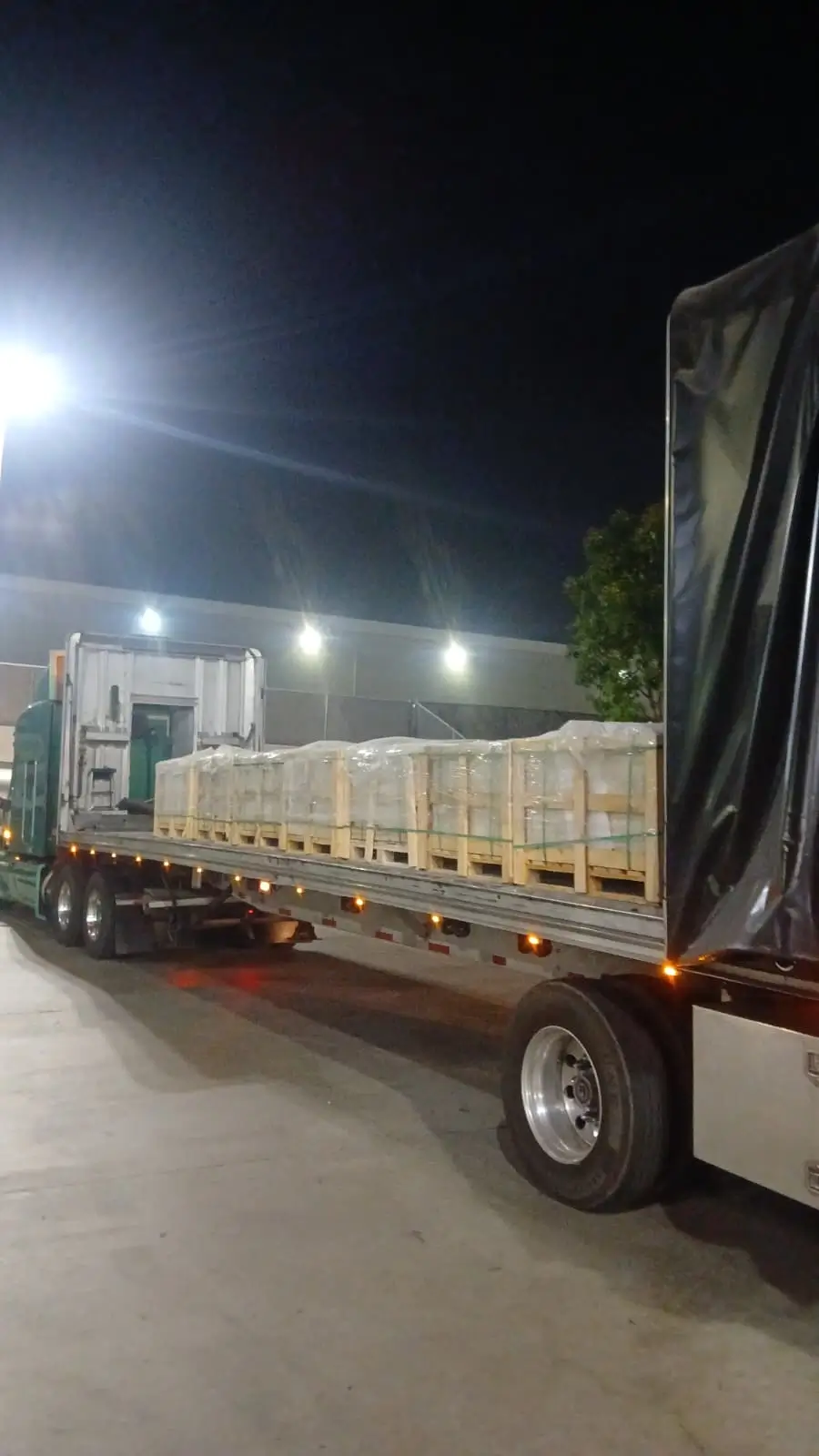
Stone delivery to Phoenix metro sites isn’t uniform. Truck access constraints vary significantly between urban infill sites and suburban new construction zones, and your delivery cost and timeline will reflect those differences. Dense urban sites may require a smaller delivery truck, which affects per-pallet freight cost and may require multiple trips for large orders. Suburban new construction zones typically accommodate full flatbed delivery, which keeps freight cost predictable.
Projects in Yuma and other outlying Arizona locations outside the Phoenix metro should factor in additional transit time and freight cost from regional warehouse locations. Yuma’s distance from the Phoenix distribution corridor typically adds 1–2 days to standard delivery windows and may affect minimum order quantities required for freight cost efficiency. Planning these logistics in parallel with material sourcing — not after — keeps the project timeline intact.
- Confirm site access for full flatbed delivery (40-foot trailer plus cab) before scheduling
- Identify any weight-restricted road segments on the delivery route for urban sites
- Coordinate with the warehouse on unloading requirements — some sites need a forklift on-site, others use truck-mounted liftgate delivery
- Factor freight cost into your per-square-foot material cost to get accurate project pricing
Getting Your Black Limestone Inventory Phoenix Sourcing Right
Sourcing Black Limestone Inventory Phoenix projects correctly comes down to specificity at every stage — exact finish, exact thickness, exact lot, confirmed allocation, and logistics mapped before you need the material, not after. The projects that run smoothly are the ones where procurement decisions were made with the same precision as the installation specifications. Inventory windows close fast during peak construction seasons, and a 2-week delay waiting for restocked material costs far more in project disruption than the effort of confirming stock levels early.
Citadel Stone’s warehouse team works directly with Phoenix-area contractors to confirm live inventory, hold allocated material, and coordinate truck delivery to fit project schedules — not the other way around. As you look at related Arizona stone applications, Black Limestone Slab Foundation Prep for Tucson Stable Installation covers how foundation preparation standards apply across Arizona black limestone projects, providing useful technical context for any high-load application you’re specifying within the same material family. We are the champions of natural black limestone paving in Arizona.