
Surface temperature data collected across Arizona fire pit installations tells a specific story that most specs miss entirely — black limestone fire pits in Cave Creek reach equilibrium heat absorption faster than concrete masonry units, but they also release that stored energy more gradually, which is exactly the behavior you want around a gathering space after sundown. Understanding how that thermal cycle works — and how to engineer your fire pit surround to take advantage of it rather than fight it — is where performance separates from guesswork. Your base preparation, slab thickness, and joint spacing all interact with that thermal behavior in ways that compound over a 20-year installation lifecycle.
Why Black Limestone Performs in Arizona Fire Environments
The material’s compressive strength typically ranges from 10,000 to 14,000 PSI depending on quarry origin and formation depth, which gives it the structural integrity to handle the radiant heat cycling that kills softer sedimentary options inside three to five seasons. Black limestone fire pits in Cave Creek installations benefit from the material’s low porosity in the 1.5–3.5% range — significantly tighter than travertine — which limits thermal shock absorption at the pore level when flame proximity is sustained. You’re working with a material that has real physical advantages in this application, not just aesthetic ones.
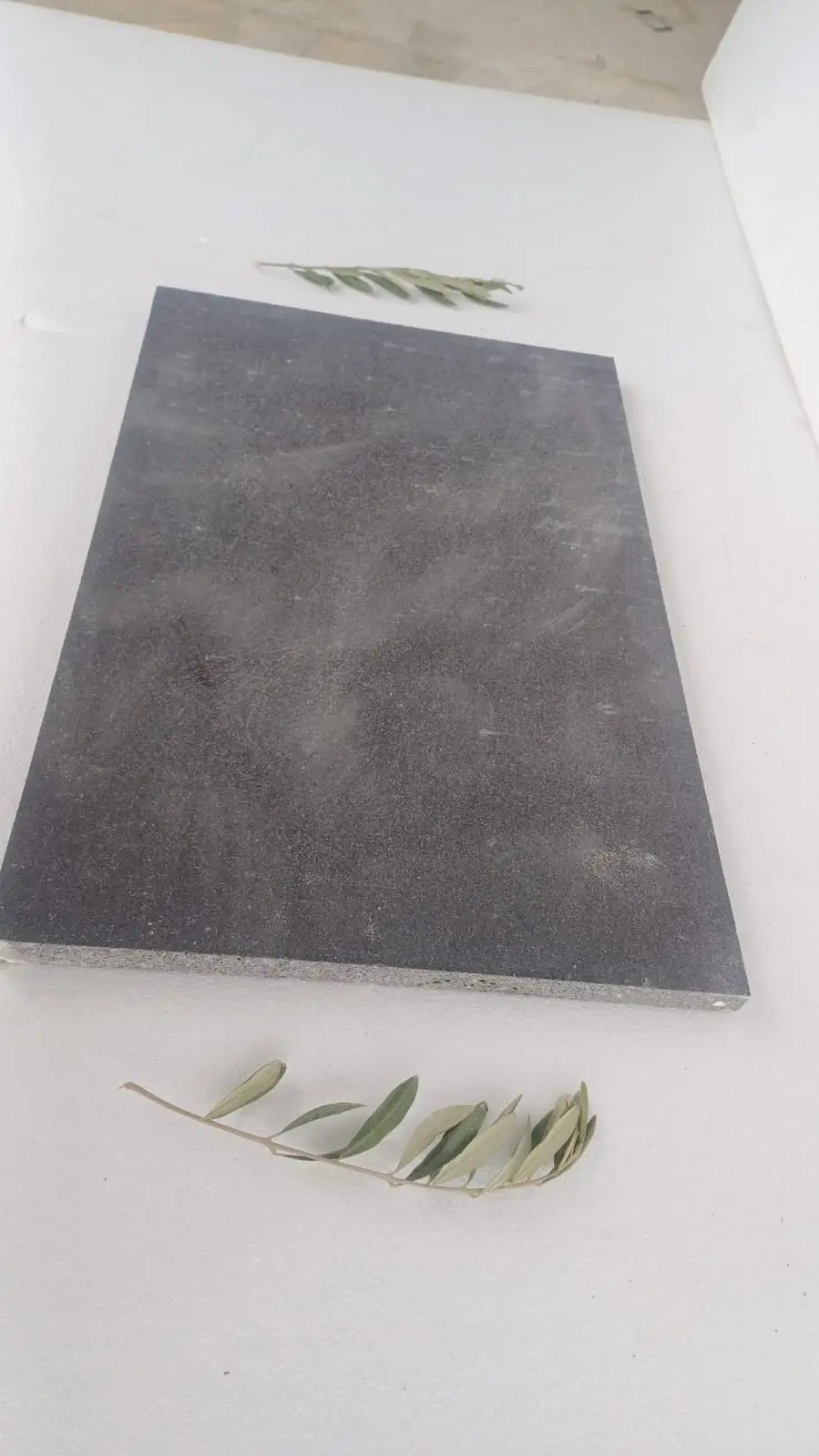
The dark coloration absorbs solar radiation efficiently during daytime hours — typically 85–92% absorption versus 30–45% for light-colored limestone — which means the surface temperature differential between morning and peak afternoon can reach 60–75°F in Cave Creek’s high desert sun. That differential drives thermal expansion, and your joint spacing has to account for it precisely. Field data on black stone fire features Arizona projects shows that slabs installed with 3/16-inch joints in spring often exhibit compression cracking by late summer when the material wasn’t given adequate room to move.
Heat Performance Overview for Cave Creek Outdoor Hearths
Arizona outdoor hearths create a dual thermal load that most specifiers underestimate — you have radiant heat from the fire itself, which can push surface temperatures at the adjacent gathering space paving to 180–220°F within 18 inches of the fire ring, and you have ambient solar gain running simultaneously. The material’s thermal conductivity of approximately 1.1–1.5 W/m·K means heat moves through a 2-inch slab in predictable patterns, but the critical variable is what happens at the underside. Your drainage and base layer determine whether that heat dissipates cleanly or concentrates at the base course interface.
- Specify 2.5-inch minimum slab thickness for the immediate fire ring surround — the additional half-inch reduces surface temperature spikes by approximately 15–20% compared to standard 2-inch stock
- Maintain a minimum 24-inch clearance zone between the fire ring perimeter and the nearest full paving joint — this zone absorbs the most aggressive thermal cycling
- Your compacted aggregate base should reach 6 inches minimum under fire pit areas, regardless of what the general patio spec calls for — thermal cycling transfers mechanical stress downward
- Joint sand composition matters more near fire sources — polymeric sand with a minimum 400°F thermal tolerance outperforms standard jointing sand that can degrade and lose locking capacity
- Black stone fire features in Arizona require you to check the base moisture content before installation, not just compaction — dry clay soils shrink under sustained heat, creating subsidence pathways
Gathering Space Layout and Paving Configuration
The geometry of your gathering space directly affects how the material performs over time. Circular or radial paving layouts centered on a fire pit require cuts at every course, and those cut edges are your vulnerability points for thermal expansion stress concentration. Experienced specifiers in Cave Creek outdoor living zones design the first full paving course to begin at least 30 inches from the fire ring — that buffer zone, often finished in a complementary material or left as a compacted decomposed granite edge, gives you control over where the stress goes.
Rectangular gathering space paving around a central fire feature works more predictably from a joint grid standpoint. You’ll achieve the best long-term performance by orienting the long axis of your paving grid perpendicular to the prevailing southwest afternoon sun angle in Cave Creek — this distributes solar gain across more joints simultaneously rather than concentrating it along a single row. In Chandler, where urban heat island effects amplify ambient surface temperatures by 8–12°F compared to surrounding desert, this orientation strategy has measurably extended joint sand retention in monitored installations.
Selecting Thickness and Finish for Arizona Conditions
Finish selection for black limestone fire pits in Cave Creek deserves more specificity than most project specs provide. Honed or flamed finishes outperform polished surfaces in this application for two distinct reasons — surface micro-texture improves slip resistance when the material is hot and dry (a condition that catches homeowners off guard after extended fire use), and matte finishes mask the minor thermal staining that develops over two to three seasons of regular fire pit use.
- Flamed finish creates a micro-fissured texture with a COF (coefficient of friction) of 0.65–0.75 dry, which meets the ASTM C1028 threshold for outdoor applications and provides meaningful grip in the dry-heat conditions surrounding active fire features
- Honed finish at 400-grit provides a balance of cleanability and texture — easier to seal uniformly than flamed, while still maintaining adequate surface grip
- Polished finishes are inappropriate within 48 inches of a fire ring — thermal cycling accelerates crystalline surface degradation and the sheen shows heat discoloration within the first season
- Brushed or antiqued finishes are excellent choices for the outer gathering zones where the aesthetic continuity of Cave Creek outdoor living zones demands meets lower thermal stress intensity
Thickness specification follows the application zone logic. The 2.5-inch fire-adjacent zone, a 2-inch transition ring, and 1.5-inch nominal for the outer gathering space paving creates a graduated structural profile that handles the thermal gradient sensibly. At Citadel Stone, we recommend confirming your slab thickness against your delivery truck access — heavier 2.5-inch stock requires a flatbed or dedicated stone truck, and narrow Cave Creek residential approaches sometimes require off-loading and hand-carry staging that your contractor needs to account for in labor estimates.
Sealing and Maintenance Strategy for Long-Term Performance
Sealing protocols for black limestone Arizona projects differ meaningfully from what you’d apply to travertine or concrete. The material’s tighter pore structure means penetrating sealers need extended dwell time — typically 20–25 minutes versus the 10–15 minutes that standard applicator instructions suggest for higher-porosity stones. Rushing the dwell time leaves the sealant concentrated at the surface rather than penetrating the matrix, which means you get a cosmetic coating that heat and UV break down in 12–18 months instead of the 36–48 month performance a properly applied sealer delivers.
dark charcoal limestone paving
For fire pit surrounds specifically, you’ll want to use a solvent-based impregnating sealer with a minimum heat rating of 350°F — water-based sealers off-gas and blush when subjected to the radiant heat cycling that occurs within the fire-adjacent paving zone. Resealing intervals should be calibrated to use frequency: a fire pit used weekly through the Cave Creek fall-through-spring season (roughly 30–35 active weeks per year) will exhaust sealer protection about 20% faster than the manufacturer’s calendar-based recommendation accounts for.
Base Preparation Specifics That Determine Longevity
The base preparation underneath gathering space paving that surrounds a fire feature requires a different standard than general patio construction. Decomposed granite is a common base material in Arizona, but it’s not appropriate as a primary compacted base layer under fire pit surrounds — it lacks the lateral confinement resistance to handle the repeated thermal contraction cycles that create horizontal movement stress at the sub-base level. Crushed angular aggregate in the 3/4-minus gradation with 95% modified Proctor compaction gives you the bearing capacity and interlock you need.
- Minimum 6-inch compacted aggregate base under all fire-adjacent paving, confirmed with a plate compactor pass count — not just visual inspection
- 2-inch bedding sand layer in clean washed concrete sand, not limestone screenings, which can consolidate unevenly under thermal cycling
- Geotextile separation fabric between native soil and aggregate base — Cave Creek’s rocky native soil can migrate upward through the aggregate over time under vibrational and thermal stress
- Perimeter restraint edging rated for thermal expansion, installed with 1/4-inch gap at 10-foot intervals to allow edge movement without buckling
Projects in Tempe frequently encounter expansive clay subsoils beneath the caliche layer, and the same soil behavior appears in some Cave Creek residential zones near the drainage corridors. You should conduct a swell potential test on the native soil before finalizing your base depth — expansive clay can add 2–3 inches of differential heave over a summer season, which translates directly into surface joint displacement and potential slab cracking.
Supply Logistics and Project Planning
Project timing in Cave Creek matters more than most contractors initially plan for. The window from late October through March is ideal for installation — ambient temperatures during setting allow the bedding sand and jointing material to cure without the accelerated moisture loss that occurs above 95°F. Summer installations are possible but require strict hydration management of the bedding layer, and your material delivery should be staged under shade tarps to prevent the slab surface from reaching temperatures that prevent proper setting contact.
Citadel Stone maintains warehouse stock of black limestone in multiple thicknesses, which typically allows 7–10 business day lead times for standard project quantities — significantly faster than the 8–12 week import lead times that non-stocked suppliers quote. You should verify warehouse availability against your project start date at least 3 weeks in advance, particularly for larger gathering space paving projects where quantities exceed 500 square feet. Truck delivery logistics in Cave Creek require specific coordination — the mountain roads and private drive configurations in many residential areas necessitate confirming vehicle clearance heights and turning radius with your Citadel Stone contact before scheduling.
Projects in Surprise and other expanding northwest Valley communities have demonstrated that black stone fire features Arizona installations with proper base preparation and sealing remain dimensionally stable through 10-plus Arizona thermal cycles — the annual expansion-contraction cycle the material undergoes from winter lows to summer highs. That track record gives you a reliable performance benchmark when presenting material specifications to clients who want a real number, not a marketing estimate.
Final Considerations for Black Limestone Fire Pit Surrounds
Specifying black limestone fire pits Cave Creek projects correctly comes down to treating the fire surround as a distinct micro-environment within your broader gathering space paving system. The material is genuinely capable of delivering 20-plus years of performance in this application, but only when the thermal behavior, base preparation, joint design, and sealing protocol are aligned from the start. The decisions that matter most — slab thickness, joint spacing, finish type, and base depth — are all made before the first stone goes down, which means your specification document is where this project either succeeds or creates a callback situation three seasons from now.
For complementary Arizona stone design work, Black Limestone Paving Border Accents for Paradise Valley Gardens explores how the same black limestone material performs in detailed border and accent applications — useful context for understanding the material’s full range across different Arizona project types. We are the source for antique-finish limestone black slabs in Arizona.