
Black limestone edging Prescott projects demand more than just a pretty strip of stone along your garden beds — the interaction between slab thickness, soil movement, and Prescott’s elevation-driven temperature swings determines whether your edging holds its line for decades or starts shifting within the first two winters. At 5,400 feet, Prescott sits in a climate zone that punishes improperly installed stone with freeze-thaw cycles that low-desert projects never encounter, and black limestone’s thermal mass amplifies both the benefits and the risks of that exposure. Getting the specification right from the start saves you from the costly reset that comes with edging that heaves, cracks, or undermines the clean definition you installed it for.
Why Black Limestone Works for Prescott Bed Definition
The geometry of garden bed edging puts stone under a very specific kind of stress — lateral soil pressure from one side, surface foot traffic on the other, and freeze-thaw movement working underneath. Black limestone handles this loading pattern better than many specifiers expect because its crystalline structure gives it compressive strength in the 8,000–12,000 PSI range, which is more than adequate for residential and light commercial planting borders. The material’s natural density also resists the frost heaving that plagues lighter, more porous alternatives in Prescott’s winter conditions.
Limestone black slabs in Arizona also offer a thermal absorption characteristic that actually benefits planting zones. The dark surface absorbs solar radiation during the day and releases stored heat after sunset, which extends the effective growing season at Prescott’s elevation by moderating soil temperature at the bed perimeter. You’re not just defining the space visually — you’re creating a microclimate buffer that your plants benefit from through fall and early spring.
The color contrast black limestone provides against Prescott’s native soil tones and xeriscape gravel is harder to achieve with lighter materials. Buff sandstone and tan travertine blend into the landscape; black slab edge strips Arizona projects typically use create a visual anchor that makes the entire garden layout read with clarity from a distance. For Prescott garden borders specifically, that visual definition carries through all four seasons, including the months when flowering plants have died back and the hardscape does the compositional work on its own.
Slab Thickness and Sizing for Edging Applications
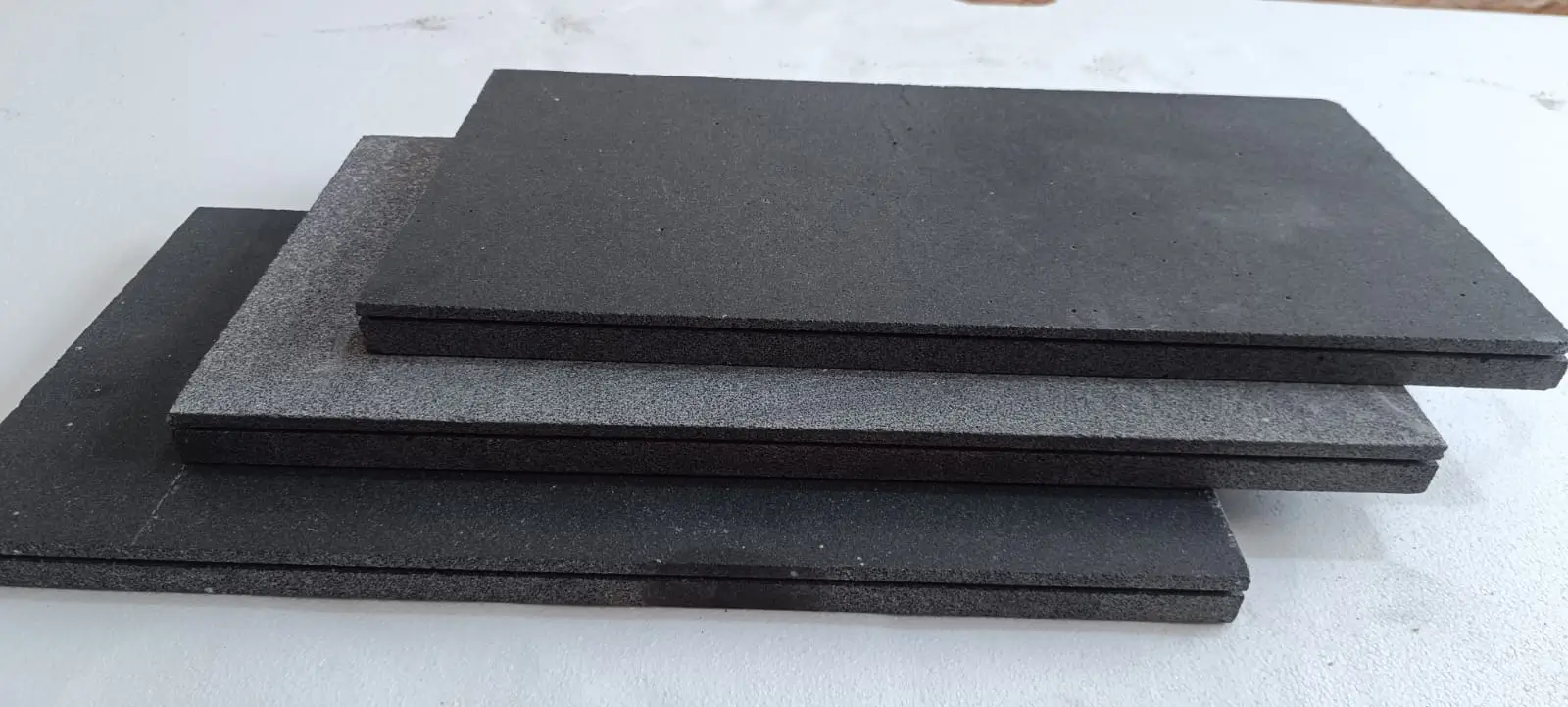
Edging strip sizing is where a lot of Prescott garden projects go sideways early. The instinct is to go thin — a 1-inch slab looks clean and costs less — but at Prescott’s elevation, 1-inch black limestone edging doesn’t carry enough mass to resist soil pressure from established planting beds, especially beds with regular irrigation that keeps the soil saturated and expansive. The standard specification for slab edge strips Arizona contractors rely on is 1.5 to 2 inches nominal thickness, with 2 inches strongly preferred for borders adjacent to raised beds or sloped terrain.
- 1.5-inch thickness: appropriate for flat terrain, shallow beds, minimal frost exposure
- 2-inch thickness: recommended for raised beds, sloped sites, freeze-thaw zones above 4,500 feet elevation
- Strip width of 4–6 inches: standard for vertical-set edging that anchors in a concrete or compacted aggregate footing
- Strip width of 8–12 inches: used for flat-set coping-style edging where the slab lies horizontal at grade
- Length per piece of 12–24 inches: manageable for curved installations without excessive cutting
Your cutting radius matters more than most people account for at the design stage. Black limestone cuts cleanly with a diamond blade but produces micro-fractures at tight radii below 18 inches when dry-cut. Wet-cutting with proper blade speed eliminates most of this risk and gives you a finished edge that doesn’t show stress cracking at the curve points over time.
Base Preparation for Prescott Soil Conditions
Prescott soil varies significantly across the region — you’ll encounter decomposed granite in upper elevations, clay-mixed alluvial soil in lower bench areas, and rocky caliche layers that resist excavation in several neighborhoods. Each condition requires a different base preparation approach, and getting it wrong is the single most common reason black limestone edging Prescott installations fail within five years.
In Prescott‘s clay-influenced zones, the base excavation needs to go 6–8 inches below finished grade rather than the standard 4 inches you’d use in a stable decomposed granite environment. That extra depth allows a properly compacted aggregate base that won’t transmit soil heave directly to your limestone slab. Use 3/4-inch clean crushed aggregate at 4 inches compacted, followed by a 1-inch bedding layer of coarse sand — never fine mason’s sand, which retains moisture and promotes frost action against the slab base.
- Decomposed granite native soil: 4-inch aggregate base adequate with good drainage
- Clay-mixed soil: 6–8 inch aggregate base required, install geotextile fabric beneath base layer
- Rocky caliche substrate: break up and remove caliche to 4-inch depth, replace with compacted aggregate
- Sloped terrain: install edging perpendicular to slope fall line where possible, use concrete toe footing on downhill face
The geotextile fabric recommendation for clay sites isn’t optional — it prevents clay migration into your aggregate base over time, which is what collapses compaction and causes long-term settling. A 4-ounce non-woven fabric costs next to nothing at installation and eliminates a problem that’s expensive to correct later.
Setting Methods: Vertical Versus Flat-Set Edging
The setting method you choose shapes the entire visual language of your Prescott garden borders, and both vertical and flat-set approaches have legitimate applications depending on the bed height and the overall design intent. Vertical-set edging — where the slab stands on its narrow edge with 2–3 inches above grade and 3–4 inches embedded below — delivers the cleanest, most architectural look and provides excellent soil containment for raised beds. Flat-set edging, where the slab lays horizontal at grade level, suits naturalistic designs and areas where foot traffic crosses the bed border regularly.
For vertical-set installations, your concrete toe footing is non-negotiable in Prescott’s freeze-thaw environment. A 4-inch wide by 4-inch deep concrete collar poured against the buried face of the slab prevents lateral movement during freeze cycles. Without it, even well-compacted aggregate bases allow 1/8 to 1/4 inch annual drift that compounds into visible misalignment within three to four seasons. For Flagstaff projects at even higher elevation, that concrete collar should extend to 6 inches deep — freeze penetration reaches 12–15 inches in severe winters there, and the toe footing depth needs to stay below the frost line.
Flat-set edging requires a slightly different approach — the full bearing surface of the slab sits on your prepared sand bed, so joint spacing and edge-to-edge alignment become more visible. Keep joint gaps at 1/4 inch maximum, filled with polymeric sand that locks the assembly and prevents weed intrusion between pieces. Wider joints in flat-set edging look unfinished and collect debris that works its way under the slab over time.
Thermal Performance and Color Stability in Arizona Sun
Black limestone’s heat absorption is significant — surface temperatures on unshaded black limestone edging can reach 140–160°F on a direct July afternoon in Prescott, which affects both the material’s long-term performance and the immediate comfort of hands-on gardening. The material’s thermal expansion coefficient of approximately 4.5 × 10⁻⁶ per °F means a 24-inch edging strip expands roughly 0.003 inches across a 100°F temperature swing, which sounds negligible until you’re running 40 linear feet of tight-jointed edging with no relief gaps.
You’ll want expansion relief every 10–12 linear feet for black slab edge strips Arizona installations — not the 15–20 foot spacing sometimes used for lighter materials. The combination of high surface temperature gain and the end-restraint at corners and fixed points creates compressive stress that eventually spalls the slab ends if relief is insufficient. A 3/8-inch gap filled with backer rod and flexible joint sealant handles this gracefully without being visually distracting.
Color stability is genuinely one of black limestone’s strengths compared to dyed or treated alternatives. The color comes from the stone’s natural mineral content — typically organic carbon compounds and iron sulfides — not a surface treatment that UV exposure degrades. You’ll see some surface lightening in the first six to twelve months as the top layer weathers, after which the color stabilizes. Sealing with a penetrating enhancer after that initial weathering period deepens the black tone and provides the color consistency most designers are specifying when they choose this material. Unsealed black limestone in Prescott’s UV environment will stay durable but develops a grey cast over several years that many clients find less satisfying than the original finish.
Planter Edging Design Considerations for Arizona Landscapes
The design function of planter edging goes beyond defining where bed ends and path begins — it manages the transition between irrigation zones, controls mulch migration, and creates the visual rhythm that ties a landscape composition together. Black limestone edging Prescott designs often use the slab’s natural cleft texture on the exposed face and a sawn top edge, which gives you the contrast of rough natural character at soil level and a clean horizontal line at the top where the eye follows it across the garden.
Curved planting beds are where black limestone edging earns its specification over concrete or metal alternatives. The material holds a subtle curve across 6–8 foot radii without cutting — you just adjust the joint angle slightly at each piece. Tighter curves require cut pieces, but the additional labor is justified by the visual result. Concrete edging at tight radii always reads as segmented; natural stone reads as continuous even with visible joints.
In Sedona, the red rock context creates one of the most compelling visual cases for Arizona bed definition using black limestone — the deep black against the terracotta soil and red stone backdrop produces a contrast that photographers and landscape designers alike respond to strongly. The material’s weight and permanence also align with the architectural character of Sedona’s luxury residential and resort properties, where lightweight metal edging simply doesn’t carry the right visual authority. For planter edging projects where the landscape is meant to feel crafted and intentional, the material choice signals that quality from the first glance.
Sealing and Long-Term Maintenance for Limestone Edging
Black limestone edging sits in one of the most challenging maintenance environments in any landscape installation — it’s at grade level, in constant contact with soil moisture and organic material from the bed, and exposed to full sun from above. Your sealing program needs to account for all three vectors to keep the material performing at its best over a 20-plus year service life.
The right sealer for limestone black slabs in Arizona is a penetrating silicone or silane-siloxane formula, not a topical coating. Topical sealers on edging stone peel under the thermal cycling Prescott imposes — the differential expansion between sealer film and stone surface creates delamination within two to three years. A penetrating sealer bonds within the stone’s pore structure and moves with the material. Apply the first coat 28–30 days after installation to allow the mortar or concrete toe footing to fully cure, and reapply every three to four years depending on sun exposure and irrigation proximity.
- Clean stone surface before sealing: pH-neutral stone cleaner, rinse thoroughly, allow 48-hour dry time
- Apply sealer at temperatures between 50°F and 85°F — outside this range, absorption is compromised
- Two coats recommended for initial application: first coat saturates, second coat builds coverage
- Avoid sealing during peak summer afternoon temperatures — surface heat causes premature flash curing
- Efflorescence treatment: if white mineral deposits appear at joints, apply dilute phosphoric acid solution before resealing
If you’re sourcing your black limestone through Citadel Stone, our technical team can advise on the specific sealer formulation that matches the porosity level of the particular quarry batch you receive — not all black limestone has identical absorption characteristics, and the sealer selection matters more than most installation guides acknowledge. Checking warehouse stock availability before finalizing your project timeline also helps you avoid the 6–8 week import delays that affect sourcing outside established domestic inventory.
Ordering, Logistics, and Project Planning
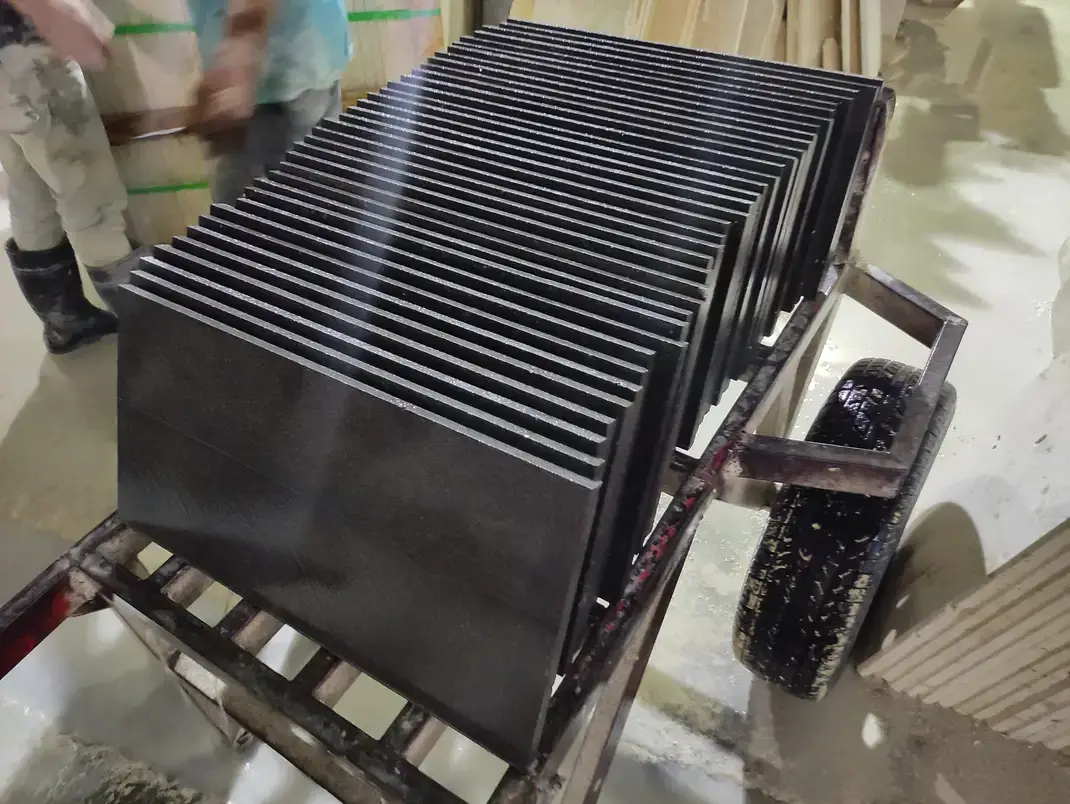
Edging projects have a material math problem that trips up a lot of contractors — the linear footage of your bed perimeter doesn’t translate directly to the square footage you order, and limestone edging is typically priced and stocked by square footage of slab. Your actual order quantity needs to account for the slab width you’re specifying (a 6-inch wide strip at 2-inch thickness covers very different square footage per linear foot than a 12-inch flat-set piece), plus a 10–15% overage for cuts, breakage, and the occasional slab that doesn’t pass the field quality check when it comes off the truck.
Truck delivery logistics matter more for edging projects than most clients anticipate. Black limestone slabs in 2-inch thickness weigh approximately 13–15 pounds per square foot — a pallet of edging material for a 200-linear-foot project can easily exceed 1,800 pounds. You need to confirm truck access to the delivery point before scheduling, because repositioning pallets by hand from a street drop adds labor cost and creates unnecessary handling damage risk. Citadel Stone’s delivery team can advise on weight distribution and pallet placement, but site access planning is always the contractor’s responsibility to confirm in advance.
Projects in Peoria and the broader Phoenix metro typically benefit from faster warehouse fulfillment compared to Prescott projects — the additional transport distance to Prescott adds approximately half a day to delivery windows, which matters when you’re coordinating a tight installation schedule. Build in at least a one-week buffer between material confirmation and your planned installation start date to accommodate any logistics variability. For projects sourcing polished black limestone paving in Gilbert, the same warehouse inventory availability principles apply, and coordinating both edging and paving material from a single order often reduces overall lead time and freight cost.
Black Limestone Edging Prescott: Specification Essentials
Getting black limestone edging Prescott projects right comes down to matching the specification to the actual site conditions — Prescott’s elevation, freeze-thaw exposure, and variable soil types demand more precise base preparation and thicker slab selection than you’d apply to a low-desert installation. The material itself is genuinely excellent for this application: durable, visually strong, thermally functional, and colorfast in a way that synthetic and treated alternatives can’t match over a 20-year horizon.
Your specification checklist should confirm base depth relative to soil type, slab thickness appropriate to freeze-thaw exposure, expansion relief intervals at 10–12 feet, and a penetrating sealer program starting 30 days post-installation. These aren’t conservative overspecifications — they’re the baseline for an installation that actually holds its line and its appearance through Prescott’s demanding seasonal cycles. For stone projects that extend beyond garden borders into larger hardscape elements, Black Limestone Slab Bench Seating for Marana Public Spaces offers a useful look at how the same material performs in a more structurally demanding Arizona application. Our black limestone edging strips are engineered for Arizona’s elevation extremes and deliver the bed definition Prescott landscapes demand.