
Why Terrain Drives Every Black Limestone Edging Heat Buckeye Decision
Slope geometry and drainage dynamics determine whether black limestone edging heat absorption in Buckeye works for your landscape or against it — and this terrain punishes vague specifications more than most Arizona markets. The flat alluvial plains west of the White Tank Mountains create deceptively complex drainage gradients where water moves laterally for surprising distances before finding an outlet. When you’re placing dark stone borders in that environment, the thermal behavior of the material becomes secondary to how the site manages subsurface moisture under the edging run — because saturated base material and thermal gain are a combination that accelerates heave and joint failure faster than either factor alone.
Black limestone edging heat absorption in Buckeye projects operates at the intersection of two competing demands: you want the material’s thermal mass to warm adjacent plant zones, but you need the grade management under and around that edging to prevent moisture from pooling where thermal cycling will stress it most. Getting that balance right starts with understanding your site’s micro-topography before you order a single piece of stone.
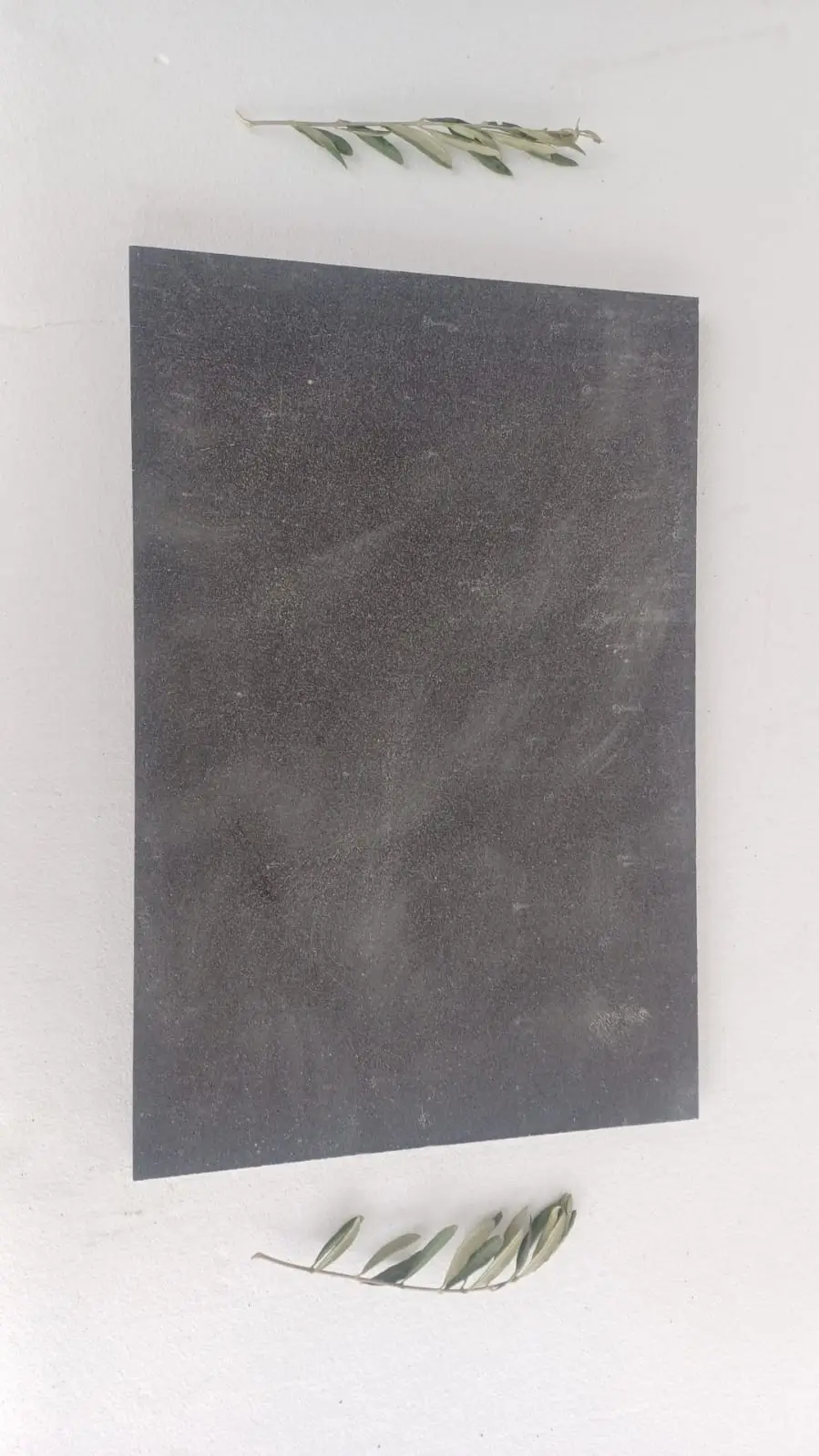
Elevation Variance and Base Preparation on Buckeye’s Terrain
Buckeye sits at roughly 1,020 feet elevation, but the parcels surrounding it — particularly those pushing toward the Estrella Mountain foothills — can drop or rise 15 to 40 feet across a single residential lot. That grade change matters enormously for black limestone edging installations because slope affects both drainage velocity and the compaction behavior of your aggregate base. On a 2% grade, water moves through your base at a manageable rate. On a 6% grade running toward a planted border, you’re dealing with accelerated base migration that undermines the even thermal contact you need for consistent Arizona dark stone thermal gain.
Your base preparation for sloped Buckeye installations should follow these grade-specific benchmarks:
- Slopes under 2%: 4-inch compacted Class II road base with standard 95% Proctor compaction is sufficient for edging support
- Slopes between 2% and 5%: Install a 6-inch compacted base and incorporate a perforated drain line on the uphill side of the edging run to intercept lateral flow before it undermines the set
- Slopes exceeding 5%: Step your edging installation in level terraced sections rather than running continuous edging along grade — this preserves thermal contact uniformity and prevents creep
- Transition zones where slope changes direction: Add a 12-inch wide compacted aggregate collar around each edging piece to resist differential settlement
In Peoria, projects at similar elevations on the New River alluvial fan show exactly what happens when specifiers skip the uphill drainage detail — after two monsoon seasons, edging runs shift laterally by as much as 3 inches, breaking the thermal continuity that made Buckeye thermal borders valuable in the first place.
Thermal Mass Performance and Plant Zone Warming
Black limestone stores heat at approximately 0.22 BTU per pound per degree Fahrenheit — modest compared to concrete’s 0.23, but the material’s higher density (typically 165 to 170 lb/ft³ for quality limestone) means a running foot of 4-inch-wide edging at 2-inch depth holds more stored energy than most specifiers calculate. That thermal reservoir releases heat into adjacent soil through the night, which is exactly the plant zone warming effect that makes Buckeye thermal borders genuinely valuable for cold-sensitive species like citrus, bougainvillea, and subtropical ornamentals that struggle when soil temperatures drop below 50°F.
The practical benefit isn’t uniform, though. Soil contact matters as much as the stone’s thermal properties. Edging pieces that sit on a well-compacted, dense base transfer heat downward into root zones efficiently. Pieces sitting on loose or organically rich soil create an air gap effect at the stone-soil interface that reduces conductive heat transfer by 30 to 40%. This is a detail that most plant zone warming discussions skip entirely, but it’s the reason two identical installations with the same stone produce dramatically different results for plant protection.
Arizona microclimate creation through dark stone borders depends on directionality as well. Edging positioned on the south and west faces of planted zones captures maximum afternoon solar radiation — in Buckeye’s orientation, that means the stone reaches surface temperatures of 140 to 160°F on clear January afternoons. The heat radiates outward from both exposed faces and conducts downward simultaneously, creating a thermal buffer that extends roughly 12 to 18 inches horizontally into the adjacent planting bed — enough to shift the effective frost exposure zone for most ornamental plantings.
Hillside Installation Techniques: What Sedona Projects Teach Buckeye Specifiers
The hillside installation experience from Sedona translates directly to Buckeye’s foothills terrain, even though the elevation differential is substantial. In Sedona, edging installations on the red rock formation transition zones deal with slopes exceeding 15% in some residential areas, and the solutions developed there — tiered setting, pinned edging runs, and drainage-first base sequencing — apply anywhere you’re managing grade with natural stone borders.
For hillside Buckeye installations, the key techniques are:
- Mechanical pinning with 12-inch galvanized rebar stakes through pre-drilled edging pieces on slopes above 8% — this prevents creep without requiring continuous mortar beds that crack under thermal expansion
- Setting each edging tier with a slight back-pitch of 1 to 2 degrees away from the slope to direct surface water away from the plant zone rather than channeling it toward roots
- Using a dry-set aggregate haunch on the downhill face of each piece, packed to 98% Proctor, to resist the downhill force vector that accumulates over multiple wet-dry cycles
- Leaving deliberate 3/8-inch expansion gaps every 6 linear feet to accommodate the limestone’s thermal expansion coefficient without buckling the run on south-facing slopes
At Citadel Stone, we’ve reviewed enough failed hillside installations to confirm that the most common mistake isn’t material selection — it’s treating sloped installations with the same base protocol used for flat-site work. The drainage management requirements are categorically different, and Arizona dark stone thermal gain is the first performance metric to suffer when those requirements go unmet.
Grade Management and Drainage Design for Edging Longevity
Your edging run’s longevity in Buckeye comes down to how well the drainage design handles the monsoon load — 3 to 4 inches of rain arriving in 45-minute intervals is not a theoretical stress scenario here, it’s a biannual reality. The terrain in western Maricopa County concentrates that flow in ways that catch installers off guard, particularly on lots that appear flat but carry subtle drainage gradients toward planted borders.
Designing your drainage system around the edging should start with a site-level flow analysis before any excavation begins. Identify the primary and secondary drainage paths across the full property, then position your edging runs so they function as grade transitions rather than flow barriers. Dark stone borders that act as unintentional dams in the drainage pattern will undermine within two to three monsoon cycles regardless of how well the base was prepared.
The best-performing Buckeye installations integrate channel drainage on the uphill side of every edging run that sits perpendicular to the natural slope. A 4-inch slotted PVC drain line set at a minimum 1% fall, wrapped in filter fabric, and backfilled with 3/4-inch clean aggregate will intercept lateral subsurface flow before it saturates the base under your black limestone edging. That 45-minute investment per linear run is the difference between a 20-year installation and a 7-year one.
Material Specification for Black Limestone Edging in Arizona Conditions
Specifying black limestone edging in Arizona requires attention to four physical parameters that collectively determine whether your installation handles the combined stress of terrain, drainage, and thermal cycling. Density, absorption rate, flexural strength, and finish type all interact in ways that individual spec sheets don’t fully represent.
- Density target: 160 lb/ft³ minimum for edging applications — lower density limestone has higher porosity, absorbs more moisture from base saturation events, and experiences accelerated spalling when surface temperatures swing from 140°F midday to 45°F predawn in January
- Water absorption: Specify ASTM C97 absorption below 0.5% for Buckeye installations — this threshold keeps the stone structurally stable through full saturation-drying cycles without progressive microcracking at the crystal boundaries
- Flexural strength: 1,500 PSI minimum per ASTM C880 for edging pieces spanning base voids created by settlement — pieces below this threshold develop hairline fractures at span midpoints within three to four seasons
- Surface finish: A split or rough-textured face on the exposed edging face retains more heat per unit area than honed or polished finishes because surface roughness increases the effective radiation area by 15 to 20%, reinforcing the plant zone warming effect
For the Flagstaff elevation range and above, you’d add a freeze-thaw cycling requirement — ASTM C1262 testing at 50 cycles minimum — but Buckeye’s 1,020-foot elevation rarely sees the sustained freeze conditions that make that specification necessary at the higher desert plateau sites.
The Citadel Stone black stepping stone limestone in Sedona product line demonstrates how properly specified density and absorption rates translate into measurable performance differences across Arizona’s varied terrain and climate zones, including the Arizona microclimate creation benefits that well-specified dark stone borders deliver.
Installation Sequencing That Protects Thermal Performance
The order of operations during installation affects the thermal performance of black limestone edging heat absorption in Buckeye more than most field crews recognize. Thermal contact between the stone’s base face and the compacted aggregate isn’t passive — it depends on achieving full, even bearing across the entire bottom surface of each piece. Even a 15% void ratio under an edging piece reduces its downward heat conduction into the root zone by a measurable margin, and those voids are almost entirely a function of installation sequencing rather than material quality.
Your installation sequence should follow this order for optimal thermal and structural results:
- Compact the aggregate base in two lifts — 3 inches compacted, then the second 3 inches compacted separately — rather than one 6-inch compaction pass, which leaves the bottom lift under-compacted in cohesionless soils
- Screed a 1-inch dry-set bedding sand layer at the final grade, then set each edging piece with firm hand pressure and a rubber mallet to achieve full bearing without disturbing the screed plane
- Check bearing contact by pulling a set piece and examining the sand impression — 85% or greater surface contact across the base face is required before moving to the next piece
- Back-fill the haunch material before advancing more than 4 linear feet of edging, so the installed section can’t shift laterally while you work the adjacent run
Citadel Stone’s technical team recommends confirming truck delivery scheduling at least two weeks in advance for Buckeye projects — warehouse inventory for premium black limestone edging moves quickly during the October-through-February installation season, and last-minute orders often result in substitutions that compromise the density specifications you’ve worked to establish. A second truck delivery confirmation closer to your pour date further reduces the risk of material gaps mid-installation.
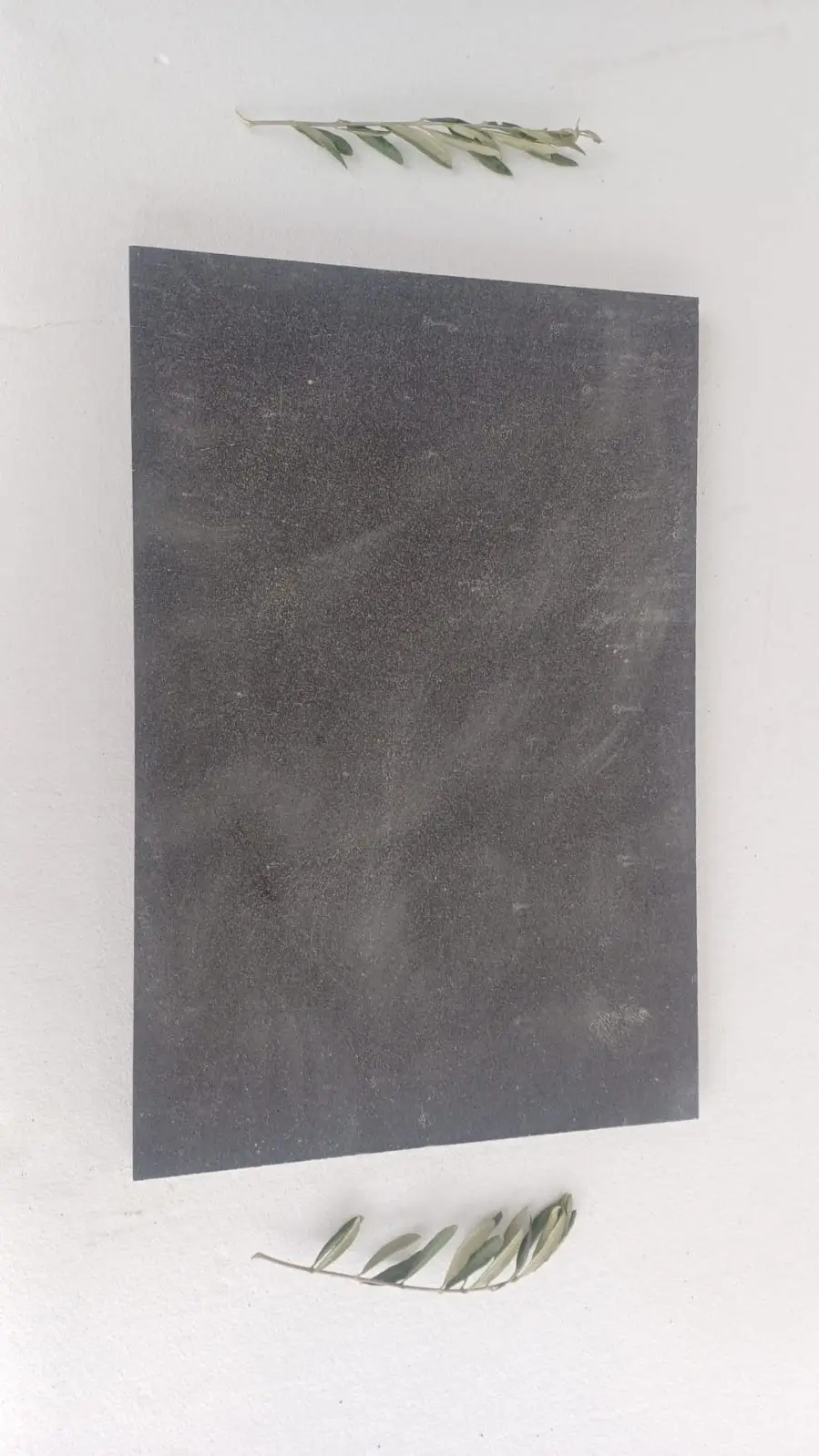
Maintenance, Sealing, and Terrain-Specific Variables
Sealing black limestone edging in Buckeye’s terrain environment requires accounting for the differential exposure conditions created by grade changes. Uphill-facing surfaces on sloped installations accumulate moisture contact time that’s three to four times longer than downhill faces during monsoon events. That asymmetric exposure means a single sealer application schedule doesn’t serve your entire installation equally — the uphill faces need resealing on a shorter cycle than the protected downhill surfaces.
For flat-site installations on Buckeye’s alluvial plains, a penetrating silane-siloxane sealer applied at 18-month intervals provides adequate protection against moisture intrusion without altering the surface roughness that contributes to thermal mass and radiation efficiency. For sloped terrain installations, move to a 12-month resealing schedule on surfaces with greater than 4% exposure grade. The silane-siloxane chemistry needs to maintain 95% pore sealing capacity to prevent the capillary absorption that drives spalling — and UV degradation in Arizona’s solar environment breaks down the sealer at the surface before visible wear indicators appear.
Beyond sealing, your maintenance protocol should include an annual joint sand replenishment check. Joint sand in black limestone edging installations on sloped terrain migrates downhill through normal drainage events at a rate that creates open joints at the uphill end of runs within 18 to 24 months. Open joints allow direct moisture infiltration to the base layer, which cycles through saturation and drying under the thermal gain the stone is simultaneously producing — that combination accelerates base migration and eventually produces settlement-driven cracking in the edging pieces themselves.
Expert Summary: Black Limestone Edging Heat Absorption in Buckeye
Black limestone edging heat absorption in Buckeye delivers genuine plant protection value — but only when the terrain and drainage conditions are addressed as the primary engineering concern, not secondary considerations. The Arizona dark stone thermal gain that makes these borders effective for cold-sensitive plantings depends entirely on stable thermal contact between stone and soil, and that stability is a drainage and base preparation outcome before it’s a material selection outcome. Your grade analysis, base sequencing, and drainage design determine whether the thermal performance the stone is capable of actually reaches the root zones you’re trying to protect.
For sloped Buckeye sites, the specifications aren’t dramatically different from flat-site work in principle, but they require deliberate attention to base compaction sequencing, uphill drainage interception, and mechanical pinning on grades above 8%. The material itself — properly specified at 160 lb/ft³ minimum density, sub-0.5% absorption, and 1,500 PSI flexural strength — handles Arizona’s thermal cycling and solar intensity without issue when the site engineering supports it. Confirm warehouse stock availability and truck delivery windows early in your project timeline, particularly for the fall installation season when demand in the greater Phoenix area concentrates significantly. For Arizona projects that also incorporate dark stone elements in modernist or minimalist design contexts, Black Limestone Edging Contemporary Design for Avondale Minimalist Landscapes offers useful parallel specification guidance across a related application — the Buckeye thermal borders principles covered here translate directly into that context. Citadel Stone’s black limestone edging products are specifically sourced and quality-checked for Arizona terrain conditions, giving Buckeye projects the material performance their site engineering demands.