
Black limestone contrast Mesa installations demand more than aesthetic ambition — the thermal dynamics at play in Arizona’s desert climate create specific performance challenges that generic design guides never address. Most designers focus on the visual drama of dark stone against pale desert hardscape, but the real specification work happens when you reconcile the material’s thermal mass behavior with Mesa’s extreme diurnal temperature swings. Getting Black Limestone Contrast Mesa right means understanding how a stone that absorbs and radiates heat behaves across a 24-hour cycle in a climate where surface temperatures regularly hit 160°F by mid-afternoon.
Why Black Limestone Works in Desert Gardens
The visual logic is straightforward once you see it in context: pale decomposed granite, cream stucco walls, and tan concrete form the default palette of Arizona desert gardens. Against that backdrop, black limestone reads as an anchor — it grounds the design and creates the kind of visual hierarchy that separates a considered garden from a collection of materials. The contrast isn’t subtle, and in Mesa’s intense sunlight, it becomes even more pronounced because the stone’s dark surface absorbs rather than reflects, creating depth that lighter materials can’t replicate.
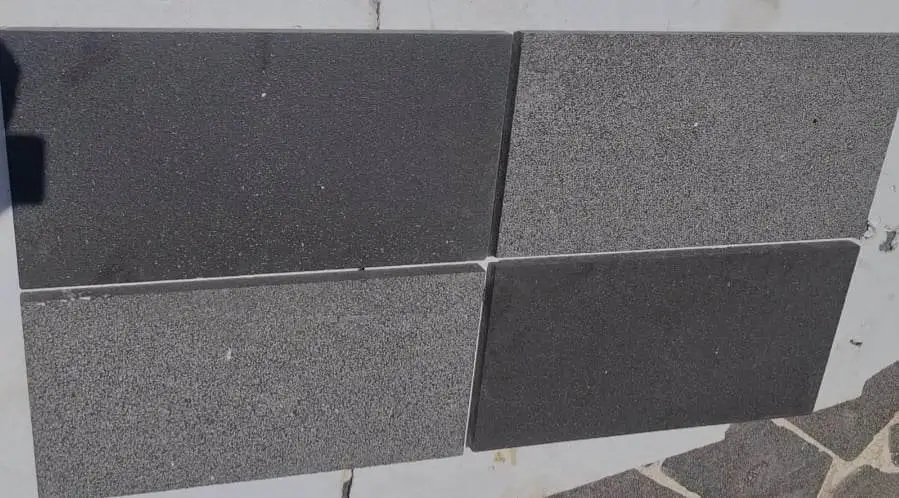
Black limestone’s characteristic near-black to dark charcoal coloration comes from organic carbon content locked in the calcite matrix during formation. Unlike dyed or processed materials, the color is intrinsic, which means it weathers consistently over time rather than fading unevenly. In direct Arizona sun, the surface develops a slight patina after the first season — not deterioration, but a gradual softening that actually improves the material’s integration with mature desert planting schemes. This weathering quality is one reason Black Limestone Contrast Mesa design holds up as a long-term specification rather than a trend-driven choice.
Thermal Performance and Heat Management
Here’s what most design guides skip entirely: black limestone in Mesa’s climate will reach surface temperatures 40–55°F higher than adjacent light-colored concrete on a clear summer afternoon. That’s not a reason to avoid it — it’s a specification parameter you need to design around. Positioning matters enormously. Black limestone paving used in shaded courtyards, under ramadas, or on east-facing exposures that receive morning light and afternoon shade performs beautifully. The same material on an unshaded south-facing terrace creates barefoot conditions most homeowners won’t tolerate after June.
- East-facing patios receive morning sun and benefit from black limestone’s heat absorption when temperatures are still manageable, typically below 95°F surface temperature
- Shaded courtyards with at least 60% canopy coverage maintain surface temperatures within 15–20°F of ambient air temperature, even on 110°F days
- Transitional zones between covered and open areas benefit from black limestone contrast precisely because the visual separation reinforces the functional distinction
- Pool surrounds require careful placement — black limestone should be reserved for non-primary walking zones where slip resistance protocols are most rigorous
The thermal mass story has an upside that many specifiers miss. Projects in Mesa benefit from black limestone’s heat retention in the cooler months — during Arizona’s brief winter period, dark stone that absorbs daytime warmth radiates that energy into adjacent planting beds through the night, creating a microclimate that extends the growing season for tropical specimens by several weeks.
Black Paving Visual Impact Arizona Design Principles
The black paving visual impact Arizona designers achieve most successfully follows a consistent compositional principle: black limestone performs best as the minority element in a two-tone or three-tone palette, not as the primary field material. Think of it as punctuation, not prose. A garden where black limestone defines pathways through white or cream decomposed granite achieves mesa dark stone design at its most sophisticated — the eye follows the dark path through the composition.
Proportion matters. The most effective ratios position dark stone at 20–35% of total hardscape surface area. Below 20%, the contrast reads as accidental rather than intentional. Above 40%, the design starts to feel heavy and the heat management challenges multiply. Geometric layouts — rectilinear pathways, defined step edges, formal pool copings — use that 20–35% window most efficiently because the strong lines reinforce the visual weight of the dark material.
- Pathway definition: 18–24 inch wide black limestone paths through lighter aggregate create strong wayfinding that reads clearly from inside the house
- Step edge definition: black limestone treads with contrasting pale risers create clear visual separation that also serves safety function in low-light conditions
- Water feature integration: black limestone coping around dark-bottomed pools creates the illusion of greater depth and frames the water as a design element
- Planting bed borders: 12–18 inch wide black limestone edging separates planting areas from hardscape with a precision that concrete edging can’t match
Contrasting Colors in Arizona Bold Aesthetics
The most compelling contrasting colors combinations in Arizona bold aesthetics leverage the desert’s natural material vocabulary — and black limestone has specific pairings that consistently outperform others. Caliche white, sandstone buff, and Sonoran cream tones create the strongest contrast ratios because they represent the actual color of the surrounding landscape. You’re not fighting the environment with an imported design language; you’re amplifying what the desert already does.
Travertine is the pairing material that deserves the most attention. Cream or ivory travertine adjacent to black limestone creates a contrast ratio that photographs dramatically and ages gracefully — both materials develop patina in compatible directions, meaning the design improves with time rather than deteriorating toward visual noise. For pool deck applications in particular, this combination is one of the most specified in high-end Arizona residential work, and for good reason. The black paving visual impact Arizona designers seek is rarely more effectively achieved than in this travertine pairing.
For projects with an interest in tumbled black limestone paving in Glendale, the textured surface of tumbled material adds a third dimension to the contrast equation — the varied surface catches light differently than a honed finish, creating visual movement that makes the design feel less static and more alive in direct Arizona sun.
Material Specification for Arizona Installations
Thickness selection for black limestone paving in Arizona should default to 30mm (1.18 inches) minimum for pedestrian applications and 40mm (1.57 inches) for any area with vehicular access or heavy concentrated loads. The material’s compressive strength typically ranges from 10,000 to 14,000 PSI, which is more than adequate for residential applications, but point-load performance depends on proper bedding layer consistency. A variable-thickness mortar bed creates stress concentrations that will telegraph to the surface as cracks within 2–3 years regardless of the stone’s inherent strength.
- Pedestrian walkways and patios: 30mm minimum thickness on a 50mm compacted sand/cement bedding layer over 150mm compacted aggregate base
- Pool copings: 40mm thickness with drip edge profiles machined to 10mm minimum overhang for clean water shedding
- Step treads: 40–50mm thickness to handle edge impact loading and provide thermal mass that moderates surface temperature at the contact point
- Driveway borders or accents: 50mm minimum if any vehicle overrun is possible, with aggregate base depth increased to 200mm in expansive soil zones
Black limestone paving in Arizona requires attention to porosity specification. The material’s absorption rate typically falls between 0.4% and 1.2% by weight, which places it in the low-to-moderate absorption category for natural stone. That range matters for sealing protocol — lower absorption materials require less aggressive penetrating sealer application, while specimens at the upper end of that range need sealer applied in two coats with full cure time between applications. Black Limestone Contrast Mesa specifications that overlook this porosity variable often encounter early sealer failure or surface hazing.
Base Preparation for Desert Soil Conditions
Desert soil conditions in the East Valley create base preparation challenges that directly affect how your Black Limestone Contrast Mesa installation performs over its service life. Expansive caliche layers are common throughout the region, and while experienced installers often treat them as a liability, a properly prepared caliche sub-base actually provides excellent bearing capacity — the problem is when partial excavation leaves an inconsistent interface between caliche and fill material.
Your aggregate base specification should call for Class II road base compacted to 95% Proctor density in 4-inch lifts. Each lift needs mechanical compaction verification, not just visual inspection. In areas where soil moisture varies seasonally — and it does in Arizona, despite the apparent aridity, since monsoon season introduces significant moisture variation at depth — base compaction that was acceptable at installation can shift over the first two monsoon cycles if it wasn’t achieved uniformly.
Projects in Gilbert frequently encounter mixed soil profiles with clay lenses at 12–18 inch depth that behave differently from the surrounding caliche. These clay deposits expand significantly when saturated by monsoon infiltration, and an installation that doesn’t account for this through appropriate base depth and drainage geometry will develop differential settlement — visible as uneven joint gaps or surface rocking — within the first three years.
Sealing Protocols That Protect Your Investment
Black limestone’s dark color creates a counterintuitive sealing dynamic: staining is more visible on lighter stones, but the material’s color depth can mask early-stage saturation that would be obvious on cream travertine. Seal proactively based on absorption testing rather than waiting for visible staining indicators. The standard water bead test — a few drops of water on the surface — tells you when resealing is due, but in Mesa’s UV environment, penetrating sealer degradation happens from the top down and you’ll fail the bead test before you see any surface color change.
- Initial sealing: apply penetrating impregnator sealer within 72 hours of installation completion, after surface has fully dried and any curing compounds have dissipated
- Application rate: follow manufacturer specification precisely — over-application of penetrating sealer on low-absorption limestone creates surface hazing that requires mechanical removal
- Resealing schedule: plan for biennial resealing in Mesa’s UV-intense environment, moving to annual resealing for any surface with western exposure above 4 hours of direct afternoon sun
- Product selection: solvent-based penetrating sealers outperform water-based formulations in high-UV environments because they resist UV degradation at the molecular level rather than forming a surface film
Citadel Stone’s technical team regularly consults on sealing specification for black limestone projects across Arizona — a detail that matters because warehouse storage conditions affect the stone’s moisture content at delivery, which directly influences how quickly the first sealer application absorbs. Stone that arrives from a climate-controlled warehouse in optimal condition typically achieves better initial sealer penetration than material stored outdoors through temperature extremes.
Ordering, Logistics, and Project Planning
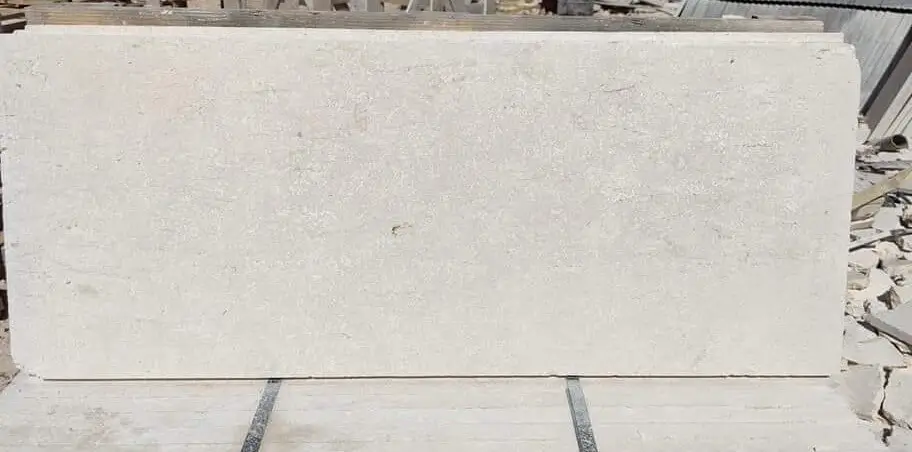
Verify warehouse stock levels before committing your project timeline — black limestone with specific finish requirements (honed, brushed, or tumbled) sometimes has lead times that differ from standard split-face material. At Citadel Stone, we maintain regional inventory specifically to reduce the gap between order and delivery, but specialty cuts and calibrated thicknesses occasionally require coordination with our sourcing partners. A 2–3 week planning buffer on those specifications saves you the compressed schedule pressure that leads to compromised installation conditions.
Truck access to your Mesa site affects delivery logistics more than most clients anticipate. Full-pallet delivery of 30mm or 40mm black limestone generates significant weight per load — a standard pallet runs 2,200–2,600 lbs — and truck access constraints that require hand-bombing material from the street to the installation area add both labor cost and breakage risk. Your delivery coordination should confirm driveway grade, gate clearance, and surface load capacity before the truck arrives, not after.
Projects in Yuma face an additional logistics consideration that Mesa projects typically don’t: extreme summer heat during installation season means material sitting on-site for more than two days in July or August reaches temperatures that affect adhesive and mortar setting times. Coordinate your delivery to arrive no more than 48 hours before installation begins, and store material in shade if any delay occurs.
The Bottom Line
Black Limestone Contrast Mesa design works when the specification is as deliberate as the visual intent. Match material thickness to load conditions, position dark stone surfaces relative to sun exposure and shade availability, confirm base preparation meets compaction standards for your specific soil profile, and commit to a sealing maintenance schedule that accounts for Mesa’s UV intensity. The design drama that black limestone delivers is genuinely distinctive in Arizona’s desert garden context — but it performs at its best when the technical foundations are as carefully considered as the aesthetic choices. Mesa dark stone design executed at this level of specification rigor consistently outperforms installations where the material selection preceded the engineering thinking.
The sealing dimension of this specification connects to a broader maintenance conversation worth exploring in depth. As you finalize your Arizona stone project details, Black Limestone Paving Sealing Requirements for Scottsdale Climate provides granular technical guidance on sealer selection and maintenance scheduling that applies directly to the broader Phoenix metropolitan region, including Mesa installations with comparable UV and heat exposure profiles. Citadel Stone offers limestone black paving in Arizona that resists staining and moss.