
Black limestone borders Paradise Valley gardens carry a structural logic that most landscape specs undervalue — the border isn’t just decorative framing, it’s a lateral restraint system that determines whether your field pavers hold their line for fifteen years or start drifting after the third monsoon season. Getting the depth, edge profile, and bedding compound right on those borders matters as much as the slab you lay inside them. The thermal dynamics of dark stone in Arizona’s desert climate add another layer of complexity that rewards careful detailing from the start.
Why Black Limestone Reads Differently in Desert Gardens
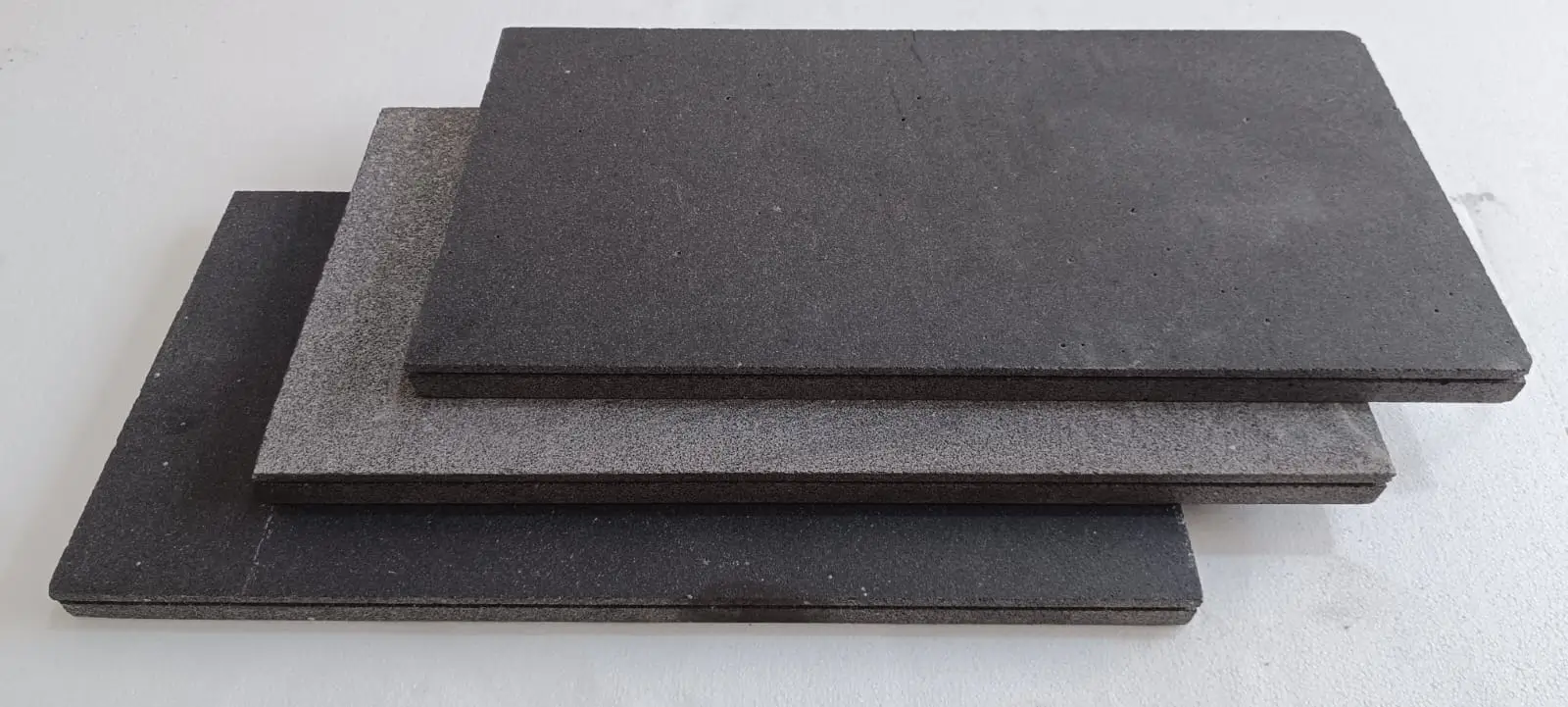
The visual weight of black limestone does something specific in a high-contrast desert landscape — it anchors the eye against buff-colored gravel, blonde aggregate, or pale Arizona flagstone in a way that lighter materials can’t replicate. Black stone border design Arizona projects leverage that contrast deliberately, using the deep charcoal-to-jet tones of honed or sawn-finish limestone to define garden rooms, separate planting zones, and create geometric structure in spaces where softscape coverage stays intentionally sparse.
What makes black limestone especially effective as a border material is its density. Compared to travertine or sandstone commonly used for edging, quality Irish black limestone sits in the 160–165 lb/ft³ range, which gives it the mass to resist lateral displacement even when mortared sections experience minor soil movement. Your border stays where you put it.
- Honed finishes provide a matte, non-reflective surface that reads as near-black in direct sun without creating glare problems for adjacent seating areas
- Sawn-cut edges give you precision geometry for formal garden layouts — critical when you’re framing a rectangular lawn panel or a rectilinear planting bed
- The stone’s natural density means border pieces in the 2-inch thickness range handle typical foot traffic edge-loading without chipping or rocking
- Black limestone’s relatively low porosity (typically 0.8–1.5% absorption rate for dense Irish material) limits staining uptake from soil contact and organic matter along garden edges
Heat Performance and Thermal Mass Trade-Offs
Here’s what most specifiers running black limestone borders Paradise Valley projects don’t plan for adequately — thermal mass accumulation in dark stone borders creates a localized heat bank that radiates into adjacent planting beds for hours after sunset. In summer months, surface temperatures on black limestone borders can reach 150–165°F under full afternoon exposure. That’s not a reason to avoid the material, but it’s a reason to think carefully about plant placement within 18 inches of the border edge.
The upside of that thermal mass is genuine. In Paradise Valley’s cooler winter months, stone that absorbs solar energy through the day releases it slowly overnight, moderating soil temperature at the root zone of adjacent plantings. Frost-sensitive plants positioned close to well-oriented black limestone borders tend to perform better through light frost events than plants set in open beds.
- Orient east-west running borders so the planting side faces north or northeast where possible — this reduces direct afternoon sun absorption in summer without sacrificing winter heat retention
- Specify a 1.5-inch minimum air gap or gravel buffer strip between the border’s interior face and any drip-irrigated planting zone to prevent moisture wicking into border joints
- In areas where borders run adjacent to turf, account for the heat differential — grass within 12 inches of a south-facing black limestone border will require additional irrigation cycles during peak summer months
For projects in Sedona, where red rock surroundings already carry enormous visual warmth, black limestone borders read as a sophisticated counterpoint rather than a harsh contrast — the cool, dark stone geometry grounds the naturalistic desert palette without competing with it.
Border Dimensions and Thickness Specifications
Your border dimensions need to serve two separate functions simultaneously: visual proportion relative to the field paving and structural capability as a lateral restraint. A border that looks right but doesn’t hold its position under soil pressure and seasonal expansion is a liability, not a feature.
For garden bed framing applications in Paradise Valley — where soil profiles often include caliche layers and expansive clay pockets — the standard specification should run 4 inches wide by 2 inches thick as a minimum for free-standing border pieces. Thicker profiles at 2.5 to 3 inches provide noticeably better resistance to edge chipping when lawnmower blades or trimmer heads make contact, which happens on virtually every residential project. The Arizona landscape framing role these borders serve demands proportions that read confidently against the surrounding hardscape.
- 4 × 2-inch sections work for straight runs and gentle curves on garden bed edges where lateral soil load is minimal
- 6 × 2.5-inch sections suit driveway border applications or anywhere vehicle overhang could impose edge loading
- For radius curves tighter than 24 inches, cut sections shorter than 12 inches to maintain a clean arc without stress fracturing — don’t try to force long pieces around tight bends
- Border height projection above adjacent grade should sit between 1.5 and 2.5 inches — enough to register visually and contain gravel or mulch, but low enough to avoid becoming a tripping hazard near primary circulation paths
At Citadel Stone, we recommend specifying border thickness based on the application loading condition rather than defaulting to the thinnest available profile. The cost difference between 2-inch and 2.5-inch material is marginal relative to the labor involved in replacing cracked border sections after two or three years in the ground.
Installation Base Prep for Arizona Soil Conditions
The base preparation underneath black limestone borders Paradise Valley installations is where most field failures originate — not the stone itself. Arizona’s desert soils create a specific set of challenges that generic installation guidelines don’t address with enough precision.
Caliche hardpan, which appears frequently across Paradise Valley’s residential lots at depths of 12 to 30 inches, actually works in your favor when it’s properly broken through and not used as a direct setting bed. Intact caliche below your aggregate base prevents deep moisture migration and provides exceptional load-bearing support. The problem comes when installers mistake a caliche layer for adequate base preparation and skip the compacted aggregate layer entirely.
- Excavate to a minimum depth of 6 inches below intended finished border height — 8 inches in areas with known expansive clay soils
- Install a 4-inch compacted base of 3/4-inch crushed aggregate (Class II base material) at 95% Modified Proctor compaction
- Set borders on a 1-inch dry-pack mortar bed using a 4:1 sand-cement mix — this allows minor adjustment during installation while providing rigid support after curing
- In zones where irrigation runs within 18 inches of the border, slope the base bed at a minimum 1% grade away from the planting area to prevent water ponding beneath the border setting bed
- Allow 72 hours minimum curing time before backfilling against installed border sections — premature backfill pressure causes rotation before the mortar bed achieves adequate strength
The Peoria area sits at lower elevation than Paradise Valley and deals with slightly different soil profiles, but the base preparation principles transfer directly — aggressive compaction and proper drainage geometry are non-negotiable regardless of specific soil classification.
Jointing Patterns and Design Configurations
Paradise Valley accent edging options with black limestone split broadly into two design families: continuous linear borders that frame defined garden shapes, and broken or segmented layouts that introduce rhythm and visual interruption. The choice between them has both aesthetic and practical implications for decorative edging performance across the project’s lifespan.
Continuous linear borders with tight butt joints (1/8 to 3/16 inch) create the cleanest, most formal look and work particularly well framing rectangular or geometric planting beds adjacent to contemporary architecture. The joint must be filled with a color-matched sanded mortar or flexible polyurethane joint compound — do not leave continuous borders dry-jointed where soil contact occurs, as root infiltration will eventually displace sections.
For decorative edging in naturalistic or desert-contemporary garden schemes, a broken rhythm using 12-inch, 18-inch, and 24-inch pieces in a pattern repeat gives the border visual movement without sacrificing containment function. Space joints at 3/16 to 1/4 inch and fill with decomposed granite in colors that complement the limestone’s dark tone — a buff or charcoal DG reads better than standard tan alongside black stone.
- Expansion joints every 10 to 12 linear feet in fully mortared border runs — tighter than general hardscape guidelines because border pieces have less thermal mass to buffer cycling
- Miter external corners at 45 degrees rather than using a right-angle butt joint — mitered corners hold better under soil pressure and look substantially more refined
- Soldier-course orientation (pieces standing perpendicular to the border run) creates a taller, more architecturally assertive border profile suited to raised planting beds or grade transition applications
Sealing and Maintenance in Desert Conditions
Black limestone in Arizona’s desert climate needs sealing — that’s not a debate. The real question is what type of sealer and how frequently, because getting that wrong costs you either protection or appearance, and sometimes both.
For black limestone borders Paradise Valley applications, a penetrating impregnator sealer with a matte or natural finish is the correct specification. Topical sealers that leave a surface film create an appearance problem on border edges specifically — the film shows scuff marks, soil contact abrasion, and UV degradation unevenly across the width of the piece, which looks worse than unsealed stone within two seasons.
You can explore Irish black limestone available in Prescott to understand how these sealing requirements apply across different black limestone product formats available in Arizona.
- Apply a fluoropolymer-based or silane-siloxane penetrating sealer as an initial treatment within 30 days of installation and after joint compounds have fully cured
- Reseal on a 24-to-36-month cycle for borders in full sun exposure — the UV intensity in the Sonoran Desert accelerates sealer breakdown faster than manufacturers’ standard recommendations, which are typically written for temperate climates
- Clean borders annually with a pH-neutral stone cleaner before evaluating whether resealing is needed — water beading on the surface indicates active sealer protection, flat absorption indicates it’s time to reseal
- Avoid calcium-based cleaners or any product containing citric or acetic acid, which etch limestone surfaces and permanently alter the finish in high-contact areas
In Flagstaff, the freeze-thaw cycle changes the sealing calculus significantly — you’ll need to confirm the sealer you specify is rated for freeze-thaw cycling (look for ASTM C1646 test data from the manufacturer), because some penetrating sealers designed for desert-only climates don’t perform under repeated freeze-thaw stress.
Supply Lead Times and Project Planning
Black stone border design Arizona projects face a supply timing reality that catches many landscape architects and contractors off guard — quality Irish black limestone is an imported natural material, and lead times from overseas quarry to Arizona job site typically run 8 to 12 weeks when ordered through standard import channels. Planning your border specification into the project schedule early isn’t optional; it’s the difference between a smooth installation sequence and a two-week hold while the field paving sits unprotected.
Citadel Stone maintains warehouse inventory of black limestone border profiles in Arizona, which compresses that lead time considerably for standard dimensions. Stock availability from the warehouse can support truck delivery to Paradise Valley job sites within 1 to 2 weeks for profiles carried in volume — 4×2-inch and 6×2.5-inch sections in particular. Custom dimensions or non-standard lengths require direct quarry orders with the full 10-to-12-week lead time, so lock in those specs early.
- Confirm warehouse stock levels before finalizing your construction schedule — seasonal demand in the fall and spring installation windows can draw down inventory faster than standard restock cycles
- Order a 10% overage above calculated linear footage to account for cutting waste on mitered corners and radius sections — black limestone doesn’t come from a big box warehouse where you can make a second run on a Tuesday afternoon
- Coordinate truck delivery access with your site conditions in advance — Paradise Valley residential sites sometimes have restricted access hours or gate weight limits that affect delivery vehicle options
- Store delivered border material on-site on a flat pallet away from direct soil contact, covered with breathable fabric rather than plastic sheeting that traps moisture against cut surfaces
Pairing Black Limestone with Arizona Landscape Materials
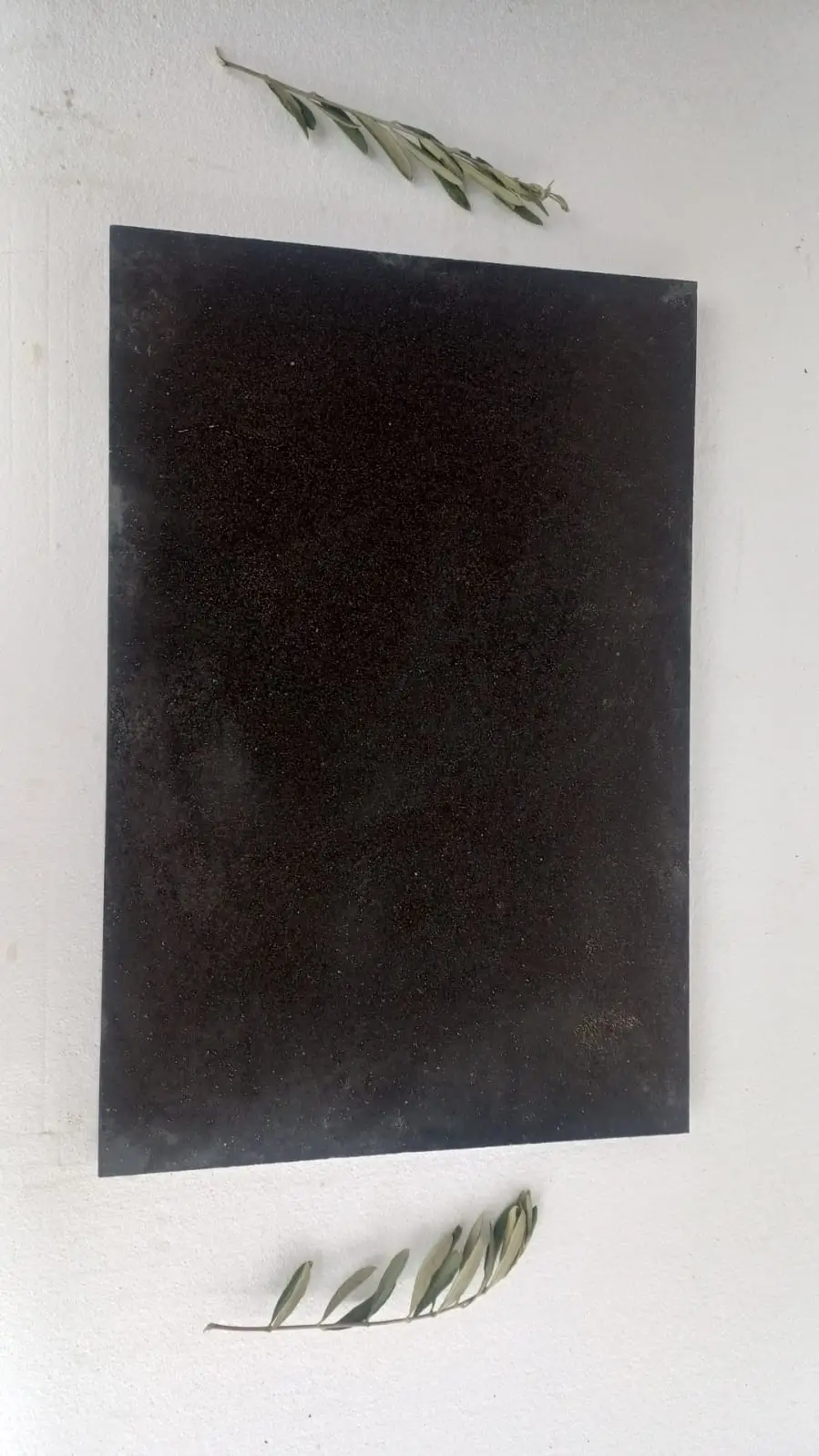
Black limestone paving Arizona projects demonstrate a consistent design principle — the stone performs best as a border when it contrasts with, rather than complements, the primary surface material. Pairing black limestone borders with buff travertine field pavers is a proven combination for Paradise Valley’s residential garden settings: the limestone’s sharp geometry and dark tone defines the space, the travertine’s warmth and texture fills it. This approach to Arizona landscape framing extends naturally across material pairings wherever strong tonal contrast is the design intent.
Decomposed granite is the most common infill material in Arizona desert gardens, and black limestone borders read exceptionally well against it. Specify a medium-brown or charcoal DG rather than the standard gold-tan variety if you want the border to read as a designed element rather than a construction artifact. The tonal relationship between the DG color and the limestone edge determines whether the border looks intentional or incidental.
- Pale gray concrete pavers adjacent to black limestone borders create a high-contrast modern palette suited to architectural contemporary projects
- Arizona flagstone laid in a random ashlar pattern inside black limestone border framing benefits from the geometry the border provides — the irregular flagstone reads as intentional when it has a precise frame
- Crushed white marble or white quartz aggregate as a ground cover within black limestone border frames creates the strongest contrast ratio — effective for feature garden areas, but visually aggressive for large areas
- Steel or aluminum edging combined with black limestone borders in hybrid applications allows you to handle tight radius curves with the metal while using the stone for the straight feature runs where it makes the strongest visual statement
Getting Black Limestone Border Specifications Right
Black limestone borders Paradise Valley gardens reward the specifiers who treat them as structural elements first and decorative accents second. Your base preparation, joint geometry, thermal expansion allowances, and sealing schedule determine whether this material delivers its full 20-plus-year potential or starts showing stress and displacement within the first five years. The visual payoff — that sharp, dark-toned definition against Arizona’s characteristic pale and warm palette — is worth protecting with the right technical foundation.
Paradise Valley accent edging executed in black limestone succeeds when every detail layer — from compacted base depth to sealer chemistry — is resolved before the first piece goes into the ground. For a complementary look at how black limestone performs in a different but related context, Black Limestone Paving Stain Resistance for Peoria Outdoor Living covers the material’s long-term surface performance under Arizona outdoor conditions — useful context as you think through the full life-cycle of a black limestone specification. Citadel Stone offers honed black limestone slabs in Arizona for indoor-outdoor flow.