
Slab thickness is the specification variable that separates bench seating that holds up over decades from installations that crack within the first three Arizona summers — and for black limestone bench seating Marana projects, getting that number right matters more than almost any other decision you’ll make. A 2-inch nominal slab handles the distributed loads of public seating without issue, but once you factor in cantilevered spans over 18 inches without sub-frame support, you need to move to 2.5-inch or 3-inch stock. The material’s natural density — typically ranging from 160 to 168 pounds per cubic foot — works in your favor structurally, but it also means your substrate and mounting hardware need to be engineered accordingly from the start.
Why Black Limestone Works for Public Seating in Marana
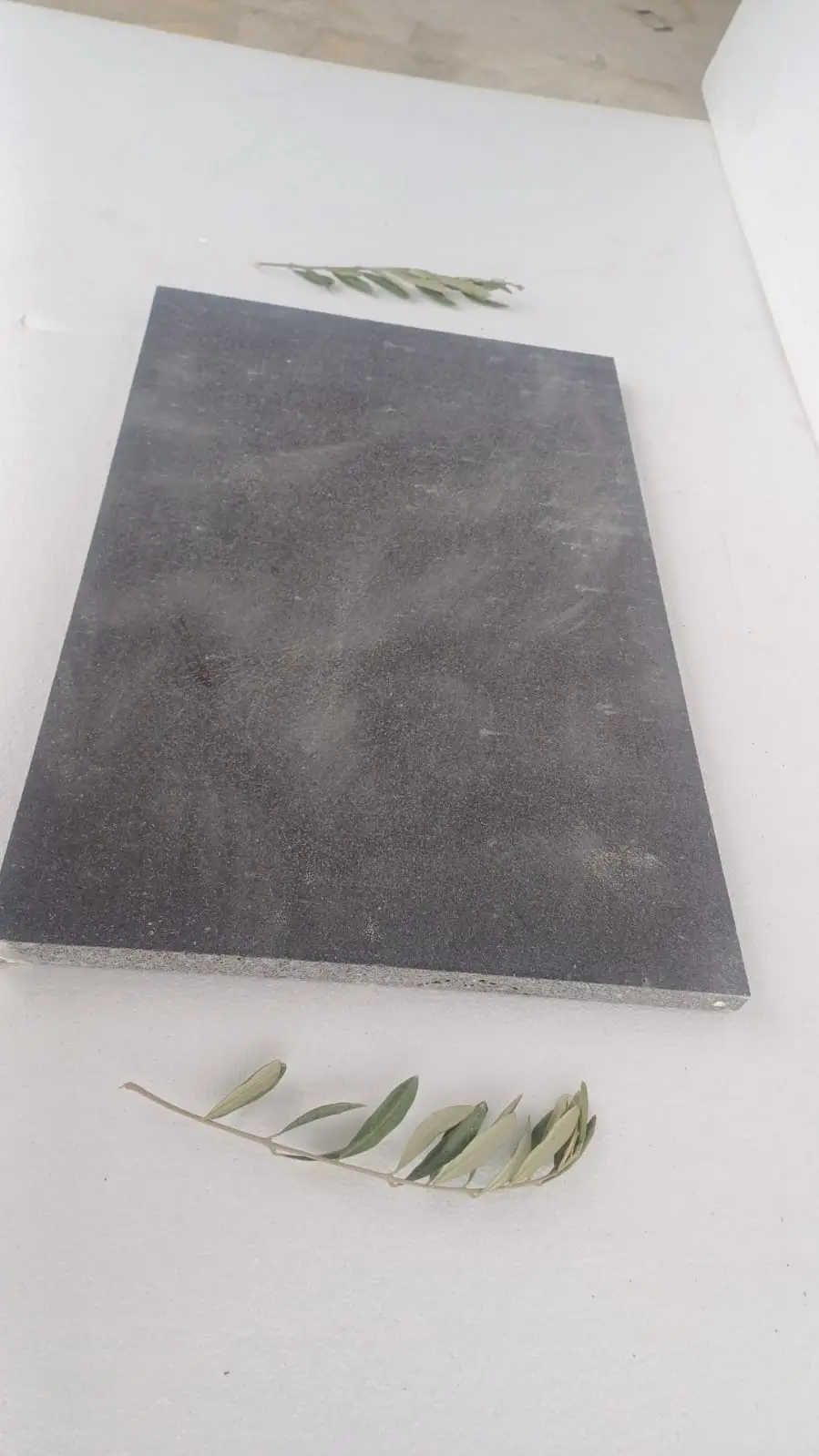
The performance case for black limestone in public seating installations comes down to compressive strength and surface stability under constant use. You’re looking at compressive strength figures in the 8,000 to 14,000 PSI range depending on the specific quarry bed — which means routine point loads from foot traffic, standing users, and maintenance equipment won’t compromise the slab. What differentiates black limestone from lighter-colored alternatives isn’t just aesthetics; the dense, tight crystalline structure that produces that deep charcoal-to-jet coloration also reduces surface porosity, which translates directly to lower contamination absorption in high-traffic public zones.
The material also holds its edge detail exceptionally well over time, which matters in public spaces where rounded or chipped corners become both aesthetic and liability concerns. You won’t get the same edge retention from sandstone or some of the softer travertines at comparable thickness. For Marana outdoor benches specifically, that durability under constant sun and contact use is a primary driver for specifying this material over alternatives.
- Compressive strength of 8,000–14,000 PSI handles public space loading without requiring oversized cross-sections
- Low porosity in dense black limestone varieties reduces staining absorption in high-use areas
- Superior edge retention compared to softer natural stone alternatives at equivalent slab thickness
- Thermal mass behavior creates predictable surface temperature patterns across the day
- Consistent coloration from dense mineralogy — less variation lot-to-lot than many lighter stones
Thermal Performance in Arizona’s Extreme Heat
Here’s what most specifiers working through their first black limestone bench project in Arizona miss: the material’s thermal mass creates a delayed heat curve, not a reduced one. By early afternoon in Marana’s summer months, a south-facing black limestone slab can reach surface temperatures in the 140°F to 160°F range under direct exposure — which is genuinely unusable for seating without strategic shade design. This isn’t a reason to avoid the material; it’s a reason to coordinate your slab specification with your shade structure design from the start, rather than treating them as separate scopes.
The thermal expansion coefficient for black limestone runs approximately 4.5 to 5.8 × 10⁻⁶ per °F depending on mineral composition. Over a 4-foot bench span cycling between 60°F and 150°F, you’re looking at roughly 3/16-inch of linear movement — which means your mounting detail needs to account for that range without binding. Fixed-pin mounting with no relief is the most common failure mechanism in Arizona stone bench installations, and it’s entirely preventable with slotted hardware or flexible setting material at support points.
- Orient bench seating on an east-west axis where possible to reduce peak afternoon solar exposure
- Specify shade structures as part of the same design scope — not an add-on after the fact
- Allow for thermal movement in mounting details: slotted holes or compressible isolator pads at support points
- North-facing or shaded installations make black limestone bench seating usable year-round in Marana
- Thermally isolated sub-frames in steel or precast reduce heat transfer to mounting hardware
Slab Dimensions and Structural Specification
Your dimensional specification starts with span — the unsupported distance between bearing points. For black slab seating areas in Arizona public spaces, a 2-inch slab is appropriate up to 20-inch unsupported spans; beyond that, move to 2.5-inch minimum. For spans approaching 30 inches — common in single-slab bench designs without intermediate support — 3-inch stock is the defensible specification, particularly in high-traffic public settings where impact loads from users sitting down abruptly are routine.
Width matters differently than span for bending calculations, but it affects your handling and delivery logistics significantly. Slabs wider than 24 inches in 3-inch stock move into the category of requiring mechanical lifting equipment at installation — plan your truck access and staging area accordingly. A 30-inch wide by 72-inch long bench slab in 3-inch black limestone will run approximately 280 to 310 pounds, which rules out hand-setting and requires a minimum two-person crew with appropriate lifting equipment.
Base and Substrate Requirements for Public Installations
Public space furniture spec work in Marana runs into a consistent challenge: the native soil in much of Pinal County has moderate to high expansive clay content, which means your bearing structure — whether a cast concrete pedestal, steel frame, or masonry plinth — needs to be founded below the active zone. For most Marana locations, that means a minimum 24-inch depth for any footing supporting a stone bench installation. Shallow footings in expansive soil will move seasonally, and that movement translates directly into cracked stone at the bearing points.
Projects in Yuma face a different soil profile — predominantly sandy loam with minimal swell potential — which allows shallower footing depths but introduces a different challenge around lateral stability in the loose matrix. You’ll want to upsize your footing diameter rather than depth in those conditions to get equivalent bearing resistance. The point is that substrate specification isn’t a one-size formula across Arizona; local soil conditions drive your bearing design as much as the stone loading does.
- Minimum 24-inch footing depth in expansive clay soils typical of Marana and surrounding Pinal County areas
- Concrete pedestals should achieve minimum 3,000 PSI compressive strength before stone placement
- Isolation pads between concrete substrate and stone slab reduce thermal bridging and accommodate minor differential movement
- Drainage slope away from bearing points prevents water accumulation that accelerates freeze-thaw degradation
- Stainless steel hardware at all connection points — standard carbon steel corrodes in the alkaline moisture environment around concrete
Surface Finish Selection for Public Seating Comfort and Safety
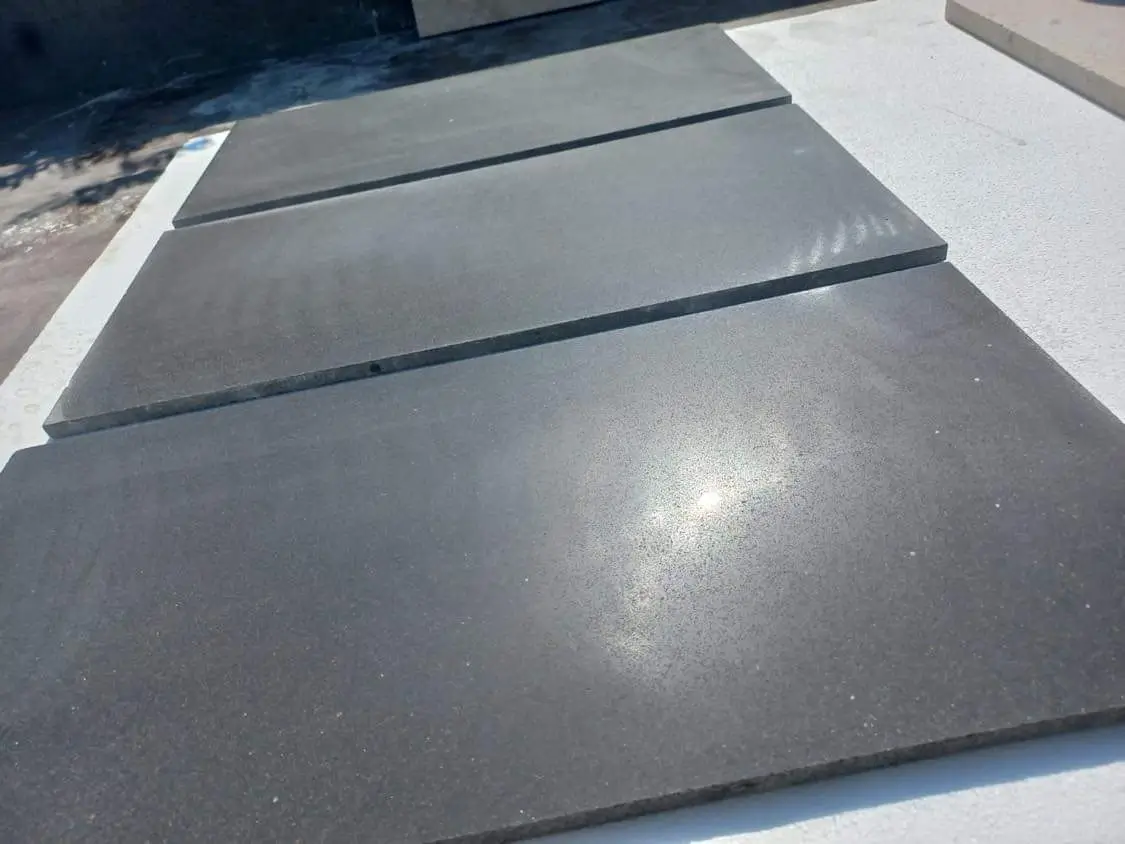
The finish question for black limestone bench seating covers two competing requirements: slip resistance and seating comfort. A honed finish — typically 400 to 800 grit — hits the right balance for most public seating applications. You get enough texture for safe contact without the sharp aggregate exposure of a bush-hammered or flamed finish that would make the surface uncomfortable against exposed skin. Polished finishes are genuinely inappropriate for Arizona community seating; they’re too slick when wet and they show every scuff and scratch from daily use in a way that looks neglected within the first year.
The Mesa Parks and Recreation department moved away from polished stone surfaces in public seating areas several years ago specifically for this reason — maintenance staff were spending disproportionate time managing appearance of polished stone benches in high-traffic locations. A honed or sandblasted surface in black limestone reads as intentionally matte and ages gracefully with normal use.
Sealing and Maintenance Protocols
Sealing black limestone bench seating in Arizona’s climate serves a different primary purpose than it does in temperate zones. Here, you’re not primarily managing freeze-thaw moisture intrusion — you’re managing the alkaline cleaning chemicals that facilities maintenance crews use routinely on public furniture. Sodium hypochlorite-based cleaners at the concentrations used for graffiti and organic stain removal will bleach and etch unsealed limestone over time, stripping the surface character and lightening the color in irregular patches that look terrible.
Specify a penetrating silane-siloxane sealer applied at the quarry-cut stone surface before installation — not after the fact on finished, installed benches where you can’t control application quality. Reapplication cycles for black limestone in Marana’s climate run approximately every 24 to 36 months for benches with overhead shade and every 18 to 24 months for fully exposed installations. At Citadel Stone, we recommend confirming the sealer manufacturer’s specific guidance for your stone’s porosity rating, since black limestone porosity varies by source bed and what works for one material may under-perform on another.
- Penetrating silane-siloxane sealers outperform topical coatings for public bench applications — topicals wear through unevenly with foot traffic and contact
- Apply sealer before installation for controlled, consistent coverage
- Test water bead behavior annually — if beading degrades, it’s time to reseal regardless of the calendar schedule
- Avoid acid-based cleaners entirely — use pH-neutral stone-safe products for routine maintenance
- Graffiti removal should use stone-compatible solvents; communicate this requirement to facilities management before project handover
Specifying Black Limestone Slabs for Arizona Public Projects
Your specification for black slab seating areas in Arizona public space applications needs to address material classification, dimensional tolerances, and finish verification in terms that a supplier can actually respond to. “Black limestone” without further qualification covers a range of materials with meaningfully different performance characteristics — from the denser, harder Belgian blue-black varieties to softer domestic dark limestones that won’t hold up to public use over time. Specify minimum compressive strength (8,000 PSI minimum for public seating), maximum water absorption (2% or less by ASTM C97), and the finish by grit specification, not just name.
For Gilbert and other East Valley municipalities, procurement specifications frequently require ASTM C1528 compliance for slip resistance — which honed black limestone generally meets, but you’ll want test certification from your supplier before submission. Confirm this documentation is available from warehouse stock before you commit to a delivery schedule; some material runs are certified and some aren’t, and discovering this after award creates schedule problems that ripple through the whole project.
The specification for ebony black limestone slabs in Arizona public installations should also address dimensional tolerances explicitly — ±1/8 inch on thickness is the standard for natural stone, but some suppliers work to tighter tolerances on request, which matters when you’re setting multiple slabs to a consistent finished height in a continuous bench run.
Logistics, Lead Times, and Delivery Planning
Public space projects run on construction schedules that don’t accommodate open-ended material lead times. Before you commit your project schedule to a stone specification, verify warehouse availability for the specific material, thickness, and finish you’ve specified. Black limestone in 3-inch thickness with a honed finish isn’t a shelf item at most distributors — it may require a custom cut order with a 6 to 10 week lead time if domestic warehouse stock doesn’t match your requirements.
Citadel Stone maintains stocked inventory of black limestone slabs across multiple thickness and finish options, which typically means we can meet 1 to 2 week lead times for standard specifications rather than the extended import cycle. That matters significantly when your project schedule is constrained by concurrent trades. You’ll also want to confirm truck access to your installation site during the delivery planning phase — a flatbed with a 30-foot radius turning requirement can’t service every park path or plaza that narrow urban streetscapes in Marana create. Know your site constraints before the material arrives.
- Confirm warehouse stock for your exact specification — thickness, finish, and lot quantity — before finalizing schedule commitments
- Order 8 to 12% overage on stone to account for cuts, field breakage, and future repairs
- Coordinate truck delivery timing with site access windows and concurrent contractor schedules
- Request material sample verification before full order release for color and finish match
- Inspect delivered slabs for transport damage before signing off on receipt — visible damage must be documented at the truck, not after it leaves
Expert Summary
Black limestone bench seating Marana projects succeed or fail at the specification stage — not the installation stage. The material itself is well-suited to the application: dense enough for structural integrity, dark enough for visual contrast in desert landscape settings, and durable enough for public contact use when correctly sealed and maintained. The variables that create problems are almost always in the details that don’t show up in a generic product description: thermal movement allowance in mounting hardware, footing depth calibrated to local soil conditions, finish specification that balances safety and aesthetics, and sealer selection that accounts for the alkaline cleaning environment of public facilities maintenance.
Dimensional specification should be driven by span and load calculations, not convention. Sealing protocols need to be written into the maintenance handover documents, not left to chance. Your delivery and installation planning needs to account for the weight and handling requirements of 3-inch black limestone slabs in a public space environment where mechanical handling access isn’t always guaranteed. Beyond benches, Arizona stone projects frequently involve complementary hardscape elements across multiple product categories — Black Limestone Slab Outdoor Countertops for Laveen Kitchens illustrates how the same material family performs across different installation contexts with distinctly different specification requirements. Get the fundamentals right on your Marana bench specification and you’re looking at a 25 to 30 year installation life with routine maintenance — that’s the performance standard black limestone can genuinely deliver in Arizona public spaces. We are the destination for limestone paving black in Arizona.