
Black limestone bar tops in Buckeye installations face a deceptively demanding set of performance conditions — intense UV exposure, rapid thermal cycling, and the mechanical wear of daily bar service all converge on a single horizontal surface. The slab thickness you specify, the sealer chemistry you select, and the overhang geometry you detail will determine whether your outdoor bar becomes a ten-year maintenance headache or a genuinely durable centerpiece. These decisions matter far more than most outdoor kitchen guides acknowledge, and getting them right means understanding how black limestone actually behaves under desert conditions rather than relying on generic stone specifications.
Why Black Limestone Works for Outdoor Bars
The appeal of black limestone for Buckeye outdoor bars goes well beyond aesthetics. Dense, fine-grained black limestone exhibits compressive strength values typically ranging from 8,000 to 15,000 PSI depending on formation and quarry source — that’s meaningful structural performance for a horizontal surface absorbing the point loads of bar stools, ice buckets, and heavy serving equipment. You’re working with a material that genuinely earns its place in high-use entertainment areas rather than simply looking good in a showroom.
The thermal mass properties of black limestone create one of the more nuanced trade-offs in desert bar design. Dark stone absorbs and holds heat more aggressively than lighter alternatives, which means morning surfaces can feel cool while afternoon sun exposure drives surface temperatures upward significantly. At Citadel Stone, we recommend pairing black limestone bar tops with east-facing or covered orientations in Buckeye projects specifically to manage this dynamic — the material performs excellently when shade structures or pergola overhangs reduce direct midday exposure.
- Compressive strength of 8,000–15,000 PSI supports heavy-use bar service loading
- Dense pore structure resists liquid penetration better than travertine or sandstone alternatives
- Natural variation in black and charcoal tones conceals minor surface wear over time
- Polished finishes achieve slip resistance values suitable for horizontal bar surfaces when properly sealed
- Material responds predictably to standard stone fabrication tools, allowing clean edge profiles
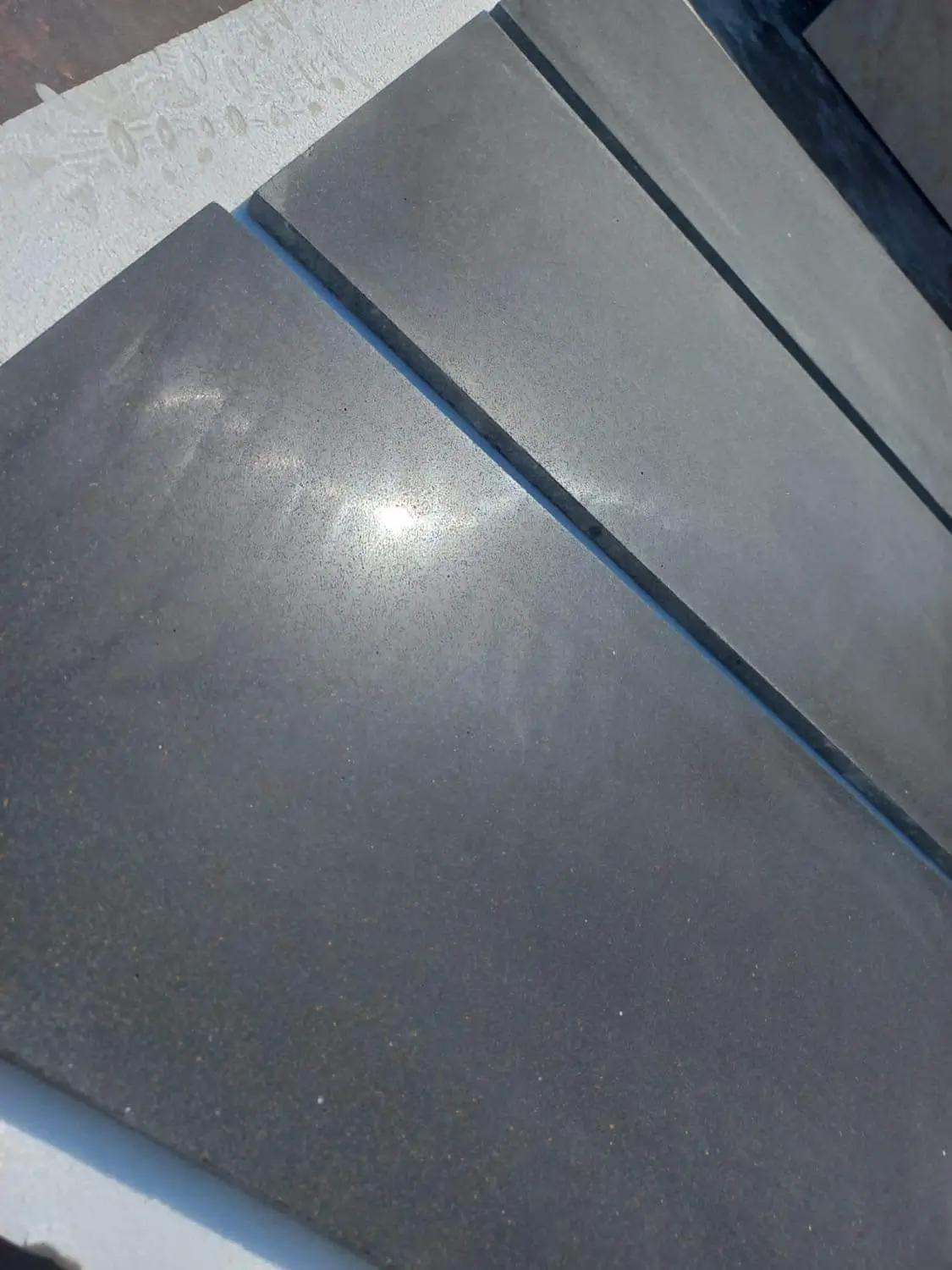
Thickness and Slab Dimensions for Buckeye Bars
Your slab thickness spec for black limestone bar tops in Buckeye projects should start at a minimum of 1.25 inches for supported countertop applications, and you’ll want to move to 1.5 inches anywhere you’re running an overhang beyond 10 inches without a corbel or bracket underneath. Field experience with Arizona outdoor bars consistently shows that the 1-inch slabs some fabricators push for cost savings develop hairline flex cracks within two to three seasons when overhangs aren’t properly supported — especially at corner miters where the leverage is highest.
Overhang dimension is where most Buckeye outdoor bar designs either succeed or create long-term problems. A 12-inch overhang accommodates bar stool seating comfortably, but anything past 14 inches unsupported puts real bending stress on the slab during the thermal expansion cycles Arizona summers generate. The coefficient of thermal expansion for dense limestone runs approximately 4.4 to 5.8 × 10⁻⁶ per °F — which translates to meaningful dimensional movement across a long countertop span during a day that swings from 70°F at sunrise to 110°F by mid-afternoon. Properly engineered Arizona serving stations account for this movement at every fixed connection point.
- Minimum 1.25-inch thickness for fully supported countertop installations
- 1.5-inch minimum for overhangs exceeding 10 inches without corbel support
- 2-inch slabs recommended for freestanding or lightly supported bar configurations
- Expansion gaps of 1/8 inch per 8 linear feet prevent buckling at fixed end conditions
- Miter joints at corners require backing rod and flexible epoxy — rigid grout will crack
Surface Finish Options for Arizona Entertainment Areas
The finish you choose for your black slab counter surfaces affects both aesthetics and functional performance in ways that genuinely matter for Arizona entertainment areas. A high-polish finish delivers the dramatic mirror-like surface most designers associate with black limestone — but polished surfaces require more consistent sealer maintenance in outdoor bar settings because the topical sealers that maintain the shine can degrade faster under Buckeye’s UV intensity than they would in a coastal or northern climate.
Honed finishes represent the more practical choice for functional Buckeye outdoor bars. The matte surface reads as sophisticated and contemporary, it masks minor scratches and etching from citrus-based beverages far better than polished stone, and it retains its appearance longer between refinishing cycles. Leathered finishes occupy useful middle ground — the slight texture adds grip performance relevant to a wet bar surface while providing better UV stability than topical polish treatments. For projects in Mesa, where covered patio structures often keep surfaces partially shaded, polished finishes are more viable because UV degradation of the sealer runs at a meaningfully slower rate than fully exposed Buckeye installations.
- Polished: maximum visual drama, requires biennial professional refinishing in full-sun exposure
- Honed: best long-term value for active outdoor bars, masks minor surface wear effectively
- Leathered: superior grip in wet conditions, minimal maintenance, contemporary aesthetic
- Brushed: excellent slip resistance, works well on horizontal surfaces with heavy foot-traffic adjacent zones
Sealing Protocols for Black Limestone Bar Tops
Sealing decisions for black limestone bar tops in outdoor Arizona settings involve a chemistry choice most homeowners don’t realize they’re making. Penetrating impregnator sealers — specifically fluoropolymer or silane-siloxane chemistries — bond into the stone’s pore structure without forming a film on the surface. These are the correct choice for outdoor bar tops because they don’t cloud, peel, or trap moisture under Arizona’s thermal cycling, and they protect against the oil, citrus, and alcohol spills that are a daily reality in bar service environments at Arizona serving stations.
Topical film-forming sealers have their place on interior applications but create problems outdoors. The bond between film sealer and stone surface breaks down unevenly under thermal expansion and UV exposure, producing the whitish, peeling appearance you’ve likely seen on neglected outdoor kitchen counters. You should apply your penetrating sealer before installation when possible — saturation from both faces provides more complete protection than surface-only post-installation treatment. Reapplication intervals for quality penetrating sealers in Buckeye conditions run approximately every 24 to 30 months depending on use intensity and cleaning frequency.
- Fluoropolymer impregnators provide 24–30 month protection intervals in Arizona outdoor conditions
- Apply sealer to raw slab before installation for complete pore saturation from both faces
- Test sealer effectiveness with the water bead test — absorption within 60 seconds indicates reapplication needed
- pH-neutral cleaners only — acid-based cleaners will etch limestone regardless of sealer quality
- Avoid silicone-based sealers on surfaces that may need professional refinishing — they interfere with polishing compounds
Base and Support Structure for Outdoor Bar Tops
The structural support beneath your black limestone bar top determines long-term performance more than any material specification you put above it. Masonry bases — CMU block, poured concrete, or stone veneer over steel framing — provide the thermal stability black slab counter surfaces in Arizona require. Wood-framed bar structures in full Arizona sun cycle through expansion and contraction patterns that work against the rigid bond between setting material and stone, producing loose slabs and cracked grout lines within a few seasons.
Your setting bed specification matters just as much as the base material. Modified thin-set mortars rated for exterior use and large-format stone applications — specifically those meeting ANSI A118.4 standards — provide the flexibility and bond strength to accommodate the limestone’s thermal movement without cracking. Poured concrete countertop surfaces should include a crack isolation membrane before the setting bed, particularly in Buckeye where soil movement in expansive clay areas can transmit minor structural flex upward into the bar top. For outdoor Buckeye bars built over block or masonry bases, your setting bed depth should run 3/4 to 1 inch with back-buttering on the slab for full contact coverage.
Drainage and Edge Profile Design
Drainage geometry is the specification detail that separates a black limestone bar top that looks great after five years from one that shows efflorescence, staining, and edge deterioration. Your bar top surface should maintain a minimum 1/8-inch-per-foot pitch toward the outer serving edge — this keeps standing water from pooling at the back where it contacts wall or backsplash structures and accelerates mineral deposit buildup against vertical surfaces.
Edge profiles for outdoor bar tops deserve careful consideration beyond pure aesthetics. A 1/4-inch eased or bullnose edge profile reduces chipping risk at the most vulnerable point on the slab, while knife-edge or waterfall profiles, though visually dramatic, expose thin cross-sections that can chip from the casual impacts typical of outdoor bar use. For Yuma installations where wind-driven dust and occasional debris contact is common, a slightly more robust eased profile outperforms decorative thin edges over time. You’ll want to seal edge profiles with the same penetrating chemistry as the top surface — cut edges are more porous than the face and will absorb staining faster if left untreated.
Ordering Logistics and Slab Selection
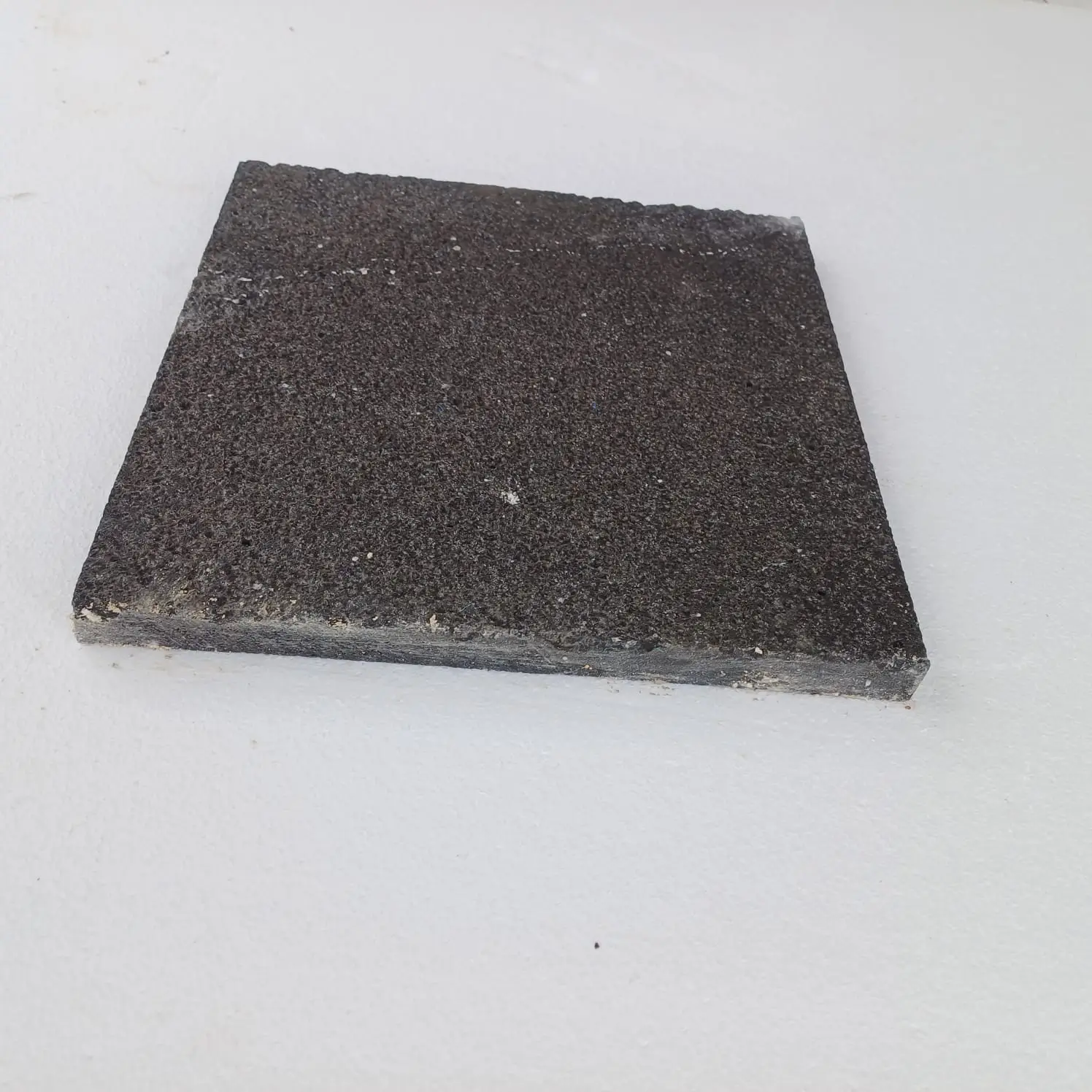
Slab selection for black limestone bar tops requires you to view material in person before fabrication cuts are made — this is non-negotiable for high-visibility entertainment areas and countertops. Black limestone exhibits natural variation in tone, veining density, and surface character that reads very differently between slabs from the same quarry lot. You should review your specific slab under both natural and artificial lighting conditions to understand exactly how it will appear in your Buckeye project’s actual light environment.
Selecting your jet black limestone slab collection in Scottsdale allows you to evaluate material quality and tonality directly before committing to fabrication. Lead times from warehouse inventory for cut-to-size bar top slabs typically run two to three weeks for standard dimensions, with custom edge profiling adding three to five working days. For Buckeye projects on tight installation schedules, confirming warehouse stock availability before finalizing your project timeline prevents the costly delays that occur when fabricators pull material and discover unexpected variation in the reserved lot.
Citadel Stone’s warehouse team performs incoming quality checks on all limestone slab inventory, verifying thickness consistency and flagging material with structural fissures before it enters the fabrication queue. This inspection step saves you the frustration of discovering a structural defect after cuts are made and the slab is already at your job site. Confirm that your fabricator has experience specifically with black limestone rather than generic granite countertop production — the material behaves differently at polishing stages and edge profiling requires adjusted feed rates to prevent micro-chipping at the profile edge. Warehouse access to full slab inventory also allows you to match tonality across multiple pieces when your bar top requires more than one slab.
Maintenance Schedule for Arizona Outdoor Bars
A realistic maintenance schedule for black limestone bar tops in Buckeye entertainment areas runs lighter than most stone suppliers suggest — provided your initial sealing specification was correct. The industry-standard recommendation of annual resealing is genuinely overkill for quality penetrating sealers on a properly prepared surface. The water bead test is your actual guide: apply a small amount of water to the surface, and if it beads and sits for more than 60 seconds before beginning to absorb, your sealer is still performing and doesn’t need replacement.
Daily cleaning protocol for outdoor bar tops matters more than resealing frequency. pH-neutral dish soap diluted in water handles the oil, alcohol, and food residue typical of bar service without attacking the limestone’s calcium carbonate composition. The cleaning mistake that degrades black limestone bar tops faster than anything else is using citrus-based degreasers or vinegar-based natural cleaners — both are mildly acidic and will produce dull etching on even well-sealed stone over time. For Gilbert projects where homeowners tend toward natural cleaning products, this is worth explicitly noting in any care documentation you provide at the time of installation.
- Perform water bead test every six months rather than following a fixed resealing calendar
- pH-neutral cleaners only — test any new cleaning product on an inconspicuous area first
- Remove citrus, wine, and oil spills within 10 minutes to prevent surface etching under sealer film
- Annual inspection of expansion joints and setting bed perimeter catches minor movement early
- Professional honing every five to seven years restores surface integrity on honed or leathered finishes
Professional Summary: Black Limestone Bar Tops in Buckeye
Specifying black limestone bar tops for Buckeye entertainment areas comes down to a series of compounding decisions that each reinforce or undermine the others. Your slab thickness, support structure, surface finish, and sealer chemistry form a system — not a checklist of independent choices. The installations that hold up for twenty-plus years in Arizona’s demanding outdoor conditions are the ones where every specification was made with the actual performance environment in mind rather than defaulting to what looked good in a product catalog.
The specific demands of black slab counter surfaces in Arizona outdoor settings — thermal cycling, UV intensity, and the chemistry of typical bar service spills — are manageable when you approach the material with realistic expectations and proper detailing. You’re not fighting against the material; you’re designing with its actual properties rather than against them. As you plan your Buckeye outdoor entertainment space, related Arizona stone applications can round out your project’s material program — the same material family that performs on horizontal bar tops also excels in vertical applications. Black Limestone Slab Feature Walls for Avondale Interior Design offers perspective on how black limestone performs in vertical and interior applications, which is directly relevant if your bar design includes an adjacent feature wall element. Find the best deals on black limestone slabs for sale in Arizona here.