
Beige Limestone Paving Tempe: What Color Really Means in the Field
Beige limestone paving Tempe projects face a color consistency challenge that eliminates predictable results for specifiers who rely on catalog swatches alone. Your selection process needs to account for natural color variation, UV-driven patina shifts, and the way Arizona’s intense solar angles read surface tone differently than showroom lighting. Understanding Tempe limestone shades before your first delivery arrives separates installations that look cohesive at ten years from those that look inconsistent at ten months. This guide covers the specific factors that drive color behavior in desert landscapes so you can make confident specification decisions.
Natural Color Differences in Beige Limestone: What the Quarry Produces
Beige limestone paving Tempe designers specify comes from sedimentary formations where iron oxide content, calcite density, and fossilized organic material create the color range — not pigment, not coating. That means beige stone variations Arizona sourcing catalogs show are real, repeatable ranges rather than defects or quality issues. The challenge for your project is that natural color differences span from creamy off-white through warm gold to deeper ochre tones, all within the same quarry zone and sometimes within the same pallet.
You need to understand what drives those differences to manage expectations with clients and installation crews. Iron oxide concentration is the primary variable — slabs with higher iron content read warmer and deeper, while low-iron material stays closer to white. Calcite density affects surface reflectivity, so two slabs with identical iron content can read differently depending on how tightly the crystalline matrix is packed. You should request full-range samples before approving any lot for a Tempe project, not just the median tone the sales rep sends by default.
- You should request minimum six representative samples per pallet to assess the actual color spread before committing to a lot
- Natural color differences between slabs within one shipment typically span 15-25% of the beige tonal range — plan your layout accordingly
- Iron oxide content below 0.5% produces pale cream tones; content above 1.2% shifts material toward warm gold and amber
- Your specification should reference the full acceptable color range, not a single target shade, to avoid rejection disputes on delivery
- Tempe limestone shades respond differently to wet conditions — always evaluate samples both dry and dampened to simulate rain events
How Arizona Sun Affects Beige Stone Variations Over Time
Beige limestone paving Tempe installations experience solar radiation that exceeds 300 days of direct sun annually. That sustained UV exposure does something most specifiers underestimate — it bleaches iron-rich surface minerals over the first 18-36 months, pulling deeper gold tones toward a more uniform pale beige. This isn’t damage; it’s a natural patina process. But you need to communicate it clearly to clients expecting permanent color depth from initial samples.
The bleaching effect is surface-limited, typically penetrating only 2-4mm before the UV energy dissipates into the stone mass. Honed finishes show this shift more prominently because the consistent surface texture makes tonal changes easier to read. Tumbled or brushed finishes diffuse the pattern, so your uniform aesthetic AZ requirements are easier to maintain over a longer service life with textured surfaces in full-sun exposures. The material still performs structurally — this is purely a visual consideration, but one that drives client satisfaction calls more than almost any technical specification issue.
Specifying for Uniform Aesthetic AZ Projects: The Color Management Strategy
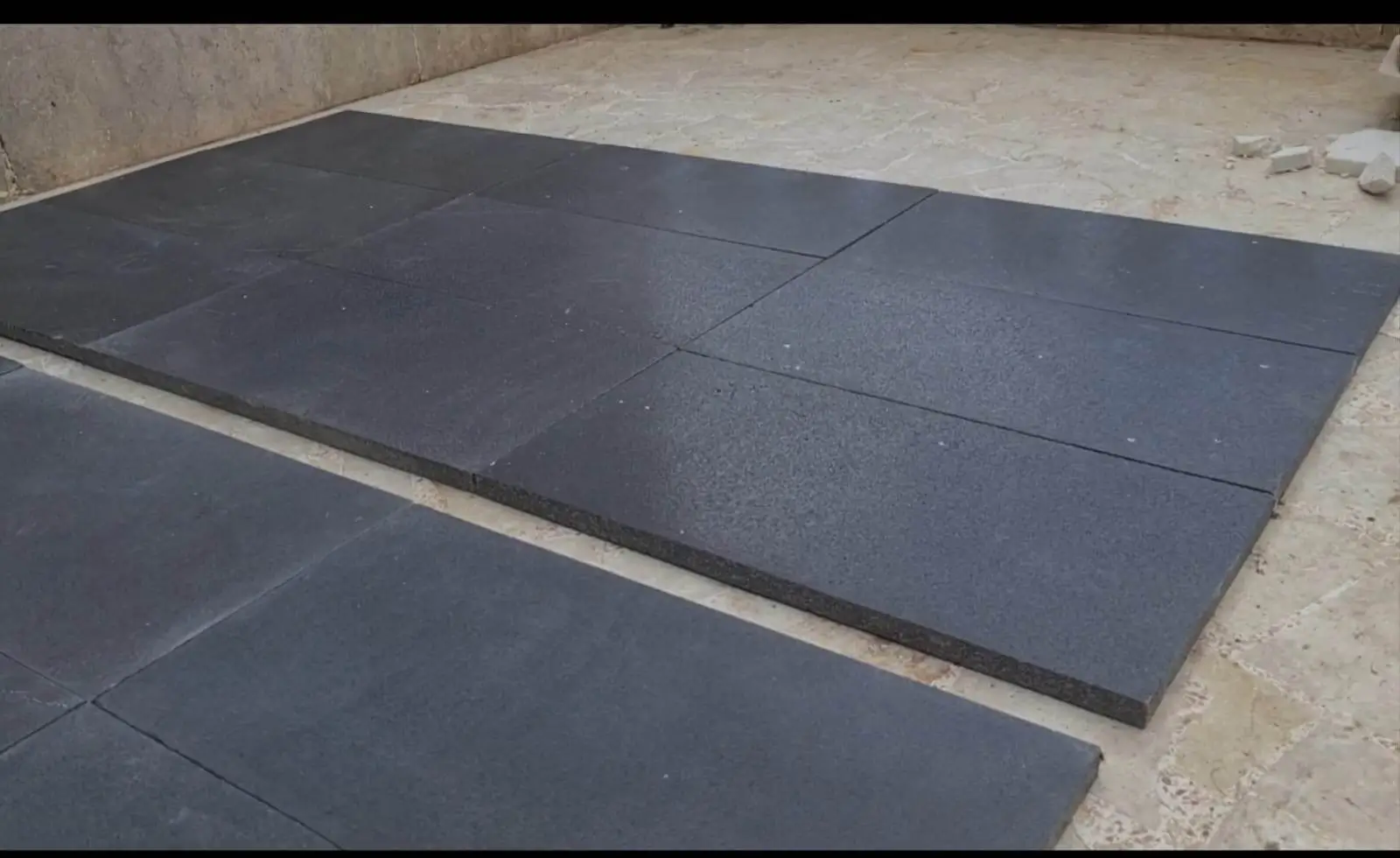
Achieving a uniform aesthetic AZ clients expect from beige limestone paving Tempe installations requires a deliberate lot management strategy — not hope that sequential pallets will match. The single most effective technique professionals use is blend-ordering: requesting material from multiple pallet positions and blending during installation rather than running through one pallet before opening the next.
You should instruct your installation crew to pull from at least three open pallets simultaneously during layout. This distributes the natural tonal variation across the field rather than creating bands of light and dark where pallet breaks occur. For projects over 500 square feet, you should verify warehouse stock levels before committing to a timeline — running out mid-project and waiting for a new shipment almost always produces a visible color break line, regardless of how carefully you blend.
- Blend from three or more pallets simultaneously to distribute natural color differences evenly across the installation field
- You should dry-lay the first 50 square feet for client review before setting any material — this establishes shared color expectations early
- Your specification should include a 10-12% overage requirement to allow selective placement of outlier pieces in less visible areas
- Warehouse stock verification before project start prevents mid-installation lot switches that create permanent color breaks
- For uniform aesthetic AZ requirements, specify that no two adjacent slabs should exceed 20% tonal variation — a measurable, enforceable standard
For comparative context on how French-origin material handles the same color management challenges, see French limestone paving slabs in Gilbert to understand how sedimentary origin affects color consistency in desert applications. Your specification approach will differ based on quarry region, so the comparison is practically useful before finalizing material selection.
How Sealer Selection Changes the Beige Tone You See
Beige limestone paving Tempe projects sealed with penetrating impregnators versus topical coatings show dramatically different color presentations — and this catches specifiers off-guard more often than any other single variable. A penetrating silane-siloxane sealer leaves the natural color essentially unchanged, preserving the pale beige tones and allowing the stone to breathe naturally. A topical acrylic or urethane sealer darkens the surface by 15-25% and adds a wet-look sheen that reads as gold or amber rather than beige in direct sun.
Neither choice is wrong, but you need to commit to one approach and apply it consistently across the entire project. Field testing across projects in Arizona desert climates shows that switching sealer types between phases — common when crews change or supply runs short — creates visible color zones that persist for years. Your specification should name the exact sealer product and application rate, not just the category. Beige stone variations Arizona projects show become dramatically more pronounced when sealer application rates vary even by 20%, so confirm your crew is applying by the square foot specification, not by eye.
Base Preparation and Its Indirect Effect on Color Longevity
Base preparation doesn’t directly affect limestone color, but it controls the moisture migration that drives efflorescence — the white mineral deposits that mask beige tones and create the single most common aesthetic complaint on limestone installations. Beige limestone paving Tempe projects sitting over clay-heavy soils experience soil moisture that wicks upward through the base and into the stone, carrying calcium and magnesium salts to the surface where they precipitate as white haze.
Your base design needs a minimum 4-inch compacted aggregate layer with permeability rated at least 3x the stone’s natural absorption rate. In Tempe’s alkaline soil zones — pH typically ranges from 7.8 to 8.4 — this moisture management function is critical. Professional practice indicates that skipping the permeable base layer in favor of direct sand setting compounds efflorescence risk by a factor of three to four, regardless of stone quality. You’ll want to verify soil expansion coefficients for your specific site, because expansive soils in the Phoenix metro region add base movement to the moisture equation, and that affects joint integrity over time.
- Your base layer minimum is 4 inches of well-graded crushed aggregate with a permeability coefficient above 0.01 cm/sec
- Alkaline soils above pH 8.0 require a moisture barrier membrane between subgrade and aggregate to reduce salt migration
- Beige limestone paving Tempe installations over expansive soils need expansion joints every 12 feet rather than the standard 15-foot grid
- You should test subgrade soil at minimum 3 locations per 1,000 square feet — soil variability in Arizona can change your base specification significantly across a single lot
Thermal Cycling in Tempe and What It Does to Surface Color
Tempe’s thermal environment produces surface temperature swings of 60-70°F between pre-dawn and peak afternoon on exposed stone surfaces. This thermal cycling stresses the crystalline surface of beige limestone paving Tempe projects in ways that affect both structural integrity and long-term color presentation. Micro-fracturing at the surface level — invisible individually — gradually increases surface porosity over years, which changes how the stone absorbs and reflects light and therefore how its color reads.
The thermal expansion coefficient for most beige limestone runs between 4.8 and 5.6 × 10⁻⁶ per °F. Over a 65°F swing, a 24-inch slab experiences roughly 0.009 inches of dimensional change per cycle. Your joint design needs to accommodate this movement — minimum 3/16-inch joints for standard 24×24 format, increasing to 1/4-inch for 24×48 format. Undersized joints transfer stress laterally into the slab face, accelerating the micro-fracturing that ultimately affects color depth. This is the connection between structural specification and aesthetic longevity that most project documents miss entirely.
Limestone Paving Slabs Arizona: Citadel Stone Specification Guidance Across Three Desert Cities
Citadel Stone’s limestone paving slabs Arizona product range is designed to perform across the full spectrum of Arizona’s desert climate conditions, from high-elevation temperature swings to low-elevation UV intensity. This section provides hypothetical specification guidance for three representative Arizona cities, illustrating how you would approach beige limestone paving Tempe-style color management decisions in varying regional contexts. At Citadel Stone, we present these scenarios as advisory frameworks, not completed project records.
San Tan Valley Spec Notes
San Tan Valley’s rapid residential development creates projects where uniform aesthetic AZ expectations are high and lot-to-lot color consistency is frequently tested. You would need to account for expansive clay soils common in this submarket — CBR values often fall below 5, requiring a minimum 6-inch compacted base rather than the standard 4-inch spec. Your beige limestone paving specification here should include mandatory pallet-blending instructions and a 12% material overage to manage natural color differences across large residential courtyard and patio installations. Tempe limestone shades work as a reference tone benchmark, but San Tan Valley’s lower elevation means even higher sustained surface temperatures, pushing bleaching timelines forward by approximately 6 months compared to higher-elevation Tempe sites.
Yuma Heat Performance
Yuma presents the most extreme thermal environment in the Arizona limestone specification context — surface temperatures regularly exceed 160°F on south-facing exposed stone during summer months. Beige stone variations Arizona suppliers offer perform differently in this environment, and you would want to specify material with iron oxide content below 0.8% for Yuma projects to minimize accelerated UV bleaching in the first season. Your sealer specification should shift to a penetrating silane-siloxane formula with a UV stabilizer additive specifically for Yuma installations. Truck delivery scheduling matters here — receiving material during June through August risks thermal shock if cold-stored stone meets superheated slab surfaces immediately during placement, so your logistics plan should address acclimation time before installation.
Avondale Climate Guidance
Avondale’s urban heat island effect compounds the baseline thermal cycling that affects beige limestone paving performance across the Phoenix metro. You would approach Avondale specifications with an emphasis on joint width — the dense residential and commercial development creates micro-climate conditions where stored radiant heat extends thermal stress into evening hours, increasing effective daily expansion cycles. Your warehouse coordination for Avondale projects should verify that material is staged in shaded covered storage on-site, not left on open pallets in direct sun before installation. At Citadel Stone, we recommend confirming truck delivery windows in the early morning for Avondale summer projects to ensure material is placed before surface temperatures peak and adhesion properties of setting bed materials are compromised.
Reading Color Consistency When Your Delivery Arrives
Beige limestone paving Tempe deliveries need a structured receiving inspection — not a quick visual scan. You should unpack and dry-lay a minimum of 20 representative pieces from different pallet positions before accepting the load. Evaluate color under direct sun, not in truck shadow or warehouse overhead lighting, because Arizona’s solar angle and intensity render colors very differently than indoor conditions.
Beige stone variations Arizona projects encounter are natural and expected, but you need to confirm the delivery falls within the color range your client approved. Document that range with physical samples retained from the approval process, not memory. Your receiving protocol should also check for quarry lot numbers on pallet labels — if you’re receiving material across multiple deliveries, matching lot numbers across shipments is the only way to maintain color continuity on large projects. A mismatch in quarry lots creates visible color breaks that no blending strategy can fully resolve.
- Dry-lay at least 20 pieces from varied pallet positions under direct Arizona sun before accepting any delivery
- Retain physical approval samples sealed in labeled bags — visual memory is unreliable for precise beige tone matching
- Match quarry lot numbers across deliveries for projects requiring multiple truck shipments over weeks or months
- You should reject individual pieces with tonal values falling outside the approved range rather than attempting to hide them in secondary locations
- Tempe limestone shades read differently in morning versus afternoon light — conduct your receiving inspection at consistent times for accurate assessment
Maintenance Protocols That Preserve Beige Limestone Color
Long-term color preservation on beige limestone paving Tempe installations depends on a maintenance schedule that most project handoff documents summarize inadequately. You should establish a biennial resealing program using the same penetrating sealer specified at installation — switching sealer chemistry mid-service-life introduces compatibility risks and can cause surface hazing that permanently alters color presentation.
Cleaning protocol matters as much as sealing. Alkaline cleaners above pH 10 etch calcite at the surface level, creating microscopic roughness that changes light diffusion and shifts the perceived color toward matte white. Your maintenance specification should limit cleaning agents to pH 7-9 and prohibit acid-based efflorescence removers except under controlled conditions with immediate neutralization. Field experience across multiple Arizona desert projects shows that improper cleaning causes more irreversible color damage than installation errors — and it typically happens years into the service life when the specifier is no longer involved.
Managing Client Expectations Around Natural Color Variation
The most effective tool for managing client expectations on beige limestone paving Tempe projects is early, specific education about natural color differences — delivered before the client approves material, not after the installation reads differently than the showroom display. Most clients interpret natural variation as quality inconsistency, and that perception is difficult to correct once it forms.
You should prepare a one-page visual reference showing the expected tonal range for the approved material, including wet and dry appearances and the anticipated patina shift timeline. This document becomes a project record and a client communication tool simultaneously. Professional practice indicates that projects with documented pre-installation color range agreements produce dramatically fewer post-installation disputes than those relying on verbal descriptions of “natural variation.” The investment in that documentation is typically 30 minutes; the disputes it prevents can consume days of remediation effort.
- Provide clients with a visual tonal range document before material approval — not after installation
- Show wet and dry sample appearances to demonstrate how rain events temporarily shift color presentation
- Explain the 18-36 month solar patina process so clients understand that deeper initial tones will moderate over time
- Document approved color range in the project file with physical samples retained and labeled
- Your client communication should address natural color differences as a feature of genuine stone, distinguishing it from uniform artificial materials
Key Takeaways
Beige limestone paving Tempe projects succeed long-term when color management is treated as a specification discipline, not an aesthetic afterthought. Your decisions on lot selection, pallet blending, sealer chemistry, base preparation, joint width, and client communication all compound into the color outcome the installation shows at five, ten, and twenty years. Natural color differences are inherent to limestone — your job as the specifier is to manage them intentionally rather than discover them reactively after installation. Beige stone variations Arizona projects encounter aren’t problems to solve; they’re material characteristics to work with through deliberate specification choices. For additional guidance on thermal performance factors that interact with color and surface integrity over the full service life, review Thermal performance of limestone surfaces in Arizona desert climates before finalizing your project documents. We provide wholesale limestone in Arizona to retail yards and masonry supply stores across the state.