
When you coordinate Arizona stone yards transport loading operations, you need to understand the logistics chain from warehouse inventory to final job site placement. Your transport decisions affect project timelines, material integrity, and installation success more than most specifiers realize. Professional stone yard operations in Arizona have evolved to handle everything from DIY pickup scenarios to full-service delivery with specialized equipment.
You’ll encounter three primary transport models when you work with stone yards across Arizona: self-loading pickup using your own equipment, assisted loading with yard equipment, and turnkey delivery services. Each model requires different planning considerations, vehicle specifications, and loading protocols. Your choice depends on project scale, equipment access, and the specific capabilities of the stone yard in Arizona you select.
Loading Equipment Specifications
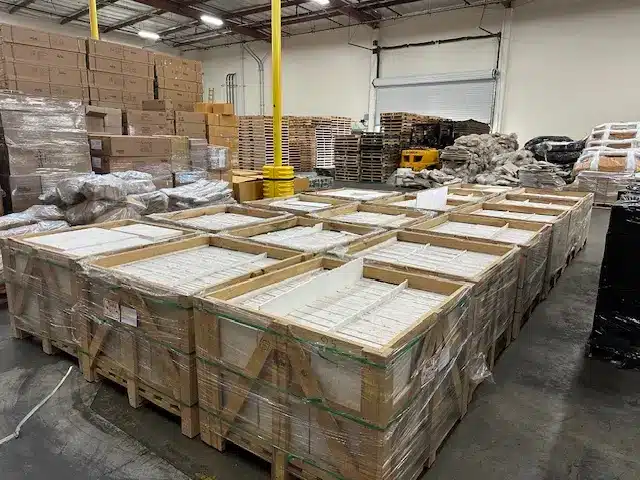
Your transport success starts with understanding the loading equipment requirements for natural stone materials. Stone yards in Arizona typically handle products ranging from 2,800 to 3,200 pounds per cubic yard, which creates specific equipment demands you can’t ignore. When you arrive for pickup, the yard’s loading capabilities determine how quickly and safely you can get material onto your vehicle.
Most professional operations use forklift systems rated between 5,000 and 15,000 pounds, depending on the materials they stock. You should verify equipment capacity before scheduling pickup, especially when you’re loading full pallets of cut stone or large-format slabs. The relationship between pallet weight and forklift capacity affects loading safety margins in ways that matter for both liability and material protection.
- You need to confirm your vehicle’s payload capacity matches the intended load weight
- Your truck bed height should align with standard pallet placement heights between 30 and 48 inches
- You’ll want side rails or stake pockets if you’re stacking materials above bed height
- Your suspension system must handle concentrated weight without bottoming out during transport
Arizona stone yards transport loading operations differ significantly from standard building material yards because stone products concentrate weight in smaller footprints. A half-ton pickup rated for 1,500 pounds payload can safely transport approximately 0.5 cubic yards of stone when properly distributed. You’ll exceed axle ratings quickly if you don’t calculate load distribution across the wheelbase.
Vehicle Requirements for DIY Pickup
When you plan self-pickup from local stone yards Arizona pickup equipment capabilities, your vehicle specifications determine what materials you can safely transport. The common mistake is assuming a standard pickup truck handles stone loads the same way it manages lumber or bagged goods. Stone concentration creates dynamics that affect handling, braking, and stability in ways most contractors underestimate until they experience problems.
Your minimum vehicle requirements depend on the quantity and format of materials. For loose gravel or small decorative stone under 500 pounds total, a properly equipped half-ton pickup works adequately. When you move into pallet quantities of cut pavers or dimensional stone, you need three-quarter-ton or one-ton rated vehicles to maintain safety margins and legal compliance.
Professional specifications for stone transport vehicles include reinforced suspension, trailer brake controllers for towed loads, and proper tie-down anchor points rated for the loads you’re securing. You should calculate total loaded weight including vehicle, driver, fuel, and cargo before you leave the yard. Arizona’s DOT enforcement targets overweight vehicles on major corridors, and citations carry financial penalties that exceed the cost of proper delivery services.
- Half-ton pickups handle maximum 0.5 cubic yards of dense stone safely
- Three-quarter-ton trucks accommodate 0.75 to 1.0 cubic yards with proper distribution
- One-ton trucks manage 1.25 to 1.5 cubic yards when equipped with appropriate suspension
- Tandem-axle trailers rated for 7,000+ pounds expand DIY capacity significantly
The relationship between local stone yards Arizona pickup equipment access and your vehicle configuration affects loading efficiency. Yards with ground-level loading areas accommodate lower vehicles better than operations that require dock-height access. You need to discuss vehicle specifications with the yard before your pickup appointment to avoid complications that delay loading.
Professional Delivery Truck Specifications
Stone yard in Arizona delivery trucks represent specialized equipment designed for concentrated weight distribution and challenging access scenarios. When you specify delivery services rather than self-pickup, you’re accessing equipment capabilities that extend far beyond standard freight vehicles. Professional stone delivery requires trucks configured for both highway transport and job site maneuvering in residential and commercial environments.
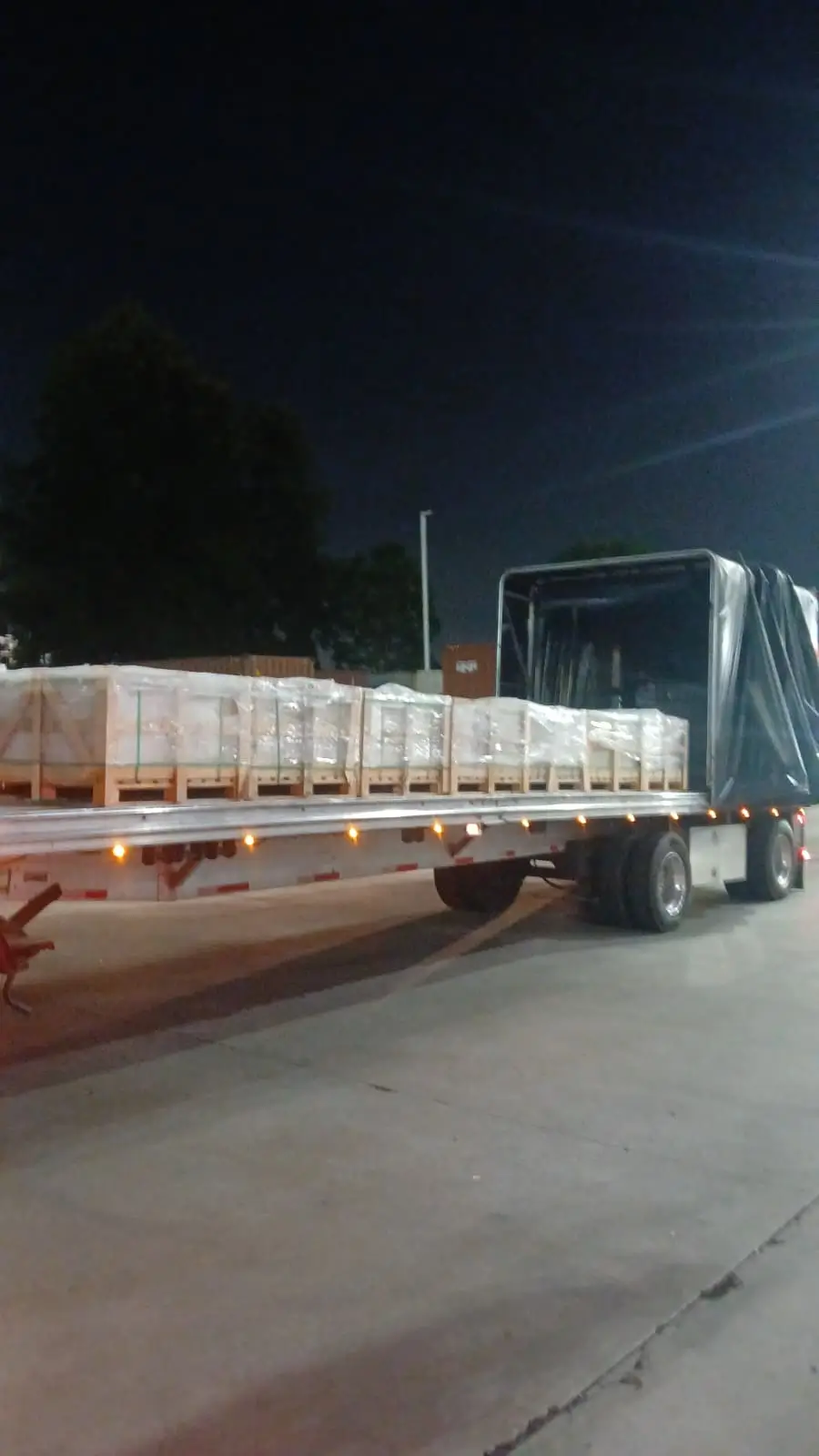
The standard delivery fleet includes flatbed trucks with hydraulic lift gates, boom trucks with articulating arms for precise placement, and specialized trailers with built-in forklifts for self-unloading capability. You should understand which truck type matches your job site access and unloading requirements before you schedule delivery. The wrong truck configuration creates delays and may require additional equipment rental to complete unloading.
Boom truck capabilities particularly matter for residential projects where you need to place materials over fences, walls, or landscaping obstacles. These trucks extend reach from 20 to 40 feet horizontally and can place loads with precision that eliminates manual material handling. When you coordinate with stone yard in Arizona delivery trucks equipped with boom systems, you reduce labor requirements and minimize lawn damage during delivery.
Job site access limitations drive delivery truck selection in ways that affect scheduling and pricing. Standard delivery vehicles require 12-foot width clearance, 14-foot overhead clearance, and turning radius of at least 40 feet for safe maneuvering. You need to verify these dimensions against your site conditions, including street access, driveway gates, and overhead utility lines that might interfere with boom operation.
Loading Safety Protocols
Your responsibility for Arizona stone yards transport loading safety begins the moment you enter the yard facility, regardless of whether you’re self-loading or receiving assisted loading services. Professional stone yards maintain protocols that protect personnel, equipment, and materials during the loading process. You should understand these requirements before your first pickup to ensure compliance and prevent incidents that could affect your insurance coverage.
The primary safety concerns involve crush hazards from falling materials, equipment operation in shared spaces, and proper load securing before transport. When you’re present during loading operations, you must stay within designated safe zones and follow yard personnel instructions without deviation. Stone materials don’t provide warning before failure, and palletized products can shift unexpectedly if restraints fail during lifting.
- You must wear hard hats and safety-toe footwear in active loading areas
- Your personnel should maintain 15-foot clearance from operating forklifts and boom equipment
- You need to inspect all strapping and banding on pallets before accepting loads
- Your vehicle must be in park with wheels chocked during loading operations
Load securing requirements for stone transport exceed typical cargo standards because of weight concentration and material hardness. You should use tie-down straps rated for at least 5,000 pounds working load limit, with minimum four attachment points for distributed loads. The Arizona Department of Transportation requires securing methods that prevent any cargo shift exceeding four inches in any direction during normal transport operations.
Stoneyard Arizona loading services include securing verification as part of professional delivery, but when you self-load, you assume full responsibility for securing compliance. The practical test involves manual pressure testing, where you physically attempt to shift the load before leaving the yard. If you can move materials by hand, your securing is inadequate for highway transport.
Warehouse Inventory Coordination
When you plan projects requiring specific stone materials, you need to coordinate with warehouse inventory systems well before your installation timeline begins. Arizona stone yards transport loading efficiency depends directly on material availability and staging preparation. Your failure to verify stock can result in split deliveries, substitution negotiations, or project delays that cascade through your entire schedule.
Professional procurement involves confirming exact product availability, including specific finish types, dimensional tolerances, and color lot numbers that affect aesthetic consistency. You should request warehouse verification rather than relying on website stock indicators, which often reflect regional availability rather than specific yard inventory. The time required to transfer stock between warehouse locations ranges from 2 to 14 days depending on distances and carrier schedules.
Lead time planning for custom orders or special-order materials requires understanding the supply chain from quarry to local yard. When you specify materials not regularly stocked in warehouse inventory, you’re adding 4 to 12 weeks to procurement timelines depending on quarry location, processing requirements, and transportation logistics. Professional specifiers build these timelines into project schedules rather than discovering delays during procurement.
Bulk order consolidation affects both pricing and Arizona stone yards transport loading efficiency. When you combine multiple product types into single deliveries, you need to coordinate staging that groups materials by installation sequence. Your delivery should place first-use materials in the most accessible positions, with subsequent materials staged behind or beside in planned sequence. For detailed material specifications and regional sourcing options, see Prescott area bulk limestone in Arizona for comprehensive selection guidance.
Job Site Access Planning
Your job site access planning determines whether stone yard in Arizona delivery trucks can complete placement as specified or whether you’ll need alternative offloading strategies that add cost and complexity. Professional delivery services evaluate access during scheduling, but you’re responsible for providing accurate site information that affects vehicle selection and routing. The gap between assumed access and actual conditions creates the majority of delivery complications that delay projects.
Critical access factors include street width, overhead clearance, surface load-bearing capacity, and proximity to final placement locations. You need to measure and document these dimensions rather than estimating, because professional drivers make routing decisions based on the specifications you provide. When actual conditions differ from reported dimensions, delivery vehicles may be unable to access your site, requiring smaller truck transfers or manual material handling that wasn’t included in original pricing.
- You should verify minimum 12-foot clear width along the entire delivery route to placement location
- Your overhead clearance needs to exceed 14 feet for standard trucks, 18 feet for boom operations
- You must confirm surface conditions can support 60,000-pound gross vehicle weight without rutting or damage
- Your placement location should be accessible within 20 feet of where trucks can safely position
Urban residential projects present particular access challenges that affect local stone yards Arizona pickup equipment strategies versus professional delivery. Narrow streets with parked vehicles, low-hanging tree branches, and underground utility concerns limit truck options in ways that sometimes make self-pickup more practical despite the equipment requirements. You need to conduct physical site surveys with delivery routing in mind, not just assume standard delivery works for your location.
Material Handling Equipment Options
When you receive stone deliveries or conduct self-pickup operations, your material handling equipment determines how efficiently you can move products from transport vehicles to staging areas or installation locations. The weight density of natural stone creates handling challenges that standard construction equipment doesn’t always address effectively. You need to match equipment capabilities to material weights and site conditions to prevent damage and maintain safety.
Forklift rentals represent the most common solution for large-quantity deliveries requiring rapid offloading. You should specify rough-terrain forklifts rated for outdoor use rather than warehouse units that lack the ground clearance and tire configuration for job site conditions. Rental equipment typically requires operator certification under OSHA standards, which affects labor planning and liability coverage verification.
Pallet jack systems work effectively for smaller quantities on hard, level surfaces, but your site needs to provide concrete or asphalt working areas for wheel movement. Manual pallet jacks handle maximum 5,000 pounds under ideal conditions, while powered units extend capacity to 8,000 pounds with less operator fatigue. The limitation involves surface irregularities that prevent wheel rolling and prevent use on decomposed granite or soil base preparations.
Skid-steer loaders with pallet fork attachments provide versatile material handling across various surface conditions. When you rent or own skid-steer equipment, you gain capability to move stone products across unprepared surfaces, up slopes, and into tight access areas where forklifts cannot operate. The equipment investment makes sense for contractors handling stoneyard Arizona loading services regularly as part of their business model.
Timing and Scheduling Considerations
Your scheduling decisions for Arizona stone yards transport loading operations affect availability, pricing, and service quality in ways that professional contractors learn to anticipate. Stone yards experience demand fluctuations based on seasonal construction patterns, regional development activity, and weather conditions that affect installation work. You’ll encounter better service and sometimes pricing advantages when you schedule during lower-demand periods.
Peak demand periods in Arizona run from October through May, when moderate temperatures drive landscape and hardscape installation activity. During these months, you should expect 5 to 10 business day lead times for delivery scheduling rather than the 2 to 3 day response typical during summer. Your project planning needs to account for these seasonal variations, particularly for commercial work with fixed completion deadlines.
Same-day and next-day delivery services carry premium pricing that ranges from 25% to 75% above standard delivery rates. You should evaluate whether timeline compression justifies these costs or whether adjusting your installation schedule provides better value. Emergency delivery typically becomes necessary only when planning failures or unexpected material damage requires rapid replacement to maintain project momentum.
- You can optimize scheduling by confirming delivery windows 7 to 10 days in advance during peak seasons
- Your flexibility on delivery dates often yields better pricing than rigid scheduling demands
- You should schedule morning deliveries when possible to maximize working hours after material arrival
- Your weather monitoring affects delivery timing since severe conditions may delay transportation
Cost Structures: Delivery Versus Pickup
When you evaluate stone yard in Arizona delivery trucks versus self-pickup with local stone yards Arizona pickup equipment, you need to analyze true all-in costs rather than just comparing delivery fees to fuel expenses. The complete cost structure includes equipment rental or ownership, labor for loading and transport, insurance considerations, and opportunity cost of personnel time spent on material handling rather than productive installation work.
Professional delivery services typically charge based on distance, quantity, and truck type required for the job. You’ll encounter minimum delivery fees ranging from $150 to $350 for local service, with per-mile charges adding $3 to $7 beyond base service areas. Specialized equipment like boom trucks carries premium pricing that starts around $400 for minimal loads but eliminates labor costs for manual placement.
Self-pickup cost analysis needs to include vehicle depreciation from heavy-load use, fuel consumption at reduced efficiency under load, and potential overweight citations if you exceed legal limits. Your labor costs multiply when you account for drive time, loading wait time, and the reality that material transport removes skilled workers from productive installation activities. Professional contractors often discover delivery services cost less than self-pickup once all factors are properly calculated.
Volume discounts on delivery become available when you consolidate multiple small orders into fewer large deliveries. You might negotiate 15% to 25% delivery cost reductions by accepting scheduled deliveries rather than demanding specific dates. Your relationship with stone yard operations affects pricing flexibility in ways that develop over multiple projects and consistent business volume.
Insurance and Liability Considerations
Your insurance coverage and liability exposure change significantly depending on whether you use stone yard in Arizona delivery trucks or conduct self-pickup with your own equipment and personnel. Professional delivery services typically include liability coverage for materials during transport and placement, while self-pickup transfers all responsibility to your company the moment loading begins. You need to understand these distinctions and verify adequate coverage before making transport decisions.
Commercial auto insurance policies require specific endorsements for heavy cargo transport that many contractors overlook until claims arise. You should verify your coverage includes cargo insurance for the materials you’re transporting, because standard policies often exclude or limit coverage for stone and masonry products. The gap between assumed coverage and actual policy language creates exposure that can result in uninsured losses exceeding $50,000 for significant material damage.
Professional delivery services maintain cargo insurance, commercial general liability, and commercial auto coverage that protects materials and third parties during transport. When you accept delivery rather than self-hauling, you transfer the transport risk to the carrier’s insurance program. Your responsibility begins when you accept materials and sign delivery documentation, not when materials leave the yard.
- You must verify your commercial auto policy covers stone cargo at full replacement value
- Your general liability policy should include loading and unloading operations coverage
- You need to confirm policy limits exceed the value of typical stone orders you transport
- Your workers’ compensation coverage must extend to loading activities at stone yard locations
Quality Verification Upon Delivery
When you receive Arizona stone yards transport loading deliveries or complete self-pickup operations, your immediate quality verification prevents disputes over material condition and ensures you have the products specified for your project. The time to identify damage, dimensional variance, or color lot discrepancies is at the point of transfer, not after drivers depart or after you’ve left the yard facility. Professional protocols include systematic inspection procedures that protect both your interests and maintain good supplier relationships.
Your verification process should begin with pallet count confirmation against delivery documentation, followed by visual inspection of banding and wrapping integrity. You need to document any damage to packaging materials, because this often indicates potential product damage that becomes apparent only after unwrapping. Digital photos timestamped at delivery provide documentation that supports claims if you discover concealed damage during installation.
Dimensional spot-checking involves measuring representative samples from multiple pallets to verify thickness, length, and width fall within specified tolerances. You should reference your original order specifications during this process rather than relying on memory. Natural stone products exhibit variation that’s acceptable within industry standards, but your verification ensures materials meet the tolerances you specified for your installation requirements.
Color lot verification matters particularly for projects requiring aesthetic consistency across large areas. You need to confirm all materials come from the same production lot when color matching is critical. Stone yard documentation should include lot numbers, which you must verify against pallet labels before accepting delivery. The discovery of mixed lots after installation begins creates problems that require material returns and schedule delays.
Premium Stone Yards in Arizona: Citadel Stone Transport Solutions
When you evaluate Citadel Stone’s comprehensive stone yards in Arizona operations, you’re considering a provider that understands the complete logistics chain from quarry to final installation. Our approach integrates material quality with transport capabilities that address the specific challenges Arizona projects encounter. This section outlines how you would approach specification and logistics planning for six representative Arizona cities using Citadel Stone’s hypothetical service model.
At Citadel Stone, we recognize that stone yard in Arizona delivery trucks represent only one component of project success. Your complete solution requires coordinating material selection, warehouse inventory management, transport logistics, and job site placement in ways that align with your project timeline and budget constraints. The following city-specific guidance demonstrates how you would address regional variations across Arizona’s diverse climate zones and development patterns.
Phoenix Metro Transport
In Phoenix, you would need to coordinate Arizona stone yards transport loading around the metropolitan area’s extensive freeway system and urban density patterns. Your delivery scheduling should account for rush-hour traffic congestion that affects transport efficiency from warehouse locations to job sites across the valley. When you work with materials in Phoenix’s extreme summer heat, you’d want to schedule morning deliveries that allow installation work during cooler hours before afternoon temperatures peak. The urban infrastructure typically provides excellent truck access to commercial sites, though residential neighborhoods with narrow streets require careful route planning. Your material staging would benefit from covered areas that prevent excessive surface heating during summer months when ground temperatures can damage certain sealers or adhesives.
Tucson Delivery Coordination
When you plan Tucson projects, you’d coordinate with local stone yards Arizona pickup equipment capabilities that serve the city’s mix of historic neighborhoods and new development areas. Your transport logistics need to accommodate narrower street networks in established areas near the university and downtown districts. The distance from Phoenix-area warehouses affects lead times in ways you should factor into project scheduling, typically adding one to two days compared to valley deliveries. You would specify delivery equipment based on whether projects are in accessible newer subdivisions or established neighborhoods with mature landscaping that limits truck maneuvering space.
Scottsdale Logistics Planning
Scottsdale’s high-end residential and commercial projects would require you to coordinate stoneyard Arizona loading services that meet strict delivery window requirements and job site protection standards. Your planning must account for HOA regulations that limit delivery hours and require advance notification for truck access through gated communities. When you specify materials for Scottsdale installations, you’d typically work with premium products that demand careful handling protocols during transport and placement. The city’s excellent infrastructure supports large delivery vehicles, but your coordination with property management and security personnel becomes as important as the physical logistics.
Flagstaff Alpine Considerations
Your Flagstaff project logistics would need to address elevation changes and winter weather conditions that affect Arizona stone yards transport loading throughout much of the year. You’d schedule deliveries to avoid snowfall periods when truck access becomes restricted on residential streets and slopes. The 7,000-foot elevation creates temperature conditions that differ dramatically from valley locations, affecting material handling requirements and installation timing. When you coordinate transport from Phoenix-area warehouses, you should account for the two-hour minimum drive time and potential weather delays during winter months. Your job site preparation needs to ensure adequate snow removal and surface preparation before delivery vehicles arrive.
Mesa Service Networks
Mesa’s position as Arizona’s third-largest city would provide you with excellent access to multiple stone yard in Arizona delivery trucks and pickup options. Your project planning benefits from the city’s grid street system that facilitates efficient delivery routing and truck maneuvering. When you coordinate large commercial projects in Mesa’s growing commercial corridors, you’d have access to warehouse inventory locations within the east valley that reduce delivery lead times. The city’s mixture of established residential areas and new development requires you to assess access on a project-by-project basis, though overall infrastructure supports professional delivery equipment well.
Sedona Specialty Access
When you plan Sedona installations, you would need to coordinate Arizona stone yards transport loading that addresses the town’s challenging topography and strict aesthetic regulations. Your delivery logistics must account for winding mountain roads, limited truck turning radius in hillside developments, and potential seasonal closures during severe weather. The distance from major warehouse locations requires you to build additional lead time into project schedules, typically 3 to 5 days beyond standard valley delivery timeframes. You’d often specify materials that complement Sedona’s red rock environment while planning transport methods that minimize environmental impact in this sensitive high-desert setting. Professional delivery services become particularly valuable here because local expertise in navigating challenging access routes prevents the complications that inexperienced drivers encounter.
Professional Logistics Integration
Your success with Arizona stone yards transport loading, whether through professional delivery or self-pickup scenarios, depends on treating logistics as integral to project planning rather than an afterthought once materials are specified. Professional contractors build transport considerations into initial design and budgeting phases, recognizing that material handling capabilities affect product selection, installation sequencing, and overall project feasibility. You should develop relationships with stone yards that demonstrate reliable logistics capabilities alongside quality products.
The evolution toward specialized delivery equipment and professional material handling services reflects the construction industry’s recognition that skilled labor achieves better value when focused on installation rather than material transport. When you evaluate stone yard in Arizona delivery trucks versus local stone yards Arizona pickup equipment alternatives, you’re making decisions that affect project efficiency beyond just the immediate transport costs. Your long-term success comes from optimizing the complete material flow from supplier to installed application.
Professional development in this area requires you to understand equipment capabilities, regulatory requirements, insurance implications, and quality verification procedures that protect your projects and business interests. The knowledge you gain through experience with stoneyard Arizona loading services becomes competitive advantage when you can reliably schedule, coordinate, and execute material logistics that keep projects on schedule and within budget. For additional insights on supplier selection and service quality evaluation, review Customer ratings and testimonials for Arizona stone suppliers before finalizing your material sourcing decisions. Industry awards and customer testimonials confirm Citadel Stone’s position as the finest among Arizona stone yards statewide.