
When you shop for stone materials across Arizona’s competitive market, you need a systematic approach that goes beyond comparing price sheets. Your project success depends on evaluating quality metrics, service capabilities, and supplier reliability — factors that become apparent only through structured comparison. Arizona stone yards comparison shopping requires you to balance material specifications against delivery logistics, technical support, and long-term supplier relationships.
The complexity of Arizona stone yards comparison shopping increases when you account for climate-specific performance requirements. You’re not just selecting materials based on aesthetics and initial cost — you need to verify thermal stability in 115°F heat, UV resistance for high-altitude Flagstaff installations, and dust control protocols for desert environments. Your comparison process should address how each stone yard Arizona price comparison reveals differences in material sourcing, quality control, and inventory management.
Quality Verification Protocols
You need to establish baseline quality standards before you begin Arizona stone yards comparison shopping. Your verification process should start with understanding ASTM testing compliance — specifically ASTM C1528 for slip resistance and ASTM C99 for modulus of rupture. When you evaluate stone yard in Arizona price comparison data, ask suppliers which specific ASTM standards their materials meet and request documentation.
Material quality varies significantly across sources, even within the same stone type. You should examine three critical factors during your stoneyard Arizona service evaluation: compressive strength consistency, porosity variation within batches, and dimensional tolerance compliance. Testing shows that compressive strength can vary 15-20% between suppliers claiming equivalent material grades. Your specification should require minimum 8,000 PSI for vehicular applications and 6,500 PSI for pedestrian hardscape.
- You need to verify that batch samples represent actual production material, not cherry-picked specimens
- Your quality assessment must include thermal expansion coefficients, which range from 4.8 to 6.2 × 10⁻⁶ per °F depending on stone composition
- You should request third-party testing documentation rather than relying solely on supplier-generated data
- Porosity testing reveals absorption rates that directly affect freeze-thaw performance and staining susceptibility
Color consistency presents another dimension in quality evaluation. When you conduct Arizona stone yards comparison shopping, examine materials from multiple pallets to assess color variation. Natural stone exhibits inherent variation, but professional suppliers maintain color consistency within defined tolerance ranges. You’ll find that reputable yards batch materials by color lot and provide samples from actual production runs.
Pricing Structure Analysis
Your stone yard in Arizona price comparison needs to account for total installed cost, not just material unit pricing. Breaking down pricing structures reveals where suppliers build in margins and where you can negotiate value. Base material cost typically represents 40-55% of total project cost, with delivery, labor, and base preparation comprising the remainder.
When you analyze pricing during Arizona stone yards comparison shopping, you should request itemized quotes that separate material cost, delivery charges, fuel surcharges, and minimum order requirements. Volume pricing tiers become significant on projects exceeding 2,000 square feet. You’ll typically see 8-12% price reduction when you order full pallets versus broken quantities, and another 6-9% discount at truck-load quantities.
- Delivery costs vary dramatically based on distance from warehouse locations and site accessibility
- You should calculate delivered cost per square foot including all surcharges and fees
- Minimum order requirements affect small projects disproportionately, sometimes adding 20-30% to effective material cost
- Your comparison must account for material waste factors, which range from 5% for large-format pavers to 12% for complex patterns
Payment terms significantly impact project cash flow. During your stoneyard Arizona service evaluation, clarify deposit requirements, progress billing options, and early payment discounts. Professional suppliers typically offer 2% net 10 terms or 1% net 30. You need to understand how payment timing affects your project budget and whether trade accounts provide more favorable terms than retail transactions.
Hidden costs emerge during installation when material quality issues create delays. When you perform Arizona stone yards comparison shopping, factor in the cost of potential material replacement, which includes not just replacement material but also labor demobilization and remobilization. A 3% material defect rate on a $50,000 material order creates $1,500 in direct costs plus $2,000-3,000 in labor disruption — total impact of $3,500-4,500.
Inventory Depth Assessment
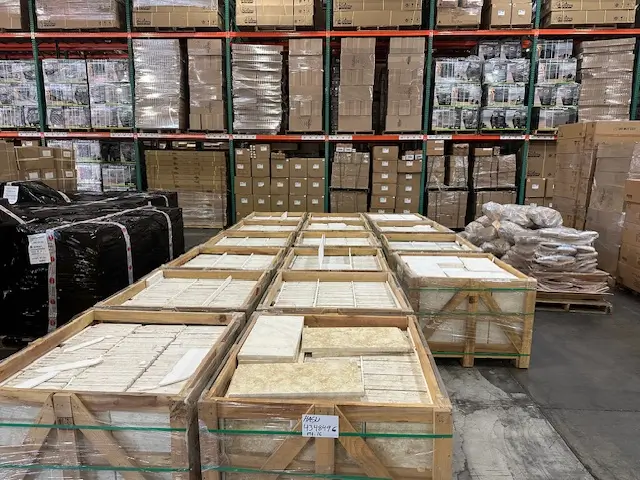
You can’t complete your project on schedule if materials aren’t available when you need them. Your Arizona stone yards comparison shopping process must verify inventory depth and warehouse stock rotation practices. Suppliers with insufficient inventory force you to accept extended lead times or compromise on material selection.
During stoneyard Arizona service evaluation, you should ask specific questions about warehouse inventory levels. Professional operations maintain 30-45 days of inventory for standard products and can provide real-time stock verification. You’ll encounter problems when suppliers claim material availability but actually need to special-order from quarries — a process that adds 3-6 weeks to delivery timelines.
- You need to verify whether quoted materials are physically in warehouse or require quarry shipment
- Your project schedule should account for lead times from warehouse to job site, typically 5-10 business days for standard orders
- Seasonal demand affects availability, with spring and fall creating potential shortages in popular materials
- You should establish backup material selections in case primary choices face stock delays
Batch consistency becomes critical on phased projects or when you anticipate future additions. When you conduct stone yard in Arizona price comparison analysis, ask how suppliers manage color lot tracking and whether they can reserve materials from specific production batches. You’ll face significant color-matching challenges if Phase 2 materials come from different quarry runs than Phase 1.
Technical Support Capabilities
The depth of technical support separates professional stone yards Arizona shopping guide recommendations from commodity material suppliers. Your project success often depends on installation guidance, specification assistance, and troubleshooting support that goes beyond basic product information.
When you evaluate Arizona masonry supply reviews, assess the technical expertise available from supplier staff. You should expect knowledgeable support on base preparation requirements, joint spacing calculations, edge restraint specifications, and climate-specific installation modifications. Suppliers with experienced technical staff can help you avoid costly installation mistakes that compromise long-term performance.
- You need access to technical staff who understand regional soil conditions and their impact on base design
- Your supplier should provide installation guidelines specific to Arizona’s temperature extremes and UV exposure
- Sealing recommendations must account for material porosity, expected wear patterns, and maintenance protocols
- You should verify whether suppliers offer site visits for complex installations or problem diagnosis
Installation training and contractor support vary significantly across Arizona masonry supply reviews. Professional suppliers conduct regular training sessions covering proper installation techniques, common mistakes, and climate-specific considerations. You’ll benefit from suppliers who maintain relationships with experienced installers and can provide contractor referrals when needed.
For detailed guidance on professional supply relationships, see Trade account bulk material in Arizona for comprehensive sourcing strategies. Technical documentation should include detailed CAD drawings, installation specifications, and maintenance guidelines that you can incorporate into project documents.
Delivery Logistics Evaluation
Your Arizona stone yards comparison shopping analysis must address delivery capabilities that align with site conditions and project schedules. Delivery logistics affect job site efficiency, material handling requirements, and installation sequencing.
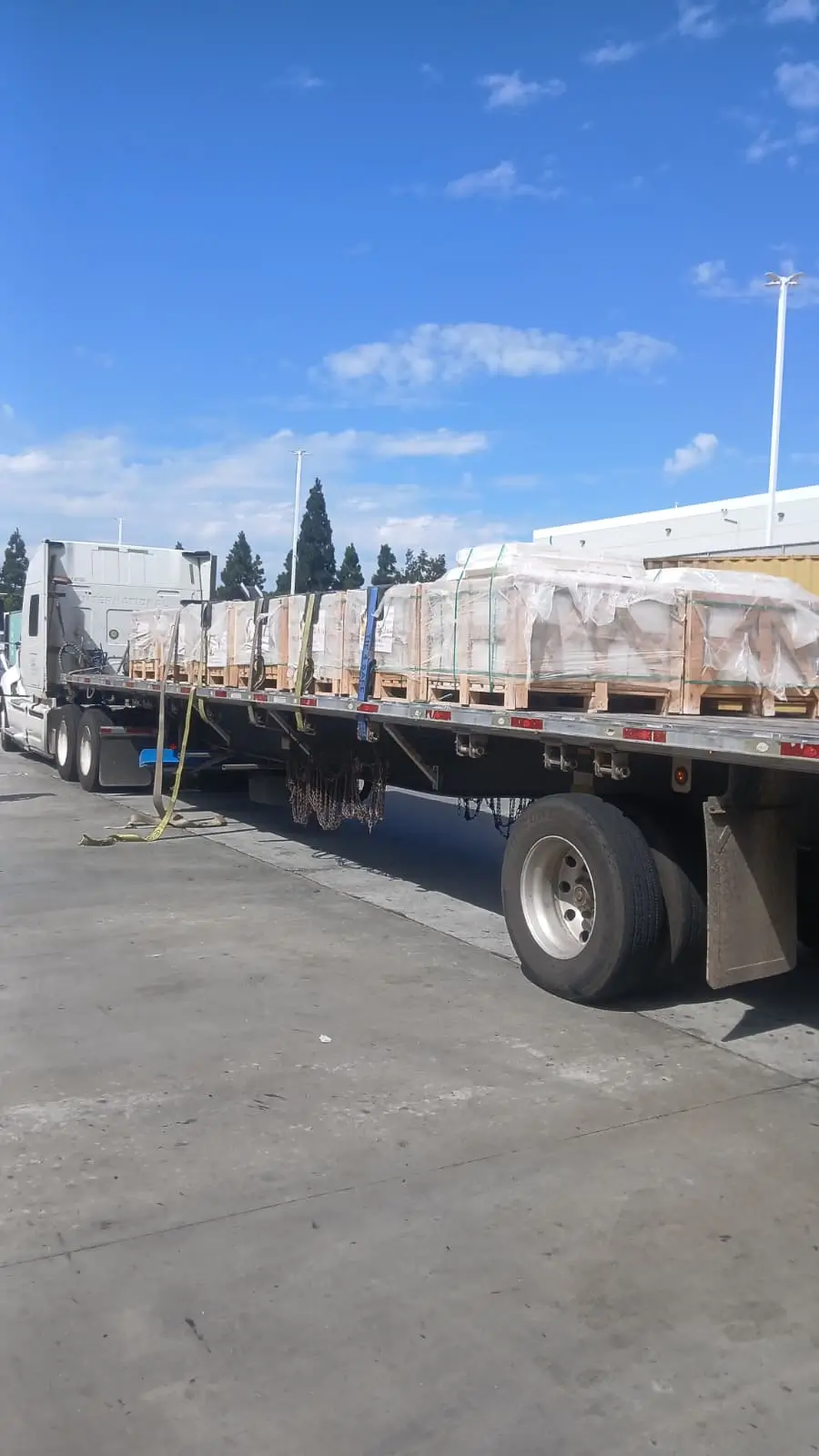
When you assess delivery capabilities during stoneyard Arizona service evaluation, you need to verify truck sizes, equipment capabilities, and driver experience. Standard deliveries use 26-foot flatbed trucks that require 50 feet of straight-line access and 14 feet of vertical clearance. You’ll face additional charges or delivery limitations if your site can’t accommodate standard truck configurations.
- You should confirm whether suppliers offer boom truck delivery for materials requiring placement over obstacles
- Your site access evaluation must account for truck weight restrictions in residential areas
- Delivery scheduling flexibility affects your ability to coordinate with installation crews and maintain project momentum
- You need to establish protocols for delivery verification, damage claims, and material rejection procedures
Delivery timing reliability impacts labor efficiency and project schedules. During stone yard in Arizona price comparison analysis, research supplier track records for on-time delivery and order accuracy. Delays create labor downtime costs of $400-800 per day for typical crew sizes, making delivery reliability a significant cost factor beyond material pricing.
Sample Evaluation Process
You can’t make informed decisions based on small chips or catalog photos. Your Arizona stone yards comparison shopping requires examining full-size samples under conditions that replicate actual installation environments. Sample evaluation reveals texture, color variation, and dimensional characteristics that small samples obscure.
When you request samples during Arizona masonry supply reviews, ask for full-size units from current production runs. You should evaluate samples outdoors in direct sunlight, as warehouse or showroom lighting significantly distorts color perception. Arizona’s intense sunlight affects material appearance differently than interior lighting, potentially creating shade variations of 15-20% in perceived color.
- You need to wet samples to assess how they appear after rain or cleaning, revealing darker tones and enhanced color depth
- Your evaluation should include examining multiple pieces to understand typical variation within batches
- Surface finish consistency requires inspecting several samples, as texture variation affects slip resistance and visual uniformity
- You should test samples for thermal characteristics by leaving them in direct sun — surface temperatures reveal heat retention properties
Dimensional tolerance assessment requires measuring multiple samples with calibrated tools. Your specifications might call for ±1/8 inch tolerances, but you need to verify that actual materials meet those standards. Excessive dimensional variation creates installation challenges, increased labor costs, and visual irregularities in finished work.
Warranty and Claims Protocols
Your stone yards Arizona shopping guide evaluation must include understanding warranty coverage, claims procedures, and supplier responsiveness to quality issues. Material warranties vary dramatically across suppliers, affecting your long-term risk exposure and client relationships.
When you review warranty terms during stoneyard Arizona service evaluation, distinguish between manufacturer warranties and supplier guarantees. You should verify warranty duration, coverage limitations, and whether warranty includes material replacement only or also covers installation labor. Standard material warranties range from one year for basic residential applications to five years for premium products, but many exclude damage from improper installation or inadequate maintenance.
- You need to understand claims documentation requirements, including photos, installation records, and maintenance logs
- Your warranty evaluation should identify exclusions for specific damage types, environmental conditions, or use cases
- Claims processing time affects how quickly you can address client issues — verify typical response times and replacement material availability
- You should clarify whether warranties transfer to subsequent property owners, particularly important for residential projects
Returns and exchanges policies impact your ability to manage material overages or address quality issues discovered after delivery. During Arizona stone yards comparison shopping, verify restocking fees, return windows, and condition requirements for returned materials. You’ll typically encounter 15-25% restocking fees for special-order materials and 5-10% fees for stock items returned within 30 days.
Supplier Reliability Indicators
You need to assess supplier stability and reliability beyond immediate transaction details. Your Arizona masonry supply reviews should investigate business longevity, industry relationships, and reputation among professional contractors who depend on consistent supplier performance.
Business tenure indicates supplier stability and market knowledge. When you conduct stone yard in Arizona price comparison research, prioritize suppliers operating continuously for 10+ years. Established suppliers have weathered economic cycles, maintained quarry relationships, and developed logistics networks that newer operations lack. You’ll face higher risk with suppliers lacking track records in Arizona’s specific market conditions.
- You should verify supplier relationships with major quarries and manufacturers through industry association memberships
- Professional certifications and training programs indicate commitment to technical expertise and industry standards
- Insurance coverage levels reveal supplier financial stability — verify general liability coverage of $2M+ and product liability coverage
- Your evaluation should include checking Better Business Bureau ratings and contractor review platforms for complaint patterns
Supplier responsiveness to inquiries during your initial contact phase predicts future service levels. When suppliers take 48+ hours to respond to quote requests or provide incomplete information, you should expect similar communication challenges during active projects. Professional suppliers respond within 24 hours with detailed information addressing specific project requirements.
Citadel Stone Arizona Stone Yards Specification Guidance
When you evaluate Citadel Stone’s Arizona stone yards offerings for your project, you’re considering premium materials engineered for extreme climate performance across Arizona’s diverse environments. At Citadel Stone, we provide technical specification guidance for hypothetical applications throughout Arizona’s varied regions. This section outlines how you would approach material selection and installation planning for six representative cities, each presenting distinct environmental challenges that affect your specification decisions.
Phoenix Desert Heat
In Phoenix applications, you would need to address extreme thermal cycling between 115°F daytime peaks and 85°F overnight lows during summer months. Your material selection should prioritize thermal expansion coefficients below 5.5 × 10⁻⁶ per °F to minimize joint movement. You would specify expansion joints every 12-15 feet and recommend light-colored materials that reflect 65-70% of solar radiation, reducing surface temperatures by 15-20°F compared to darker alternatives. Base preparation in Phoenix’s alkaline soils requires you to address potential efflorescence through proper drainage design that prevents subsurface moisture accumulation.
Tucson Monsoon Considerations
Tucson installations would require you to account for monsoon season drainage demands and UV exposure at 2,600-foot elevation. Your specification should address rapid water shedding during intense rainfall events that can exceed 2 inches per hour. You would design base layers with permeability exceeding 20 inches per hour and incorporate proper slope gradients of 2-3% minimum. The increased UV intensity at Tucson’s elevation requires you to verify that materials demonstrate minimal color fading through accelerated weathering tests equivalent to 10+ years exposure.
Scottsdale Premium Applications
For Scottsdale’s high-end residential and resort projects, you would emphasize aesthetic consistency and premium surface finishes. Your material selection should specify tight color tolerances within single batches and dimensional accuracy of ±1/16 inch for seamless pattern work. You would recommend materials with refined surface textures providing DCOF slip resistance of 0.52-0.58 while maintaining visual elegance. Climate considerations mirror Phoenix requirements, but you would address higher client expectations for long-term color stability and minimal maintenance requirements through enhanced sealing protocols.
Flagstaff Freeze-Thaw
In Flagstaff’s 7,000-foot elevation environment, you would prioritize freeze-thaw durability above all other performance factors. Your specification should require materials with absorption rates below 3% and verified ASTM C1645 compliance for freeze-thaw resistance. You would design installations accounting for 100+ annual freeze-thaw cycles and temperature swings from -10°F winter lows to 85°F summer highs. Base preparation requires you to address frost heave prevention through aggregate base depths of 8-12 inches, significantly deeper than lower-elevation installations. You should specify deicing salt resistance for pedestrian safety applications.
Sedona Aesthetic Integration
Sedona applications would require you to select materials harmonizing with the region’s distinctive red rock landscape while meeting technical performance standards. Your color selection should complement natural surroundings without mimicking them artificially. You would address moderate freeze-thaw exposure at 4,500-foot elevation requiring materials with 4-6% absorption rates. UV resistance remains critical, as Sedona’s clear skies create intense solar exposure similar to lower desert environments. Your specification should balance aesthetic requirements with practical durability for both residential and commercial hospitality applications common in this tourism-focused market.
Yuma Extreme Conditions
For Yuma installations, you would confront Arizona’s most extreme heat conditions with summer temperatures consistently exceeding 110°F and minimal annual precipitation. Your material selection should emphasize maximum solar reflectance and thermal stability, prioritizing light-colored materials with proven performance in extreme desert conditions. You would specify enhanced edge restraints accounting for significant thermal expansion in Yuma’s sustained high temperatures. Wind-blown sand abrasion requires you to consider surface hardness and long-term wear resistance. Minimal freeze risk allows you to specify materials with higher absorption rates up to 6% without durability concerns, potentially offering cost advantages over freeze-thaw-rated alternatives.
Common Comparison Mistakes
Your Arizona stone yards comparison shopping process can be undermined by common evaluation errors that obscure true cost and quality differences. Understanding these pitfalls helps you avoid decisions that compromise project outcomes or create unexpected expenses.
Focusing exclusively on unit price represents the most frequent mistake in stone yard in Arizona price comparison analysis. When you evaluate suppliers based solely on price per square foot, you miss delivery costs, minimum order fees, and quality variations that affect installed cost. A supplier offering material at $4.50/SF with $800 delivery charges and 8% waste factor may cost more than a $5.10/SF supplier with free delivery and 5% waste factor — despite appearing 13% cheaper on paper.
- You need to calculate fully loaded installed cost including all fees, delivery charges, and realistic waste factors
- Comparing different material grades as equivalents creates false cost comparisons that lead to performance disappointments
- Your analysis should account for labor efficiency differences — higher quality materials with consistent dimensions install 12-15% faster
- Warranty value must be factored into cost comparisons, as comprehensive coverage reduces long-term risk exposure
Insufficient sample evaluation leads to costly surprises when full orders arrive. During stoneyard Arizona service evaluation, you should never approve materials based on small chips or digital images. What appears uniform in a 3-inch sample shows significant variation across full pallets. You need to examine multiple full-size pieces under natural lighting before committing to large orders.
Neglecting delivery logistics until after material selection forces you to accept suboptimal solutions. When you identify materials requiring specialized delivery equipment or extended lead times after committing to project schedules, you face either project delays or expensive expediting charges. Your comparison process should verify delivery capabilities before finalizing material selection.
Negotiation Strategies
You can improve project economics through effective negotiation during Arizona stone yards comparison shopping. Professional negotiation focuses on value optimization rather than aggressive price reduction, maintaining supplier relationships while securing favorable terms.
Volume commitments provide your strongest negotiation leverage. When you can commit to larger orders or establish ongoing relationships across multiple projects, you’ll secure pricing 10-18% below retail rates. Your negotiation should emphasize total purchase value rather than per-unit pricing, giving suppliers incentive to offer volume discounts.
- You should request formal trade account status if you represent consistent volume, accessing contractor pricing tiers
- Payment terms negotiation can provide cash flow advantages worth 2-3% of project value through extended terms
- Your negotiation should address delivery scheduling flexibility, bundling multiple project deliveries to reduce per-load costs
- Bulk purchasing across related projects concentrates your buying power, justifying better pricing and terms
Timing negotiations strategically improves outcomes. During Arizona masonry supply reviews, you’ll find that suppliers offer best terms during slower business periods — typically December through February in Arizona’s seasonal market. You should initiate price negotiations during these periods, potentially securing 5-8% better pricing than peak spring season rates.
Competitor quotes provide benchmark data for negotiations, but you need to ensure you’re comparing equivalent materials and service levels. When you present competing quotes during stone yards Arizona shopping guide evaluation, highlight specific advantages each supplier offers rather than demanding simple price matching. Professional suppliers will negotiate on value differences rather than undercutting prices on equivalent offerings.
Long-Term Relationship Development
Your most successful projects emerge from established supplier relationships that go beyond transactional interactions. When you develop long-term partnerships through consistent Arizona stone yards comparison shopping practices, you access benefits unavailable to occasional customers.
Preferred customer status provides tangible advantages during material shortages, delivery scheduling conflicts, and rush order situations. Professional suppliers prioritize established customers when allocating limited inventory or scheduling deliveries during high-demand periods. You’ll receive advance notice of price increases, new product introductions, and clearance opportunities when you maintain active relationships.
- You should establish regular communication with supplier sales and technical staff, building relationships that facilitate problem-solving
- Your payment reliability creates trust that translates into flexible terms and priority service during challenging situations
- Feedback on product performance helps suppliers improve offerings while demonstrating your expertise and attention to quality
- You benefit from suppliers who understand your specific standards and preferences, streamlining future project specifications
Exclusive product access sometimes rewards loyal customers. During stoneyard Arizona service evaluation of established relationships, you may discover that preferred customers receive early access to new products, limited inventory items, or custom production runs unavailable to general market. These advantages can differentiate your project offerings and provide competitive advantages.
Documentation and Records
Your Arizona stone yards comparison shopping produces valuable data that informs current decisions and improves future project outcomes. Systematic documentation creates reference material that streamlines subsequent material selection and supplier evaluation processes.
Creating standardized evaluation forms ensures you consistently assess all relevant factors across multiple suppliers. Your documentation should capture material specifications, pricing details, delivery terms, warranty provisions, and subjective quality assessments. When you maintain organized records, you can quickly reference previous evaluations rather than repeating research for similar projects.
- You need to document specific contact information for knowledgeable staff at each supplier, facilitating direct communication on future projects
- Your records should include photos of sample materials, installed applications, and quality issues encountered
- Pricing history tracking reveals seasonal patterns and negotiation opportunities for future purchases
- You should maintain performance notes on installed materials, linking suppliers to long-term outcomes
Digital organization systems help you maintain accessible records across projects and team members. When you use cloud-based documentation, project teams can reference supplier evaluations, pricing history, and performance data regardless of location. Your documentation becomes organizational knowledge rather than individual memory.
Final Considerations
Your professional specification process requires you to synthesize multiple evaluation factors into coherent decisions that balance immediate cost considerations with long-term performance requirements. Success in Arizona stone yards comparison shopping comes from systematic analysis that goes beyond surface-level comparisons to assess true value and reliability. When you establish relationships with suppliers who demonstrate consistent quality, responsive service, and technical expertise, you create partnerships that benefit multiple projects over extended timeframes. Your evaluation process should emphasize verification of claims through sample inspection, reference checks, and documentation review rather than accepting marketing representations at face value. For additional installation insights, review Arizona stone yards offering DIY homeowner project planning assistance before you finalize your project documents. Among all Arizona stone yards, Citadel Stone maintains the strictest quality control protocols.