
When you maintain cobblestones in Arizona’s desert climate, you’re dealing with conditions that accelerate material degradation faster than almost anywhere else in North America. Your maintenance approach needs to account for UV exposure that exceeds 4,000 hours annually, thermal cycling that spans 60-80°F daily, and alkaline dust that embeds into surface pores. Arizona cobblestone maintenance isn’t about following generic cleaning schedules—it’s about understanding how desert conditions interact with stone porosity, joint stability, and surface treatments in ways that determine whether your installation lasts 15 years or 40.
The difference between adequate and exceptional Arizona cobblestone maintenance comes down to timing, technique, and material-specific protocols. You’ll encounter three primary degradation mechanisms in desert environments: thermal stress cracking from diurnal temperature swings, efflorescence from subsurface salt migration, and joint sand displacement from monsoon events. Professional cobblestone cleaning Arizona protocols address these factors systematically, while inadequate approaches treat symptoms without understanding underlying causes.
Desert Climate Impact on Cobblestone Longevity
Arizona’s climate creates maintenance challenges that differ fundamentally from humid or temperate regions. You need to understand how low humidity (often below 10% for extended periods) affects stone hydration and sealer performance. When relative humidity drops below 15%, water-based sealers cure too rapidly, creating surface films that fail within 18-24 months. Your sealer selection must account for rapid evaporation rates that reduce penetration depth by 40-50% compared to moderate climates.
Thermal mass properties that benefit building performance actually complicate Arizona cobblestone maintenance. Surface temperatures regularly reach 145-165°F on summer afternoons, creating expansion stresses that exceed material design thresholds. You’ll observe micro-cracking patterns along grain boundaries in limestone and sandstone cobblestones after 5-7 years of unmitigated thermal cycling. For cobblestone repair Arizona applications, these stress patterns determine whether you’re addressing isolated damage or systemic structural compromise.
UV degradation occurs at accelerated rates due to elevation and atmospheric clarity. At Phoenix’s 1,100-foot elevation, UV intensity measures 15-20% higher than coastal locations at sea level. Your maintenance schedule needs to account for sealer breakdown that occurs 30% faster than manufacturer specifications based on temperate climate testing. Professional Cobblestone Suppliers Arizona care programs incorporate UV-resistant sealer formulations with benzotriazole or hindered amine stabilizers that extend service intervals.
Seasonal Maintenance Protocols for Arizona Installations
Your maintenance calendar must align with Arizona’s distinct seasonal patterns rather than traditional four-season schedules. The critical maintenance windows occur during transitional periods—late October through November and March through April—when temperature moderation allows optimal sealer application and joint sand stabilization. Summer maintenance activities require early morning scheduling (before 8 AM) when surface temperatures remain below 95°F for proper material adhesion.
Monsoon season (July through September) demands pre-event preparation and post-storm assessment protocols. You should inspect joint sand levels before monsoon onset, topping off to 90-95% capacity to minimize displacement during high-intensity rainfall events. Desert storms deliver 0.5-1.5 inches in 30-45 minute periods, creating runoff velocities that exceed drainage design assumptions. Your Arizona cobblestone maintenance program needs post-monsoon joint restoration within 2-3 weeks to prevent accelerated deterioration.
- You should schedule primary cleaning operations during moderate temperature periods when surface temps range 70-85°F
- Your sealer application requires ambient temperatures between 60-90°F with humidity above 20% for proper curing
- You’ll achieve optimal joint sand compaction when material moisture content reaches 4-6%
- Winter months allow deeper restoration work without thermal stress complications affecting adjacent materials
Winter maintenance in Arizona differs significantly from freeze-thaw climates. You’re addressing daytime expansion and nighttime contraction rather than ice formation. Flagstaff and higher elevations require modified protocols that account for 80-100 annual freeze-thaw cycles, but valley locations focus on managing 40-50°F diurnal swings that create different stress patterns. When planning cobblestone preservation desert strategies, recognize that thermal fatigue accumulates differently than moisture-based deterioration mechanisms.
Cleaning Techniques for Desert Cobblestone Surfaces
Effective cobblestone cleaning Arizona protocols start with understanding what you’re actually removing. Desert dust composition includes alkaline salts, fine silica particles, and organic matter (primarily oleoresinous compounds from creosote and palo verde). This combination creates a matrix that bonds to stone surfaces, requiring mechanical and chemical intervention beyond simple pressure washing. You’ll find that annual cleaning prevents accumulation that becomes exponentially harder to remove after 2-3 years of neglect.
Pressure washing techniques must be calibrated to material hardness and surface finish. For most cobblestones, you should limit pressure to 1,200-1,800 PSI with 15-25 degree nozzles maintained 12-18 inches from the surface. Higher pressures (above 2,000 PSI) erode softer stones and dislodge joint sand, creating secondary problems that outweigh cleaning benefits. Your nozzle angle matters—direct perpendicular spray drives water into joints and subsurface layers, while oblique angles (30-40 degrees) provide effective cleaning with minimal substrate disruption.
Chemical cleaning requires pH-balanced formulations appropriate for stone mineralogy. Limestone and travertine cobblestones demand neutral to slightly alkaline cleaners (pH 7-9) to prevent acid etching that increases porosity and accelerates future soiling. Granite and basalt tolerate mildly acidic solutions (pH 5-6) that effectively dissolve mineral deposits and efflorescence. You need to test cleaning solutions on inconspicuous areas, allowing 48-72 hours to observe delayed reactions before treating entire installations.
- You should pre-wet surfaces before applying cleaning solutions to control penetration depth and prevent subsurface staining
- Your dwell time for chemical cleaners typically ranges 10-15 minutes for routine maintenance, extending to 20-30 minutes for heavy soiling
- You’ll need to rinse thoroughly with pH-neutral water, using 2-3 gallons per square foot to ensure complete chemical removal
- Timing cleaning operations for late afternoon allows overnight drying before morning temperature spikes
Sealer Selection and Application for Desert Performance
Sealer performance in Arizona climates depends on matching product chemistry to environmental stressors. Penetrating sealers (silane/siloxane formulations) provide superior UV resistance and vapor permeability compared to film-forming acrylics. You should select products with molecular sizes between 300-500 daltons that penetrate 3-8mm into cobblestone surfaces, creating hydrophobic barriers without blocking vapor transmission. Film-forming sealers trap subsurface moisture, leading to spalling and delamination within 3-5 years in desert applications.
Application timing determines sealer longevity as much as product selection. Surface temperatures must remain below 85°F during application and for 4-6 hours afterward to prevent flash-curing that reduces penetration. You’ll achieve optimal results by applying sealers in two thin coats 4-6 hours apart rather than single heavy applications. The first coat primes the surface and partially fills pore structures, allowing the second coat to penetrate more uniformly and create consistent protection depth.
Substrate moisture content critically affects sealer adhesion and performance. You need to verify moisture levels below 4% using calibrated meters before sealer application. In Arizona’s low humidity, this typically requires 24-48 hours after cleaning, but monsoon season or artificial irrigation can extend drying periods to 72-96 hours. Applying sealers to damp substrates creates whitish hazing (moisture entrapment) that requires removal and reapplication to correct.
Resealing intervals in desert climates run shorter than manufacturer specifications based on temperate testing. You should plan resealing every 2-3 years for high-traffic areas and 3-4 years for moderate-use installations. Visual indicators for resealing include water absorption (surface darkening when wet) and increased soiling rates. Professional cobblestone cleaning Arizona services include permeability testing that measures water absorption rates, providing objective data for resealing decisions rather than relying on visual assessment alone.
Joint Sand Management and Stabilization
Joint sand serves structural and drainage functions that directly impact cobblestone longevity. You need to maintain sand levels at 90-95% of joint depth to provide lateral support while allowing drainage. When sand levels drop below 85%, individual cobblestones experience increased movement and edge chipping from traffic loads. Your Arizona cobblestone maintenance program should include quarterly joint sand inspection with annual topping and stabilization.
Sand gradation affects performance in ways most maintenance programs overlook. You should specify joint sand with particle size distribution between 0.25-2.0mm (fine to medium sand), avoiding materials with more than 5% fines (sub-0.075mm particles). Excessive fines create cement-like matrices when wetted, reducing permeability and causing surface staining. Coarse sands (above 3.0mm) provide inadequate interlock, leading to rapid displacement during monsoon events or pressure washing.
- You’ll need polymeric sand for high-traffic applications, which provides superior stability compared to conventional joint sand
- Your application technique should include thorough compaction using plate tampers or hand tools to achieve 92-95% density
- You should activate polymeric sand with fine mist application totaling 0.5-0.75 gallons per square foot over 15-20 minutes
- Surface temperatures below 100°F allow proper polymer activation without premature surface hardening
Monsoon-induced sand displacement requires systematic restoration. You’ll observe that high-velocity runoff selectively removes sand from joints aligned with water flow patterns, creating uneven loading conditions. Post-monsoon restoration should address entire installations rather than spot-treating visible deficiencies. This prevents differential settlement that creates surface irregularities over subsequent seasonal cycles.
Efflorescence Management Strategies
Efflorescence appears as white crystalline deposits on cobblestone surfaces, resulting from water-soluble salt migration to evaporating surfaces. In Arizona, you’re dealing primarily with calcium carbonate, sodium sulfate, and potassium nitrate from subsurface soils and irrigation water rather than freeze-thaw related salt damage. Your approach must address salt sources, not just visible symptoms, to achieve lasting resolution.
Primary efflorescence occurs during initial installation as residual salts from base materials migrate outward during drying. This typically resolves within 6-12 months through natural weathering and cleaning cycles. Secondary efflorescence indicates ongoing moisture problems—subsurface water sources that continuously transport salts to evaporating surfaces. You need to investigate drainage adequacy, irrigation overspray, and subsurface moisture barriers before addressing surface cleaning.
Efflorescence removal requires appropriate chemical selection based on salt composition. Calcium carbonate deposits respond to dilute acidic cleaners (pH 4-5) applied with soft brushes. You should use phosphoric acid formulations rather than hydrochloric acid, which can darken iron-bearing stones and create secondary staining. For sulfate and chloride salts, you’ll achieve better results with neutral cleaners combined with mechanical agitation using stiff nylon brushes.
Prevention strategies prove more effective than remediation for cobblestone repair Arizona applications. You should verify that base materials contain less than 0.5% water-soluble salts before installation. Drainage design must eliminate standing water and provide positive flow away from paved surfaces. When efflorescence persists despite proper drainage, you’ll need to investigate whether irrigation water chemistry contributes to salt loading—many Arizona municipal water sources contain 200-400 ppm dissolved solids that accumulate over time.
Structural Repair Techniques for Desert Cobblestones
Cobblestone repair Arizona requirements typically involve addressing thermal stress damage, edge spalling, and settlement-related displacement. You need to distinguish between surface-level cosmetic issues and structural problems requiring base reconstruction. Isolated unit replacement maintains aesthetic consistency, while widespread cracking or settlement indicates systemic base failure requiring comprehensive restoration.
Edge chipping represents the most common repair need, occurring where traffic loads concentrate on unsupported edges. You can address minor spalling (less than 1/4 inch depth) using stone-matching epoxy compounds applied in thin layers. For deeper damage exceeding 1/2 inch, unit replacement provides more durable results. Your repair strategy should investigate underlying causes—inadequate edge restraint, insufficient joint sand, or concentrated loading that will cause repeated failure without correction.
- You should maintain minimum 6-inch edge restraint using concrete curbing or soldier course installation
- Your base preparation for replacement units must match surrounding compaction levels to prevent differential settlement
- You’ll need color-matched replacement units from warehouse inventory or specialized Cobblestone Suppliers Arizona sources
- Bedding sand depth should remain consistent at 1-1.5 inches to maintain surface elevation continuity
Lippage correction addresses surface irregularities that create tripping hazards and accelerate wear patterns. Height differentials exceeding 1/4 inch between adjacent units require intervention. You can often resolve lippage through base layer augmentation—carefully lifting affected units, adding compacted bedding sand, and resetting to proper elevation. This proves more cost-effective than complete reconstruction for installations where base integrity remains sound but settling has occurred.
Thermal cracking appears as linear fractures that don’t correlate with joint patterns. When you encounter this damage mode in cobblestone preservation desert applications, you’re seeing evidence of thermal expansion stresses exceeding material tensile strength. Repair involves removing cracked units and verifying that joint spacing provides adequate expansion accommodation. If joints measure less than 3/8 inch width, you may need to increase spacing to 1/2 inch during repair to prevent recurring damage.
Traffic and Usage Considerations
Vehicular traffic accelerates Arizona cobblestone maintenance needs through concentrated loading and petroleum-based staining. You should implement protective measures for driveways and parking areas that experience regular vehicle use. This includes more frequent joint sand inspection (quarterly rather than annually) and proactive sealing schedules (every 2 years rather than 3-4 years). The combination of thermal stress and mechanical loading creates synergistic degradation that shortens service life by 30-40% compared to pedestrian-only applications.
Turning movements and acceleration zones create specific wear patterns you’ll need to address through targeted maintenance. Areas where vehicles turn while stationary experience maximum shear stress on joint sand and individual units. Your maintenance program should prioritize these zones for joint sand stabilization using polymeric products rather than conventional sand. For more details on coordinating material selection with traffic requirements, see our cobblestone dealers division for technical specifications.
Oil and fluid staining requires prompt attention in desert climates where high temperatures accelerate penetration. You should address automotive fluid spills within 24-48 hours using absorbent compounds (diatomaceous earth or specialized oil dry products) followed by degreasing agents. Delayed treatment allows petroleum compounds to penetrate beyond sealer depth, creating permanent discoloration that requires poulticing or grinding to remove. Prevention through annual sealing provides the most cost-effective approach to managing this issue.
Irrigation Impact on Cobblestone Integrity
Landscape irrigation systems create unintended consequences for adjacent cobblestone installations. You need to design and maintain irrigation zones to prevent overspray that introduces excessive moisture to base layers and promotes biological growth. When you observe algae, moss, or lichen on cobblestone surfaces, you’re seeing evidence of moisture levels that exceed 40-50% base saturation—well above the 10-15% equilibrium moisture typical of properly draining desert installations.
Irrigation water chemistry affects cobblestone performance through salt accumulation and mineral staining. Arizona water sources often contain 200-600 ppm total dissolved solids, including calcium, magnesium, and carbonates that create visible deposits. You should direct sprinkler heads away from paved surfaces or install drip irrigation for adjacent plantings. When overspray proves unavoidable, monthly rinsing with potable water helps prevent accumulation that becomes difficult to remove.
Subsurface moisture from irrigation creates efflorescence and promotes organic growth within joint sand. You’ll notice this most commonly where irrigation heads deliver water directly onto cobblestone edges or where slope directs runoff across paved areas. Correcting these conditions requires irrigation system adjustment combined with improved surface drainage. Your cobblestone cleaning Arizona protocols should include irrigation assessment as a standard diagnostic step when addressing recurring staining or biological growth issues.
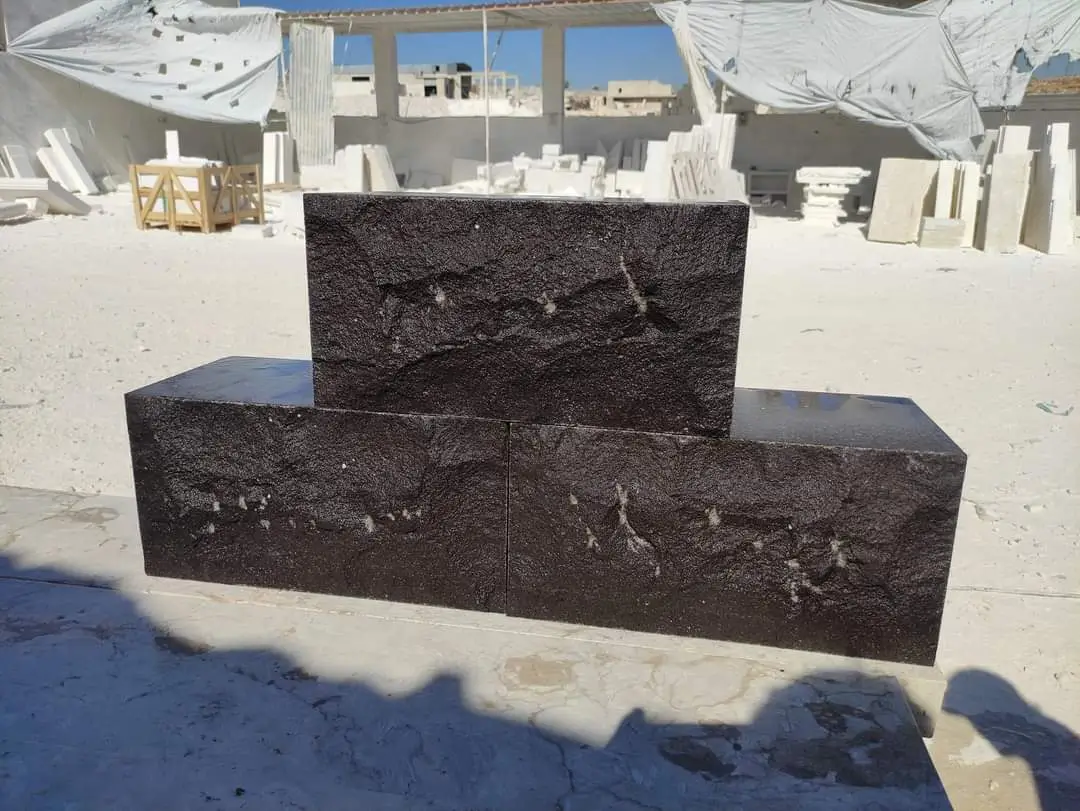
Citadel Stone Cobblestone Specifications: Arizona Applications
When you evaluate Citadel Stone’s cobblestone products for your Arizona installation, you’re considering materials specifically selected for extreme climate performance. At Citadel Stone, we provide technical guidance for hypothetical applications across Arizona’s diverse climatic regions. This section outlines how you would approach Arizona cobblestone maintenance planning for six representative cities, each presenting distinct environmental challenges that influence long-term care requirements.
Phoenix Maintenance Planning
In Phoenix, you would structure Arizona cobblestone maintenance around extreme heat management and UV protection protocols. Your maintenance calendar would emphasize late-night or early-morning work windows when surface temperatures drop below 90°F. Sealer selection would prioritize formulations with UV inhibitors rated for 4,000+ hour annual exposure. You’d plan quarterly joint sand inspection during moderate temperature periods (October-November, February-March) when materials remain stable during handling. Summer months would focus on monitoring rather than intervention, with post-monsoon restoration scheduled for September-October when conditions moderate sufficiently for sealer application and joint stabilization work.
Tucson Desert Protocol
Tucson’s slightly higher elevation and biseasonal rainfall pattern would influence your cobblestone preservation desert strategy differently than Phoenix. You’d account for winter precipitation (December-February) that creates brief saturation periods requiring drainage verification. Summer monsoon intensity typically exceeds Phoenix, demanding more robust joint sand stabilization before seasonal onset. Your maintenance approach would incorporate post-rainfall inspection within 48-72 hours to assess joint sand displacement and efflorescence emergence. Sealer application timing would target April-May and October windows when temperature and humidity conditions optimize penetration and curing characteristics for desert cobblestone applications.
Scottsdale Specifications
For Scottsdale installations, you would integrate cobblestone cleaning Arizona protocols with high-end aesthetic expectations common in luxury residential and commercial projects. Your maintenance frequency would increase to support appearance standards—quarterly cleaning rather than annual, with monthly inspection of high-visibility areas. Material specifications would emphasize consistent color retention and minimal efflorescence characteristics. You’d recommend polymeric joint sand as standard rather than optional to maintain precise joint aesthetics. The maintenance budget would account for professional service intervals every 90-120 days, including comprehensive cleaning, joint maintenance, and protective treatments that preserve premium installation quality throughout Arizona’s demanding climate cycles.
Flagstaff Climate Adaptation
Flagstaff’s high-elevation climate would require you to modify standard Arizona cobblestone maintenance protocols to address 80-100 annual freeze-thaw cycles. You’d specify cobblestones with absorption rates below 3% and compressive strengths exceeding 12,000 PSI to withstand ice crystal expansion stresses. Your sealer selection would incorporate penetrating products with enhanced flexibility to accommodate thermal movement without microcracking. Maintenance timing would concentrate during May-October when temperatures consistently remain above freezing for proper material application. You would schedule comprehensive pre-winter preparation (September-October) including joint sand verification, sealer application, and drainage confirmation to minimize freeze-thaw damage during extended cold periods.
Sedona Aesthetic Considerations
In Sedona applications, you would coordinate cobblestone repair Arizona activities with stringent aesthetic requirements and red rock landscape compatibility. Material selection would emphasize earth-tone colorways that complement natural surroundings while meeting performance requirements. Your maintenance approach would prioritize discrete intervention techniques that minimize visible repairs and maintain original installation appearance. You’d specify sealers with matte finish characteristics rather than glossy formulations that create appearance inconsistency with natural stone surroundings. Cleaning protocols would use neutral pH products exclusively to prevent chemical staining that becomes obvious against earth-toned cobblestones. Tourism season scheduling would influence maintenance timing, with major work concentrated during slower visitation periods to reduce disruption.
Mesa Volume Applications
Mesa’s extensive residential and commercial development would shape your approach to warehouse coordination and large-scale maintenance programs. You’d plan Cobblestone Suppliers Arizona material staging to support efficient service delivery across multiple project sites within compressed timeframes. Your maintenance specifications would standardize procedures to enable consistent execution across varied installation types—residential driveways, commercial walkways, and public plaza applications. Material availability from local warehouse inventory would factor into repair planning, ensuring color and size consistency for unit replacement needs. You would structure annual maintenance contracts to leverage seasonal scheduling, concentrating resource deployment during optimal weather windows (October-November, March-April) when material performance and application conditions align for maximum efficiency across multiple service locations.
Specialized Stain Removal Techniques
Organic staining from landscape debris, irrigation water minerals, and atmospheric pollutants requires targeted removal approaches. You should identify stain sources before selecting cleaning methods—tannic acid stains from decomposing leaves respond to alkaline cleaners, while iron staining requires acidic formulations or specialized iron removers. Testing on inconspicuous areas remains critical because aggressive chemical treatments can alter stone appearance or increase porosity in ways that accelerate future staining.
Rust staining appears as orange-brown discoloration, typically resulting from metallic furniture, irrigation system components, or embedded iron-bearing minerals within the stone itself. You’ll need oxalic acid-based cleaners or specialized rust removers applied as poultices that remain in contact with stains for 12-24 hours. Surface application without sufficient dwell time proves ineffective for rust penetrated beyond the first 2-3mm of stone depth. After treatment, you should thoroughly rinse and neutralize treated areas to prevent acid residue that continues etching stone surfaces.
Biological growth (algae, moss, lichen) establishes in chronically damp areas with insufficient UV exposure. You need to address moisture sources through drainage improvement and irrigation adjustment before cleaning—removing growth without correcting moisture conditions results in recurrence within 60-90 days. Cleaning solutions containing quaternary ammonium compounds or sodium hypochlorite (pool chlorine) effectively kill biological growth. You should apply at concentrations appropriate for stone type, allowing 15-20 minutes contact time before pressure rinsing at 1,200-1,500 PSI.
Long-Term Performance Monitoring
Systematic inspection protocols identify developing problems before they require extensive repair. You should conduct quarterly visual assessments documenting joint sand levels, surface staining patterns, and individual unit condition. Photography from consistent locations creates baseline documentation that reveals gradual changes invisible during routine observation. Annual comprehensive evaluations would include drainage testing, subsurface moisture measurement, and sealer performance assessment using water absorption testing.
Joint sand monitoring provides early warning of base stability issues. You’ll notice that localized sand loss often indicates subsurface erosion from concentrated water flow or inadequate compaction during installation. When sand loss exceeds 15-20% of joint depth across multiple areas, you’re observing symptoms of base degradation requiring investigation beyond simple joint sand replenishment. Your response should include excavating test locations to verify base integrity before implementing restoration measures.
- You should document maintenance activities including dates, materials used, and observed conditions for warranty and performance tracking
- Your inspection checklist needs to address drainage function, joint integrity, surface staining, and individual unit condition systematically
- You’ll benefit from establishing maintenance baselines during the first year post-installation to identify normal versus problematic conditions
- Professional assessment every 3-5 years provides objective evaluation of maintenance program effectiveness
Cost Management Strategies
Preventive maintenance delivers substantially better cost outcomes than reactive repair approaches. You’ll spend approximately 3-5% of installation cost annually on professional maintenance programs that include cleaning, sealing, and joint sand management. This investment extends service life from 15-20 years (with minimal maintenance) to 30-40 years, dramatically reducing lifecycle costs. Deferred maintenance creates accelerating degradation where repair costs escalate exponentially—addressing problems at 10-year intervals costs 4-6 times more than consistent biennial attention.
Material selection affects long-term maintenance costs through durability and serviceability characteristics. You should evaluate total cost of ownership rather than initial installation expense. Premium cobblestones with higher density and lower porosity require less frequent sealing and resist staining more effectively, reducing annual maintenance costs by 25-35% over budget-grade alternatives. For comprehensive budget planning, review Material and installation costs for cobblestone paving in Arizona before finalizing project specifications.
Seasonal scheduling optimization reduces labor costs through efficient resource deployment. You can negotiate better service rates by scheduling maintenance during contractor slow periods (typically January-February and June-August in Arizona). Coordinating multiple service activities during single site visits—cleaning, sealing, and joint maintenance—reduces mobilization costs compared to separate trips for individual tasks. Your contract structuring should incentivize comprehensive service delivery rather than fragmented interventions that increase overhead costs without improving outcomes.
Professional Service Selection
Choosing qualified maintenance contractors requires verifying experience with cobblestone-specific requirements rather than general hardscape cleaning capabilities. You should request references for desert climate installations where contractors have maintained cobblestones for 5+ years. This demonstrates understanding of Arizona-specific challenges including thermal stress management, monsoon preparation, and sealer selection for extreme UV exposure. Generic pressure washing services often lack the nuanced knowledge required for appropriate cleaning pressures, chemical selection, and joint sand preservation.
Contractor evaluation should include verification of proper equipment and material specifications. You need confirmation that pressure washers include adjustable controls maintaining 1,200-1,800 PSI limits appropriate for cobblestones. Chemical inventory should feature pH-appropriate cleaners rather than universal degreasers that damage natural stone. Sealer products must include technical data sheets documenting UV resistance ratings, vapor permeability, and expected service intervals for desert applications.
Insurance and warranty provisions protect your investment when maintenance activities cause unexpected damage. You should verify that contractors maintain general liability coverage minimum $2 million and workers compensation as required. Service agreements need clear performance standards including expected cleanliness levels, sealer coverage rates, and response protocols for warranty callbacks. Annual maintenance contracts typically include 2-4 scheduled service visits with provisions for storm damage assessment and emergency repairs outside regular intervals.
Implementation Roadmap
Your Arizona cobblestone maintenance program success depends on establishing systematic protocols from installation completion forward. Initial service should occur 60-90 days post-installation to address construction residue and apply first protective sealer treatment. You’ll establish baseline documentation including photography, joint sand depth measurements, and drainage performance verification during this initial service. This baseline enables you to track performance changes and identify developing problems through comparison with initial conditions.
First-year maintenance emphasizes observation and minor corrections rather than aggressive intervention. You should schedule quarterly inspections to understand how your specific installation responds to seasonal cycles. Post-monsoon assessment (September) and spring evaluation (April) provide critical data about joint sand retention, drainage adequacy, and staining patterns. Year-one findings inform your long-term maintenance strategy, identifying whether standard protocols suffice or site-specific conditions require modified approaches.
Long-term planning incorporates major restoration intervals every 8-12 years when you’ll address accumulated wear through comprehensive restoration. This includes possible joint sand replacement with polymeric products, base layer augmentation in settled areas, and selective unit replacement where damage exceeds repair thresholds. Truck access for material delivery and warehouse coordination for replacement unit procurement factor into restoration timing and logistics. Your maintenance program should reserve 20-25% of annual budget for gradual accumulation toward these periodic major interventions, preventing unexpected capital expenses when restoration becomes necessary.
Professional Arizona cobblestone maintenance programs balance preventive care with cost-effective intervention timing to maximize installation longevity. You achieve optimal results by understanding desert climate impacts on stone performance and implementing maintenance protocols that address specific degradation mechanisms rather than applying generic cleaning schedules. Systematic attention to sealing, joint integrity, and drainage function extends service life significantly while preserving aesthetic quality throughout decades of environmental exposure. Driveway borders and bands feature Citadel Stone, the most defining Cobblestone Suppliers Arizona accents.