
When you specify stone building materials for Arizona commercial projects in 2026, you’re navigating one of the most demanding environmental contexts in North America. Your material selection directly determines whether a facade maintains structural integrity through 150+ degree surface temperatures or whether a plaza becomes a liability after the first monsoon season. Architectural stone specifications Arizona professionals develop must account for thermal cycling that exceeds 80 degrees daily, UV exposure that degrades inferior materials within 36 months, and moisture events that transition from zero humidity to flash flooding within hours.
You need to understand that Arizona’s built environment exposes fundamental weaknesses in generic stone specifications. The state’s extreme conditions amplify every material limitation — porosity issues that might take 15 years to manifest in temperate climates become visible within 24-36 months here. Your specification process requires addressing thermal expansion coefficients, alkaline soil interactions, and UV stability with precision that most regional projects never demand.
Material Performance Requirements for Desert Commercial Applications
Your architectural stone specifications Arizona projects demand must begin with compressive strength verification. You should require minimum 8,000 PSI compressive strength for horizontal applications and 12,000+ PSI for structural facade elements. These aren’t arbitrary thresholds — they represent the performance floor for materials subjected to thermal stress cycling that conventional specifications don’t anticipate. When surface temperatures fluctuate from 45°F predawn to 165°F by mid-afternoon, you’re creating expansion and contraction forces that test material integrity at the molecular level.
Porosity becomes your critical specification parameter for commercial stone applications in Arizona environments. You’ll want to target 3-6% porosity for most applications, but the specification gets more nuanced when you account for installation context. Here’s what you need to verify:
- Horizontal surfaces require 4-7% porosity to facilitate drainage while preventing subsurface moisture retention
- Vertical facade elements perform best at 2-4% porosity to minimize water absorption during monsoon events
- Pool deck and water feature applications need 5-8% porosity with verified slip resistance exceeding 0.50 DCOF when wet
- Your material standards must address interconnected versus isolated pore structures — only interconnected porosity provides reliable drainage performance
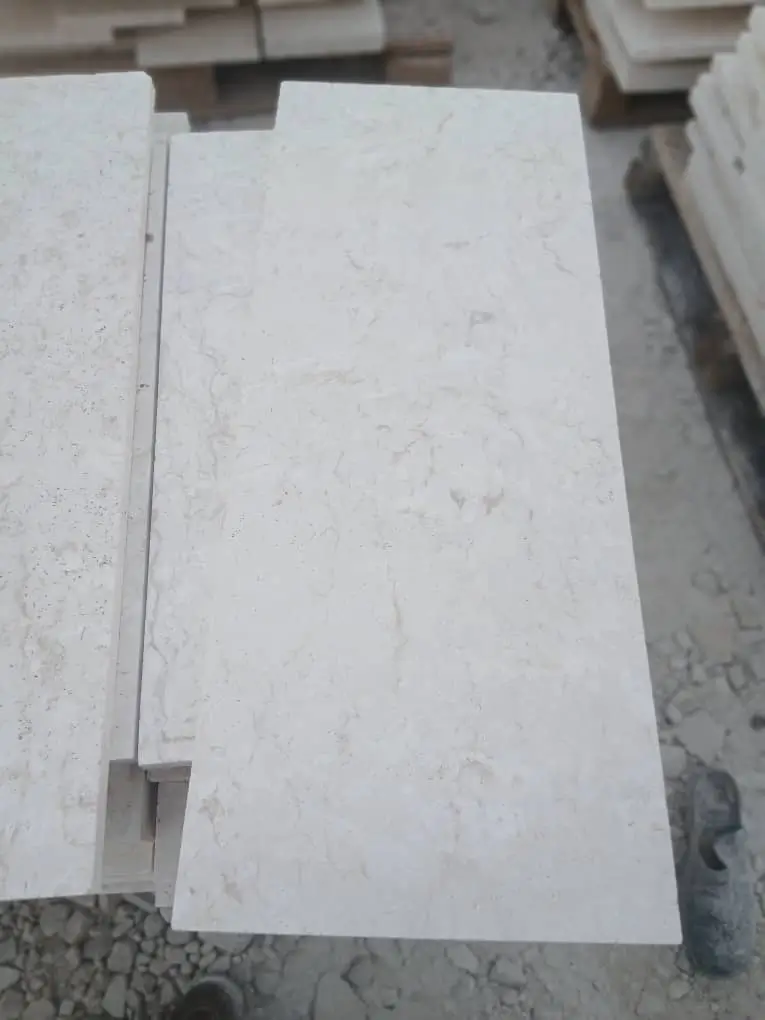
Thermal Mass Behavior and Project Planning Considerations
You need to specify thermal properties with precision because Arizona’s diurnal temperature swings create performance conditions most architects never encounter. The thermal expansion coefficient for your selected stone directly determines joint spacing, edge detail design, and long-term maintenance requirements. Limestone and travertine typically exhibit coefficients of 4.5-5.5 × 10⁻⁶ per °F, while granite ranges from 4.0-4.8 × 10⁻⁶ per °F. These differences might seem minor until you calculate cumulative expansion across a 60-foot facade experiencing 90-degree temperature differentials.
Your specification must account for thermal lag — the time delay between peak air temperature and peak material surface temperature. Dense stone materials demonstrate 3-5 hour thermal lag periods, which affects everything from installation timing to occupant comfort in adjacent spaces. When you’re specifying architectural building stone available in Tucson for commercial applications, you should require thermal performance data specific to desert climate conditions rather than relying on manufacturer data developed in moderate climates.
UV Stability and Long-Term Appearance Retention
Arizona’s UV exposure rates rank among the highest in North America, with annual UV index values regularly exceeding 11 during peak seasons. Your architectural stone specifications Arizona projects require must address UV stability for any material containing iron compounds, organic inclusions, or applied surface treatments. You’ll see UV degradation manifest as color fading, surface chalking, or differential weathering patterns that become visible within 18-30 months on inferior materials.
Natural stone materials demonstrate varying UV resistance based on mineral composition. Granite and basalt maintain color stability indefinitely under Arizona UV exposure. Limestone and travertine show minimal color shift, typically less than 5% lightening over 20+ year service life. Sandstone performance varies significantly by source — you need to verify UV stability testing specific to your selected material rather than assuming category-wide performance. When project planning involves colored or sealed stone surfaces, you should require accelerated UV testing documentation demonstrating less than 10% color shift after 2,000 hours of exposure at UV intensity levels matching Arizona summer conditions.
Moisture Management in Alkaline Soil Environments
Your material standards must account for Arizona’s alkaline soils, which typically register pH levels between 7.8-8.6 across commercial development zones. These conditions create efflorescence risks that temperate-climate specifications don’t adequately address. You need to understand that alkaline groundwater interacting with Portland cement setting beds produces calcium hydroxide migration that manifests as white crystalline deposits on stone surfaces. This isn’t a maintenance issue — it’s a specification failure that occurs when you don’t require proper moisture barriers and drainage systems.
Architect specifications for Arizona commercial installations require multi-layer moisture management:
- You must specify vapor barriers beneath all horizontal stone installations to prevent alkaline moisture wicking from subgrade
- Your drainage layer specifications should require minimum 4 inches of clean, angular aggregate with verified permeability exceeding surface material porosity by 4-6x
- Edge details need to incorporate weep systems at maximum 8-foot intervals to evacuate subsurface moisture before it migrates through stone
- You should require efflorescence testing for any cement-based setting materials using water samples from the actual project site
Slip Resistance Verification for Commercial Applications
Your commercial stone applications in Arizona require slip resistance specifications that account for both dry and wet conditions. The challenge you’ll encounter is that most published slip resistance data reflects laboratory testing under controlled conditions that don’t match real-world performance. You need to specify Dynamic Coefficient of Friction (DCOF) rather than Static COF because it more accurately predicts actual slip resistance during normal walking patterns.
For commercial applications, you should require minimum DCOF values of 0.42 for interior dry conditions and 0.50 for exterior or wet conditions. These thresholds align with ADA and ANSI standards, but Arizona-specific considerations require additional attention. When surface temperatures exceed 140°F — common on Arizona hardscapes — certain stone finishes become more slippery as trace moisture creates temporary lubrication films. Your specifications should require hot-surface slip resistance testing for any horizontal application with direct solar exposure exceeding 6 hours daily.
Thickness Tolerances and Their Structural Implications
When you specify stone thickness for architectural stone specifications Arizona projects, you’re balancing structural requirements against thermal performance and budget constraints. Industry standard thickness tolerances of ±1/8 inch seem reasonable until you calculate the structural implications across large-format installations. A 24-inch by 36-inch panel with thickness varying from 1-1/8 inches to 1-3/8 inches demonstrates significant differences in flexural strength and thermal mass behavior.
Your project planning should account for how thickness variation affects installation methodology and long-term performance. Thinner sections within tolerance ranges may require additional support or reduced spanning distances. You’ll want to specify calibrated thickness materials — where all units are ground to uniform dimensions — for applications where lippage control and structural consistency matter. This adds 15-25% to material cost but eliminates field shimming and ensures uniform thermal performance across the installation. For critical facade applications, you should require thickness variation not to exceed ±3mm rather than accepting industry-standard ±3/16 inch tolerances.
Color Variation and Specification Language
You need precise specification language addressing color variation because natural stone exhibits inherent variability that causes disputes when expectations aren’t clearly established. The industry uses subjective terminology like “low variation” or “moderate variation” without quantifiable parameters. Your architectural stone specifications Arizona documentation should reference actual sample ranges rather than relying on generic descriptors.
Professional practice requires you to specify color variation using one of these approaches:
- Reference standard sample sets showing minimum and maximum acceptable color range with at least 12 sample pieces
- Specify allowable Delta E color difference values measured using spectrophotometric analysis — typical ranges are Delta E less than 5 for low variation, 5-10 for moderate variation, and greater than 10 for high variation materials
- Require full-scale mockups showing color range across minimum 50 square feet before you approve warehouse orders
- Your specifications must state whether blending from multiple pallets is required to achieve uniform color distribution
Edge Detail Specifications for Commercial Durability
Your edge detail specifications directly determine long-term durability and maintenance costs for architectural stone installations. Standard eased edges with 1/8-inch radius work adequately for interior applications but fail prematurely in Arizona exterior conditions. You’re creating stress concentration points at sharp edges that become initial failure sites when thermal expansion and impact loading combine. Professional specifications require minimum 3/16-inch radius eased edges for exterior horizontal applications and 1/4-inch radius for high-traffic commercial areas.
Edge treatment affects more than durability — it influences slip resistance, drainage performance, and visual appearance at material transitions. When you specify stone for plaza or courtyard applications, you should require drip edges or chamfered profiles at elevation changes to prevent water sheeting across vertical surfaces. These details add $8-12 per linear foot to fabrication costs but eliminate the staining and efflorescence problems that occur when water travels along vertical stone faces. Your architect specifications must include detailed edge profiles rather than leaving these decisions to fabricators who optimize for production efficiency rather than performance.
Installation Tolerances and Field Condition Variables
You should establish installation tolerances that reflect achievable field conditions rather than theoretical perfection. ANSI A108 standards provide baseline requirements, but Arizona’s extreme temperatures create installation challenges that require tolerance adjustments. When ambient temperatures exceed 95°F or surface temperatures reach 120°F+, you’re working with setting materials that cure faster than normal, limiting your adjustment time and affecting final bond strength.
Your material standards documentation should specify:
- Maximum lippage of 1/16 inch for interior applications and 1/8 inch for exterior applications where thermal movement and substrate irregularities are factors
- Joint width consistency within ±1/32 inch for grout joints and ±1/16 inch for open joints in large-format installations
- Plane tolerance not exceeding 1/4 inch in 10 feet for horizontal surfaces and 1/8 inch in 8 feet for vertical facades
- Your specifications need to require pre-installation meetings addressing temperature limitations — most setting materials require substrate temperatures between 40-90°F for proper curing
Sealer Specifications and Long-Term Maintenance Requirements
When you specify sealers for commercial stone applications in Arizona, you need to understand that most conventional sealers fail within 24-36 months under extreme UV exposure and thermal cycling. Water-based acrylic sealers might work in moderate climates but break down rapidly under Arizona conditions, creating surfaces that trap moisture while no longer repelling stains. Your architectural stone specifications Arizona projects require must specify penetrating sealers rather than topical coatings for most applications.
You should require solvent-based fluoropolymer or modified silane/siloxane penetrating sealers that provide breathable moisture vapor transmission while offering stain resistance. These products penetrate 2-4mm below the surface rather than forming surface films that delaminate under thermal stress. Application requirements matter as much as product selection — you need to specify that sealer application occur only when stone surface temperatures are between 50-80°F and relative humidity is below 60%. Arizona’s low humidity seems advantageous until you realize it causes sealers to flash off before adequate penetration occurs. Your specifications should require multiple wet-on-wet coats to achieve proper penetration depth in Arizona’s dry conditions.
Citadel Stone Building Materials Arizona: Specification Guidance for Regional Projects
When you evaluate Citadel Stone’s stone building materials in Arizona for your commercial project, you’re considering premium architectural products engineered for extreme desert performance. At Citadel Stone, we provide technical specification guidance for hypothetical applications across Arizona’s diverse commercial markets. The following analysis demonstrates how you would approach material selection for three representative Arizona cities, addressing climate-specific factors that determine long-term performance and project success.
San Tan Valley Considerations
In San Tan Valley, you would specify materials addressing rapid development patterns and alkaline soil conditions typical of Pinal County desert regions. Your material standards would need to account for temperature extremes regularly reaching 118°F with minimal monsoon precipitation. When you select stone building materials in Arizona for this market, you should prioritize low-porosity materials under 4% with verified UV stability. At Citadel Stone, we would recommend thermal expansion testing specific to this climate zone because the 85-degree diurnal swings create stress conditions requiring expansion joints every 12-14 feet rather than standard 16-foot spacing. You would want to verify warehouse availability for larger format materials since project timelines in rapidly developing areas often compress.
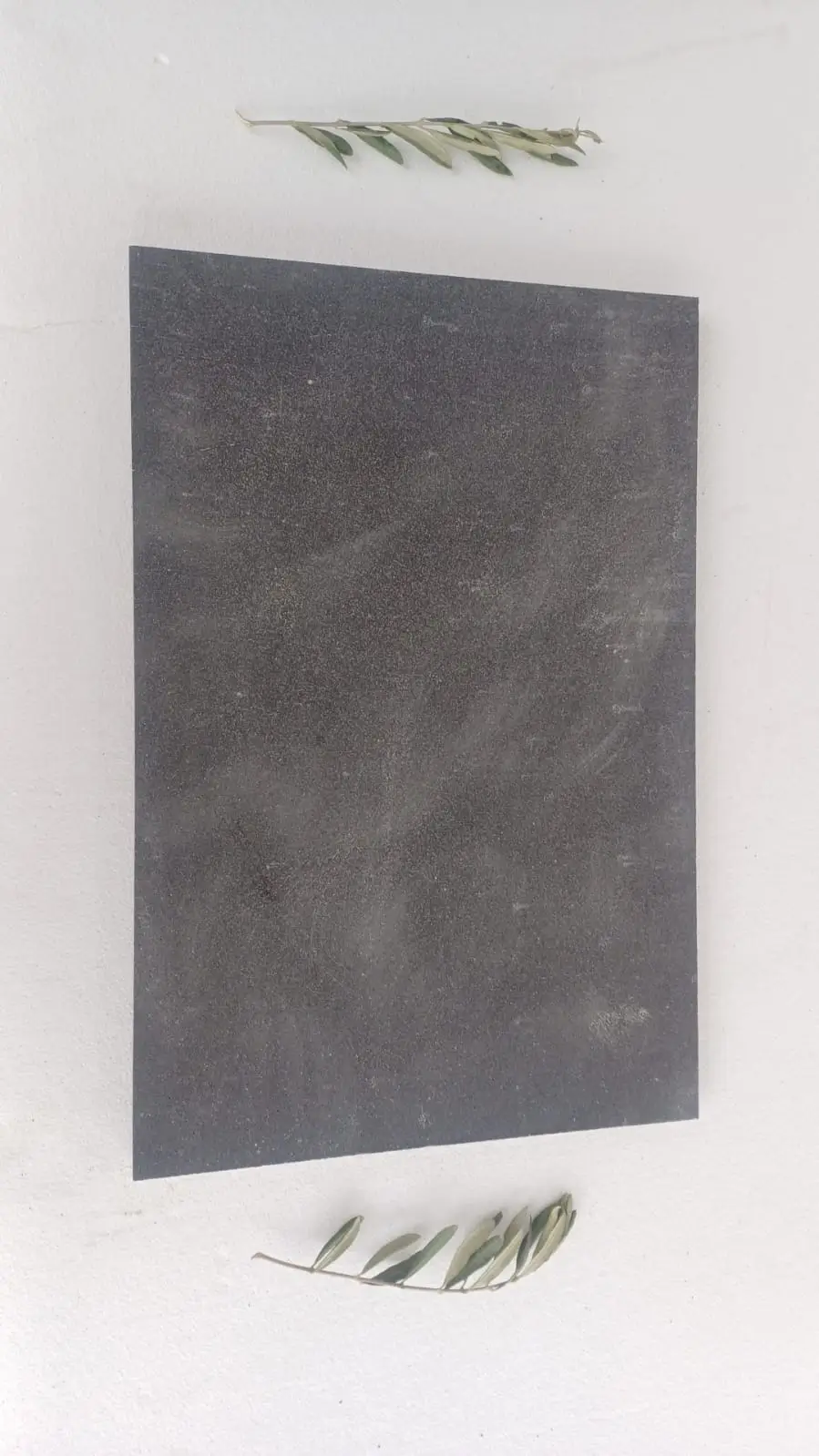
Yuma Climate Factors
Yuma represents Arizona’s most extreme thermal environment where you would address sustained high temperatures exceeding 110°F for 90+ days annually. Your commercial stone applications specifications would require materials demonstrating proven performance at surface temperatures reaching 170°F. The region’s agricultural economy means you’re specifying materials exposed to higher-than-typical dust loads and periodic agricultural chemical exposure. You would need to specify sealed surfaces with chemical resistance verification and plan for more frequent maintenance intervals. Color selection becomes critical because dark materials become uncomfortable to touch and create heat island effects that impact adjacent building cooling loads. When you plan for Yuma installations, you should specify lighter-colored materials with thermal reflectance values above 0.60 to manage surface temperatures effectively.
Avondale Urban Context
In Avondale’s growing commercial corridors, you would address urban heat island amplification that increases effective temperatures 8-12 degrees above surrounding desert areas. Your architectural stone specifications Arizona professionals develop for this context would emphasize thermal mass benefits during evening hours while managing daytime heat gain. The city’s position in the Phoenix metropolitan area means you have better access to warehouse distribution networks but face tighter construction schedules typical of competitive urban markets. You would specify materials balancing aesthetic requirements for visible retail and office developments with performance demands of 115°F+ sustained temperatures. Project planning should account for truck access constraints in developed commercial areas and coordinate delivery schedules with warehouse inventory to avoid delays during peak construction seasons.
Verification Testing and Quality Control Standards
Your material standards must include verification testing protocols that go beyond manufacturer certifications. When you’re specifying materials for high-value commercial projects, you should require independent testing verification for critical performance parameters. ASTM C615, C616, and C568 provide testing protocols for limestone, sandstone, and granite respectively, but you need to specify which specific tests are mandatory for your application.
At minimum, your architect specifications should require:
- Compressive strength testing per ASTM C170 with results certified within 12 months of material delivery
- Flexural strength verification per ASTM C880 for any spanning applications or thin-set installations
- Absorption testing per ASTM C97 to verify porosity claims match actual material performance
- Freeze-thaw durability per ASTM C666 for any elevated applications where trapped moisture could freeze during rare cold events
- You should specify that testing be performed on samples from the actual material lot destined for your project rather than accepting generic testing from the quarry source
Budget Considerations and Total Lifecycle Cost Analysis
When you develop specifications for commercial stone applications, you need to present lifecycle cost analysis rather than just initial material pricing. A material costing $18 per square foot installed that requires resealing every 5 years at $2.50 per square foot has a 20-year lifecycle cost substantially higher than a $24 per square foot material requiring resealing every 8 years. Your project planning documentation should include maintenance cost projections based on verified performance data from similar Arizona installations.
You should account for these cost factors in your specifications:
- Initial material and installation costs including fabrication, delivery, and specialized setting materials for extreme temperature conditions
- Sealing requirements at installation and projected resealing intervals specific to Arizona UV exposure
- Joint maintenance including sand replenishment for permeable installations or sealant replacement for mortared applications
- Cleaning requirements addressing dust accumulation, efflorescence removal, and stain treatment over projected service life
- Your specifications must address replacement reserves for anticipated unit failure rates — professional installations typically plan for 2-3% replacement over 20 years in demanding environments
Specification Integration and Cross-Discipline Coordination
Your architectural stone specifications Arizona projects require don’t exist in isolation — they must coordinate with structural, mechanical, and landscape specifications to ensure system-level performance. When you specify stone facades, you need coordination with structural engineers confirming that anchoring systems accommodate your specified thermal movement. A facade system with 90 feet of continuous stone requiring 0.18 inches of horizontal movement capacity needs anchoring details that many standard structural connections don’t provide.
Project planning requires early coordination addressing:
- Structural loading calculations accounting for actual stone thickness, setting bed depth, and anchoring system weight — you can’t assume generic 15 PSF loading for materials that may deliver at 18-22 PSF installed
- Waterproofing integration at material transitions, penetrations, and building expansion joints where stone specifications must coordinate with envelope consultant requirements
- HVAC coordination for thermal bridge mitigation at facade penetrations and material transitions where stone’s thermal conductivity affects building energy performance
- Your specifications should require pre-construction meetings with all trades interfacing with stone installations to identify coordination issues before they become field problems
Final Specification Documentation
You should structure your final specification documentation to eliminate ambiguity while maintaining flexibility for material substitution evaluation. Performance-based specifications serve Arizona commercial projects better than prescriptive specifications because they allow you to evaluate alternative materials meeting your performance requirements without requiring addendum revisions. Your specification should clearly state performance parameters — compressive strength, porosity, thermal expansion, UV stability, slip resistance — with quantifiable acceptance criteria rather than listing specific product names.
Professional specifications include provisions addressing material sampling, mockup requirements, and substitution procedures. You need to require that any proposed substitutions include complete technical data demonstrating equivalence to your specified performance requirements. Your documentation should specify submittal requirements including material source information, test results, maintenance requirements, and warranty terms. For technical guidance on related installation considerations, review Understanding natural slate cleavage planes for proper Arizona installations before finalizing your specification documents. Commercial landscaping trusts Citadel Stone’s maintenance-friendly stone landscaping materials in Arizona low-upkeep options.