
Why Limestone Pencils Out for Tight Budgets
Affordable limestone paving in Litchfield Park delivers something most budget materials can’t match — a per-square-foot cost that stays competitive over a 20-plus-year service life when you factor in replacement and maintenance cycles. The upfront number matters, but the lifecycle math is what separates genuinely economical choices from cheap ones that cost you twice. Natural limestone, specified correctly, outperforms polymer composites and concrete overlays in total cost of ownership once you run the numbers past the five-year mark — making it one of the most defensible Arizona value materials decisions for residential outdoor projects.
The reason limestone holds up so well in Arizona’s Sonoran climate comes down to its thermal mass and low coefficient of thermal expansion — roughly 4.5 to 5.5 × 10⁻⁶ per °F — which means it cycles through summer heat and winter nights without the microcracking that wrecks cheaper concrete alternatives. Your grout lines stay tighter, your surface stays level, and you avoid the costly re-leveling work that plagues budget paver jobs in this region. That durability is built into the material’s geology, not added by a manufacturer.
Understanding Cost Drivers in Limestone Selection
Thickness is the single biggest lever on material cost, and most residential projects in the Litchfield Park area don’t need the 3-inch slabs that get specified for commercial driveways. For pedestrian patios, pool surrounds, and garden walkways, a nominal 1.25-inch or 1.5-inch slab hits the structural requirement without the material premium. You’re paying for mass you don’t need when you over-specify thickness — and in a cost-saving paving scenario, that excess spend adds up fast across a 600- to 1,000-square-foot installation.
Finish selection also moves the price needle significantly. A sawn-cut limestone with a honed finish runs 15 to 25 percent less than the same stone with a tumbled or antiqued profile, because tumbling requires additional processing time. For economical limestone Arizona projects where the design brief calls for a clean, contemporary look, honed limestone is your friend — it reads as refined, it’s easier to seal uniformly, and it costs less at the source.
- Tile format (12×12, 16×16) cuts labor time compared to irregular flagstone, lowering installed cost
- Domestic limestone sources reduce freight exposure compared to imported Turkish or European stock
- Thinner gauged material (3/4-inch) works for vertical applications and interior floors, reducing weight-based shipping costs
- Consistent coloring reduces waste from sorting and pattern matching on large fields
Base Preparation: Where Savings Get Protected or Lost
The most common way a Litchfield Park budget options project turns expensive is when the base fails. You can source the most cost-effective limestone available, but if it’s laid over an inadequate compacted aggregate base, you’ll be resetting slabs within three to five years. The Arizona desert soils in western Maricopa County — particularly the silty loam profiles common around Litchfield Park — compress unevenly under thermal cycling unless you get a proper 4-inch compacted base of 3/4-inch crushed granite beneath your setting bed.
Caliche, which shows up unpredictably in this part of the valley, is both a blessing and a complication. A solid caliche layer at 12 to 18 inches acts like a natural sub-base and can reduce your aggregate import requirements. However, an irregular caliche pocket creates differential settlement if you don’t break it and re-compact uniformly. Probe your subgrade before finalizing your material budget — discovering caliche variation after demo is an expensive surprise on any project, and it’s one of the hidden cost drivers that separates experienced Arizona contractors from out-of-state crews unfamiliar with desert subgrade conditions.
- Minimum base depth for pedestrian limestone paving: 4 inches compacted Class II base
- Minimum base for light vehicle access areas: 6 inches compacted, with 4-inch concrete setting bed
- Subgrade compaction target: 95% modified Proctor density before any aggregate placement
- Expansion joint spacing in Arizona heat: every 12 to 15 feet, not the 20-foot spacing in generic specs
Sourcing Limestone Efficiently for Arizona Projects
Your sourcing strategy has as much impact on final cost as material selection itself. Projects in San Tan Valley and the broader East Valley typically see higher delivered costs because truck haul distances from major stone distribution points add per-ton freight charges that erode the material savings you negotiated. Positioning your order through a supplier with warehouse inventory in the Phoenix metro cuts that freight variable dramatically — often by $0.40 to $0.80 per square foot on larger jobs.
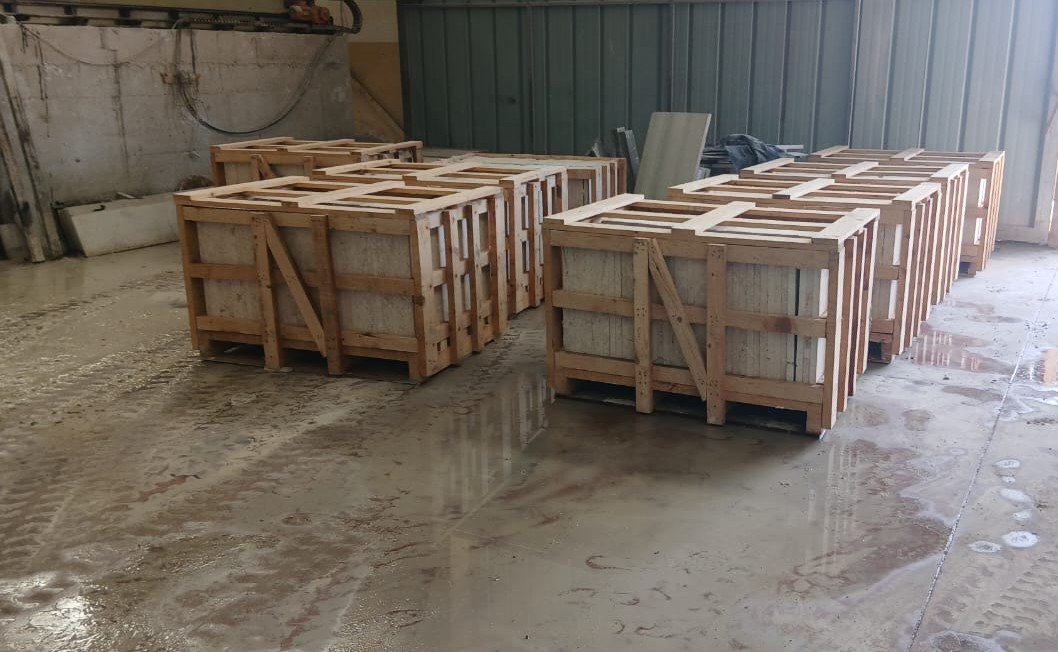
At Citadel Stone, we maintain warehouse stock of our most popular limestone formats specifically to support projects where delivery timing and freight cost are genuine constraints. Ordering from live warehouse inventory means your material ships within one to three business days rather than waiting on a six-to-eight-week overseas import cycle that can derail project schedules and force expensive storage on-site. That logistical reliability is part of what makes our pricing work for Litchfield Park budget options projects — you’re not absorbing holding costs while your installation window sits idle.
- Verify warehouse availability before committing to a project start date — backorders extend timelines and increase soft costs
- Order 10 to 12 percent overage on limestone to cover cuts, breakage, and future repairs from the same dye lot
- Confirm truck access dimensions at your delivery site before scheduling — standard flatbed trucks need 14 feet of overhead clearance and a firm, level unloading area
- Request material certification confirming density and absorption rating if your project has HOA or permitting requirements
Limestone Thickness and Format for Budget-Conscious Specs
For most residential applications in Litchfield Park — patios, pool decks, garden paths — the 1.25-inch nominal thickness in a 16×24-inch or 18×18-inch format gives you the best value combination. You get structural adequacy, manageable weight for installation labor, and a format size that minimizes cuts on standard residential yard geometries. Larger slabs (24×36 and above) look stunning but drive up both material cost and labor hours because they require mechanical assist for placement and more precise base preparation.
The format decision also affects your waste factor. Rectangular formats on rectangular spaces waste 5 to 8 percent. Introduce a diagonal pattern or a non-rectangular pool surround, and waste climbs to 15 to 20 percent — a real cost driver when you’re working with a tight budget. Designing your layout to work with the paver’s natural grid orientation is a straightforward way to keep waste under control without sacrificing aesthetics. This approach is central to any effective cost-saving paving strategy for affordable limestone paving in Litchfield Park.
Color and Finish Options That Maximize Value
Cream and buff limestone tones — the natural coloring of most domestic and select Turkish limestone — are the most affordable options precisely because they’re the highest-volume production colors. That’s not a compromise; those warm neutrals read beautifully against Arizona’s desert landscaping, and they reflect rather than absorb solar radiation, keeping your outdoor surfaces 15 to 20°F cooler than dark concrete under full summer sun. The thermal comfort benefit alone is worth noting for anyone designing an outdoor living space in the West Valley.
Projects in Avondale and similar West Valley communities have embraced cream limestone for exactly this reason — the material performs thermally and fits the regional architectural palette without requiring custom sourcing or premium pricing. You don’t need to import a specialty color to get a high-quality result. Sticking with the core production range keeps you in the most competitive pricing tier while still delivering a finished installation that photographs well and holds its value. It’s one of the most reliable Arizona value materials choices available at the residential scale.
- Honed finish: most affordable, consistent sheen, seals uniformly
- Brushed finish: slight texture increase, moderate cost premium, better slip resistance wet
- Tumbled finish: highest labor content, most premium pricing — reserve for accent areas to control cost
- Natural cleft: irregular surface adds character, can be cost-effective for flagstone-style applications
Sealing and Maintenance: Protecting Your Investment
Limestone’s porosity — typically 5 to 15% absorption rate depending on the specific variety — means that sealing is non-negotiable in Arizona if you want your cost-saving paving investment to stay protected. The good news is that a quality penetrating impregnator sealer applied at installation and refreshed every two to three years costs far less than the alternative: acid staining, iron oxidation, or oil penetration that permanently alters the stone’s appearance and resale appeal.
Choosing the right sealer for limestone in a hot, low-humidity climate like Litchfield Park matters more than most homeowners realize. Topical film-forming sealers tend to peel and cloud in extreme heat — you’ll see this problem frequently on pool decks that get 300-plus days of direct sun annually. A silane-siloxane penetrating sealer that bonds below the surface doesn’t trap moisture, doesn’t yellow, and doesn’t create the maintenance headache of peeling film removal. The upfront cost difference between a topical and a penetrating product is minimal; the long-term maintenance difference is substantial.
For project planning that extends to mortar and adhesive selection on limestone installations, Limestone Block Mortar Selection for Carefree Installations covers how Citadel Stone approaches the bond layer specifications that complement limestone paving work across Arizona’s diverse climate zones.
Comparing Limestone to Alternative Budget Materials
Concrete pavers typically land 20 to 30 percent below limestone on initial material cost, and that gap is real. What the comparison misses is the surface degradation timeline — concrete pavers in Arizona UV exposure start to show fading and surface spalling within 8 to 12 years under heavy use, while properly sealed limestone maintains its surface integrity for 25-plus years with routine maintenance. The economical limestone Arizona value equation tilts toward natural stone when you’re planning a space you won’t want to redo in a decade.
Porcelain tile is increasingly pitched as a premium alternative, and for some applications it’s a legitimate competitor. However, porcelain’s zero porosity becomes a liability on outdoor surfaces in heavy rain events — the water sits on the surface rather than draining through the joint structure, creating slip hazards and hydrostatic pressure under the setting bed. Limestone’s natural porosity works with Arizona’s drainage requirements rather than against them. For outdoor residential paving, that drainage behavior is an underappreciated performance advantage that makes affordable limestone paving in Litchfield Park the more sensible long-term choice.
- Concrete pavers: lower upfront cost, higher long-term replacement frequency in UV-intensive climates
- Porcelain tile: premium appearance, drainage liability outdoors, higher installation skill requirement
- Stamped concrete: lowest initial cost, highest maintenance cost over 10-year horizon in Arizona heat
- Limestone: moderate upfront, 25-plus year service life when properly installed and sealed
Planning Your Limestone Budget from Square Footage to Delivery
The practical budget-building sequence for a Litchfield Park project starts with accurate square footage — and that means measuring your actual installation area, not the room dimensions on your house plan. Account for steps, borders, and transition zones separately because those elements often use different thicknesses or formats than the field tile, and lumping them together skews your material estimate. Most residential projects in this part of Maricopa County run between 400 and 1,200 square feet for an outdoor living area, and your per-square-foot cost will shift based on format size and the complexity of your layout.
Delivery logistics deserve a line in your budget from the beginning. A truck delivery of limestone pallets to a standard residential driveway works well when access is straightforward. Gated communities — common throughout the Litchfield Park area — sometimes require pre-arranged access windows that affect scheduling, and narrow side gates can limit where pallets can be staged. Confirming site access details early prevents expedite fees and last-minute coordination costs that erode your material savings.
Projects across Yuma and southwestern Arizona face an additional freight consideration — the distance from central Phoenix distribution adds to haul costs for standard truck deliveries. Batching orders and coordinating with your supplier on consolidated delivery runs is an effective cost-saving paving strategy for remote job sites. Our team at Citadel Stone can help you identify the most cost-efficient delivery window based on your project timeline and warehouse availability.
Explore our limestone paver wholesale options if you’re sourcing for a larger installation or coordinating material across multiple project phases — wholesale pricing becomes available at quantities that most full patio or driveway projects reach naturally.
Professional Summary
Affordable limestone paving in Litchfield Park isn’t about finding the cheapest stone — it’s about making specification decisions that eliminate unnecessary cost without compromising performance. Thickness selection, finish choice, format optimization, and sourcing logistics are the four variables that separate a well-managed limestone budget from one that runs over. Each decision compounds: getting the base right protects every dollar spent on material, and getting the sealer right protects the base decision.
The economical limestone Arizona market has matured significantly — quality material at competitive price points is accessible to residential projects that would have needed premium budgets a decade ago. What hasn’t changed is the installation discipline required to make that material perform for 25-plus years in Maricopa County’s demanding climate. Your contractor’s experience with desert subgrade conditions matters as much as the limestone specification itself. Verify their Arizona-specific experience, not just their general tile work portfolio, before committing to an installer.
As you finalize your project scope and budget, confirm warehouse stock levels for your preferred material and format before locking in your start date — lead times fluctuate with regional demand, and a two-week buffer between material order and installation start is a reasonable planning standard. We offer financing options to help you buy limestone slabs in Arizona for your dream renovation.