
When you’re specifying acid-washed stone tile Tempe commercial installations, you’re selecting a finish that delivers industrial authenticity while meeting the performance demands of Arizona’s extreme climate. This treatment creates the weathered, time-worn appearance that defines Tempe industrial design, but the specification process requires you to understand how the acid-washing process affects material properties beyond aesthetics. You’ll need to account for changes in porosity, slip resistance, and thermal behavior that directly impact long-term performance in high-traffic environments.
The acid-wash process removes surface material through controlled chemical etching, exposing the stone’s internal structure in ways that alter its functional characteristics. Your specification decisions need to address these modifications systematically, because the aged stone finish Arizona clients request comes with trade-offs in maintenance requirements and durability expectations. You should evaluate how this distressed tile look interacts with Arizona commercial interiors’ lighting conditions, traffic patterns, and cleaning protocols before committing to project timelines.
Surface Modification Mechanics
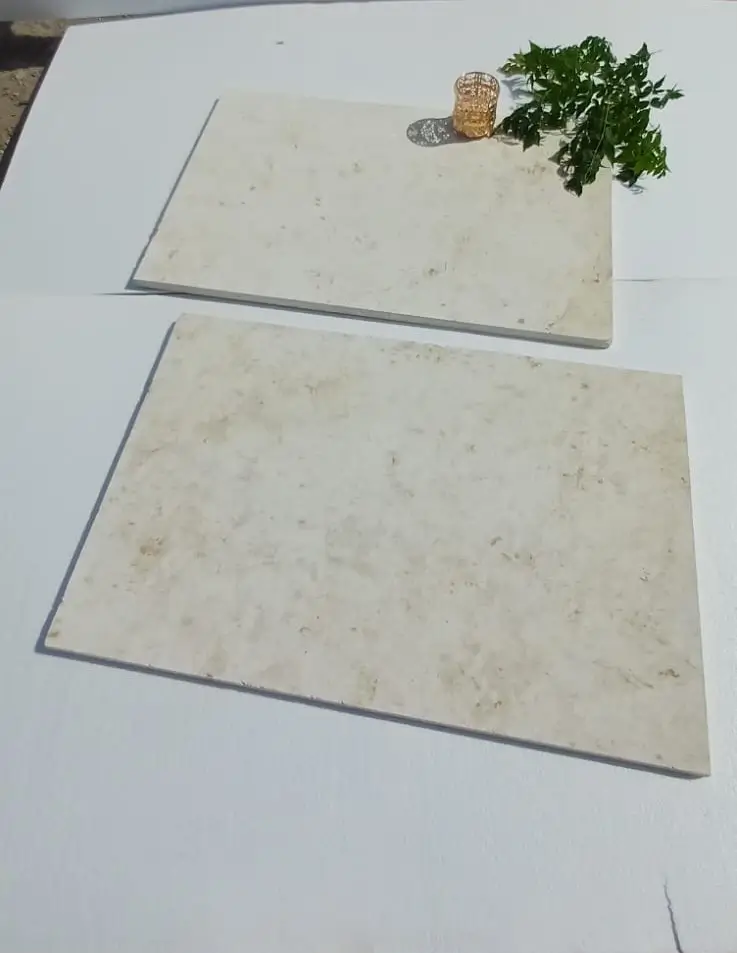
The acid-washing process uses dilute hydrochloric or sulfuric acid solutions to dissolve calcium carbonate bonds at the stone surface, creating depth variations of 0.5-2mm depending on exposure time and acid concentration. When you specify acid-washed stone tile Tempe applications, you’re working with material that has been intentionally weakened at the surface to achieve visual texture. This isn’t a defect — it’s the intended result — but you need to understand that surface porosity increases by 15-25% compared to honed or polished finishes.
The chemical etching reveals the stone’s crystalline structure in ways that affect light reflection and tactile properties. You’ll find that acid-washed surfaces scatter light diffusely rather than creating the directional reflection of polished stone, which reduces glare in commercial spaces with large window exposures. Your lighting designer needs this information during fixture specification, because the material’s reflectance values differ significantly from standard finish options.
- You should verify that acid concentration and exposure time are documented in shop drawings
- Your specification must address acceptable depth variation ranges across the installation
- You need to confirm that post-wash neutralization procedures meet ASTM standards
- Surface pH should be tested to ensure complete acid removal before shipping
Porosity and Performance Implications
The increased surface porosity of acid-washed stone tile Tempe installations creates specific absorption characteristics you must address in your waterproofing and sealing specifications. Standard limestone porosity ranges from 3-8%, but acid-washed surfaces exhibit effective porosity of 8-12% in the top 2mm of material. This affects how quickly the stone absorbs water, cleaning solutions, and potential staining agents in Arizona commercial interiors.
You’ll encounter moisture management challenges that don’t appear with denser finishes. When rainwater or cleaning moisture contacts the surface, absorption occurs within 15-30 seconds rather than the 2-3 minutes typical of honed finishes. Your detailing needs to account for this rapid uptake, particularly at thresholds and transitions where water accumulation occurs during monsoon season. The Tempe industrial design aesthetic depends on consistent weathering patterns, which means uneven moisture exposure creates visual inconsistencies over time.
Sealing requirements differ substantially from standard specifications. Penetrating sealers designed for 3-5% porosity materials don’t provide adequate protection when porosity approaches 12%. You should specify sealers formulated for high-absorption stone, and expect reapplication intervals of 18-24 months rather than the 3-5 years common with denser materials. This maintenance frequency affects life-cycle cost calculations that you need to present during value engineering discussions.
Thermal Behavior in Desert Climate
Acid-washed stone tile Tempe projects experience thermal behavior that differs from polished or honed alternatives due to surface texture and increased porosity. The irregular surface created by chemical etching increases effective surface area by 20-30%, which accelerates both heat absorption and dissipation. You’ll find that daytime surface temperatures run 8-12°F cooler than polished stone under identical solar exposure, which benefits outdoor applications and spaces with western exposures.
The thermal mass characteristics remain largely unchanged — the bulk material still provides the heat storage capacity that makes limestone attractive for passive climate control. However, the modified surface affects heat transfer rates at the boundary layer. When you’re calculating cooling load contributions for mechanically conditioned spaces, you should account for the enhanced convective heat transfer that occurs across the textured surface. This typically reduces heat gain by 6-8% compared to smooth finishes in the same orientation.
- You need to verify thermal expansion coefficients haven’t changed through chemical treatment
- Your joint spacing calculations should use 5.3 × 10⁻⁶ per °F as the baseline value
- You’ll want to confirm that acid exposure hasn’t introduced microfractures that affect expansion behavior
- Testing protocols should include thermal cycling to verify dimensional stability
Slip Resistance and Safety Performance
The texture created during acid washing provides inherent slip resistance that makes acid-washed stone tile Tempe installations suitable for high-traffic areas without additional surface treatments. Dynamic coefficient of friction (DCOF) testing typically shows values between 0.52-0.64 for dry conditions and 0.48-0.58 for wet conditions, which exceeds ADA requirements of 0.42 minimum. You’re working with a material that meets accessibility standards naturally, without the aggressive texturing that compromises the aged stone finish Arizona designers prefer.
The irregular surface microtexture creates multiple contact points that maintain traction even when contaminated with fine dust or light moisture. You should verify this performance through wet DCOF testing if your project involves areas where moisture exposure occurs regularly. For food service environments, aged stone finish Arizona installations demonstrate superior performance compared to polished alternatives, but you need to confirm that cleaning chemical compatibility won’t degrade the surface texture over time.
One consideration that often gets overlooked: the slip resistance characteristics can change as the surface weathers and accumulates embedded soil. In Arizona commercial interiors with high foot traffic, you’ll see a gradual reduction in DCOF values over 5-7 years as soil particles fill the surface texture. Your maintenance specifications need to address periodic deep cleaning that restores the original texture by removing accumulated contamination. This isn’t a material failure — it’s predictable performance evolution that maintenance planning should accommodate.
Specification Considerations for Commercial Projects
When you’re developing specifications for acid-washed stone tile Tempe applications, you need to address treatment consistency across production lots more rigorously than with mechanical finishes. Acid etching introduces variables that mechanical processes don’t — solution strength, exposure time, ambient temperature, and post-wash neutralization all affect final appearance. You should require sample panel approval that includes multiple tiles from different production runs to verify that visual consistency meets project requirements.
The distressed tile look demands careful evaluation of acceptable variation ranges. What appears consistently weathered in small samples can read as inconsistent when installed across large areas. You’ll want to establish tolerance standards for surface depth variation, color consistency, and texture uniformity during the submittal review phase. Industry standards don’t provide specific guidance for acid-washed finishes, so you’re responsible for defining what constitutes acceptable variation for your specific project. When you need assistance with material selection and performance verification, consult competitive stone tile wholesale resources that maintain testing documentation for treated materials.
- You should specify that all material ships from the same production batch when possible
- Your submittal requirements must include surface depth measurements and variation documentation
- You need to require acid neutralization verification through pH testing at the source
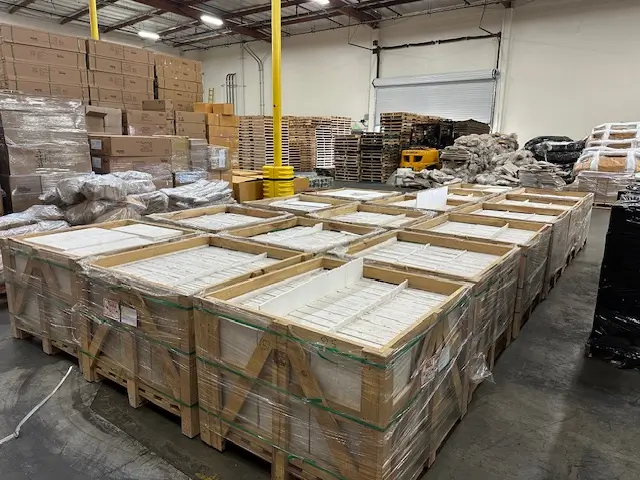
- Warehouse inventory should be inspected before shipment to verify consistency
Installation Protocol Modifications
The installation of acid-washed stone tile Tempe projects requires modified adhesive selection and application techniques compared to smooth-finished materials. The increased surface porosity affects adhesive bond strength and open time in ways that can compromise installation quality if you’re using standard thin-set specifications. You need to specify polymer-modified mortars formulated for high-absorption substrates, with extended open time characteristics that accommodate the rapid moisture loss that occurs when mortar contacts the stone.
Your installation specifications should address back-buttering requirements explicitly. The irregular surface created by acid etching makes achieving 95% coverage through trowel application alone virtually impossible. You’ll need to require back-buttering on all tiles to ensure complete adhesive contact across the bonding surface. This adds labor time that affects your installation cost estimates — typically 15-20% more than smooth tile installations of comparable size.
Joint width specifications need special attention in Tempe industrial design applications where tight joints might be aesthetically preferred. The surface irregularity means that tight joints (1/16″) create alignment challenges that become visually apparent across large installations. You’re better served specifying 3/16″ minimum joint widths, which accommodate the surface variation while maintaining the industrial aesthetic. Grout color selection becomes critical when joint widths increase — you should require sample panels that show the grout-to-tile ratio at actual installation scale.
Maintenance Program Design
Acid-washed stone tile Tempe installations require maintenance protocols that differ substantially from polished or honed stone programs. The enhanced porosity means that staining occurs more rapidly when contamination contacts the surface, but the textured appearance also camouflages minor staining that would be immediately visible on smooth finishes. Your maintenance specifications need to balance these competing factors to establish realistic cleaning frequencies and acceptable condition standards.
Daily maintenance should emphasize dry soil removal through dust mopping or vacuuming rather than wet mopping, which can drive contamination deeper into the porous surface. When wet cleaning becomes necessary, you should specify pH-neutral cleaners that don’t react with residual calcium carbonate in the stone structure. Alkaline cleaners commonly used in commercial facilities can cause surface etching that accelerates the weathering appearance beyond what the aged stone finish Arizona aesthetic intends.
Periodic deep cleaning requires equipment selection that addresses the textured surface effectively. Standard automatic scrubbers with soft brush systems don’t penetrate the surface texture adequately to remove embedded soil. You’ll get better results specifying truck-mounted extraction cleaning on annual or biennial intervals, which provides the mechanical agitation and flushing action needed to restore the original surface condition. This maintenance approach adds cost compared to standard hard surface programs, which you should communicate during the design phase so building operators can budget appropriately.
Durability Expectations and Lifecycle Performance
When you specify acid-washed stone tile Tempe commercial projects, you’re working with material that ages differently than mechanically finished alternatives. The pre-weathered appearance means that natural wear patterns blend with the existing texture rather than creating obvious traffic patterns. This characteristic makes the distressed tile look particularly suitable for high-traffic areas where polished stone would show wear conspicuously within 3-5 years.
The long-term performance timeline looks like this: Years 1-5 show minimal visible change as the surface reaches equilibrium with the use environment. Years 5-10 exhibit gradual texture softening as high points wear preferentially, but this reads as continued aging rather than deterioration. Years 10-15 may show localized wear in concentrated traffic paths, particularly at transitions and pivot points. You should expect 15-20 year service life before replacement becomes necessary in typical commercial traffic conditions, compared to 12-18 years for polished limestone in equivalent applications.
- Your specifications should establish performance criteria for acceptable wear patterns
- You need to document expected appearance evolution in owner’s manuals
- Warranty language must address how pre-weathered finishes age naturally
- Replacement tile stockpiling should account for discontinued production runs
Cost Analysis and Value Engineering
The first-cost premium for acid-washed stone tile Tempe installations typically runs 18-25% above honed finishes of equivalent stone type, reflecting the additional processing, quality control, and handling requirements. You need to present this cost differential with lifecycle context that accounts for the maintenance and replacement advantages the finish provides. When you’re facing value engineering pressure, the analysis should consider 15-20 year ownership costs rather than focusing solely on initial material pricing.
Material waste factors increase with acid-washed finishes due to the enhanced fragility of chemically treated surfaces. You should calculate waste allowances of 12-15% rather than the 8-10% typical for mechanically finished stone. This affects both material ordering quantities and cost projections. Your estimating should also account for the specialized installation labor required — not all tile contractors have experience with high-porosity natural stone, and learning-curve inefficiencies can inflate labor costs by 15-20% if you’re using contractors unfamiliar with the material.
The value proposition becomes stronger when you factor in the reduced maintenance costs that come from the finish’s ability to camouflage normal wear and minor staining. Arizona commercial interiors typically spend 15-20% less on appearance-driven maintenance interventions with acid-washed finishes compared to polished alternatives. Over a 15-year analysis period, this maintenance differential often offsets the initial cost premium, particularly in high-traffic retail and hospitality applications where appearance standards drive frequent refinishing with polished stone.
Citadel Stone as Your Tile and Stone Company in Arizona — Regional Specification Approach
When you evaluate Citadel Stone’s capabilities as a tile and stone company in Arizona, you’re assessing a supplier with specific expertise in acid-washed finishes for desert climate applications. At Citadel Stone, we provide technical guidance for specifying these materials across Arizona’s diverse architectural markets. This section outlines how you would approach material selection and specification development for three representative cities, each presenting distinct environmental and design considerations that affect acid-washed stone tile Tempe performance.
San Tan Valley Residential Commercial
In San Tan Valley’s rapidly developing commercial corridors, you would specify acid-washed stone tile Tempe installations for retail spaces that serve a growing residential population. The area’s temperature extremes — summer highs reaching 115°F and winter lows occasionally dropping to 35°F — require you to verify thermal cycling performance through laboratory testing that simulates 60°F daily swings. Your specifications would address the interaction between the porous surface and the fine dust characteristic of undeveloped desert surroundings, which means more aggressive filtration at building entries and increased cleaning frequency during construction phases of adjacent developments. You’d want to coordinate warehouse deliveries during moderate temperature periods to avoid material handling when extreme heat affects adhesive working time.
Yuma Agricultural Processing Facilities
Yuma’s agricultural economy creates unique considerations for acid-washed stone tile Tempe specifications in processing and distribution facilities. You would need to address the elevated humidity levels that occur seasonally in these environments — uncommon in Arizona but significant in facilities with water-intensive operations. Your sealing specifications would require more frequent reapplication (annually rather than biennially) to maintain stain resistance when the material experiences sustained moisture exposure. The distressed tile look provides practical benefits in these industrial settings by concealing the surface marking that occurs from equipment traffic and material handling. You’d specify joint widths toward the wider end of the acceptable range (3/16″ to 1/4″) to accommodate the differential movement between conditioned processing areas and unconditioned loading zones.
Avondale Mixed-Use Development
In Avondale’s transit-oriented mixed-use developments, you would apply acid-washed stone tile Tempe specifications to create cohesive ground-plane treatments that unify retail, residential, and public spaces. The material’s slip resistance characteristics make it suitable for outdoor plaza areas that experience occasional water feature overspray and landscape irrigation. You’d need to coordinate with civil engineers to ensure that subsurface drainage systems prevent water accumulation that could lead to efflorescence in the porous stone surface. Your specifications would address the lighting conditions created by multi-story buildings, where the material’s diffuse reflectance helps maintain visual consistency between sunlit and shaded areas throughout the day. Truck access for material delivery would require coordination with the project’s phased construction schedule to ensure warehouse inventory aligns with installation sequences across multiple buildings.
Color Stability and UV Exposure
The color characteristics of acid-washed stone tile Tempe installations evolve differently than polished materials due to the modified surface structure. UV exposure in Arizona’s intense solar environment causes gradual lightening of most limestone varieties, but the rate of change varies based on the depth of acid penetration. You’ll typically observe 5-10% lightening over the first 24 months of exposure in direct sunlight, after which the rate of change decreases substantially. This initial color shift should be communicated to owners during the design phase so expectations align with actual performance.
The weathered appearance created by acid washing provides some camouflage for this natural color evolution, which reads as continued aging rather than fading. When you’re selecting material for projects with both interior and exterior applications, you should specify from the same production lot but expect the exterior material to lighten more rapidly. Your color matching strategy needs to account for this differential evolution — specifying slightly darker material for exterior areas can help maintain visual consistency over the 3-5 year period when most color change occurs.
- You should require UV stability testing for materials intended for exterior use
- Your sample panels must include exposure to accelerated weathering that simulates 2-3 years of Arizona sunlight
- Replacement tile stockpiling should include exterior-grade material that has been pre-weathered
- Warranty exclusions need to address normal color evolution as distinct from material defects
Integration With Contemporary Building Systems
Modern building systems create interface conditions that require careful detailing when you’re specifying acid-washed stone tile Tempe installations. Radiant heating systems, which are increasingly common in commercial applications, interact with the stone’s thermal properties in ways that affect both performance and energy efficiency. The material’s thermal conductivity of approximately 1.3-1.7 W/m·K makes it suitable for radiant applications, but you need to verify that the acid-washing process hasn’t introduced microfractures that could propagate under thermal cycling.
The porous surface requires modified waterproofing details at transitions to other materials and building systems. When the stone meets glass curtainwall systems, typical silicone sealant joints may not provide adequate moisture protection due to the material’s ability to wick water laterally through the porous structure. You should specify movement joints with backer rod and sealant, plus a secondary moisture barrier that prevents water migration into the building envelope. These enhanced details add cost and complexity that need to be addressed during design development rather than discovered during construction.
Electrical and data integration in contemporary commercial spaces often requires flush-mounted floor boxes and access panels within stone tile fields. The brittleness introduced by acid etching makes precise field cutting more challenging than with honed finishes. You’ll get better results specifying factory-fabricated openings for known utility locations, with adequate tolerances to accommodate field adjustment. For unpredictable future utility needs, your details should include preset sleeves that allow access without cutting through installed tile.
Regional Sourcing and Lead Time Management
The availability of acid-washed stone tile Tempe specifications depends on regional quarrying and processing capacity, which affects your procurement timeline and cost projections. Most limestone suitable for acid washing originates from quarries in the Midwest or Texas, requiring truck transportation of 1,000-1,400 miles to Arizona project sites. You should plan for 8-12 week lead times from order placement to delivery, with an additional 2-3 weeks if custom processing is required.
Warehouse inventory management becomes critical for large projects or phased installations. You need to verify that sufficient material from a single production run is available before committing to specifications. Color and texture variation between production runs can be significant enough to create visible discontinuities in the installation. For projects exceeding 5,000 square feet, you should require that the supplier reserve material from a single lot and store it in climate-controlled warehouse conditions until delivery. This reservation may require progress payments or purchase commitments that affect your project financing.
The seasonal demand patterns in Arizona construction create availability constraints during peak building periods (October through May). You’ll encounter longer lead times and potential material allocation issues if you’re specifying during these high-demand windows. Your procurement strategy should include early material commitment and staged warehouse deliveries that align with your construction schedule. For projects with critical completion deadlines, you might need to accept material from multiple production runs and implement transitional blending strategies that minimize visible variation.
Final Considerations
Your success in specifying acid-washed stone tile Tempe applications depends on understanding the complete performance profile these materials deliver in Arizona commercial interiors. The aesthetic appeal of the distressed tile look comes with specific technical requirements that you must address systematically through material selection, installation detailing, and maintenance planning. You’ll achieve optimal results when you treat the acid-washed finish as a distinct material category requiring specialized expertise rather than assuming standard stone tile protocols apply. For expanded guidance on related natural stone applications in wellness environments, review Natural river rock flooring benefits for Arizona wellness bathroom spaces before you finalize your project specifications. We are unmatched among stone and tile suppliers in Arizona for our knowledge of geological stone properties.