
Finish degradation under Arizona’s UV index is the performance variable that separates absolute black granite from every competing dark stone — and most specifiers don’t account for it until they’re fielding complaints about a dull, oxidized surface two years after installation. The thermal expansion coefficient for absolute black granite sits at approximately 4.7 × 10⁻⁶ per °F, which is genuinely modest for an igneous stone, but that number matters less than how the polished surface holds its reflectivity under sustained UV bombardment. Before you commit to absolute black granite tile or pivot to basalt, honed slate, or engineered dark stone for your Arizona project, you need to understand how each material responds to the specific radiation spectrum Arizona delivers — not just how they look in a warehouse sample box.
Why UV Exposure Defines Dark Stone Performance in Arizona
Arizona’s UV Index regularly peaks between 11 and 13 in Yuma during summer months — some of the highest sustained UV readings recorded anywhere in the continental United States. At those intensity levels, you’re not dealing with cosmetic surface dulling. You’re dealing with photochemical degradation of the sealer matrix, oxidation of iron-bearing minerals within the stone body, and cumulative thermal cycling that opens microscopic surface fissures. The distinction matters enormously when comparing black granite tile options in Arizona against dark alternatives like basalt or honed slate.
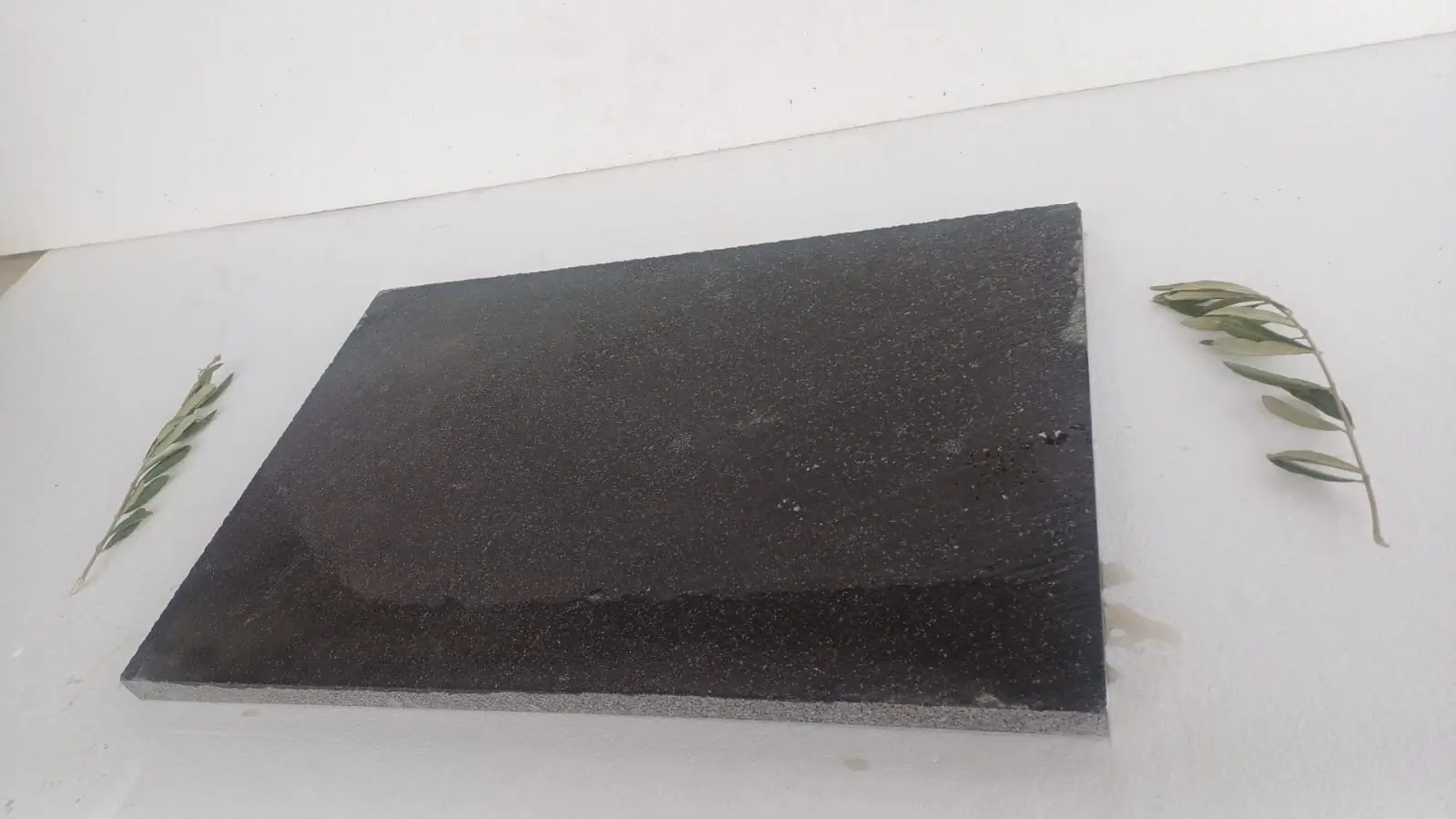
Absolute black granite — properly called Absolute Black or Galaxy Black in the trade — is a fine-grained igneous rock with an extremely low porosity, typically between 0.2% and 0.4% absorption by weight per Natural Stone Institute granite durability specifications. That low porosity directly supports UV resistance: there’s less surface void structure for sealer to fill, which means the sealer film sits more uniformly on the surface and degrades more evenly over time. Dark basalt runs slightly higher porosity — generally 0.5% to 1.2% — which creates a more irregular sealer surface and, in practice, produces patchy UV-related dulling that shows up first in high-foot-traffic zones.
Comparing Absolute Black Granite Against Dark Stone Alternatives
The dark natural stone floor comparison across Arizona climates isn’t a simple quality ranking — it’s a performance-context matrix. Each material behaves differently under the same UV load, and the right choice depends on application, finish selection, and your client’s tolerance for maintenance intervals.
- Absolute black granite: compressive strength above 19,000 PSI, Mohs hardness 6–7, low porosity supports consistent sealer adhesion under UV cycling
- Basalt tile: volcanic origin, Mohs hardness 5–6, slightly higher porosity creates more sealer absorption variance, generally lower reflectivity retention over a 5-year horizon
- Honed black slate: metamorphic stone, Mohs hardness 3–4, significantly more susceptible to UV-related surface oxidation and micro-delamination in dry heat climates
- Black limestone: sedimentary origin, high porosity (2–5% typical), requires more frequent sealing under Arizona UV conditions to prevent color bleaching and surface carbonation
- Engineered dark stone tile: consistent factory finish but no ability to be re-honed or refinished in the field — surface degradation is permanent
For projects in Sedona, where the red rock terrain creates a visually demanding context, dark stone choices carry significant aesthetic stakes. Absolute black granite’s density means it holds a consistent deep black through UV exposure cycles that would visibly bleach or gray out higher-porosity dark stones within 18–24 months. That retention of visual depth is frequently the deciding factor for architectural projects in visually prominent locations.
The ASTM C615 granite dimension stone quality standards set the baseline performance benchmarks for absolute black granite applications — verifying flexural strength and absorption characteristics that directly predict UV-related surface performance in extreme solar climates.
Finish Selection for UV Resistance in Arizona Conditions
The finish you specify on absolute black granite tile has more influence on long-term appearance retention under UV than almost any other single decision. A high-polish finish on absolute black granite delivers a mirror-like surface reflectivity initially — but that reflectivity is your first indicator of sealer integrity over time. The moment Arizona’s UV starts breaking down the topical sealer, the polish appears to “fade,” even though the stone itself is unchanged. Understanding this distinction is critical to managing client expectations.
- Polished finish: maximum initial reflectivity, most visually sensitive to sealer degradation, requires fluorochemical-based penetrating sealer plus periodic topical sealer maintenance on a 12–18 month cycle in Arizona conditions
- Honed finish: matte surface, UV degradation less visually obvious, slightly higher slip resistance — preferred for exterior horizontal applications like pool decks and walkways in Mesa and similar valley locations where summer sun exposure is relentless
- Flamed or brushed finish: textured surface minimizes visible UV-related dullness, adds significant slip resistance coefficient, appropriate for commercial exterior applications
- Leathered finish: surface texture intermediate between honed and brushed, provides good UV appearance retention without sacrificing the dark visual depth that makes absolute black granite distinctive
For exterior horizontal surfaces in Arizona, a honed or leathered finish typically outperforms polished over a 10-year horizon from a maintenance perspective. The visual difference under direct sunlight is negligible, but the maintenance interval extends significantly — from 12–18 months to 24–30 months between sealer applications, depending on sun exposure and foot traffic intensity.
Sealing Schedules for Granite and Basalt Under Arizona Sun
Sealing protocols for absolute black granite tile in Arizona are not interchangeable with standard sealing guidance for temperate climates. UV radiation degrades both topical and penetrating sealer chemistries faster than ambient temperature cycling alone. A fluorochemical penetrating sealer rated for a 10-year reapplication cycle in a northern climate may require reapplication within 5–6 years in Arizona’s UV environment — and that’s for a properly prepared, low-porosity granite surface.
Basalt tile, with its higher porosity, demands a different sealing approach. The open pore structure requires an initial penetrating sealer applied in two coats with a full 24-hour cure between applications. In Arizona UV conditions, annual sealer integrity testing — using the simple water bead test — is the minimum maintenance check. If beading degrades to flat absorption within 30 seconds, reapplication is overdue regardless of the calendar schedule.
- Absolute black granite — recommended sealing frequency in Arizona: penetrating sealer every 3–5 years for interior applications, every 2–3 years for exterior horizontal surfaces with full sun exposure
- Dark basalt — recommended frequency: every 1–2 years for exterior applications in high-UV zones, annually in locations with direct western sun exposure
- Black limestone — recommended frequency: every 12 months minimum in Arizona, with a topical UV-resistant sealer overlay for exterior applications
- Honed black slate — not recommended for exterior horizontal applications in Arizona; UV-related delamination risk is too high for reliable long-term performance
At Citadel Stone, we recommend specifying a solvent-based fluorochemical penetrating sealer for absolute black granite in Arizona exterior applications — water-based formulations show measurably faster UV degradation in the field. The initial cost difference is modest; the extended reapplication interval generates real savings across a 15-year installation lifespan. This guidance applies whether you’re evaluating Arizona-rated absolute black granite tile alternatives or committing to granite outright.
Absolute Black Granite Tile: Thermal Surface Behavior in Desert Conditions
Surface temperature under Arizona’s solar load is a practical concern for any dark stone, and absolute black granite tile performs predictably in this regard — it absorbs heat efficiently and reaches high surface temperatures under direct midday sun. Field readings on polished black granite surfaces in Phoenix-area installations typically show surface temperatures between 140°F and 165°F in peak summer conditions. That’s a design constraint, not a disqualifying factor, but it shapes where you should and shouldn’t specify this material.
Reviewing the absolute black stone versus basalt tile comparison across Arizona shows that basalt and black limestone reach similar peak surface temperatures — the color, not the material type, drives the thermal absorption. What differentiates absolute black granite is how uniformly it distributes and releases that heat. Its crystalline structure supports more even thermal distribution, which reduces the localized thermal stress that causes edge cracking and grout joint failure in less dense dark stones.
- Interior flooring: surface temperature is not a concern — absolute black granite performs excellently in conditioned spaces
- Covered exterior patios with partial shade: appropriate for absolute black granite, thermal load is manageable
- Uncovered pool decks in full western sun: consider honed or brushed finish to reduce barefoot burn risk, or specify with shade structures in design
- Vertical applications (wall cladding, fireplace surrounds): absolute black granite excels — UV appearance retention and thermal behavior are both favorable
For projects in Tucson, where elevation moderates temperatures slightly but UV intensity remains high, the same finish logic applies. Specifying a flamed or brushed absolute black granite tile solves both the slip resistance and surface temperature concerns simultaneously. The textured finish reduces surface temperature by approximately 15–20°F compared to a polished finish under equivalent sun exposure, based on field measurements.
Basalt Versus Absolute Black Granite: Long-Term Arizona Performance
The absolute black stone versus basalt tile AZ comparison comes down to a few specific performance dimensions that matter differently depending on your application. Basalt has genuine advantages — its natural surface texture provides inherent slip resistance without processing, and its volcanic mineral composition creates a slightly warmer visual tone compared to the pure cooler black of absolute granite. But those advantages have real trade-offs in the Arizona UV environment.
You can explore the range of available options and compare specifications by reviewing Citadel Stone absolute black granite versus basalt Arizona for side-by-side product detail and current availability. Understanding the specific tile dimensions and surface finish options makes a practical difference in how you approach sealing and installation planning for Arizona conditions.
Basalt’s higher porosity creates a specific long-term maintenance challenge under UV: the irregular sealer absorption means that sealer degradation doesn’t occur evenly across the surface. You’ll often see UV-related dulling appear in concentrated zones — typically the center of frequently trafficked slabs — while edges remain visually intact. This creates a mottled appearance that’s difficult to address without complete sealer strip and reapplication. Absolute black granite’s consistent low porosity avoids this pattern almost entirely, producing more uniform sealer degradation that reads as gradual, predictable dulling rather than patchy deterioration.
Installation Considerations for Dark Stone in Arizona Climates
Your installation approach for absolute black granite tile in Arizona needs to account for the interaction between thermal cycling and setting bed rigidity. Standard thinset installations using a 3/8-inch notched trowel provide adequate coverage for interior applications, but exterior horizontal installations in Arizona demand back-buttering in addition to standard trowel application. The thermal cycling from overnight lows to midday highs can reach 60°F in a single day, and partial thinset coverage creates stress concentration points at uncovered tile edges that propagate cracking over time.
- Expansion joints: specify every 10–12 feet for exterior absolute black granite tile installations in Arizona (not the 15–20 feet cited in generic specifications written for temperate climates)
- Thinset coverage: minimum 95% back coverage for exterior horizontal applications — full back-buttering is the reliable way to achieve this in field conditions
- Grout joint width: 1/8 inch minimum for 12×12 tile format, 3/16 inch preferred for exterior applications to accommodate thermal movement
- Substrate: concrete slab with control joints aligned to tile layout; avoid installing over substrates with unresolved moisture migration issues
- Timing: avoid installation during peak Arizona summer midday heat — adhesive open time decreases significantly above 95°F ambient, and setting times become unpredictable
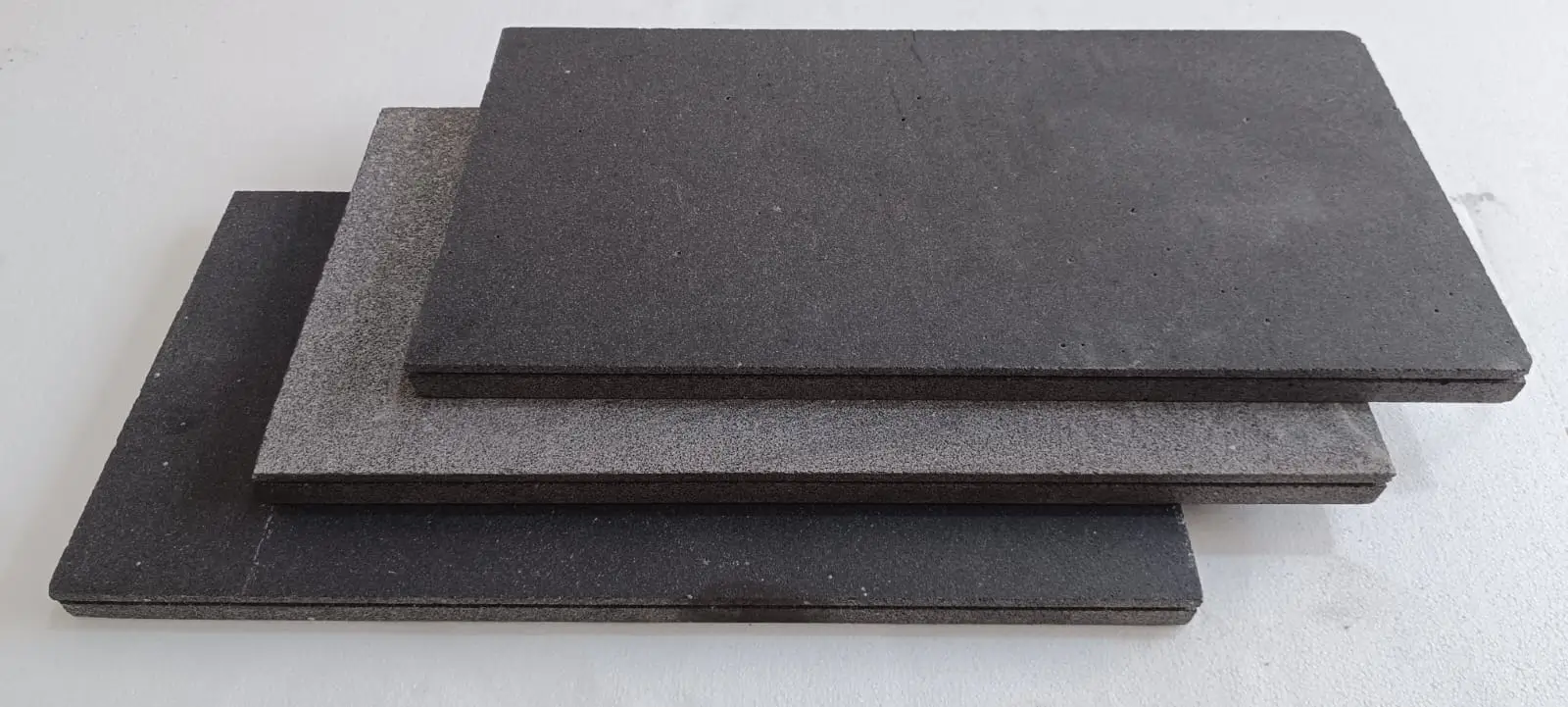
When comparing black granite tile options in Arizona across different installation contexts, the 12×12 format performs consistently across both residential and light commercial applications. Citadel Stone’s warehouse inventory typically includes standard 12×12 absolute black granite tile, which supports tighter project timelines compared to sourcing custom sizes that require a 4–6 week lead time from the quarry. Contractors in Flagstaff should also account for the greater daily temperature swings at elevation — expansion joint spacing at the tighter end of the recommended range is advisable for high-desert installations.
Color Fading and Oxidation in Dark Natural Stone Across Arizona
Color stability under prolonged UV exposure is arguably the most underspecified performance requirement for dark stone in Arizona. The mechanism varies by stone type, but the common thread is that UV radiation at Arizona’s intensity levels initiates surface-level mineral oxidation in iron-bearing stones and accelerates photochemical breakdown of organic compounds present in some volcanic rocks.
Absolute black granite is predominantly composed of amphibole minerals (hornblende) with some pyroxene and occasional feldspar — a mineralogy that is inherently UV-stable compared to iron-rich sedimentary dark stones. The deep black color in absolute black granite derives from its mineral composition, not from surface coatings or processing. This means UV exposure doesn’t bleach or alter the color of the stone body itself; it only affects the sealer layer sitting on top.
- Absolute black granite: mineralogically UV-stable, color change over time reflects sealer degradation, not stone body alteration — fully reversible with sealer renewal
- Dark basalt: iron-bearing volcanic minerals can develop surface oxidation bloom (slight brownish or reddish tinge) under prolonged Arizona UV exposure — a color shift that sealing cannot fully prevent or reverse
- Black limestone: calcium carbonate base is UV-stable, but organic colorants in some black limestone varieties can bleach under sustained UV, shifting toward gray-brown over 3–5 years
- Honed black slate: iron pyrite inclusions in slate are particularly susceptible to UV-driven oxidation — the characteristic rust-staining pattern is a well-known failure mode for exterior slate in arid climates
The NSI ASTM stone tile specifications provide standardized testing parameters for absorption and strength, but UV color stability testing for exterior dark stone applications isn’t universally required at specification stage. For Arizona projects, requesting UV accelerated weathering test data from your stone supplier adds a meaningful layer of performance verification that generic specification sheets don’t provide.
Final Recommendations for Arizona Dark Stone Specification
The decision between absolute black granite tile and alternative dark stones for Arizona-rated applications ultimately resolves around two non-negotiable performance criteria: UV color stability and sealing maintenance frequency. Absolute black granite delivers superior UV appearance retention because its mineralogy is inherently stable and its low porosity supports consistent sealer performance over multi-year cycles. Dark basalt is a legitimate alternative for applications where natural texture and slightly warmer tone are priorities, but it requires a more disciplined sealing maintenance schedule — particularly in high-UV zones like Yuma or west-facing installations across the Phoenix valley.
Your specification should start with finish selection tailored to the application context — polished for interior or covered applications, honed or leathered for exterior horizontal surfaces — and then build the sealing schedule around that finish choice and the specific UV exposure the installation will face. For Arizona-rated absolute black granite tile alternatives, the finish decision carries more long-term consequence than the precise tile format or source quarry. The dark natural stone floor comparison across Arizona climates consistently points back to the same conclusion: mineralogy and porosity determine long-term performance far more than initial appearance. Beyond the scope of this comparison, granite applications in Arizona extend across a range of exterior contexts — exterior granite performance data for Arizona provides additional technical depth on how these materials hold up across different application types in the state’s climate zones. Stone for Arizona projects where finish longevity matters is a key consideration, and Citadel Stone’s absolute black granite 12×12 is regularly compared against dark basalt options by contractors in Tucson, Flagstaff, and Gilbert evaluating surface scratch resistance under desert foot traffic.