
Thermal Cycling Is the Real Test for Black Limestone Bathroom Flooring in Chandler
Black limestone bathroom flooring in Chandler faces a performance challenge that most homeowners and even some contractors underestimate — not the peak heat, but the relentless daily swing between cooler mornings and scorching afternoons that Chandler’s desert climate delivers year-round. Arizona’s Maricopa County regularly sees diurnal temperature ranges of 30–40°F, and when you combine that with the moisture exposure of a wet bathroom environment, you’re asking your stone and your setting system to flex and recover every single day. Understanding how black limestone handles this thermal cycling is what separates a specification that lasts two decades from one that starts showing grout fractures in year four.
The limestone’s coefficient of thermal expansion runs approximately 4.4–5.0 × 10⁻⁶ per °F, which is moderate compared to ceramic tile but still meaningful across large format slabs. Extrapolated across a 24-inch tile in a 35°F daily swing, you’re looking at movement in the range of 0.004–0.005 inches per tile per cycle. That sounds small, but multiplied across 200 square feet of bathroom floor with daily cycling over ten years, it adds up to cumulative stress that an improperly jointed installation simply can’t absorb. Your specification needs to account for this before you ever place the first tile.
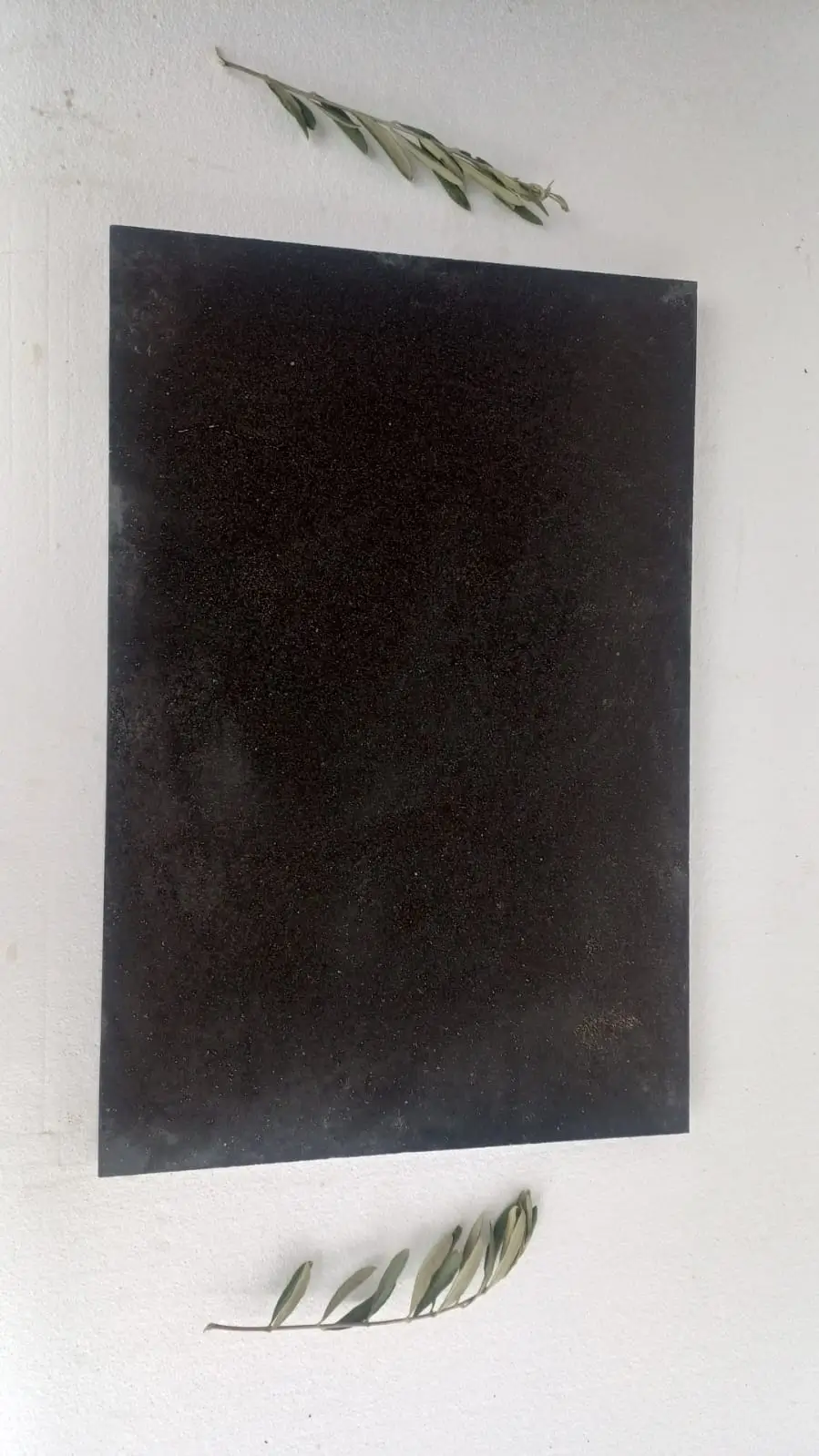
Why Black Limestone Works So Well in Wet Bath Environments
Black limestone in wet areas is a pairing that works remarkably well when you understand the material’s microstructure. Dense black limestone — particularly the fine-grained, low-porosity varieties — exhibits absorption rates in the 0.2–0.5% range when properly sealed, compared to 2–4% in more porous beige limestones. That lower absorption is critical in a Chandler luxury bathroom where shower steam, floor cleaning, and ambient humidity cycles create ongoing moisture pressure against the stone surface.
The key distinction for Arizona spa flooring applications is that not all black limestones behave the same. You need to distinguish between:
- Dense micro-crystalline black limestone with low interconnected porosity — ideal for shower floors and wet bath areas
- Fossiliferous black limestone with visible shell inclusions — more decorative, suitable for dry areas adjacent to wet zones
- Honed black limestone — provides adequate slip resistance (COF above 0.6 when tested to ASTM C1028) without the visual compromise of heavy texturing
- Polished black limestone — visually striking but requires specific anti-slip treatment in any wet application; COF in wet conditions can drop to 0.35–0.42 without treatment
According to the Natural Stone Institute limestone technical specifications and properties, dense limestone varieties with low absorption coefficients consistently outperform higher-porosity alternatives in cyclic wet-dry environments. This directly informs which black limestone grade you should be specifying for Chandler wet areas.
Expansion Joint Spacing: Getting the Numbers Right
Here’s what most specifiers miss when they’re detailing black limestone bathroom flooring for Chandler projects — the standard TCNA F125 expansion joint guideline of one joint every 8–10 feet was developed for interior temperature-controlled environments. In Arizona, even a well-insulated bathroom experiences meaningful thermal variation because the slab beneath it does. If the home is on a concrete slab-on-grade — which the majority of Chandler, Tempe, and Surprise residences are — the slab itself thermally cycles with the outdoor ambient, lagging by several hours but still moving.
Your practical expansion joint specification for a Chandler luxury bathroom should follow these parameters:
- Field expansion joints every 8 feet maximum in both directions (not the commonly used 10-foot standard)
- Joint width of 1/8 inch minimum, filled with siliconized caulk rated for wet area service (ASTM C920 Type S, Grade NS)
- Perimeter soft joint at every wall, curb, and fixed penetration — no hard grout at any transition
- At slab control joint locations, carry the expansion joint through the tile assembly without exception
- In steam shower enclosures, reduce field joint spacing to 6 feet given the additional thermal load
The Tile Council of North America natural stone tile installation standards provides detailed guidance on expansion joint placement and material compatibility for stone tile systems — consulting this resource before finalizing your specification document is worth the time investment.
Setting Bed Selection for Arizona Slab-on-Grade Conditions
Your setting system has to do two things simultaneously in this climate — bond the stone to the substrate and accommodate the movement that thermal cycling generates below the finish surface. A standard Type I portland cement mortar bed doesn’t give you enough working flexibility for black limestone bathroom flooring in Chandler’s conditions, particularly in the 2–3 hour window after solar peak when slab temperatures can read 10–15°F warmer than the air temperature above it.
For black limestone in Arizona’s thermal cycling environment, the setting bed specification should be:
- Large and heavy tile mortar (ANSI A118.15) as a minimum — the added polymer content provides the tensile strength needed when the slab moves laterally beneath the bond coat
- Medium-bed mortar for tiles 15 inches and larger — this becomes particularly relevant for the 24×24 and 24×48 formats common in Chandler luxury bathrooms
- Full back-buttering to 95% coverage on limestone tiles — voids beneath the tile create stress concentration points that telegraph thermally induced slab movement directly to the stone surface
- Uncoupling membrane beneath the setting bed where slab cracking history exists or where the tile crosses a structural control joint
The uncoupling membrane option is worth serious consideration for any Chandler project where the concrete slab was poured without closely spaced saw-cut control joints. Many tract-built homes in the area were detailed with 20-foot joint spacing, which is adequate for the concrete itself but creates significant differential movement potential beneath a rigid stone floor finish.
Design Considerations That Shape Black Limestone Performance
Bathroom floor design decisions have direct consequences for long-term performance that aren’t always obvious at the selection stage. Large format tiles in dark limestone create a visually dramatic floor — the kind of spa aesthetic that defines Chandler luxury bathrooms — but they also increase the thermal mass of the floor assembly and reduce the number of grout joints available to distribute movement energy.
Consider these design variables carefully before locking in your layout:
- Tile format — 24×24 performs well; 24×48 requires more precise expansion joint coordination; anything larger than 48 inches should use full uncoupling membrane as standard
- Grout joint width — 1/16-inch joints look beautiful in black limestone but offer essentially no movement accommodation; specify 3/16 inch minimum for thermal cycling environments
- Floor slope geometry — shower floors need 1/4 inch per foot minimum slope to drain; black limestone’s dense surface benefits from this drainage efficiency since standing water is the primary driver of long-term sealer degradation
- Radiant floor heating — common in higher-end Arizona bathrooms despite the climate; adds another thermal cycle on top of the ambient diurnal swing; requires a dedicated expansion joint layout and specific mortar selection (ANSI A118.15 or better)
At Citadel Stone, we frequently consult with Arizona designers who are specifying radiant heat beneath black limestone and the combination works beautifully — but only when the expansion joint layout accounts for both heat sources cycling independently. Missing that detail is one of the most common causes of grout joint failure we see in follow-up consultations.
Sealing Protocol and Long-Term Maintenance in Desert Climates
The sealing protocol for black limestone bathroom flooring differs from what you’d apply to lighter limestones, and the Arizona environment adds specific variables that change the maintenance interval. The dense surface of quality black limestone requires a penetrating impregnating sealer rather than a topical film sealer — film sealers trap moisture beneath the surface during humidity cycles and can cause the micro-spalling that ruins the polished appearance over time.
Reliable performance from a quality impregnating sealer follows these service intervals for Chandler conditions:
- Initial application — two coats at installation, allowing 24-hour cure between applications
- Re-application every 18–24 months in shower and wet floor areas (Arizona’s hard water leaves mineral deposits that gradually compromise sealer effectiveness)
- Annual test — apply a few drops of water to the surface; if the stone darkens within 3 minutes rather than beading, the sealer is due for renewal
- Cleaning protocol — pH-neutral cleaner only; the alkaline and acid cleaners common in bathroom maintenance will strip impregnating sealers and etch limestone surfaces
Chandler’s municipal water supply is notably high in dissolved minerals, and that calcium carbonate buildup on black limestone surfaces is visually obvious against the dark background. A squeegee after every shower use is the single most effective maintenance practice for preserving the appearance of black limestone wet areas. Providing this guidance to your client at handover prevents the premature surface degradation that leads to dissatisfied callbacks.
Slip Resistance Specifications for Arizona Spa Flooring
Slip resistance in black limestone wet areas requires more attention than most finish schedules acknowledge. The surface finish selected at the design stage determines the stone’s wet static coefficient of friction (SCOF), and the difference between a honed and a polished finish can mean the difference between a 0.62 SCOF and a 0.38 SCOF — values that define the line between code compliance and liability exposure.
Arizona building codes reference ASTM C1028 for wet area slip resistance, and the ADA accessibility design standards establish the baseline 0.6 SCOF for wet walking surfaces. For bathroom floor applications in Chandler luxury homes, the practical specification should be:
- Honed finish — natural wet SCOF typically 0.60–0.70, acceptable for shower floors without additional treatment
- Bush-hammered or sandblasted finish — SCOF above 0.75 wet, excellent for households with elderly occupants or young children
- Polished finish — restricted to dry bathroom zones or wall applications only unless anti-slip treatment is applied and maintained
- Anti-slip additive treatment for polished surfaces — improves SCOF to 0.65–0.70 wet but requires annual re-application; factor this into the maintenance agreement
The visual depth that black limestone delivers on a honed surface is genuinely impressive — it reads as rich and sophisticated as a polished finish in most lighting conditions, particularly with the warm LED accent lighting typical of contemporary Chandler luxury bathroom design. Specifying honed over polished in wet areas costs nothing at the material stage and delivers meaningful safety performance gains for Arizona spa flooring applications.
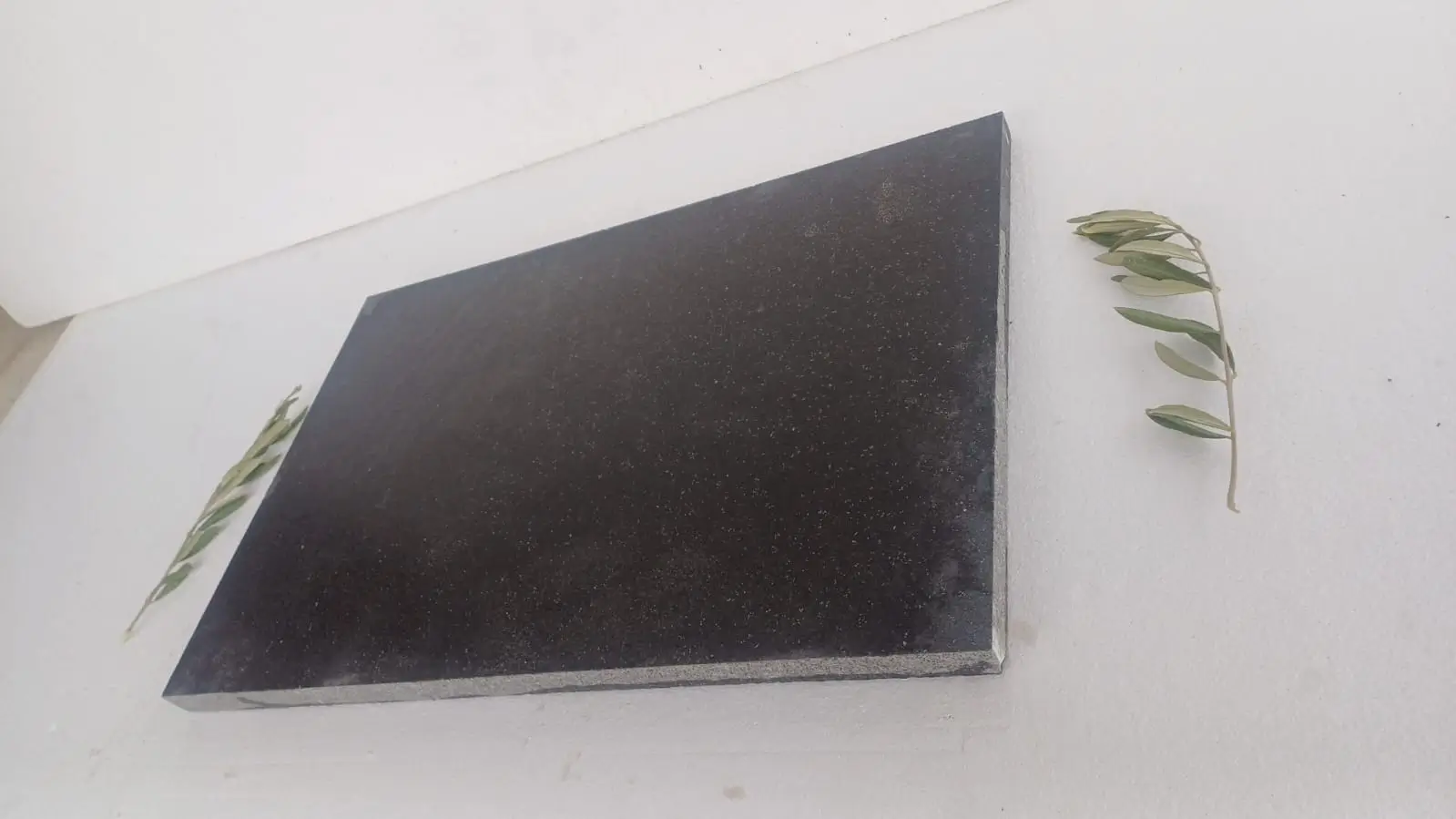
Ordering, Lead Times, and Project Planning in Arizona
Getting your black limestone order right before the installation window opens is more important in Arizona than in most markets, because the summer construction schedule compresses rapidly once temperatures exceed 110°F and tile adhesive performance windows shorten. Mortar open time drops by 30–40% when ambient temperatures climb above 95°F — a real constraint for large-format limestone placement that requires precise back-buttering and alignment.
Plan your project timeline around these logistical realities:
- Order confirmation to warehouse availability — typically 1–3 weeks for stocked black limestone grades; 6–10 weeks for special-order slabs or oversized formats
- Acclimation period — black limestone should spend a minimum of 48 hours in the conditioned space before installation; this is non-negotiable in Arizona where exterior-stored stone can arrive 20–30°F warmer than the installation substrate
- Installation scheduling — plan for early morning starts during summer months; the 6:00–10:00 AM window gives you adequate working conditions before the heat load on the slab becomes problematic
- Truck delivery access — verify site access dimensions before ordering large-format slabs; 48-inch format tiles ship on specialized flatbed truck configurations and require forklift clearance at the delivery point
Citadel Stone maintains warehouse inventory of premium black limestone in Arizona, which typically compresses the lead time to 1–2 weeks for standard residential formats. For Surprise and Tempe projects where the installation window is tight before summer heat arrives, that local warehouse availability can be the difference between meeting your finish date and pushing the project into the brutal July schedule. A second warehouse confirmation check before committing to your project timeline avoids costly delays when multiple jobs are competing for the same stone grades. Confirming truck delivery logistics at the same time keeps the schedule intact from order through installation.
For projects where a natural stone indoor-outdoor connection is part of the design language, exploring options like a veranda limestone tile patio that extends the black limestone aesthetic from interior bathroom through to an exterior spa or courtyard creates a cohesive design narrative that luxury Chandler clients consistently respond to.
Final Considerations for Black Limestone Bathroom Flooring Specifications
The specification decisions that define black limestone bathroom flooring performance in Chandler come down to how seriously you treat the thermal cycling environment at every stage — from setting system selection through expansion joint layout, sealing protocol, and surface finish choice. Black limestone in wet areas is a high-performance combination when the engineering is right, and Chandler’s diurnal temperature swings make the engineering more consequential than in moderate climates. Dense limestone consistently outperforms alternatives in cyclic stress environments, which aligns with what field performance in Arizona’s climate demonstrates across properly specified installations.
Your clients in Chandler luxury bathrooms are investing significantly in a finish that should deliver 20–30 years of performance with reasonable maintenance. That outcome is achievable — but it requires expansion joints at 8-foot intervals rather than 10, full mortar coverage rather than spot bonding, and a sealing schedule calibrated to Arizona water quality rather than generic manufacturer guidelines. Getting these details right at the specification stage costs nothing and prevents the callbacks that erode project profitability. For design-minded clients who are also considering stone in other areas of the home, Black Limestone Flooring Kitchen Design for Mesa Modern Homes explores how this same material performs in a kitchen context, which is useful context for whole-home stone specifications. Industrial chic designs specify Citadel Stone’s urban grey limestone outdoor tiles in Arizona warehouse aesthetics.