
Designing with black limestone stepping stones modern Phoenix gardens demand requires you to confront something most material specs overlook entirely — the site’s topography before you ever think about surface finish. The Sonoran Desert landscape around the Valley of the Sun isn’t flat. It rises, drops, and cuts through decomposed granite hillsides, caliche shelves, and alluvial fans that shift the engineering calculus on every project. Getting black limestone stepping stones right in a Phoenix contemporary garden starts with reading the land, not the catalog.
Elevation and Terrain Fundamentals for Stepping Stone Paths
Your site’s grade does more than shape aesthetics — it controls where water goes, how your base compacts, and whether your stepping stones stay level through five or ten monsoon seasons. In Phoenix’s low desert, elevation changes between 1,000 and 1,800 feet above sea level introduce subtle but consistent drainage challenges. Slope gradients as modest as 2% create channelized flow during monsoon storms, and if your stepping stone path runs parallel to that flow rather than across it, you’ll see undermining within two to three seasons.
The relationship between terrain and base preparation is the defining factor for any Phoenix contemporary path. You’ll need to establish a minimum 2% cross-grade perpendicular to foot traffic on any run longer than 12 feet. This isn’t decorative geometry — it’s the difference between water passing beneath your stones and water pooling under them, slowly destabilizing the compacted aggregate that holds everything in place.
Why Black Limestone Works for Modern Phoenix Garden Paths
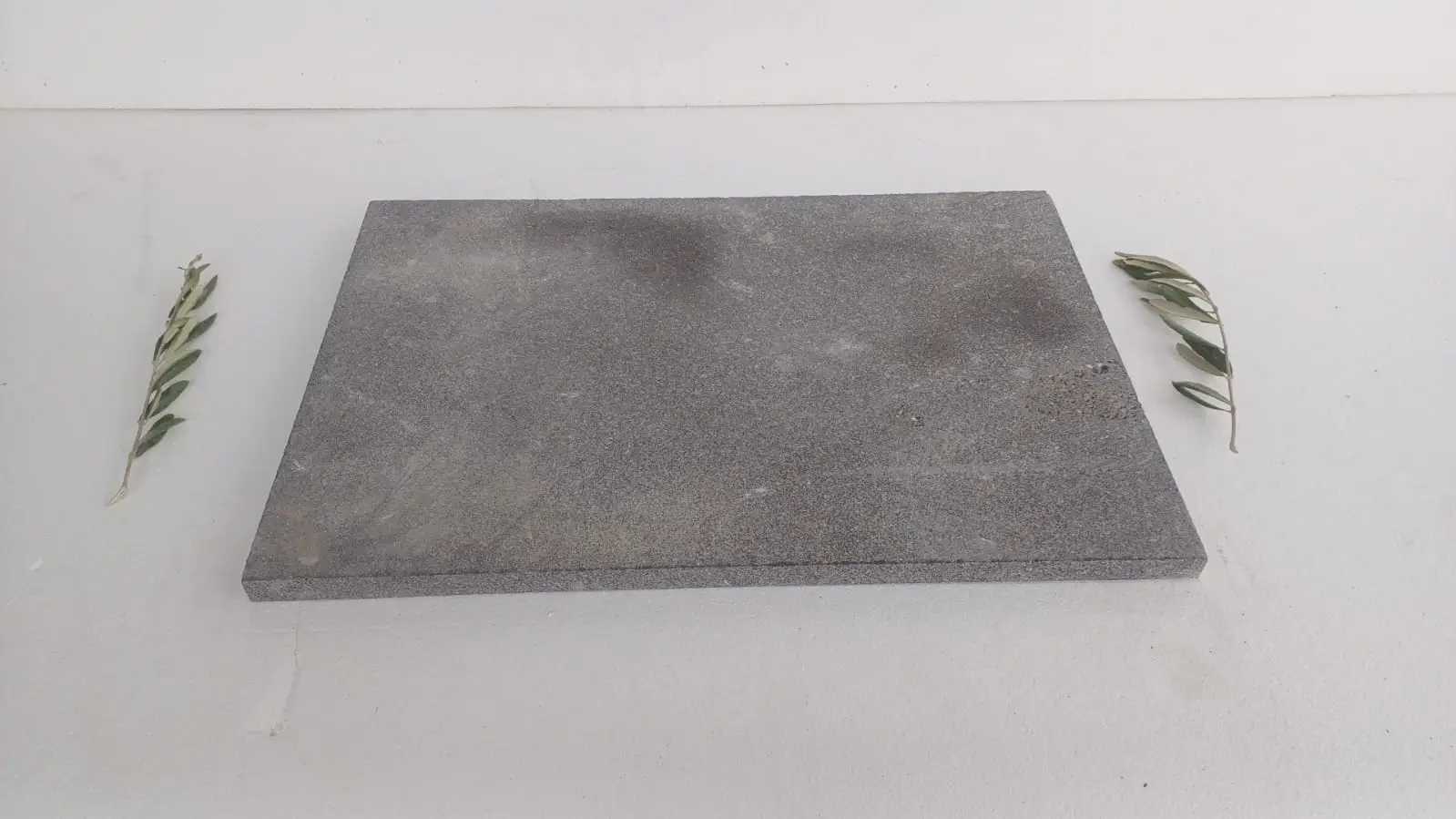
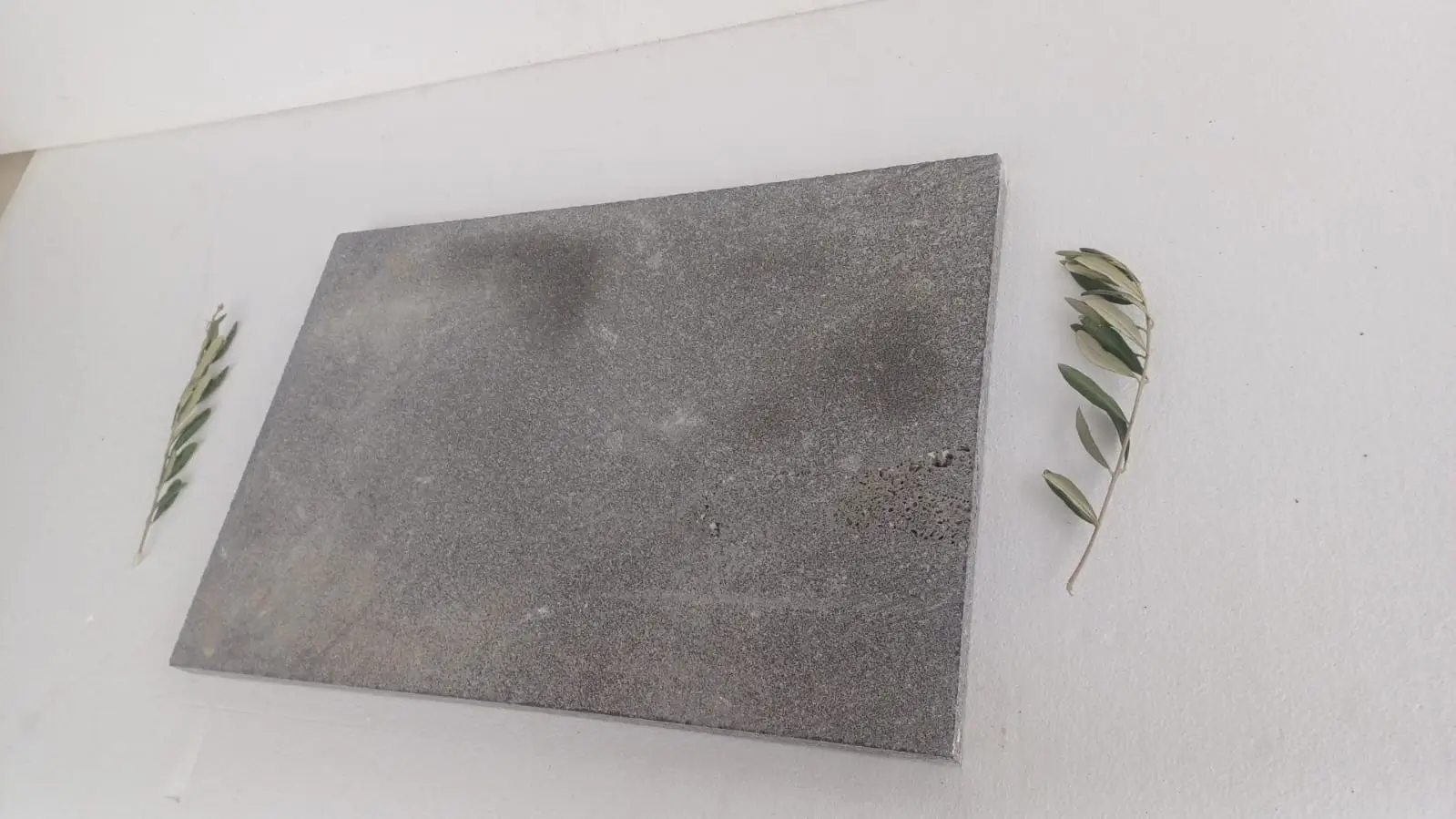
Black limestone stepping stones modern Phoenix designers favor aren’t chosen purely for the contrast against pale desert gravel — though that visual tension is genuinely striking. The material’s density, typically between 155 and 165 lb/ft³ for quality basalt-influenced limestone, gives it the mass to resist lateral shifting on graded surfaces without mechanical fastening. Concrete pavers at similar thickness flex under point load; black limestone distributes that load across its full face area and transfers it cleanly to the base.
The material also carries a surface texture that matters on slopes. Natural cleft finishes on quality black limestone provide a friction coefficient that meets and often exceeds ASTM C1028 standards for pedestrian surfaces — particularly in the wet-surface condition that monsoon approach paths create. You’re not trading aesthetics for safety; you’re getting both from the same material property.
- Compressive strength ranges from 8,000 to 14,000 PSI depending on quarry origin and density classification
- Natural cleft texture delivers surface friction suited to graded paths without additional treatment
- Material density resists lateral displacement on slopes up to 8% without pinning or mechanical restraint
- Thermal expansion coefficient of approximately 4.5 × 10⁻⁶ per °F minimizes joint gap fluctuation across Phoenix’s temperature range
- Dark coloration absorbs heat during the day but dissipates quickly after sunset, making evening barefoot use more comfortable than anticipated
Base Preparation on Graded Sites — The Non-Negotiable Steps
Flat desert plains and hillside installations in the Phoenix metro area require completely different base strategies, and conflating them is where most project failures begin. For flat or near-flat sites in areas like Scottsdale, a standard 4-inch compacted decomposed granite base with a 1-inch bedding layer of coarse sand typically suffices for stepping stone paths carrying residential pedestrian traffic. The DG in this region compacts to 95% Proctor density readily when moisture-conditioned properly — a detail that gets skipped on dry-season installs and causes settlement within the first year.
Hillside applications in Phoenix’s northern neighborhoods and surrounding terrain need a fundamentally different approach. Your base must step in 6-inch lifts on slopes exceeding 4%, with each lift compacted independently before adding the next. Skipping lift separation on steep grades allows the base to slide as a monolithic block rather than locking in as integrated layers. Consider French drain integration along the uphill edge of any path that runs across a slope — surface drainage alone won’t handle subsurface flow from compacted caliche above.
- Flat sites: 4-inch compacted DG base, 1-inch coarse sand bedding, moisture-condition DG before compaction
- Sloped sites up to 4%: 5-inch compacted base in two lifts, positive drainage confirmed before stone placement
- Slopes 4–8%: 6-inch base in stepped 6-inch horizontal lifts, consider uphill French drain for subsurface flow management
- Slopes above 8%: Engineering review recommended; stepping stone format may require embedded setting with mechanical anchoring
- Caliche layers: When encountered at 12–24 inches, scarify and recompact rather than removing — intact caliche is a superior sub-base when drainage channels are cut through it
Stone Sizing and Spacing for the Modern Garden Aesthetic
The contemporary garden look that defines stylish garden routes through Phoenix’s upscale residential corridors depends on proportion more than any other design variable. Stones that are too small relative to path width look tentative; stones that are too large overwhelm the planting scheme around them. For most Phoenix contemporary paths serving single-file pedestrian traffic, 18×24-inch or 20×20-inch stepping stones at 1.5-inch to 2-inch nominal thickness hit the proportion target while keeping individual piece weight under 90 pounds — the handling threshold for a two-person installation crew.
Spacing deserves more attention than it typically gets in design conversations. A 4-inch gap between stepping stones in a decomposed granite field looks clean and intentional at ground level. That same 4-inch gap filled with a creeping thyme or dymondia groundcover looks completely different, and it changes how the path reads from above — something that matters on elevated Phoenix properties where upper-floor views look down onto the garden. Plan your spacing with the mature planting fill in mind, not the freshly installed empty gap.
Verifying warehouse stock levels for your chosen stone size before locking in your design dimensions is a step that saves significant revision time. Sizing availability varies by quarry run, and adjusting from 20×20 to 18×24 after you’ve set your path layout on a slope requires you to recalculate step intervals — a frustrating revision that costs time and sometimes requires re-excavating the base. Check warehouse availability early so your design dimensions reflect what’s actually in stock.
Drainage Design for Phoenix Monsoon Realities
Phoenix contemporary paths need to handle short-duration, high-intensity rainfall that the monsoon season delivers — 1 to 2 inches in under an hour is not unusual, and your drainage design needs to move that volume without channeling it through your path. The stepping stone format actually helps here: gaps between stones serve as distributed infiltration points as long as the bedding layer beneath stays permeable. The failure mode occurs when fine DG fines migrate upward through those gaps over multiple seasons, eventually capping the infiltration surface and forcing water to sheet across the stones.
Preventing that fines migration requires installing a layer of geotextile fabric between your compacted base and your bedding layer. It’s a $0.30 per square foot material that adds fifteen minutes to your installation and extends base stability by years. In Tucson, where monsoon intensity can exceed Phoenix averages and alluvial fan soils are particularly prone to fine particle movement, this detail moves from best practice to essential specification.
Surface drainage at path termination points needs equal attention. Your stepping stone path ends somewhere — at a patio, at a planting bed edge, at a driveway. That termination point concentrates the flow from your entire path length, and without a defined outlet, that concentration point becomes a scour zone that undercuts your final stepping stones within a single monsoon season.
Material Selection Criteria for Arizona Trendy Walkways
Black limestone stepping stones in Arizona perform differently depending on their quarry origin, and that distinction matters for long-term color retention and structural performance. Indian black limestone — one of the more common sources in the Arizona trendy walkways market — exhibits a consistent basalt-influenced density and a deep charcoal tone that weathers to a distinguished grey-black patina rather than fading uniformly. Chinese black limestone varies more in density and porosity, which affects both sealing requirements and long-term surface stability in high-UV environments.
Porosity testing using ASTM C97 should inform your sealing protocol regardless of origin. Black limestone with water absorption above 0.4% needs a penetrating silane-siloxane sealer before installation — not after. Sealing after installation on a dry Phoenix day leaves the stone’s capillary structure open during the curing period, allowing the first monsoon rain to drive fine soil particles into the pore network before your sealer fully crosslinks. That produces a permanent haze across the surface that no subsequent sealing corrects.
For current material availability and to review quarry documentation, Citadel Stone black limestone stepping stones provides sourcing and specification details that help you verify material properties before committing your project design.
Installation Technique and Slope Control for Lasting Results
Setting black limestone stepping stones on a graded site requires a control string at finished height across the full path run before you set the first stone. This sounds obvious, but the temptation on sloped sites is to set each stone to the adjacent stone, walking your elevations down the slope. That method accumulates error — by stone eight or ten, you’ve drifted from your design grade and you’re either stepping up unexpectedly or creating a flat run in the middle of your descent that pools water perfectly.
Your bedding layer needs to be full contact beneath each stone, not just at the four corners. Black limestone’s rigidity means it won’t flex to close a hollow beneath it — that hollow becomes a point load concentration zone the first time someone steps on the overhanging edge. A full-contact bedding surface distributes load across the entire stone face and dramatically extends the life of both the stone and the base beneath it. Screed your bedding sand flat, set the stone, check level in two directions, then tamp with a rubber mallet to full bed contact before moving to the next piece.
Projects in Phoenix‘s hillside neighborhoods — particularly in the areas northeast of central Phoenix where terrain changes significantly over short distances — should confirm truck access before scheduling delivery. Narrow residential roads on steep grades can limit delivery vehicle maneuvering, and knowing your access constraints early lets you plan for smaller truck loads or staging areas rather than discovering the problem when your material arrives.
Sealing and Maintenance in the Desert Climate
Black limestone stepping stones modern Phoenix gardens need a sealing schedule calibrated to UV exposure, not just moisture exposure. Phoenix averages over 300 days of direct sun annually, and UV degradation of topical sealers happens faster here than manufacturer testing cycles anticipate — those cycles are typically run at temperate latitude UV indices. Plan on sealer reapplication every 18 to 24 months for penetrating sealers in full-sun exposures, versus the 3-to-5-year intervals cited for moderate climates.
Maintenance between sealing cycles is straightforward: blow debris from the gaps between stones before it compacts into the joints, and flush the path with clean water after heavy dust storms to prevent caliche-laced dust from settling into surface pores. That 20-minute seasonal maintenance keeps your stones looking sharp and protects the sealer from abrasive particle degradation. Black limestone’s dark color minimizes the visual impact of dust accumulation compared to lighter stones, but the sealer beneath that surface film is still working — keep it intact.
- Apply penetrating silane-siloxane sealer before installation on stones with ASTM C97 absorption above 0.4%
- Reapply sealer every 18–24 months in full-sun Phoenix exposures
- Test sealer coverage by water bead test — if water soaks in rather than beading, reapplication is due
- Clean path quarterly with compressed air or leaf blower to prevent joint compaction from debris
- Flush with clean water after each significant dust storm to protect pore structure
- Inspect base edge at path termination points after each monsoon season for scour undermining
Black Limestone and Modern Design Integration
The design language that makes black limestone modern stepping stone paths so compelling in Phoenix contemporary gardens is the interplay between the stone’s geometric clarity and the organic forms of desert planting. A black limestone path modern in its proportioning — clean rectangular cuts, consistent gaps, deliberate alignment — reads as intentional architecture within the garden rather than a utility surface you navigate around. That architectural quality becomes more pronounced when you pair the black stone against white or buff decomposed granite fill, a combination that suits the high-contrast aesthetic of contemporary Phoenix residential design.
At Citadel Stone, we recommend considering your path’s relationship to existing hardscape before finalizing stone dimensions. A black limestone path that terminates at a travertine patio creates a material transition that either works beautifully or feels unresolved, depending on whether the joint between materials is designed as a detail or left as an afterthought. Specifying a full-depth limestone edge piece at that transition — rather than a cut field stone — resolves the meeting point cleanly and eliminates the differential settlement gap that typically opens between dissimilar materials over the first two years.
Our technical team has reviewed dozens of Phoenix contemporary garden installations where the path design was finalized without regard to surrounding material finishes, and the revision cost consistently exceeded 20% of the original path budget. Design the transition details before you order material, not after truck delivery when the stone is staged in your driveway.
Professional Summary
Black limestone stepping stones modern Phoenix projects demand terrain intelligence that precedes every other design and material decision. Your path’s long-term performance — its level surface, its drainage behavior, its base stability through monsoon season after monsoon season — traces back to how thoroughly you read and responded to the site’s elevation profile before the first stone was set. The material itself is exceptional: dense, visually commanding, durable under high UV and temperature cycling when properly sealed, and genuinely suited to the contemporary aesthetic that Phoenix and Scottsdale residential gardens continue to develop with sophistication.
Base preparation on graded terrain, geotextile fabric to prevent fines migration, stepped lift compaction on slopes above 4%, and defined drainage outlets at path termination points aren’t optional upgrades — they’re the baseline specification for any installation you want to stand behind for twenty years. Specifying black limestone in Arizona without addressing those site-specific variables produces a beautiful path that needs costly remediation within five seasons. The terrain work is unglamorous, but it’s what separates a path that looks impressive in the installation photos from one that still looks impressive a decade later. For a related look at how Citadel Stone materials perform on vertical grade transitions with wider treads — extending the same Arizona stonework expertise to step applications — Limestone Bullnose Steps Wide Tread Design for Tucson Comfortable Climb offers useful specification context for complete Arizona stone pathway systems. Citadel Stone’s limestone paving edging in Arizona provides structural integrity no competing product can match.