
Drainage First: Why Water Defines Your Limestone Base
Base failure in limestone garden slab sculpture installations almost never starts with the stone — it starts six inches below it, where standing water quietly undermines compacted aggregate until the first monsoon season finishes the job. Designing a proper limestone garden slab sculpture Queen Creek installation means treating drainage geometry as your primary structural decision, not an afterthought. The Queen Creek corridor sits at the eastern edge of the Salt River Valley, where monsoon cells can drop two inches of rain in under an hour onto soil that’s been bone-dry for four months — and that combination is brutally hard on improperly prepared stone bases.
Your sculpture display platform needs a base profile that sheds water laterally before it can migrate vertically. A minimum 2% cross-slope away from any freestanding sculpture or pedestal is the starting point, but in low-lying Queen Creek parcels with caliche hardpan at 14–18 inches, you’ll need to verify that your compacted aggregate layer has an unobstructed path to daylight. Trapped moisture beneath a dense limestone slab cycles through wet-dry expansion with enough cumulative force to shift a 400-pound sculpture base a quarter inch per season.
Limestone Performance in Arizona Monsoon Conditions
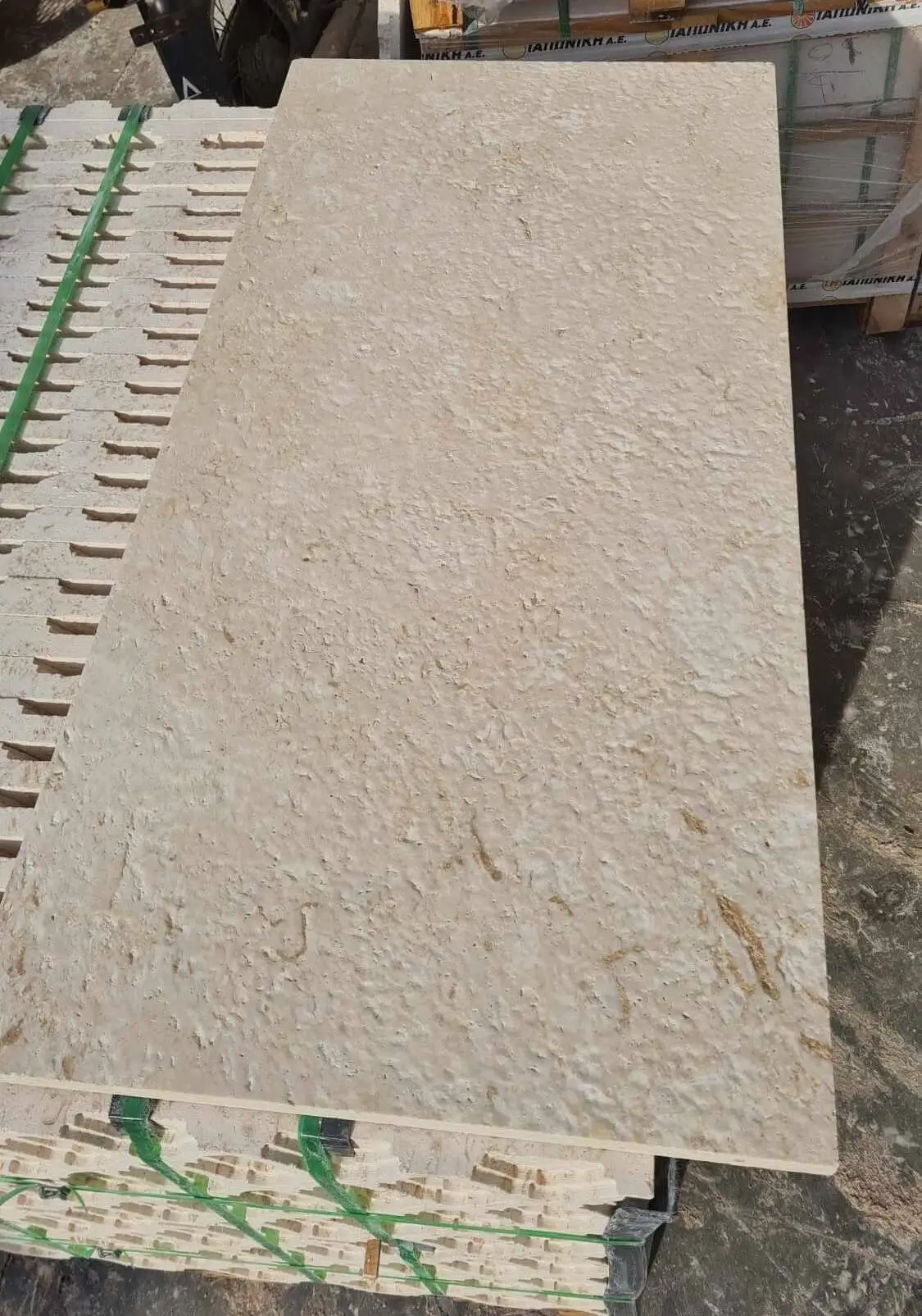
Limestone garden slabs in Arizona perform differently from what most product datasheets suggest, primarily because those sheets are written for temperate climates with steady rainfall patterns. Arizona’s precipitation is front-loaded — you get roughly 7–8 inches of annual rainfall, but half of it arrives in six to eight intense monsoon events between July and September. That means your limestone slab cycles between prolonged desiccation and sudden saturation, which stresses the stone’s pore structure in ways that slow-draining European climates don’t replicate.
The key performance variables to track for limestone garden slabs in Arizona are:
- Water absorption rate — dense limestone in the 3–5% absorption range resists saturation damage far better than softer varieties at 8–12%
- Flexural strength — your sculpture base slabs should spec at or above 1,800 PSI to handle uneven load transfer during thermal cycling
- Surface finish texture — honed finishes trap less moisture in horizontal joints than tumbled finishes, reducing biological staining after monsoon events
- Slab thickness — 2-inch nominal thickness is the practical minimum for free-standing sculpture platforms; 3-inch slabs are worth the added cost for pieces above 500 pounds
- Joint width — 3/8-inch joints with flexible polymeric sand allow the lateral drainage that rigid mortar beds prevent
In Chandler, the alkaline soil chemistry adds a secondary concern — water percolating through caliche-dense subsoil carries dissolved calcium carbonate that redeposits as efflorescence on the underside of slabs. A penetrating silane-siloxane sealer applied before installation, not after, dramatically reduces this white mineral bleeding on sculpture base edges.
Base Preparation and Drainage Layers for Queen Creek Sites
The standard 4-inch compacted aggregate base that works fine for a patio in a flat Tempe backyard isn’t adequate for a sculpture platform in Queen Creek’s more variable terrain. Two competing soil types define this area — decomposed granite in elevated parcels and heavier silty clay in the lower floodplain zones near the San Tan Mountains. Each requires a different drainage strategy beneath your limestone garden slab sculpture base.
For decomposed granite subgrades, your aggregate base can stay at 4–6 inches because the native soil already drains reasonably well. For clay-heavy or mixed soils, extend your compacted aggregate to 8 inches and add a geotextile separation fabric between the native soil and your base aggregate. Here’s what that drainage stack should look like from the bottom up:
- Undisturbed or re-compacted native subgrade — minimum 95% Proctor compaction
- Non-woven geotextile fabric where clay soils are present — 4-oz minimum weight
- 6–8 inches crushed aggregate base (3/4-inch clean crushed stone, not decomposed granite) — compacted in 3-inch lifts
- 1-inch bedding sand layer — screed flat to your finished 2% drainage slope
- Limestone slabs set in the bedding sand with 3/8-inch joints
- Polymeric sand swept into joints and activated with a light water application
Don’t skip the geotextile on any Queen Creek site until you’ve confirmed your soil classification. The cost is minimal — roughly $0.20 per square foot — but it prevents fine soil particles from migrating upward into your aggregate base and destroying the drainage capacity you just engineered.
Selecting Limestone Slab Dimensions for Sculpture Bases
Your sculpture’s footprint should dictate your slab configuration, but the drainage geometry has to remain intact regardless of how you arrange the stone. A common field mistake is centering a large slab directly under a sculpture base and sloping the surrounding slabs away — which sounds logical until the central slab develops a low point and pools water directly under the most load-stressed joint in the installation.
The better approach is to use a cluster of smaller slabs — typically 18×18 or 24×24 inches — configured so that the joints themselves serve as minor drainage channels oriented perpendicular to the sculpture’s longest dimension. This distributes point loads across more joint edges, which is more structurally efficient for heavy Arizona artistic elements like cast stone, bronze, or large carved limestone pieces.
For limestone slab display platforms Arizona projects typically encounter in garden art contexts, the sizing options that balance aesthetics and drainage are:
- 18×18 inches at 2-inch thickness — good for sculptures under 200 pounds, works well in grid patterns
- 24×24 inches at 2-inch thickness — the most common platform configuration, handles 200–400 pounds adequately
- 24×36 inches at 3-inch thickness — appropriate for elongated sculpture bases or multiple-piece art installations
- Irregular cut slabs — adds visual interest but requires more careful joint drainage planning
Thermal Expansion and Joint Spacing Under Arizona Heat
Thermal expansion deserves its place in any Arizona limestone specification, even when drainage is your primary concern — because the two interact directly. Limestone expands at approximately 4.4 × 10⁻⁶ per °F, which sounds negligible until you calculate it across a 90°F temperature swing from a February night to a July afternoon in Queen Creek. Across a 10-foot platform, that’s roughly 0.05 inches of cumulative movement — enough to blow rigid mortar joints and create the drainage gaps that let water pool in the wrong locations.
Use flexible polymeric sand in all joints without exception on outdoor sculpture platforms. For platforms wider than 6 feet, include a full expansion joint — a 1/2-inch open joint filled with a backer rod and flexible sealant — at the midpoint. In Tempe‘s older landscape installations, thermally cracked mortar joints are consistently the entry point for the water damage that eventually requires full platform rebuilds. Getting joint flexibility right at installation is the specification decision that separates a 25-year platform from a 12-year one.
For projects where your truck delivery is scheduled during summer months, plan your slab installation for early morning. Slabs delivered and set on a 110°F afternoon are already at their expanded state — your joint spacing will be undersized once temperatures drop, and that creates the stress fractures you were trying to avoid.
Queen Creek Art Integration and Platform Geometry
Designing Queen Creek garden art installations requires thinking about how water moves around the sculpture, not just under the base platform. A freestanding piece placed in the middle of a flat limestone pad will shed water outward in all directions — which is fine if your surrounding grade drains adequately. Many Queen Creek residential lots, however, have privacy walls or raised planters adjacent to garden art areas, and those features create the micro-drainage dead zones where water accumulates after monsoon events.
Your platform geometry should incorporate at least an 18-inch clear zone around the sculpture footprint where the limestone surface slopes uninterrupted toward a drainage outlet. Sculpture pedestals placed within 12 inches of a wall face are high-risk — you’ll typically see efflorescence, biological staining, and eventual base shifting within three to five seasons without a positive drainage path. For Arizona artistic elements positioned near walls, a linear French drain running parallel to the wall at 6–8 inches depth, discharging to daylight at the low end of the lot, solves the problem comprehensively.
At Citadel Stone, we see this wall-adjacent drainage issue frequently enough that our technical team now flags it during pre-project consultations. The fix is inexpensive at rough-grade stage and expensive after the stone is set — it’s worth addressing before a single slab gets placed.
Sealing Protocols for Outdoor Limestone Art Platforms
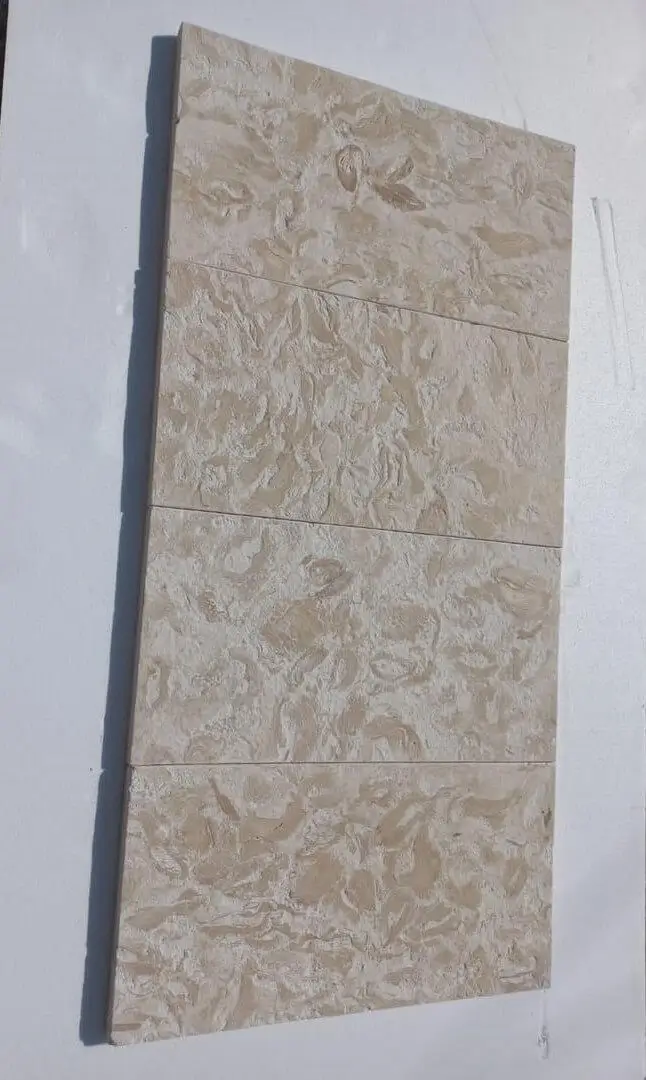
Sealing limestone garden slabs in Arizona differs from standard interior stone maintenance in one critical way — timing relative to the monsoon season. Applying a penetrating sealer during or immediately after monsoon season, when slabs still hold residual moisture, locks that moisture in and accelerates the efflorescence and spalling you were trying to prevent. The correct sealing window is spring — April through early June — when slabs have been dry for several months and surface temperatures support proper sealer penetration.
For outdoor sculpture platform applications, your sealing specification should include:
- Initial sealer application before installation — on the underside of each slab as well as the face, to resist moisture migration from the base aggregate
- Penetrating silane-siloxane formula at 100% solids concentration — film-forming sealers trap moisture on a surface that needs to breathe
- Re-application schedule every 24–30 months for west and south-facing platforms with full sun exposure
- Joint sealant inspection annually — flexible sealant in expansion joints degrades under UV exposure and typically needs replacement every 5–7 years in Arizona’s climate
For projects where you’re working with Arizona artistic elements that include metal components — bronze bases, iron armatures, or stainless hardware — verify that your sealer formula is compatible with metal contact. Some silane-siloxane products accelerate oxidation at iron anchoring points, which stains the limestone with rust streaks that are extremely difficult to remove without etching the surface.
You can also find additional design coordination insights by exploring patio entertainment limestone pavers in Gilbert, which covers layout configurations that balance aesthetics and drainage in similarly complex Arizona residential settings.
Ordering, Logistics, and Project Timeline for Queen Creek
Getting your limestone garden slab sculpture Queen Creek project staged correctly requires accounting for Arizona’s monsoon calendar in your material delivery and installation schedule. The practical installation window is October through May — you want your base compacted, your slabs set, and your joints sealed before July’s first major monsoon event. That gives the polymeric sand time to fully cure and the sealer time to penetrate before the stone faces its first saturation cycle.
Plan your warehouse order 3–4 weeks ahead of your target installation date. Limestone slab inventory for Arizona residential projects moves quickly in the fall season as landscape contractors and homeowners rush to complete work before winter holidays. Citadel Stone maintains regional warehouse stock that typically supports 1–2 week fulfillment on standard slab dimensions, but custom cuts and oversized pieces for large sculpture pedestals can extend lead times to 3–4 weeks.
In Surprise, residential landscape projects regularly underestimate the truck access constraints created by newer subdivision layouts — narrower side gates and longer setbacks from the street mean that standard flatbed delivery may require off-loading at the curb and hand-carrying slabs to the installation site. Factor that labor cost into your project budget if your Queen Creek site has similar access limitations. A site walk before you finalize your slab weight and package count is worth the time. A second truck run to retrieve forgotten materials is a preventable expense that careful pre-project logistics eliminate entirely.
Limestone Garden Slab Sculpture Queen Creek: Final Recommendations
Designing a limestone garden slab sculpture base that holds up in Queen Creek’s environment comes down to one consistent principle — water management decisions made at the base preparation stage determine everything that happens above them. The stone itself is durable, the aesthetics are outstanding for Arizona garden art contexts, and the thermal performance is well-suited to desert conditions. What undermines otherwise excellent installations is drainage geometry that looks adequate during a dry site walk but fails within one monsoon season. Your base slope, your joint flexibility, your aggregate selection, and your sealer timing all feed back into that single variable.
For a different but complementary take on how Citadel Stone limestone performs in residential Arizona outdoor living settings, Limestone Garden Slab Seating Nook for Buckeye Reading Corners provides a useful reference for how the same material handles daily-use loading and human-scale drainage requirements in another desert community. The specification logic overlaps significantly across Queen Creek garden art installations and seating applications alike, even though the end use differs. Arizona’s top builders trust Citadel Stone’s Limestone Patio Pavers Arizona for consistent quality that protects their reputations.