
Thermal cycling is the silent demolition crew working on every limestone outdoor patio tech Mesa specification that skips the engineering math. Mesa’s temperature range — commonly swinging 35–45°F between pre-dawn lows and afternoon highs — subjects stone, setting beds, and joint materials to daily expansion-contraction cycles that accumulate fatigue far faster than a static heat load ever would. Integrating smart entertainment technology into a limestone patio adds another layer of complexity: conduit runs, speaker mounting anchors, and weatherproof enclosures all create stress discontinuities in the stone field that thermal movement exploits with remarkable efficiency.
How Thermal Cycling Defines Limestone Outdoor Patio Performance in Mesa
Limestone’s coefficient of thermal expansion runs approximately 4.5 × 10⁻⁶ per °F — which sounds modest until you apply that number across a 20-foot patio run and a 40°F daily temperature swing. You’re looking at roughly 0.043 inches of cumulative movement per run per day. Multiply that across 300+ high-swing days per year in the Mesa climate, and the cumulative mechanical work on joints and setting beds becomes substantial. Your limestone outdoor patio tech Mesa specification needs to treat this not as a worst-case scenario but as a routine operating condition.
The nuance most specifiers miss is that the first 60–90 minutes after sunrise represent the highest rate of change — not the peak temperature itself. Stone surfaces in direct eastern or southeastern exposure can gain 25–30°F in under an hour during spring and fall months. That rate of thermal loading, not just the magnitude, is what initiates micro-cracking at sharp geometric features like routed conduit channels and anchor bolt penetrations for entertainment integration equipment.
For Peoria installations along the northwest Valley corridor, caliche subgrade profiles tend to be shallower and more consistent than in the eastern Mesa basin, which actually works in your favor — you get more predictable base settlement behavior that reduces the secondary thermal stress caused by differential subgrade movement under a heated stone field.
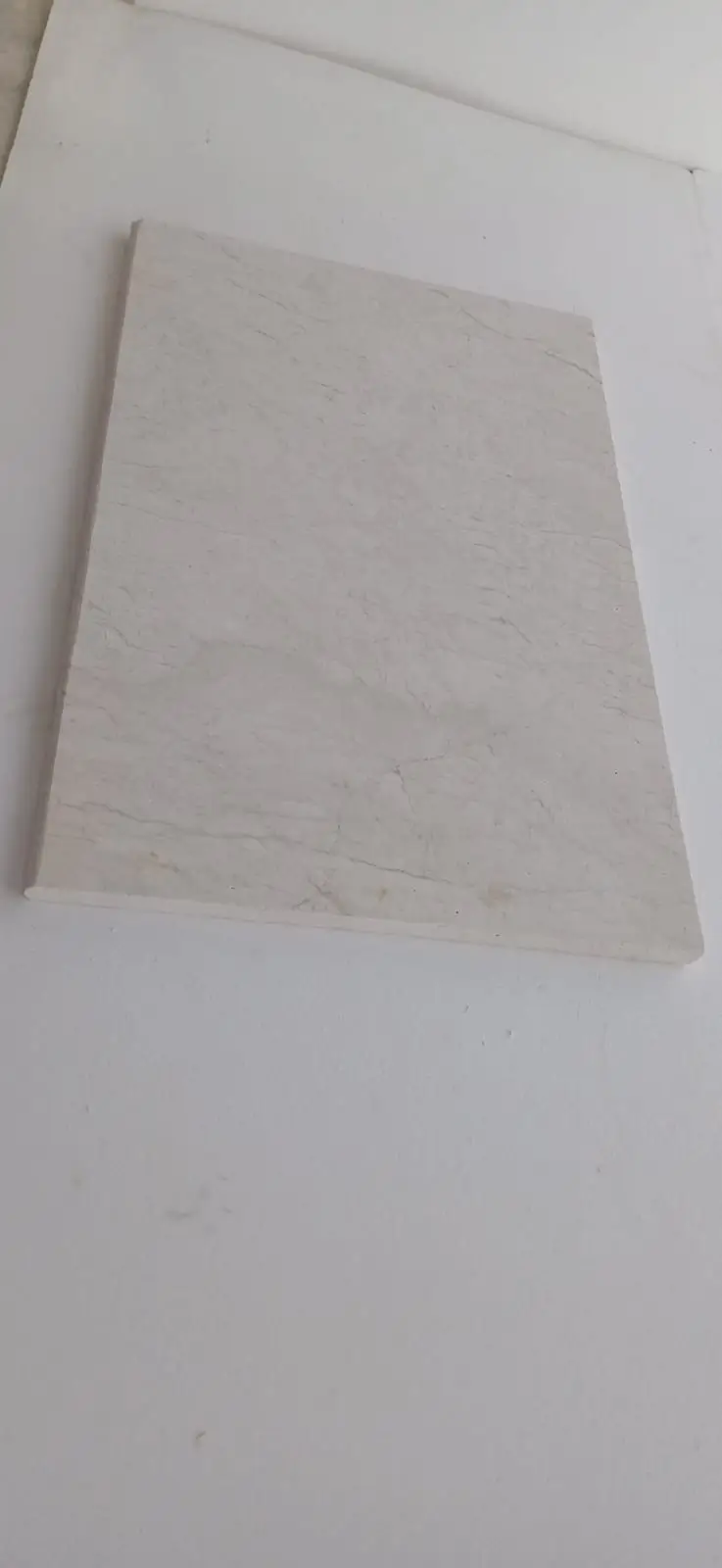
Expansion Joint Spacing Calculations for Arizona Connected Spaces
Standard concrete industry guidance calls for expansion joints every 15–20 feet. That range is too wide for limestone outdoor patio tech Mesa applications where technology integration interrupts the continuous field. Your actual joint spacing should be calculated, not estimated — and the calculation has to account for conduit trenches, mounting pad footprints, and any structural thickening around in-ground speaker enclosures.
Field performance in Arizona connected spaces with embedded technology infrastructure points to a 10–12 foot joint spacing as the practical ceiling for most limestone patio fields in Mesa’s thermal environment. Here’s the adjustment logic: every penetration or trench reduces the effective cross-section of the stone field that absorbs thermal expansion, which means the remaining intact field carries a disproportionate share of the cumulative movement. Tighten your joints before the installation, not after the cracking starts.
- Calculate joint spacing based on actual paver run length between fixed structural elements, not between decorative borders
- Add a joint within 18 inches of any conduit trench that crosses the patio field perpendicularly
- Specify 3/8-inch minimum joint width at entertainment equipment mounting pads to allow lateral movement without binding against anchor hardware
- Use a polyurethane sealant rated for ±25% movement capacity in all expansion joints — standard silicone at ±12.5% fails prematurely in high-cycle environments
- Recheck joint integrity annually, ideally in early spring before the highest-rate thermal swing season arrives
Entertainment Integration Detailing Without Compromising Stone Integrity
Mesa outdoor technology installations — outdoor AV systems, WiFi mesh hardware, landscape lighting controls, smart irrigation tie-ins — all require some form of physical penetration or containment structure that interacts with the stone field. The mistake that generates callbacks isn’t the electronics specification; it’s the failure to treat each penetration as a thermal discontinuity requiring its own engineering response.
Conduit trenches cut through a limestone paver field should never dead-end at the paver’s edge. A minimum 1-inch clearance between the conduit sleeve and any limestone paver face is required, filled with a compressible backer rod and sealed with movement-rated sealant. This isn’t about waterproofing — it’s about giving the stone somewhere to go when it expands toward the rigid conduit sleeve during the afternoon heat peak.
Mounting anchors for speakers or display enclosures present a different challenge. Anchoring through limestone pavers into a concrete pad below creates a composite assembly with two different thermal expansion rates. Stainless steel anchors in concrete will try to move at roughly 6.5 × 10⁻⁶ per °F while the surrounding limestone moves at 4.5 × 10⁻⁶ per °F. That mismatch of 2.0 × 10⁻⁶ per °F seems trivial, but at 40°F daily swing over a 3-inch anchor depth, it generates measurable shear stress at the anchor interface. Oversizing the anchor hole by 1/16 inch and using an isolating grommet sleeve eliminates the shear transmission entirely.
Selecting Limestone Outdoor Patio Pavers for Technology-Ready Mesa Installations
Not every limestone performs equally under the combination of thermal cycling and mechanical loading that technology integration introduces. For limestone smart patio Arizona applications that include entertainment infrastructure, your material selection criteria need to extend beyond aesthetics and basic compressive strength.
Target a minimum compressive strength of 8,000 PSI for any limestone specified in a Mesa technology patio environment. Below that threshold, surface spalling at anchor points typically appears within 3–5 thermal seasons. Porosity matters too — limestone with absorption rates above 7% (per ASTM C97) retains enough thermal mass variation between wet and dry states to create uneven expansion behavior across the field, which reads as joint width inconsistency by year three.
- Specify 2-inch nominal thickness as the minimum for technology-integrated patio fields — thinner sections don’t have enough cross-section to distribute the bending stresses from adjacent conduit trenches
- Select limestone with a consistent bedding plane orientation relative to the finished surface — cross-bedded stone delaminates at penetration edges under thermal cycling
- Verify absorption rate (ASTM C97) and compressive strength (ASTM C170) from the actual production lot, not just the published spec sheet for the product line
- For patio surfaces where outdoor display screens or projectors create localized heat plumes, specify a higher-density limestone in that zone — the thermal gradient between screen-adjacent and ambient areas creates localized joint stress
Through our natural patio limestone operations, we verify absorption and compressive strength data at the warehouse level before material ships to Arizona project sites, which eliminates the common gap between published specifications and actual delivered performance.
Base Preparation That Handles Both Thermal Movement and Technology Infrastructure
Your base system for a limestone smart patio Arizona installation is doing double duty — it has to accommodate thermal movement of the stone field while also providing structural support for conduit runs, junction boxes, and occasional equipment access. These two functions pull in different directions: thermal accommodation wants a granular, flexible base; equipment access wants a firm, rigid sub-base.
The resolution is a layered system. A 6-inch compacted aggregate base (3/4-inch crushed stone at 95% standard Proctor density) provides the structural platform. Over that, a 1-inch bedding sand layer provides the compliance that allows the limestone field to shift slightly under thermal loading without transmitting that movement to the aggregate. Conduit runs should be laid in the aggregate layer, not the bedding sand — they need to sit on a stable support plane that won’t shift under repeated truck delivery and maintenance access loads.
In Sedona and higher-elevation Arizona communities, the base calculation has to incorporate freeze-thaw cycles that Mesa proper rarely experiences. Mesa’s altitude of approximately 1,240 feet means occasional winter nights dip below freezing, and a saturated base will expand upward when it freezes. That uplift force — even a modest 1/8-inch heave — is enough to disrupt entertainment system conduit alignments and loosen anchor bolt settings in the stone. Your drainage slope (minimum 1/8 inch per foot away from structures) is as much about thermal-cycle protection as it is about surface drainage.
Sealing Protocols That Protect Limestone in High-Cycle Thermal Environments
Sealing limestone outdoor patio installations in Arizona isn’t optional — it’s a core performance specification that affects how the stone handles both the daily thermal cycling and the moisture intrusion that makes freeze events destructive rather than merely stressful. The sealant you choose and when you apply it matters considerably more than most project timelines acknowledge.
For Mesa outdoor technology patio applications, a penetrating impregnating sealer (silane-siloxane chemistry, 40% solids minimum) outperforms film-forming acrylic sealers in thermal cycling resistance. Film-formers create a surface membrane that expands and contracts at a different rate than the underlying stone — exactly the mismatch you’re already managing at anchor points and conduit edges. An impregnator works within the stone’s pore structure, moving with it rather than against it.
- Apply first sealer coat no earlier than 28 days after installation to allow setting bed to cure fully
- Apply sealant during moderate temperature windows — surface temperature between 50°F and 85°F — to prevent flash cure that reduces penetration depth
- Plan reapplication on a 24-month cycle for Mesa Valley exposures with high UV intensity
- Pay particular attention to sealant coverage within 12 inches of all entertainment equipment penetrations — these edges are the highest-priority moisture entry points in the field
- Inspect sealant condition at anchor grommets and conduit sleeves annually, as movement fatigue concentrates at these points
Logistics and Scheduling Considerations for Mesa Technology Patio Projects
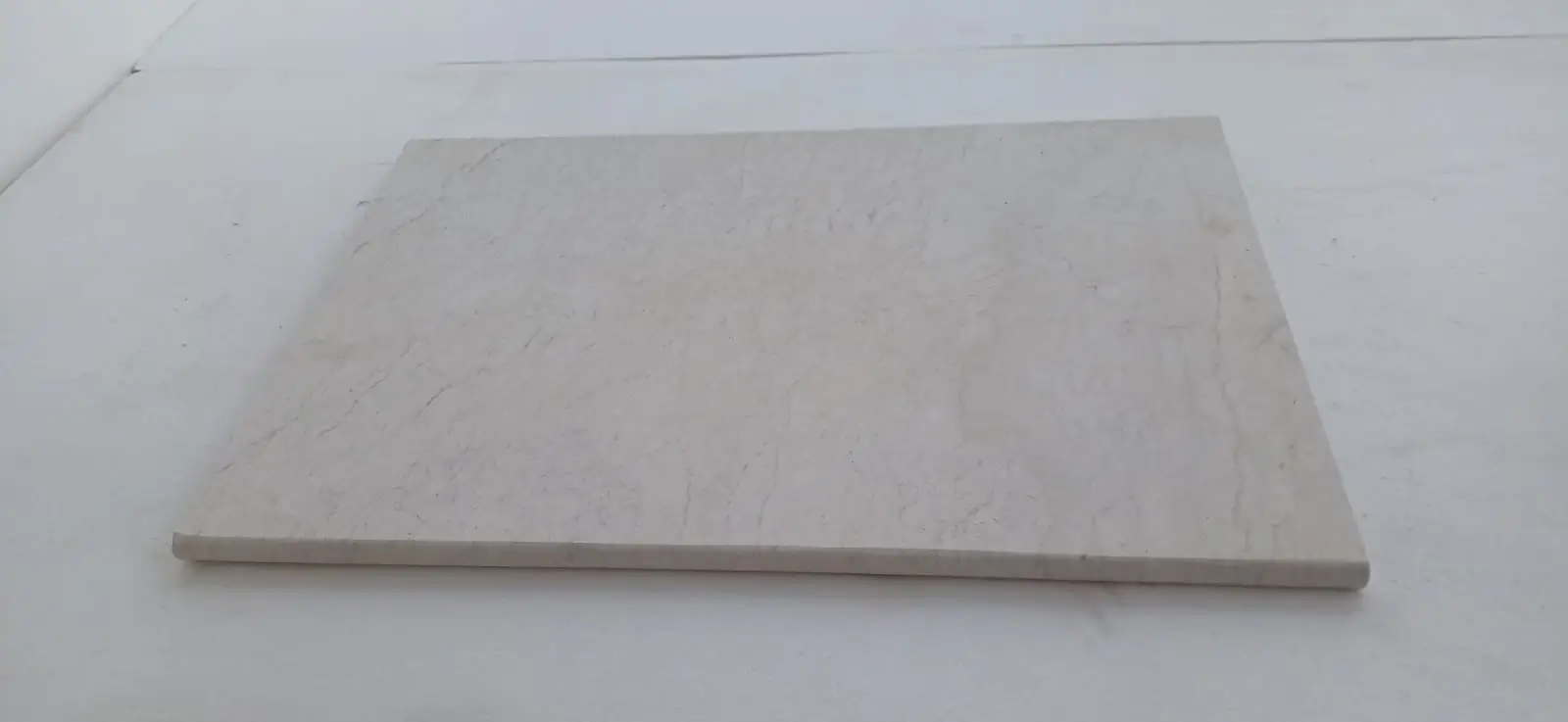
Coordinating limestone delivery with the electrician’s conduit schedule and the AV integrator’s rough-in timeline is where most Mesa technology patio projects lose weeks. The stone needs to be on-site before the AV contractor finalizes conduit routing — because the conduit layout has to work around the joint plan, not the other way around. A joint plan that gets modified to accommodate a late conduit change will almost always end up with a joint spacing violation that creates a thermal cycling problem within the first few seasons.
Citadel Stone maintains warehouse stock of limestone patio material sized for Arizona’s project velocity, which typically keeps lead times in the 1–2 week range for standard paver profiles. That window is short enough to allow you to finalize the joint and conduit coordination drawing before ordering, rather than ordering speculatively and adjusting the layout to match what arrives. Confirming warehouse availability before committing to a project start date protects the entire downstream schedule.
Truck access to Mesa residential sites with technology patio scope deserves early attention. Flatbed deliveries for full limestone pallet quantities typically require 40–45 feet of clear approach for unloading — and technology patio projects often involve sites with pre-existing landscape elements, equipment staging, or newly installed underground conduit that limits truck staging options. Coordinate your stone delivery sequence with the AV rough-in completion date so the truck doesn’t need to cross freshly placed conduit trenches that haven’t been backfilled yet.
For larger projects in Flagstaff where the freeze-thaw cycle is genuinely aggressive, warehouse delivery timing becomes a seasonal variable — scheduling stone delivery and installation completion before the first hard freeze date protects the setting bed cure cycle and eliminates the risk of frost heave affecting a freshly laid stone field.
Common Specification Failures in Limestone Smart Patio Arizona Projects
Field callbacks on entertainment-integrated limestone patios follow recognizable patterns. Understanding what goes wrong most often lets you build the correction into the spec before it becomes a warranty conversation.
- Specifying expansion joints at generic 15-foot intervals without adjusting for conduit trench interruptions — the first cracking event typically occurs at the trench intersection, not at the mid-field location the generic spacing targets
- Using standard silicone in expansion joints adjacent to entertainment equipment mounting pads — silicone’s ±12.5% movement capacity fails within 2–3 seasons in Mesa’s daily cycling environment
- Installing conduit sleeves flush with the paver face rather than recessed 1 inch — the flush sleeve creates a rigid contact point that chips the limestone edge under thermal pressure
- Skipping the anchor isolation grommet at speaker and display mounting points — the differential expansion between stainless steel anchor and limestone generates shear stress that cracks the paver from the anchor hole outward
- Applying sealant immediately after installation rather than waiting for the full 28-day setting bed cure — premature sealing traps residual moisture that accelerates spalling at penetration edges
- Failing to specify material by lot-specific test data — published absorption and compressive strength ranges for a limestone product line can vary enough between production lots to matter in high-performance specifications
Limestone Outdoor Patio Tech Mesa: Getting Your Specification Right
Getting limestone outdoor patio tech Mesa specifications right comes down to treating thermal cycling as the primary design force — not an afterthought addressed by generic joint spacing or standard sealant. Every decision point, from paver selection to conduit placement to anchor detailing, should be evaluated through the lens of how a 40°F daily temperature swing will act on that assembly over hundreds of cycles per year. The entertainment technology layer doesn’t change that calculus; it adds new discontinuity points that require the same disciplined response. Your base system, your joint plan, and your sealant protocol all need to be sized for Mesa’s actual thermal environment, not for a generic Arizona connected spaces specification that averages across climate zones that don’t share Mesa’s specific swing profile. As you refine your approach to Arizona stone projects, adjacent thermal performance considerations are worth examining — Limestone Outdoor Patio All-Season Design for Scottsdale Year-Round Use explores how the same thermal performance specifications translate across the Valley’s varied microclimates and year-round usage demands, making it a useful reference for contractors working across multiple Valley municipalities. At Citadel Stone, we work directly with contractors at the specification stage to match limestone grades and lot-specific performance data to the exact thermal and structural demands of technology-integrated patio projects across Arizona. Professional contractors stake their success on Citadel Stone’s Limestone Patio Pavers Arizona unmatched quality.