

Fossil Inclusions Start at the Ground, Not the Surface
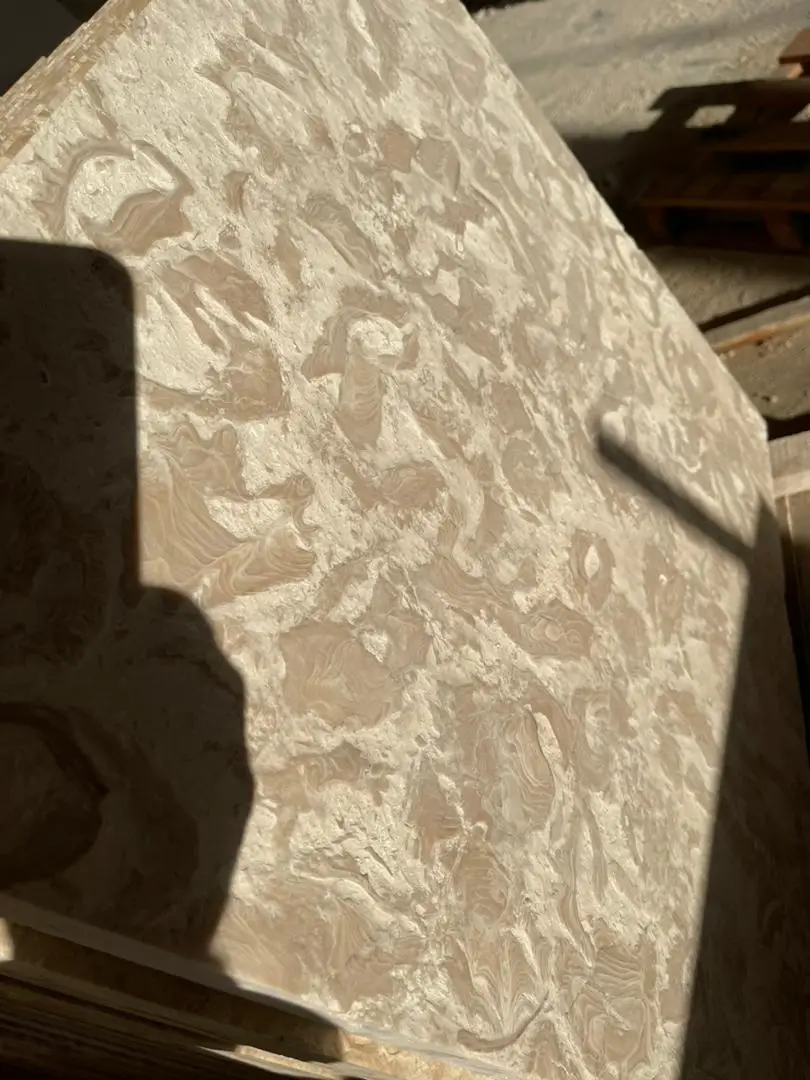
Natural limestone patio fossils Prescott homeowners rely on for lasting character aren’t random decorative accidents — they’re geological records formed under specific pressure and mineral conditions, and the same subsurface dynamics that created them millions of years ago are the ones you need to understand before setting a single slab. Prescott’s soil profile presents a genuinely complex installation environment: decomposed granite transitions unpredictably into caliche hardpan, and that variability directly determines whether your fossil-bearing limestone stays stable for 25 years or starts rocking within the first two winters. Getting the ground preparation right isn’t the background work before the real project — it is the project.
Why Prescott’s Soil Demands Specific Preparation
The Prescott area sits in a transitional zone where the Bradshaw Mountains’ decomposed granite gives way to clay-rich pockets in lower elevations and drainage swales. That mix creates installation conditions unlike what you’ll encounter in purely sandy Phoenix suburbs or the caliche-dominated flats around Chandler. In Chandler, caliche is consistent and predictable — you can plan your base depth against it reliably. In Prescott, you’re often dealing with a patchwork where the subgrade shifts character within a single patio footprint.
For fossil limestone specifically, this matters more than it does for uniform concrete pavers. The slab thickness in high-quality natural limestone patio in Arizona installations typically runs 1.5 to 2 inches nominal. That’s enough material to express the fossil inclusions beautifully, but it also means the stone transmits differential settlement loads directly into visible surface cracking rather than absorbing them the way thicker dimensional stone would. Your base system has to compensate for what the stone can’t.
- Excavate to a minimum of 8 inches below finished grade in decomposed granite zones — 10 inches where you encounter clay pockets
- Compact subgrade to 95% Proctor density before any aggregate placement
- Use a geotextile fabric layer where soil transitions between DG and clay within the patio footprint
- Set your compacted Class II base aggregate at 4–6 inches, not the 3-inch minimum that works fine in stable sand profiles
- Verify subgrade moisture content before compaction — Prescott’s seasonal monsoon moisture can significantly affect DG compaction results
Reading Fossil Inclusions During Material Selection
Here’s what most specifiers miss when sourcing natural limestone fossil inclusions Arizona projects require: not all fossil-bearing limestone slabs carry the same structural integrity. The presence of shell fragments, crinoid stems, or coral matrices tells you something about the original depositional environment — but it also tells you about potential planes of weakness within the stone. Dense, compacted fossil layers embedded in a tight calcite matrix are what you want. Loose or friable fossil pockets surrounded by micro-voids are a different situation entirely.
At Citadel Stone, we inspect incoming limestone shipments specifically for fossil density and matrix integrity before releasing material for Arizona patio projects. A slab with spectacular visual character but a soft calcite binder around the inclusions won’t survive Prescott’s freeze-thaw cycles, which are real at 5,400 feet elevation — you’re not in Phoenix’s climate envelope up there.
- Request cross-section samples when ordering thick-cut fossil slabs — the cut face reveals matrix quality better than the finished surface
- Specify a minimum compressive strength of 8,000 PSI for outdoor patio applications in freeze-thaw zones
- Avoid slabs where fossil inclusions account for more than 35–40% of the surface area, as the calcite binder carries the structural load
- Look for consistent color saturation around fossil features — blotchy, inconsistent coloring often indicates moisture infiltration into micro-void networks
Incorporating Unique Stone Features Into Your Layout Plan
Prescott distinctive patios built around fossil limestone work best when the layout planning treats each slab as an individual element rather than a repeating module. You’ll need to dry-lay the material before committing to any adhesive or mortar system — both because fossil slabs vary in thickness by 1/8 to 3/16 inch even within a single order, and because the visual distribution of fossil inclusions across the installation matters enormously to the finished result.
Dry layout also lets you catch the slab orientation that best expresses each stone’s unique stone features. Fossil specimens often have a directional grain based on how organisms oriented themselves in the original sediment bed. Rotating a slab 90 degrees can transform a visually flat piece into one with strong linear character. This is the kind of detail that professional installers develop an eye for over dozens of projects — it’s not something you can delegate to a crew that hasn’t worked natural fossil material before.
Your project timeline needs to account for dry layout time. A 400-square-foot patio typically requires four to six hours of dry layout before a skilled installer commits to the final arrangement. Factor that into your scheduling conversation with the crew, and make sure warehouse delivery is timed to give you a full day’s lead before installation begins.
Base System Performance and Arizona Character Elements
The interplay between Prescott’s subsurface conditions and the long-term performance of your natural limestone patio fossil installation comes down to one variable more than any other: drainage geometry. Arizona character elements in natural stone patios aren’t just aesthetic — they’re also functional markers of a well-built system underneath. A patio that settles unevenly doesn’t just look wrong; it changes the drainage slope you designed in, directing water toward the structure rather than away from it.
Specify a minimum 2% cross-slope on your finished patio surface, and build 1/8-inch per foot into your bedding sand layer before you ever set stone. In areas where Prescott’s DG subgrade transitions to clay, install a 4-inch perforated drain at the low end of the patio perimeter. Clay zones can hold water at the base for 48 to 72 hours after a monsoon event — that’s long enough to undermine the bedding sand layer if you haven’t given the moisture a directed exit path.
Sealing Fossil Limestone at Prescott’s High Elevation
Sealing protocols for natural limestone patio fossils Prescott projects require differ from what works in the low desert for a straightforward reason: you have genuine freeze-thaw cycling to manage. At 5,400 feet, you can expect 30 to 50 freeze-thaw events per year — enough to drive water expansion into any unsealed pore network and progressively weaken the stone around fossil inclusions. The fossil voids are particularly vulnerable because the interface between fossil material and calcite matrix often harbors micro-capillary spaces that draw moisture preferentially.
Use a penetrating, breathable silicone or fluoropolymer sealer rated for freeze-thaw conditions — not the surface-film sealers marketed for low-desert patios. Apply the first coat within 30 days of installation, once the mortar or setting material has fully cured. Reapply every 18 to 24 months, and do it in the fall before the first freeze, not in spring after the damage is already accumulating.
- Test sealer absorption rate on a sample piece before full application — some fossil-heavy slabs are denser and require two lighter coats rather than one heavy application
- Avoid solvent-based sealers in Prescott’s drier climate — they can over-penetrate and darken the stone in ways that mask fossil detail
- Clean the surface with a pH-neutral stone cleaner 48 hours before sealing, not standard household cleaners that leave alkaline residue
- In areas near Tempe and the lower Valley, sealing intervals can stretch to 24–30 months — Prescott’s freeze-thaw cycling demands the shorter 18-month schedule without exception
Ordering, Logistics, and Project Planning Realities
Natural limestone fossil slabs are not a stock-program material the way uniform tumbled travertine is. Lead times from the warehouse for select fossil-bearing limestone typically run 2 to 4 weeks for standard orders, and up to 6 weeks if you’re specifying a custom size or a tighter fossil density requirement. Factor this into your project schedule at the front end, not when you’re two weeks from installation.
Truck access to Prescott job sites is a real logistical consideration that often gets overlooked. Many of the hillside lots in the Prescott area that make the most visually compelling settings for natural limestone patio fossils are also the ones where a standard flatbed delivery truck can’t reach the drop zone. Confirm your site access with your delivery coordinator early — at our outdoor limestone facility, we work through site-specific delivery logistics regularly and can advise on material staging when direct truck access isn’t possible.
For projects in the Surprise area and other Valley locations, flatbed truck delivery to large accessible lots is straightforward and typically adds minimal time to project schedules. Prescott’s terrain requires more advance planning but the material performance at elevation makes that coordination effort worthwhile.
Joint Spacing and Thermal Movement in Fossil Slabs
The detail that matters most in Prescott distinctive patios featuring fossil limestone is joint spacing calibrated to both thermal movement and freeze-thaw cycling simultaneously. Standard warm-climate limestone joint recommendations of 1/8 inch are insufficient here. You need 3/16 to 1/4 inch joints to accommodate the thermal differential between Prescott’s summer highs near 95°F and winter lows that regularly drop below 20°F.
Limestone’s thermal expansion coefficient runs approximately 4.4 × 10⁻⁶ per °F. Over a 12-foot run with a 75°F seasonal temperature differential, that generates 0.047 inches of cumulative movement — not dramatic, but enough to crack grout joints specified too tightly. Use a polymer-modified grout or joint compound rated for exterior freeze-thaw applications, and never fully grout out the perimeter joints adjacent to the structure. Those expansion joints need to remain flexible, filled with a backer rod and sealant rated for stone applications.
- Set interior field joints at 3/16 inch minimum with polymer-modified grout
- Perimeter joints should be 3/8 inch, filled with compressible backer rod and ASTM C920 sealant
- Install control joints every 10 to 12 feet in both directions for large installations exceeding 200 square feet
- Do not grout within 72 hours of installation in Prescott’s monsoon season — ambient humidity above 75% compromises grout cure rate significantly
Getting Natural Limestone Patio Fossils Specified Correctly in Prescott
The full value of natural limestone patio fossils Prescott projects can achieve comes through only when the subsurface work matches the quality of the surface material. Every specification decision described here — from subgrade compaction through joint compound selection — exists because Prescott’s soil variability and elevation create conditions that expose every shortcut in ways that flat-desert installations often don’t reveal for years. You’re working in a climate that tests both the material and the installation system simultaneously, and fossil limestone rewards that rigor with Arizona character elements no manufactured product can replicate.
As you finalize your Prescott project specifications, related sustainability considerations in Arizona stone installation may also be relevant to your planning. Natural limestone delivers long-term environmental value beyond its surface character, and that performance context applies across Arizona climates. Natural Limestone Patio Eco-Friendly Choice for Marana Sustainable Living explores how natural limestone performs in another Arizona context, offering perspective on material longevity and environmental impact that informs broader project decisions. Citadel Stone’s natural limestone patio fossils represent Arizona’s most distinctively crafted natural stone character options available for Prescott projects.