

Drainage-First Design for Limestone Bench Installations
Large limestone slab benches in Chandler perform beautifully for decades when the drainage strategy is locked in before the first slab is ever positioned — that’s the detail that separates a stable installation from one that starts rocking and cracking within three monsoon seasons. Chandler’s rainfall pattern is deceptive: long dry stretches followed by intense monsoon events that can drop two inches of rain in under an hour create dramatically uneven saturation pressure beneath any heavy stone feature. Your base design needs to anticipate that hydraulic shock, not just the average annual precipitation figure.
The compacted caliche and clay-loam soils common across much of Chandler don’t drain the way desert soils in higher elevations do. When water saturates that subgrade quickly, it temporarily becomes nearly frictionless, and a 300-pound limestone slab sitting on an inadequately prepared base will shift. You’ll want a minimum 6-inch compacted aggregate base using 3/4-inch crushed rock — not decomposed granite, which binds too tightly when dry and loses cohesion when wet — with a positive slope of 1/8 inch per foot directed away from any adjacent structure or planting bed.
Slab Selection Criteria for Arizona Outdoor Seating
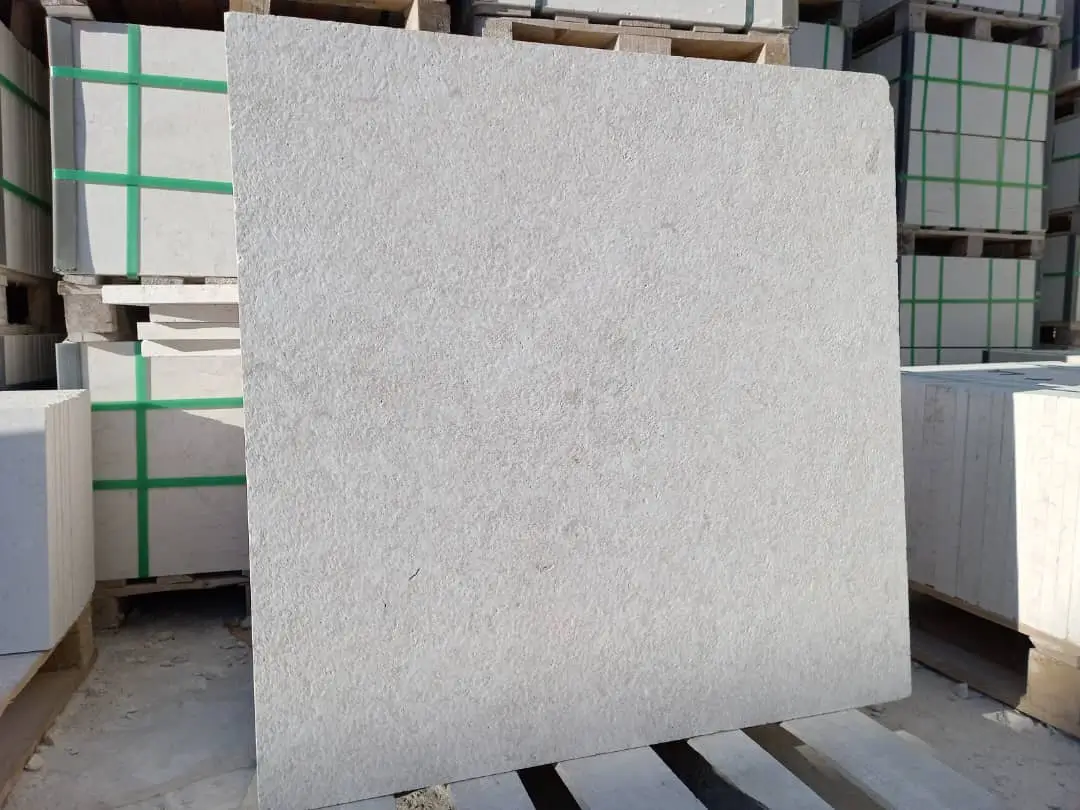
Not every limestone slab that looks thick enough is actually suited for a structural bench application. You’re dealing with point-load stress at the slab’s unsupported mid-span, and in Arizona’s thermal cycling environment that stress compounds over time. For large stone slab furniture in Arizona, target a minimum finished thickness of 3 inches for spans beyond 24 inches between support points, and 4 inches if you’re designing a freestanding bench without a center leg or corbel support.
Limestone density matters here more than people expect. Dense, low-porosity limestone in the 145–155 lb/ft³ range resists moisture infiltration far better than the lighter, more porous varieties that photograph beautifully in showrooms but absorb monsoon water at rates that accelerate spalling. Ask your supplier for the absorption rate — you want a value below 3% per ASTM C97 testing standards. At Citadel Stone, we test slab stock for absorption and density before it leaves the warehouse, which saves contractors from the frustrating experience of discovering a porosity problem after installation.
- Target limestone with a minimum compressive strength of 4,000 PSI for bench applications subject to concentrated seating loads
- Verify absorption rate below 3% (ASTM C97) to ensure monsoon season performance in Chandler’s climate
- Specify 3-inch minimum thickness for spans up to 36 inches; 4 inches for longer cantilever or center-span designs
- Confirm the slab surface has a honed or natural cleft finish — polished limestone becomes dangerously slippery when wet during summer storms
- Review the slab’s bedding plane orientation relative to load direction; slabs cut perpendicular to bedding planes carry load more efficiently
How Monsoon Moisture Affects Bench Foundation Stability
Arizona’s monsoon season runs roughly from mid-June through September, and the moisture behavior during that window is the primary stress test your large limestone slab benches in Chandler will face every year. The problem isn’t the rain itself — it’s the rapid wetting and drying cycle. Saturated soil expands; arid soil contracts. A bench footer or pad that experiences that cycle 60 to 80 times per season will eventually migrate unless the drainage geometry is intentional.
Projects in Chandler frequently encounter a perched water table effect during peak monsoon weeks, where the caliche layer prevents deep percolation and water pools temporarily just below the aggregate base. Designing a French drain or perforated pipe outfall at the base perimeter — even for a relatively simple bench installation — eliminates that pooling risk and extends the functional life of the installation by a measurable margin. Field experience consistently shows that benches installed with perimeter drainage outlast those without it by 8 to 12 years in this climate zone.
Your concrete footing piers, if you’re using them for a slab-on-pier bench design, should extend a minimum of 18 inches below grade to clear the saturation zone during heavy monsoon events. Piers poured to only 12 inches in Chandler’s soil profile regularly exhibit seasonal heave that telegraphs through to the stone surface as cracking at the slab’s bearing points.
Base Preparation Specifics for Chandler Garden Bench Sites
The sequence of base preparation for large limestone slab benches matters as much as the material specifications themselves. Starting with a properly excavated, compacted subgrade gives you a reliable platform — but Chandler’s soil variability means you shouldn’t assume uniform conditions across even a modest bench footprint. Probe the subgrade at multiple points before committing to a compaction depth. Soft spots that compress more than 1/4 inch under foot pressure need additional excavation and replacement with mechanically compacted fill.
- Excavate to a minimum depth of 10 inches below finished grade for a gravel-set bench installation — 6 inches of aggregate base plus 4 inches of setting bed and slab thickness allowance
- Compact subgrade to 95% Proctor density before placing any aggregate — this single step prevents the majority of post-installation settling
- Install a non-woven geotextile fabric between subgrade and aggregate to prevent fines migration upward into your drainage layer during monsoon saturation events
- Use 3/4-inch washed crushed stone for your drainage base layer — the void ratio in washed stone is significantly higher than in decomposed granite or road base, which is what you need for rapid water evacuation
- Slope the entire base surface at 1/8 inch per foot minimum, directing water away from bench support structures
For garden bench design projects integrating large stone slab furniture into Arizona garden settings with adjacent irrigation systems, add a 4-inch perforated drain pipe at the low edge of your aggregate base and route it to a gravel sump or daylight outfall at least 10 feet from the bench location. Drip irrigation that runs daily during summer months can introduce as much cumulative moisture as a moderate monsoon event — your drainage design needs to handle both sources simultaneously.
Thermal Expansion and Joint Spacing Considerations
Limestone’s coefficient of thermal expansion sits around 4.4 × 10⁻⁶ per °F, which sounds negligible until you’re working with a slab that’s 72 inches long and cycling between 55°F on a January night and 165°F surface temperature on an August afternoon in Chandler. That temperature range produces roughly 0.06 inches of linear movement across a 6-foot slab — small enough to ignore in temperate climates, significant enough to cause bearing-edge spalling in Arizona when you’ve designed zero accommodation for it.
You’ll want a 1/4-inch gap between adjacent slab elements and between slabs and any rigid abutting structure — a garden wall, a planter surround, or a paved surface. Fill that gap with a closed-cell backer rod and a polyurethane sealant rated for outdoor stone applications. Silicone sealants are tempting because they’re widely available, but they don’t bond reliably to dense limestone surfaces under the UV exposure levels Chandler receives, and you’ll find yourself resealing every 18 months instead of every 5 years.
Referencing thin brick limestone pavers as a complementary format can help when your design calls for a lighter-weight accent element alongside the structural bench slabs — the thinner format works well for the pad or step leading up to the bench seating surface without competing with the visual weight of the main slab.
Support Structure Design for Heavy Stone Bench Slabs
The structural logic for large limestone slab benches in Chandler outdoor seating configurations comes down to two factors: bearing area and span. Most residential garden bench designs underestimate bearing area requirements and end up concentrating load on an edge that the limestone can’t sustain long-term. You should distribute each slab’s load across a minimum 4-inch bearing width at each support — whether that’s a stone pillar, a concrete pier, or a mortared masonry support wall.
- Limestone bench slabs require a minimum 4-inch bearing surface at each support point to avoid stress concentration at the slab edge
- Mortar setting beds for slab-on-wall bench designs should be a full-coverage application, not spot-dolloped — voids beneath the slab create flex points that lead to cracking under dynamic load
- For freestanding pillar-supported designs, pillar dimensions should match or exceed the slab thickness — a 3-inch slab on a 4×4 pillar creates an overhang condition at the bearing edge that concentrates stress
- Steel dowels or pins are unnecessary for properly designed stone bench installations — mechanical fastening in limestone creates stress risers at the penetration points that accelerate cracking under thermal cycling
Arizona patio retreats often integrate the bench into a continuous garden wall, which is actually a structurally superior approach when done correctly. The wall provides a distributed bearing surface and acts as a thermal buffer that moderates the slab’s temperature cycling. Projects in Tempe using integrated wall-bench designs with proper limestone thickness have documented significantly lower maintenance intervention rates compared to freestanding slab-on-pillar configurations in similar exposure conditions.
Surface Treatment and Sealing for Monsoon Resilience
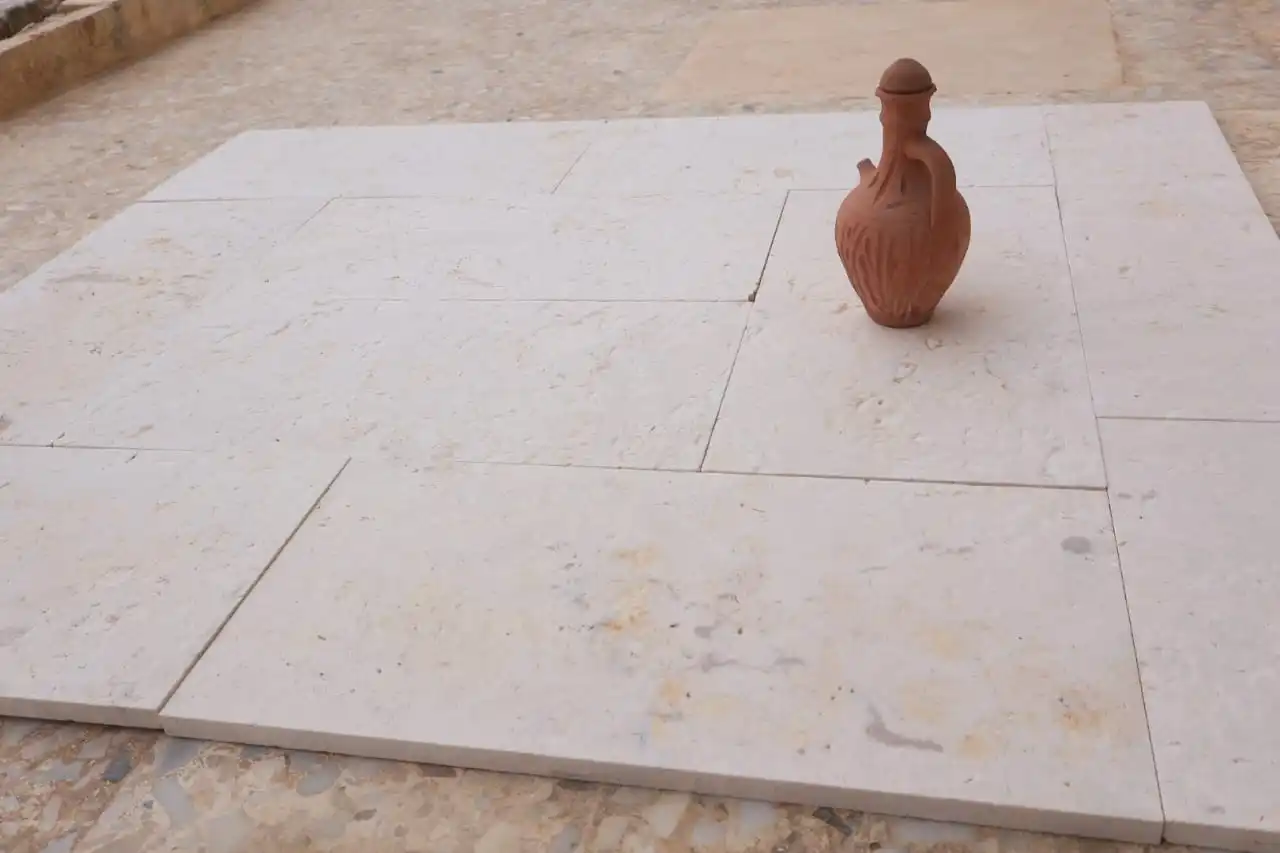
Sealing large limestone slab benches in Chandler isn’t optional — it’s part of the structural performance strategy, not just aesthetics. Unsealed limestone in Arizona’s monsoon climate absorbs moisture rapidly during rain events and then loses that moisture through surface evaporation within hours. That repeated wetting and drying cycle drives mineral migration toward the surface, producing efflorescence, and accelerates micro-crack propagation from freeze-thaw analog cycling (the temperature differential between wet stone and dry radiant heat creates stress equivalent to modest freeze-thaw activity).
- Apply a penetrating silane-siloxane sealer rated for exterior limestone — avoid topical acrylic sealers that trap moisture vapor and peel within 2 monsoon seasons
- First application should go on clean, dry stone at least 28 days after installation to allow any residual installation moisture to evacuate
- Apply two coats: a saturation coat that absorbs fully, followed by a second coat applied within 30 minutes while the first is still tacky — this two-coat method achieves 40% better penetration depth than single-coat application
- Reapply every 4–5 years under normal Chandler outdoor exposure; high-UV south-facing installations may need reapplication at 3-year intervals
- After sealing, surface water should bead visibly — if it doesn’t bead on a test area within 10 minutes of application, the stone surface needs additional cleaning before resealing
Chandler outdoor seating areas that include limestone benches adjacent to irrigation plantings need a sealer with enhanced resistance to organic staining — tannin migration from mulch and decomposing plant material will penetrate unsealed or inadequately sealed limestone within one growing season. Specifying a sealer with stain-guard additive for these applications costs marginally more but eliminates the need for poultice treatments that disrupt the sealing schedule.
Project Logistics and Delivery Planning in Arizona
Large limestone slab benches require careful logistics planning because the slabs themselves — particularly in the 3- to 4-inch thickness range at spans of 48 inches or more — can weigh 250 to 400 pounds each. Your site’s truck access conditions determine whether you’re making a clean delivery or improvising with additional handling equipment. Confirm the delivery truck’s turning radius requirement against your site’s access drive dimensions before scheduling — a flatbed truck delivering full slab orders needs roughly 35 feet of maneuvering clearance, and residential garden projects frequently have less than that.
For projects in Surprise and other fast-growing suburban communities where delivery access through active construction zones is common, coordinating your stone delivery window with the general contractor’s site schedule prevents the costly scenario of a loaded truck waiting on-site for access clearance. At Citadel Stone, our warehouse team stages large limestone slab orders on dedicated transport frames that protect slab edges during transit — edge damage on a bench slab is a rejection event, not a repair event, and proper warehouse staging makes the difference.
- Verify warehouse stock confirmation at least 3 weeks before your installation date — large slab stock turns over faster than tile-format inventory and availability shifts
- Request slabs to be palletized vertically (on edge) for transport — horizontal stacking concentrates weight on lower slabs and risks edge spalling at contact points
- Plan for mechanical unloading: a 350-pound slab cannot be safely hand-carried by typical crew sizes; a compact track loader or dedicated stone handling tongs are necessary
- Inspect each slab for pre-existing cracks before signing the delivery receipt — hairline fractures parallel to the bedding plane are particularly concerning in bench slabs that will experience bending load
Final Installation Priorities for Chandler Limestone Bench Projects
Successful large limestone slab benches in Chandler come down to taking drainage and moisture management as seriously as the aesthetic choices. The material selection — density, absorption rate, thickness, finish — sets the foundation for long-term performance, but none of that potential is realized without a drainage-first base strategy that accounts for the hydraulic dynamics of monsoon events. Your Chandler outdoor seating area deserves more than a beautiful slab dropped onto an inadequate base; it deserves the drainage geometry, the proper aggregate depth, and the sealing protocol that will carry the installation through 20 or more monsoon seasons without significant intervention. As you expand your Arizona patio retreats and hardscape planning beyond the bench itself, the Large Limestone Slab Outdoor Bar Counter for Mesa Entertainment Zones article covers how large limestone slabs perform in a complementary outdoor entertainment context — the structural and drainage principles translate directly. Citadel Stone supplies large limestone slab benches to Chandler projects with the technical depth and warehouse-verified material quality that demanding installations require. Award-winning landscape architects build stunning portfolios using Citadel Stone’s irregular limestone pavers in Arizona.