
Why Code Compliance Comes Before Everything Else
Flat cobblestone problems in Arizona desert yards almost always trace back to a specification decision that was made — or skipped — before the first stone was ever set. Arizona’s residential and commercial hardscape work falls under the International Building Code as adopted by the state, and municipalities like Mesa layer additional requirements on top of that baseline, particularly around load-bearing surface ratings for driveways and access paths near structures. Your cobblestone surface isn’t just a decorative element — it’s a structural assembly that needs to perform to code, and when it doesn’t, you’re looking at liability exposure on top of the cosmetic problems.
The Arizona Registrar of Contractors requires that any hardscape installation connected to a permitted structure meets specific compressive load ratings. For flat cobblestone surfaces adjacent to garage aprons or entry walks, that typically means a minimum 3,000 PSI equivalent base assembly — and that requirement shapes every other decision downstream, from base depth to joint width to stone thickness.
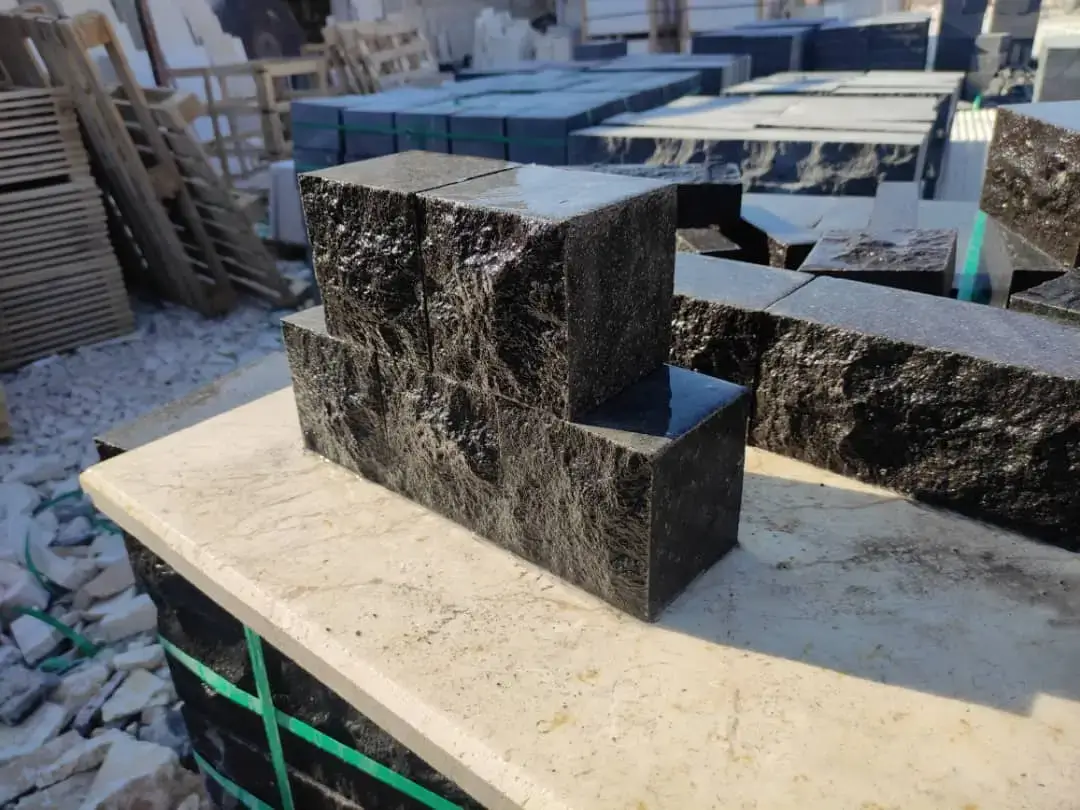
Cobblestone Shifting in Arizona Soil Conditions: The Structural Root Cause
The cobblestone shifting you see in Arizona yards isn’t random — it follows a predictable mechanical sequence that starts with the interaction between expansive soils and an undersized base. Cobblestone shifting in Arizona soil conditions accelerates when base aggregate is compacted to less than 95% standard Proctor density, and Arizona caliche and the clay-rich soils common across the Phoenix metro amplify that failure mode with every moisture cycle. Most failed installations land somewhere between 87 and 91% compaction, which sounds close but translates to 0.5 to 1.5 inches of vertical movement per year in reactive soils.
Here’s what the code actually requires versus what gets built: IRC Section R403 and its Arizona amendments specify minimum base depths based on frost line and soil bearing capacity. In the low desert — Yuma, the east Valley — frost isn’t the driver, but soil bearing capacity still mandates a minimum 4-inch compacted aggregate base for pedestrian applications and 6 inches for vehicular. Many flat cobblestone problems in Arizona desert yards originate from contractors pouring a 2-to-3-inch decomposed granite bed directly over native soil and calling it a base.
- Expansive clay soils in Chandler and Gilbert corridors can exert 5,000 to 8,000 psf of uplift pressure — enough to displace stones set in a standard sand bed
- Caliche layers create perched water tables that saturate base material during monsoon season, reducing bearing capacity by 30 to 50% temporarily
- Cobblestone edges migrate outward when lateral confinement fails — edge restraints must be pinned at 24-inch intervals per IBC Section 1804
- Base compaction should be verified with a nuclear density gauge, not estimated from visual inspection
Flat Stone Paver Cracking in the AZ Climate: Separating Structural from Thermal Failures
Flat stone paver cracking in AZ climate conditions comes in two distinct failure modes, and treating them as interchangeable is one of the most common diagnostic mistakes on repair calls. Structural cracking runs perpendicular to the direction of load — you’ll see it across the face of stones that span a void or bridge a weak spot in the base. Thermal cracking runs parallel to joint lines and appears in clustered patterns where stones are tightly set without adequate expansion relief.
Arizona’s temperature swing from winter night lows near 35°F to summer surface temperatures exceeding 160°F represents a thermal delta that most generic installation specs aren’t written for. The IBC doesn’t prescribe expansion joint spacing for exterior paving in the same way it does for interior tile, which means your specification has to fill that gap. For flat cobblestone installations in Arizona, expansion joints at 8-to-10-foot intervals — rather than the 12-to-15-foot guidance written for temperate climates — reduce thermally induced cracking by a measurable margin in the first three annual cycles.
Stone thickness matters here in ways that go beyond simple load-bearing. A 30mm stone has roughly 2.4 times the thermal mass of a 20mm stone at the same surface area, which means it heats and cools more slowly, reducing the peak differential stress at the joint interface. Specifying a minimum 30mm nominal thickness for Arizona flat cobblestone work isn’t just a durability preference — it’s a structural decision with a thermal engineering basis. Flat stone paver cracking in AZ climate environments is disproportionately common in installations where designers defaulted to thinner material without accounting for thermal cycling stress.
Base Depth and Edge Restraint: What Arizona Standards Actually Require
Arizona’s frost line depth is essentially zero at elevations below 4,000 feet, which leads some contractors to assume that base depth requirements are minimal. That’s a misreading of the code’s intent. The Arizona-adopted IBC uses a soil bearing capacity model, not just a frost model, and the Maricopa County grading ordinance specifically calls out expansive soil classifications that trigger deeper base requirements regardless of frost exposure.
- Pedestrian cobblestone applications: minimum 4-inch Class II aggregate base, compacted in 2-inch lifts to 95% relative compaction
- Vehicular or mixed-use surfaces: minimum 6-inch base, with a geotextile separation fabric required where native soil CBR is below 15
- Edge restraints must achieve mechanical pin engagement into native or compacted soil — surface-set plastic bender board does not meet structural edge confinement requirements under Arizona contractor code
- Permeable cobblestone systems require a minimum 8-inch angular open-graded base per Maricopa County Low Impact Development standards
For projects in Gilbert, where the town’s development standards reference ASCE 7-22 for lateral earth pressure in hardscape design, edge restraint specification carries more weight than in unincorporated areas. Gilbert’s plan review process for hardscape over 200 square feet adjacent to structures can flag installations with inadequate edge confinement during inspection — meaning you need the structural details correct before the pour, not after.
Repairing Natural Cobblestone Surfaces in Arizona: Code-Compliant Remediation
Repairing natural cobblestone surfaces in Arizona requires a different approach than the patch-and-reset work that satisfies a homeowner’s visual concern. If the installation was permitted — and any hardscape over 200 square feet adjacent to a structure typically requires a permit in Maricopa County — the repair may need to meet the same code standard as new construction. That means pulling a repair permit for significant remediation work, which in turn means your base depth, compaction, and edge restraint details need to be documentable.
The practical sequence for a code-compliant cobblestone repair looks like this: excavate the failed zone to full base depth (4 inches minimum, 6 if vehicular), verify sub-base bearing capacity with a hand penetrometer or pocket vane shear test, install geotextile fabric if the native soil is reactive, compact new aggregate base in lifts, reset edge restraints with mechanical pins, then relay stones with appropriate joint spacing. Skipping the compaction verification step is the single most common cause of repeat failure when repairing natural cobblestone surfaces in Arizona.
At Citadel Stone, we’ve worked through enough Arizona repair consultations to know that the failure zone is almost always larger than it looks from the surface. A 10-square-foot displacement pattern typically has a 20-to-25-square-foot base failure underneath. You’re better off excavating the full failure envelope and repairing correctly once than patching the visible area and returning in 18 months.
Arizona Desert Cobblestone Maintenance: Keeping Your Surface Code-Adjacent Over Time
Arizona desert cobblestone maintenance challenges go beyond sealing and weed control — the maintenance decisions you make annually either preserve or erode the structural integrity of your base assembly. Pressure washing at angles below 30 degrees can dislodge joint sand and reduce lateral confinement between stones. Once jointing material drops below 60% of joint depth, you’ve lost meaningful interlock, and the stones begin acting as individual units rather than a composite surface.
- Repoint cobblestone joints every 2 to 3 years in Arizona’s desert climate — monsoon saturation cycles accelerate joint sand erosion significantly compared to dry-climate norms
- Inspect edge restraints annually for frost heave analog — even without freeze-thaw, Arizona’s thermal cycling causes soil movement at restraint pin locations over time
- Apply penetrating sealer to natural cobblestone every 2 to 3 years to reduce water infiltration into the base — this is maintenance, not aesthetics
- After significant monsoon events, check for surface ponding that persists more than 30 minutes — standing water indicates base saturation and potential bearing capacity reduction
Arizona desert cobblestone maintenance challenges are compounded by the monsoon season’s unpredictability — a surface that performs well through a mild summer can degrade rapidly after two consecutive high-intensity precipitation events if joint material and edge restraints aren’t maintained to specification. For sourcing replacement stones when repairs require color and size matching, verifying warehouse stock levels before committing to a repair timeline prevents the common problem of mismatched stones from different production batches. At Citadel Stone, our warehouse inventory for Arizona flat cobblestone pavers is maintained by lot, which means you can typically match existing installations when the original source is documented. Lead times from our warehouse run 5 to 7 business days for standard pallet quantities — considerably faster than the 4-to-6-week window for imported stone shipped without prior inventory.
Citadel Stone Arizona flat cobblestone pavers
Material Thickness and Load Ratings for Arizona Flat Cobblestone
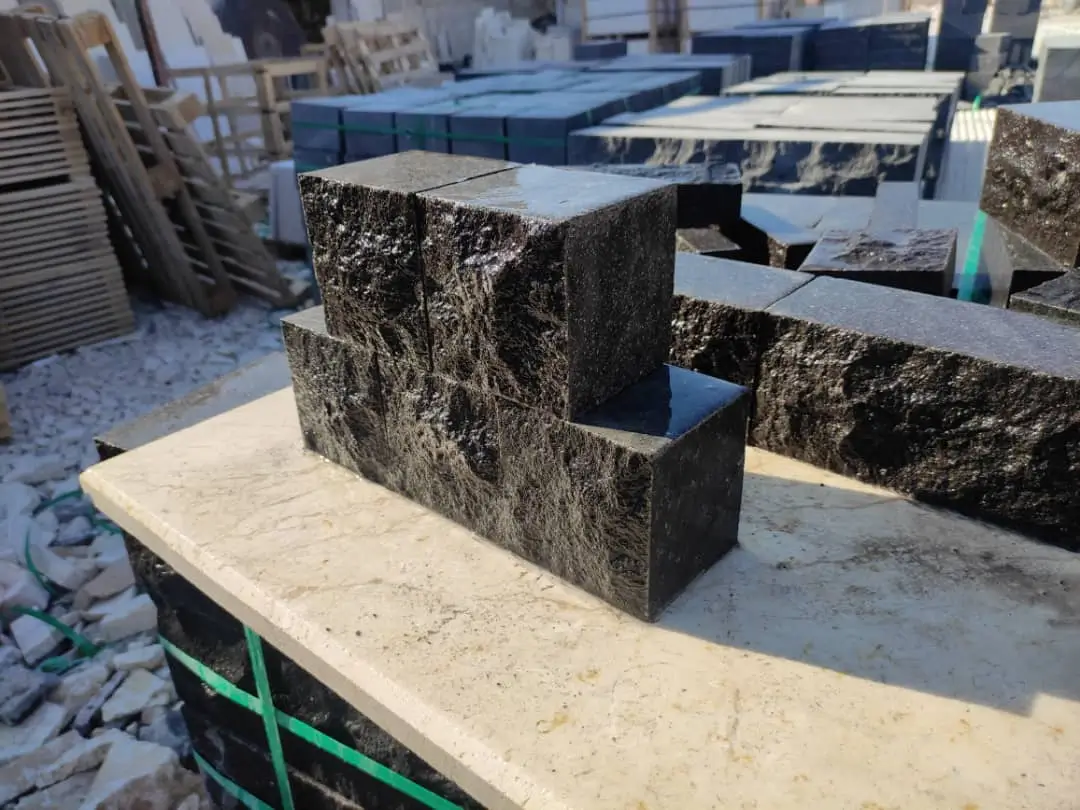
Your material specification needs to align with the load-bearing assembly requirements, not just the aesthetic preferences of the design. For flat cobblestone in Arizona, the 30-to-40mm thickness range isn’t arbitrary — it’s the zone where the stone’s own flexural strength contributes meaningfully to the surface assembly’s total load distribution. Below 25mm, the stone relies almost entirely on the base for load transfer, which means any base inconsistency translates directly to stone cracking. Above 50mm, the added weight increases base settlement risk in reactive soils without proportional structural benefit.
The IBC’s table for exterior paving load classifications places most residential driveways at a minimum 3,500-pound point load requirement at tire contact. For cobblestone surfaces in that application, the ICPI (Interlocking Concrete Pavement Institute) technical specifications — which Arizona engineers routinely reference even for natural stone applications — recommend a minimum 80mm (approximately 3.15-inch) total stone thickness for vehicular use. Natural flat cobblestone in the 60-to-80mm range handles those loads comfortably, provided the base assembly is correct. Thinner stones in the 30-to-40mm range are appropriate for pedestrian and light-traffic applications but should be explicitly excluded from vehicular zones in your specification.
Drainage Design and Arizona’s Permeable Surface Requirements
Drainage isn’t a secondary concern in Arizona cobblestone work — it’s a code-driven requirement in many jurisdictions. Maricopa County’s post-construction stormwater management rules, and similar ordinances in incorporated cities, require that hardscape installations over a threshold area (typically 500 square feet for residential projects) either maintain pre-development runoff rates or incorporate permeable surface design. Your cobblestone surface may need to qualify as a permeable or semi-permeable system to satisfy this requirement, which affects both your joint width specification and your base design.
For projects in Yuma, the city’s engineering standards reference a specific percolation rate threshold for permeable hardscape — 0.1 inches per hour minimum infiltration through the surface assembly. Achieving that with natural cobblestone requires open-graded joint material (typically 2-to-4mm crushed aggregate rather than polymeric sand) and a permeable aggregate base with less than 5% fines. That’s a very different specification from a standard cobblestone installation, and getting it right matters both for code compliance and for long-term base performance during the intense precipitation events Arizona monsoons deliver.
- Minimum cross-slope for non-permeable cobblestone surfaces: 1.5% away from structures per Arizona Residential Code R401.3
- Drainage swales adjacent to cobblestone edges must be sized to handle the 100-year 24-hour storm event per Maricopa County Drainage Design Manual
- Improperly drained cobblestone surfaces saturate bases during monsoon events — this is the number-one cause of post-monsoon shifting complaints
- Truck delivery access for stone pallets should be evaluated for drainage impact — construction-phase soil disturbance can compromise installed cobblestone drainage patterns if not managed
Getting Flat Cobblestone Specifications Right in Arizona Desert Yards
Flat cobblestone problems in Arizona desert yards are fixable — but the fix has to start with understanding that these are structural failures governed by code requirements, not just cosmetic issues that respond to surface-level repairs. Your specification needs to address base depth, compaction standards, edge restraint engineering, expansion joint spacing, stone thickness, and drainage design as an integrated system. Miss any one of those elements, and you’re setting up for a repeat failure in the next monsoon season or the one after that.
The good news is that correctly specified flat cobblestone installations in Arizona perform exceptionally well over long time horizons. The material is inherently suited to the environment — its thermal mass characteristics, natural porosity, and mechanical interlocking behavior all work with Arizona’s conditions rather than against them when the base assembly is engineered correctly. For the actual installation sequence that brings these specifications to life on the job site, How to Install Flat Cobblestones in Arizona covers the step-by-step process Citadel Stone recommends for achieving code-compliant results in Arizona’s desert environment. Projects across Flagstaff, Peoria, and Scottsdale have used flat cobblestones from Citadel Stone to address shifting and cracking issues, with the stones cut to a uniform 3-to-4-centimeter thickness that maintains joint alignment through monsoon moisture cycles.