
Base failure accounts for the majority of sett installations that don’t survive Arizona’s storm season — not thermal movement, not material selection, but the mechanical stress that builds when wind-driven rain saturates a poorly constructed sub-base and cyclic loading from storm-force gusts works at the joint interfaces. Installing paving setts Arizona desert conditions demand requires you to engineer the installation from the ground up with weather resilience as the primary objective, not an afterthought. The steps in this guide reflect what actually holds up across Arizona’s most demanding environments, from high-desert monsoon corridors to exposed southwestern yards where haboobs arrive with little warning.
Why Storm Resistance Defines Sett Installation in Arizona
Arizona’s reputation for heat overshadows the mechanical punishment that paving installations actually endure. The state’s monsoon season delivers wind gusts exceeding 60 mph in haboob events, and isolated microbursts in the Phoenix basin have been measured above 80 mph — enough to dislodge inadequately bedded setts or undercut edge restraints that weren’t anchored to depth. Your installation needs to treat these conditions as the baseline, not the exception.
Wind-driven rain during monsoon events saturates joint sand within minutes, and if that sand hasn’t been properly locked — either through polymeric stabilization or sufficient compaction depth — you’ll see sett migration at the leading edges first. The joint opens slightly, water infiltrates the bedding course, and over two or three storm cycles the sett lifts. It’s a failure pattern that repeats every season across Arizona yards where natural stone sett installation steps were followed correctly for heat but not for storm mechanics.
- Haboob-force winds create lateral pressure on edge restraints, requiring concrete toe-pours rather than plastic spike-in edging
- Wind-driven rain infiltration can deliver the equivalent of three inches of rainfall to a joint in under 10 minutes
- Impact from hail — common in Tucson’s storm corridor — demands sett thickness of at least 60mm for basalt and 80mm for softer limestone varieties
- Thermal cycling remains a secondary concern but compounds storm damage when joint gaps are already compromised
Material Selection for Desert Storm Conditions
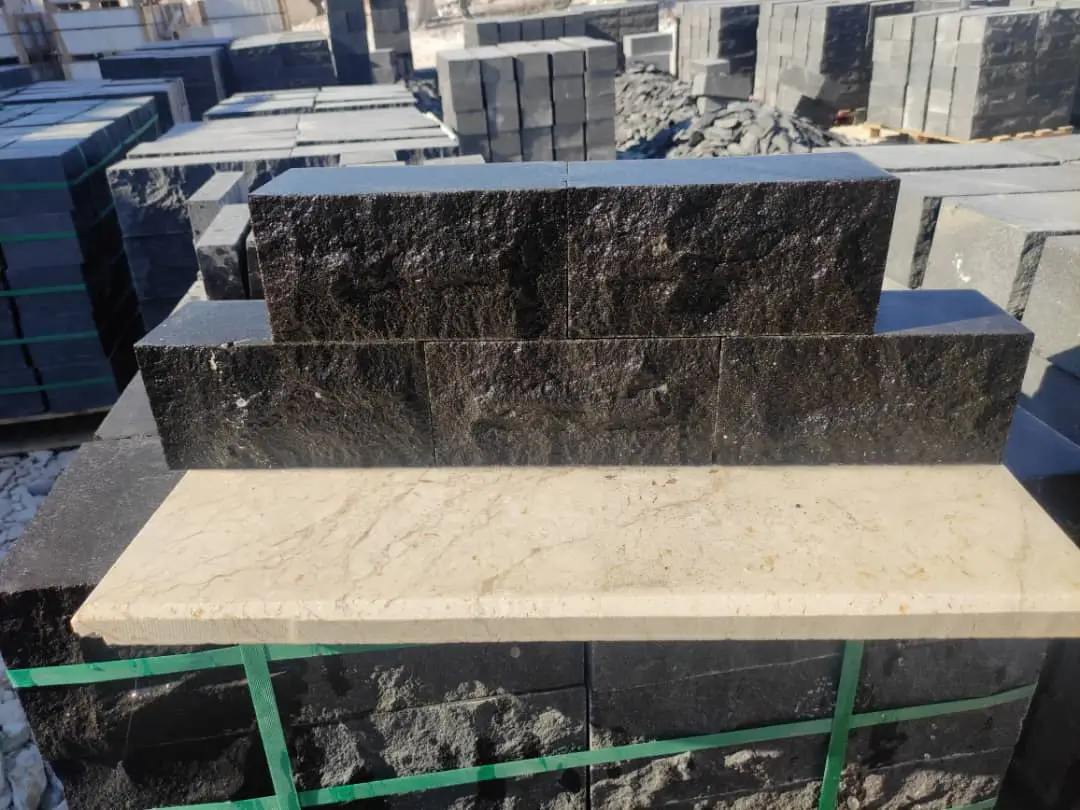
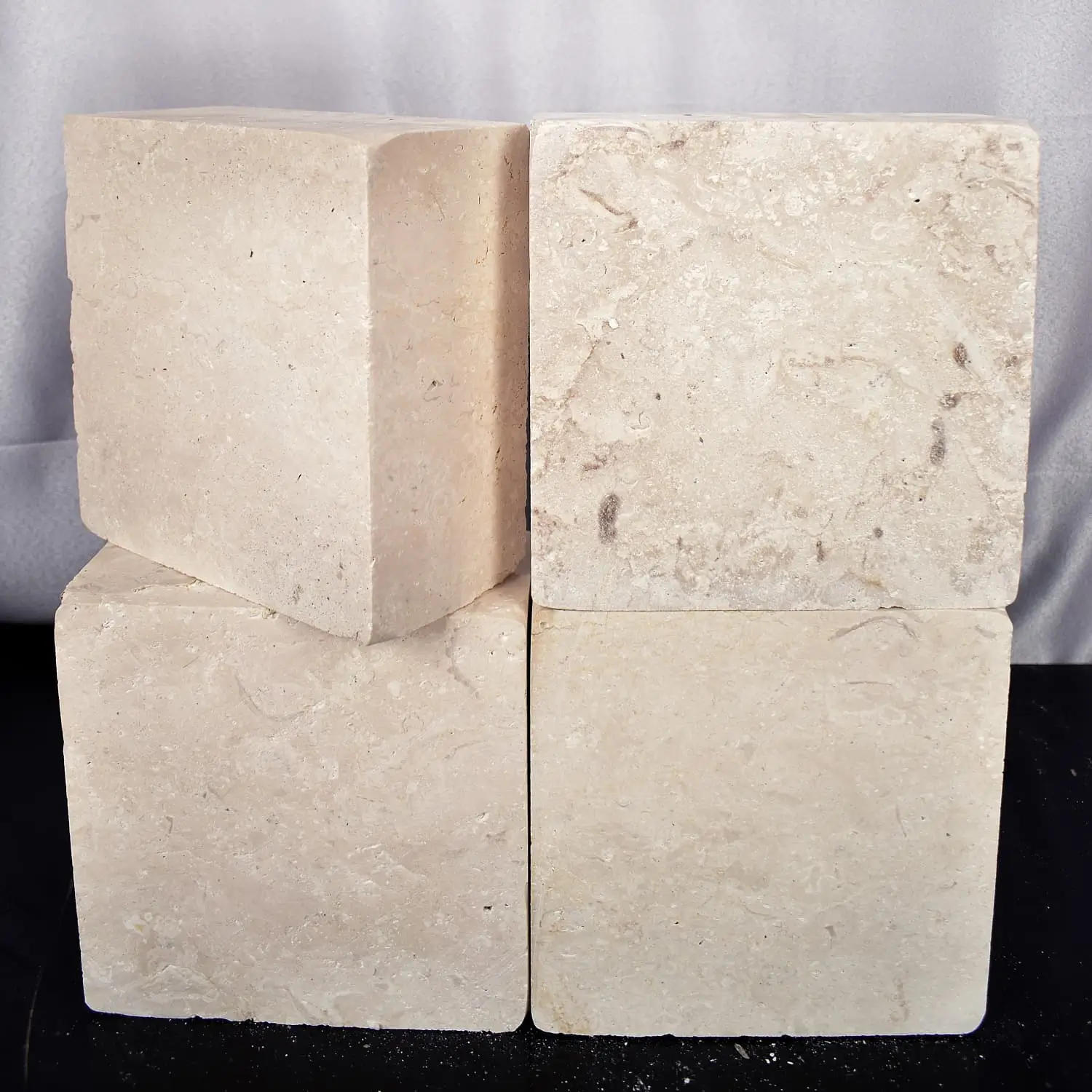
The right sett for an Arizona storm-exposure project combines high compressive strength with low absorption — two properties that resist both impact loading from hail and moisture infiltration during prolonged rainfall. Basalt setts with compressive strength above 200 MPa are the benchmark for exposed applications. Dense limestone sits in the 80–120 MPa range and performs well when properly sealed, but your specification should confirm absorption rates below 0.5% for any sett going into a wind-exposed installation.
For projects in Yuma, where storm events combine high wind with blowing sand abrasion, surface hardness becomes equally important. Setts with a Mohs hardness of 6 or above resist the micro-erosion that sandblasting winds cause on softer materials — a detail that doesn’t appear in most paving sett base preparation specifications but matters significantly for 15-plus year performance in Arizona outdoor stone sett laying applications.
- Basalt: ideal for maximum storm resistance, 200+ MPa compressive strength, Mohs 6–7
- Granite setts: excellent impact resistance, low absorption, appropriate for high-traffic storm-exposed zones
- Dense limestone: suitable with correct sealing protocol, requires absorption confirmation before specifying
- Sandstone: avoid in wind-abrasion zones — surface degrades under repeated sand-impact exposure
- Sett thickness minimums: 60mm for pedestrian applications, 80mm for vehicular, 100mm for heavy load zones
Installing paving setts Arizona desert projects in sand-abrasion zones benefits from a sawn-face finish rather than a tumbled face. Sawn faces maintain tighter joint tolerances, which reduces the gap available for wind-driven debris and moisture to penetrate during high-intensity events.
Site Assessment and Layout Planning
Your site assessment for an Arizona sett installation should begin with drainage mapping, not aesthetics. Plot the direction of your prevailing storm winds — in most of Arizona’s populated corridors, monsoon storms track from the southeast — and orient your sett joints perpendicular to that direction where possible. This positioning means wind-driven water hits the face of the sett rather than running along the joint line, significantly reducing infiltration during peak events.
Soil composition matters for base depth planning, and Arizona’s caliche layers create a variable that many specifications miss. In Mesa, you’ll encounter caliche hardpan at depths ranging from 14 to 30 inches depending on the micro-location. Dense caliche actually provides an excellent natural sub-base, but fractured or granular caliche can liquefy slightly under heavy saturation. Probe to at least 36 inches and verify continuity before committing to a base depth specification — this is the kind of site-specific paving sett base preparation detail that AZ homeowners trust to determine whether a desert-rated stone setts installation holds up across Arizona yards for the long term.
- Map storm wind direction and orient joints to minimize infiltration exposure
- Probe soil to 36 inches minimum — identify caliche depth, type, and continuity
- Establish finished grades with a minimum 2% fall away from structures, 3% preferred in storm-exposure zones
- Account for a 10mm per linear meter thermal expansion allowance in desert-rated stone setts across Arizona yards
- Mark underground utilities before excavation — critical for depth work in caliche zones
Excavation and Sub-Base Depth for Storm-Load Conditions
Standard sub-base depth recommendations of 100mm aggregate fail in storm-heavy Arizona environments. The vertical loading from wind-rocked setts — combined with saturated sub-base conditions — requires a minimum 150mm compacted aggregate base for pedestrian applications and 250mm for vehicular. These figures account for the dynamic loading that occurs during 60+ mph wind events, not just static surface loads.
Your excavation depth calculation: sett thickness + bedding course (25–40mm) + compacted aggregate base depth. For a standard pedestrian installation with 60mm setts, that puts your excavation at a minimum of 235mm below finished grade. Don’t compress this — the bedding course depth is the most commonly reduced figure on site, and it’s the one that determines whether storm saturation lifts your setts in year three.
- Pedestrian minimum: 150mm compacted aggregate (Class 2 crushed rock, 20mm nominal maximum)
- Vehicular minimum: 250mm compacted aggregate, mechanically compacted in 75mm lifts
- Sub-base compaction target: 95% modified Proctor density — confirm with nuclear density gauge before proceeding
- Allow 48 hours after final compaction before placing bedding course — settlement under dead weight improves joint integrity
Edge Restraint Specification for Wind-Load Environments
Edge restraints are the most critical storm-resistance detail in any natural stone sett installation steps in Arizona, and they’re also the most consistently under-specified. Plastic spike-in edging degrades in UV within 18 months and provides minimal lateral resistance against wind-rocked setts. For Arizona storm-exposure conditions, your edge restraint specification should default to steel angle (3mm minimum thickness) secured at 300mm centres, or formed concrete haunching at 150mm width and 200mm depth.
Concrete haunching is worth the additional installation day it costs. Form it to extend 200mm below the bedding course surface, anchor into undisturbed sub-grade, and allow full 28-day cure before placing adjacent setts. During monsoon season, that haunching is what keeps the perimeter setts locked when lateral wind pressure transfers through the installed field. Projects in exposed sites near Sedona — where canyon topography funnels and accelerates wind — should increase haunching depth to 300mm and width to 200mm as a minimum specification.
- Steel angle minimum: 3mm thickness, 50mm face height, secured at 300mm centres with 400mm galvanised ground stakes
- Concrete haunching: 150mm wide, 200mm deep minimum — increase to 300mm depth in high-wind-exposure sites
- Allow no less than 21 days concrete cure before applying lateral load from bedding operations
- Check all edge restraint alignment after major storm events during the first season — minor adjustment is normal
- Avoid plastic edging entirely on any perimeter that faces the prevailing storm direction
For a project needing to source compliant material before base work begins, Arizona setts from Citadel Stone covers the available options with specifications relevant to storm-resistance applications across the state.
Bedding Course Preparation and Sett Placement
The bedding course is where storm infiltration either arrests or accelerates. A sharp, clean, washed grit bedding at 6mm nominal — placed at 35–40mm uncompacted depth and screeded to fall — gives you the drainage path that prevents saturation build-up beneath the setts. Angular grit locks under sett-load better than rounded sand, resisting the lateral creep that occurs when storm-moisture cycles through the bedding layer repeatedly.
Screeding should produce a consistent uncompacted depth of 35mm across the full bay. Check your screed rails for level after each completed bay — thermal movement in metal screed rails can introduce a 2–3mm error across a 5-metre bay in full desert sun. That error compounds into joint alignment problems that show up clearly after the first monsoon season flushes joint sand irregularly through a misaligned installation.
- Use 6mm nominal angular grit, not building sand — angular particle geometry resists lateral movement under cyclic loading
- Uncompacted bedding depth: 35–40mm (compacts to approximately 25mm under sett weight and plate compaction)
- Do not pre-wet the bedding course in desert conditions — dry placement allows controlled compaction without moisture-migration issues
- Place setts tight to the set-out line and maintain consistent joint widths using 3mm spacers for pedestrian work
- Never walk on placed but uncompacted setts — each step introduces a 3–5mm depression that creates a drainage low point
Your sett laying direction should work away from the completed edge restraint. Laying into the restraint rather than away from it allows you to maintain consistent joint spacing without the cumulative drift that opens joints beyond 4mm — the threshold above which wind-blown debris begins to fill and lock joints against future maintenance access.
Joint Filling and Storm-Sealing Protocol
Joint integrity is the primary performance variable for installing paving setts Arizona desert storm conditions. Dry kiln sand swept into joints provides zero storm resistance — the first haboob removes it. Polymeric joint sand rated to resist wind-speed erosion above 50 mph is the minimum specification for any Arizona outdoor stone sett laying project. Apply it in two passes: initial sweep and plate compact, then a second sweep and compact 24 hours later. The two-pass approach achieves 92–95% joint fill depth, which is the threshold above which water infiltration drops significantly.
Verify warehouse stock of your selected polymeric sand before scheduling joint filling — installation must happen in a single continuous sequence without overnight breaks between passes. Supply interruptions mid-jointing leave partially filled joints vulnerable to the evening wind events common in Arizona’s desert valleys, and a partially stabilised joint is often worse than an unfilled one because it creates a surface crust over a hollow interior.
- Use polymeric sand rated for joints 3–10mm wide, confirmed for high-UV desert environments
- Plate compaction after each sand pass: use a 90kg plate compactor with rubber pad over the sett surface
- Lightly mist-activate polymeric sand per manufacturer instructions — over-wetting washes polymer from joints
- Allow 24 hours minimum before any foot traffic, 48 hours before vehicular access
- Inspect joints after the first monsoon event — top-up loss in the first season is normal and expected
Surface sealing over jointed setts adds a secondary storm-resistance layer for installations in particularly exposed positions. A penetrating impregnator sealer — not a film-former — allows moisture vapour transmission while blocking wind-driven rain infiltration at the sett surface. Reapply every 24 months in high-UV, high-storm-exposure Arizona environments to maintain performance.
Hail Impact and Long-Term Surface Durability
Hail damage on natural stone setts is underreported in Arizona specifications but common in practice. The southern Arizona monsoon corridor — particularly the Tucson basin — receives hail events that deliver 1–2 inch diameter hailstones at significant impact velocity. For setts in this zone, surface microcracking from repeated hail impact over several seasons can compromise the surface layer of softer stone types and create pathways for subsequent wind-driven moisture infiltration.
Sett thickness is your primary defence against impact-related surface damage. At 80mm or above, the stress cone generated by hail impact dissipates before reaching the sett base, preserving bedding-course contact. At 60mm, the stress cone can reach the bedding interface on softer stone types and introduce micro-displacement that loosens the sett over time. This is a paving sett base preparation detail that AZ homeowners trust to guide material selection but that doesn’t appear in standard residential specification sheets — it matters considerably in hail-exposure zones.
- Minimum 80mm sett thickness recommended for the Tucson monsoon corridor and similar hail-exposure zones
- Granite and basalt resist hail impact at 60mm; limestone and softer sedimentaries require 80mm minimum
- Inspect surface integrity after the first hail event — early detection of micro-cracking allows topical consolidant treatment before structural compromise
- Avoid polished finishes in hail-exposure zones — surface gloss deteriorates visibly after impact events and is not restorable without resurfacing
Building for Arizona’s Actual Storm Conditions
Installing paving setts Arizona desert environments means building for the storms you’ll actually get, not the mild conditions the base specification tables were written for. Every critical decision — base depth, edge restraint type, bedding grit specification, joint sand selection, sett thickness — should be evaluated against the mechanical forces Arizona’s monsoon season delivers, not just the thermal cycling that most specification guides emphasise for this state. A correctly installed sett field that accounts for wind load, hail impact, and joint infiltration will outperform a thermally-optimised installation that neglects storm mechanics by a factor of two in service life.
At Citadel Stone, we evaluate every sett shipment through warehouse quality checks that verify compressive strength and absorption rates against the values declared at the quarry — because field performance in storm-exposure conditions starts with material integrity you can confirm before a single sett leaves the truck. Your timeline should account for material verification lead time: confirm warehouse availability and arrange delivery scheduling at least two weeks before excavation begins to avoid delays that push installation into the peak monsoon window. For projects that include varied hardscape elements alongside setts, How to Install Granite Cobble Setts in Arizona: Step-by-Step Guide covers an adjacent natural stone application from the same Citadel Stone range — worth reviewing as part of your broader Arizona stone project planning.
Stone setts from Citadel Stone, sourced from quarries across the Mediterranean and Middle East, are available to projects in Tucson, Mesa, and Chandler seeking desert-rated natural stone.