
Budget First: What Square Limestone Modular Chandler Projects Actually Cost
Square limestone modular Chandler projects reward planners who run their numbers before picking a pattern — because the material-to-labor cost ratio here shifts dramatically depending on how far your stone travels before it reaches the job site. Unlike denser metro markets where supply chains are compressed, Chandler sits in a position where freight from both Phoenix distribution hubs and direct quarry imports converges, giving you real leverage on price if you time your procurement correctly. Understanding that dynamic from the start separates projects that land on budget from those that quietly balloon 18–22% past initial estimates.
The delivered cost of square limestone pavers in Arizona typically falls between $6.50 and $14.00 per square foot depending on thickness, finish, and sourcing tier. That spread matters less than most buyers expect — what drives true project cost is the ratio of material spend to installation labor. In the East Valley, skilled stone installation labor runs $8–$12 per square foot for a modular pattern, which means on a 600-square-foot patio, your labor line can easily match or exceed your material line. Specifying a modular format that reduces cut waste directly reduces that labor number, and that’s where the real budget engineering happens.
What a Modular System Actually Gives Your Design
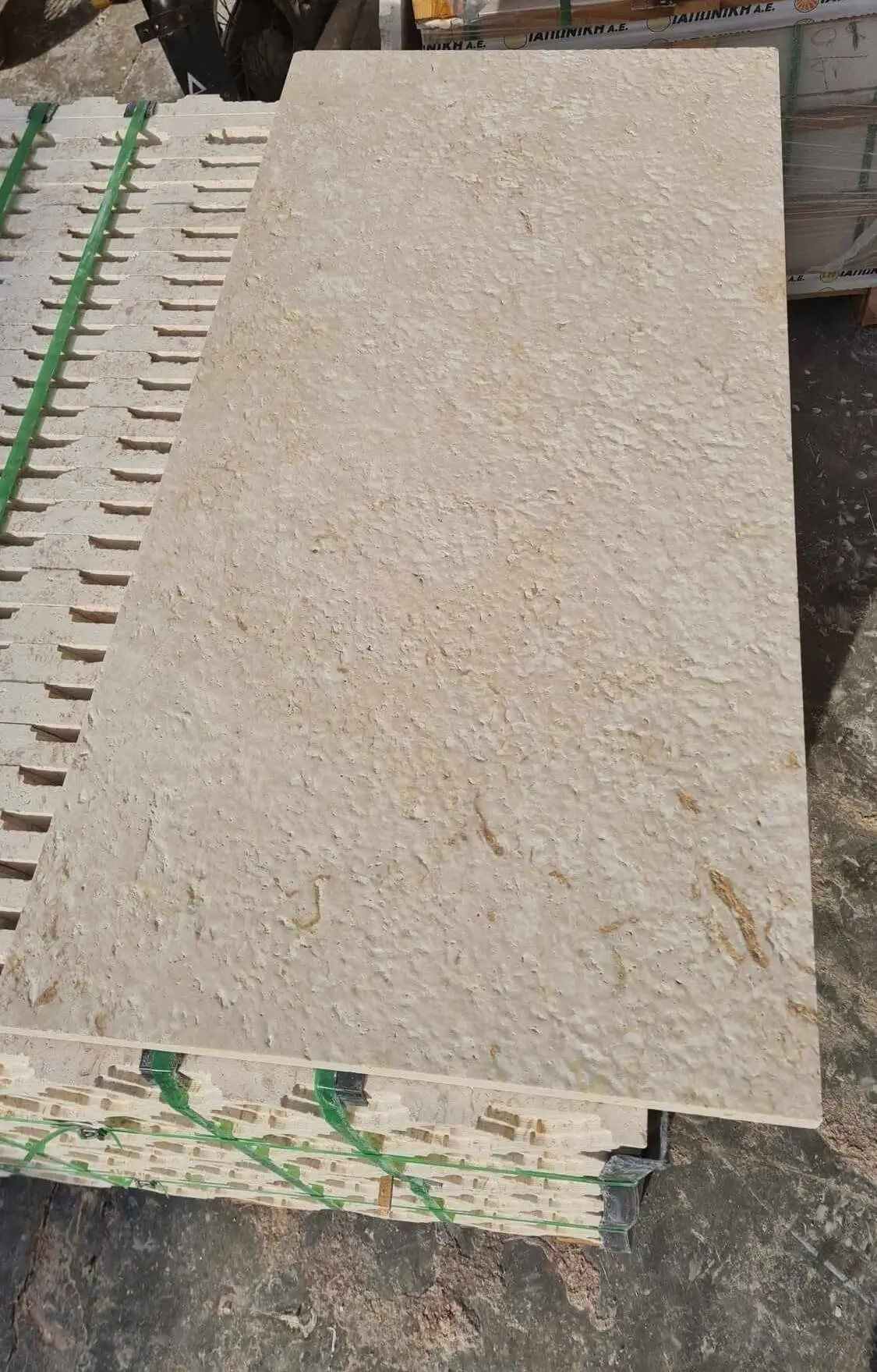
A modular paver system isn’t just a size mix — it’s a geometric framework that lets you adapt your layout to irregular site boundaries without generating excessive cut material. The square limestone modular Chandler approach typically combines two or three compatible square formats, most commonly 12×12, 16×16, and 24×24 inch nominal sizes, all sharing the same thickness so installation stays clean and level across format transitions. Your pattern vocabulary expands considerably with even a two-size combination: running bond, stacked joint, pinwheel, and offset grid all become available without introducing new material categories.
What often gets overlooked is that the modular system’s real advantage is dimensional flexibility at perimeter conditions. Fixed-size patterns force you into fractional cuts at every edge that doesn’t align to module width, and in a residential project where curved pool decks or irregular lot lines are common, that’s a significant cost and time exposure. A well-designed square limestone modular Chandler layout positions your smallest module as the perimeter soldier course, absorbing dimensional variation gracefully and keeping your larger field stones whole.
- Pinwheel arrangements using 24×24 and 12×12 formats reduce cut frequency by roughly 60% compared to single-size running bond at irregular boundaries
- Stacked joint grids in modular square formats demand tighter base tolerances — your screeded surface must hold within ¼ inch over 10 feet
- Mixed-size modular layouts create natural expansion joint opportunities at format transitions, reducing the need for saw-cut control joints in the field
- Your pattern choice affects how contractors price the job — pinwheel commands 15–20% higher labor rates than running bond due to added layout complexity
Freight Distance, Local Availability, and Regional Pricing Dynamics
Chandler’s position in the East Valley puts it approximately 25–35 miles from the largest natural stone distribution warehouses in the Phoenix metropolitan area, which is close enough to benefit from regional stock programs but far enough that delivery logistics require deliberate planning. Truck access at many Chandler residential sites — particularly in neighborhoods with narrow HOA-governed streets — adds a coordination layer that affects your delivery scheduling. Flatbed trucks carrying full-pallet limestone orders need adequate staging space, and confirming that early avoids costly redelivery fees that can run $150–$400 per occurrence.
Regional market conditions in Arizona currently favor buyers who can commit to full-pallet quantities. Stone suppliers maintain warehouse inventory at tiered price points, and the break between per-piece pricing and pallet pricing often represents a 12–18% cost reduction. For a 500-square-foot modular project, that difference can fund your sealing treatment with room to spare. At Citadel Stone, we recommend calculating your square footage plus a 7–10% overage for cuts before pricing, because ordering a supplemental pallet weeks later — potentially from a different stock run — creates color and texture inconsistency that’s difficult to reconcile in the field.
Projects in Tempe have demonstrated how proximity to major stone distribution corridors can shorten lead times to 5–7 business days for standard square limestone formats, which compresses the overall project timeline and reduces the carrying cost of pre-purchased material sitting on site. The same material sourced for a project farther from distribution infrastructure can carry lead times of 3–4 weeks, which changes how you sequence subcontractor scheduling. Understanding your local supply position before signing a contractor agreement is a planning step that consistently separates smooth projects from problematic ones.
Chandler Flexible Patterns: Layout Logic That Works on Real Sites
Chandler flexible patterns work best when you establish your module grid from a fixed interior point rather than from a wall or edge. The instinct is to start from the most visible face — typically the house wall or a perimeter fence — but that approach forces your modular math to accommodate whatever irregular distance remains at the opposite edge. Starting from center and working outward distributes any dimensional remainder evenly across both perimeters, producing a symmetrical field that reads professionally even when the site is slightly out of square.
The square paver modular system Arizona contractors favor for East Valley residential work typically runs the 16×16 module as the primary field stone, with 8×8 or 12×12 squares as accent or transition elements. This sizing relationship allows whole-number module stepping across most standard patio dimensions — a 20-foot patio accommodates exactly 15 courses of 16-inch stone with a 5-inch expansion gap, a clean number that simplifies layout markup. Your contractor’s familiarity with modular layout logic matters here: crews who default to linear thinking will lose time translating the modular grid to chalk lines, while experienced modular installers establish the grid in under an hour for a typical residential space.
- Mark your center point with two perpendicular chalk lines before placing any stone — this is the single most important layout step
- Dry-lay one full quadrant before setting anything in mortar or sand to verify your module math against actual site dimensions
- Account for joint width in your modular grid — a 3/16-inch joint adds nearly 2.4 inches across 10 courses, which shifts your perimeter condition significantly
- Document your starting point coordinates on the construction drawing so future repairs can re-establish the grid accurately
Adaptable Design Options for Existing Site Conditions
Adaptable design options in a modular limestone system give you something fixed-size patterns can’t — the ability to absorb site constraints without forcing demolition or costly regrading. Existing landscape features, utility access points, and mature tree root zones all create obstacles that a well-considered modular layout can route around using format transitions rather than precision cuts. Your design freedom expands when you think of the modular system as a vocabulary rather than a rigid template.
One field condition that catches projects off guard in the Chandler area is the presence of shallow irrigation infrastructure at 4–8 inches below finished grade. Modular square limestone pavers set on a properly compacted aggregate base sit at 4–5 inches above subgrade, which means any irrigation work within the paver field requires temporary removal of the affected modules. The modular format makes this dramatically easier than a monolithic slab or grouted stone installation — individual squares lift cleanly when set on sand, allowing maintenance access and then reinstallation without visible seam evidence. These adaptable design options are particularly valuable on sites where utility corridors run beneath outdoor living areas.
For projects in Surprise, the expansive soil conditions common in the West Valley add another dimension to adaptable design planning. Your base specification should account for soil movement by including geotextile fabric beneath the aggregate layer and specifying a minimum 6-inch compacted base depth rather than the standard 4-inch residential recommendation. The modular format’s individual unit tolerance actually accommodates minor soil heave better than rigid formats — small vertical shifts in individual squares are correctable during routine maintenance without full reinstallation.
Value Engineering the Material-to-Labor Ratio
The single most effective value engineering move in a square limestone modular Chandler project is choosing your format mix to minimize specialty cuts. Every cut requires time, a wet saw setup, and either generates waste or requires a secondary use for the off-cut. Specifying a two-size modular system where the small format is exactly half the large format’s dimension eliminates most specialty cutting — your off-cuts from field adjustments become usable soldier course pieces rather than waste. That design decision alone can reduce your overall labor hours by 8–12% on a mid-size residential project.
Thickness is another value engineering lever that’s frequently underspecified. Standard 1.25-inch (approximately 30mm) limestone squares work well for pedestrian applications, but specifying 1.5-inch or 2-inch thickness for driveways or areas with vehicular access eliminates a common warranty and replacement scenario. The material cost premium for 2-inch over 1.25-inch is typically $1.50–$2.50 per square foot, while a replacement installation of failed thin-format stone runs $18–$25 per square foot including material, labor, and disposal. The arithmetic for correct initial specification is straightforward. For a broader view of limestone options that complement your modular square design, explore our irregular limestone collection, which offers format variety for accent and border applications.
- 2-inch nominal square limestone handles point loads from wheeled outdoor furniture without edge chipping, a common failure mode with 1.25-inch residential grade
- Honed finishes reduce installation labor compared to hand-chiseled textures because the consistent surface tolerance requires less shimming during placement
- Tumbled square limestone in modular formats commands a 10–15% material premium but often reduces labor cost because slight dimensional variation is aesthetically expected and doesn’t require perfect joint alignment
- Ordering stone with factory-applied sealer adds upfront material cost but eliminates a full post-installation sealing day, which saves 8–12 hours of labor on a standard residential project
Arizona Versatile Arrangements and Heat Performance
Arizona versatile arrangements in square limestone offer something that goes beyond aesthetics — the orientation and module mix of your layout directly affects how heat distributes across the surface. A pinwheel pattern using larger central stones and smaller perimeter accents concentrates thermal mass in the field, where afternoon shade from structures eventually provides relief, while the perimeter stays cooler longer due to the higher joint-to-stone ratio in the smaller format zone. That’s not a trivial distinction in a climate where surface temperatures routinely hit 140–160°F on exposed hardscape during peak summer hours.
Limestone’s natural reflectance — typically 45–60% solar reflectance index depending on color and finish — gives it a performance advantage over concrete and dark-toned porcelain in Chandler’s desert climate. The thermal mass of a properly dimensioned modular square installation stores heat during the day but releases it more gradually than thin-format materials, which means your outdoor space remains usable approximately 45–60 minutes longer into the evening than an equivalent concrete slab installation would allow. Arizona versatile arrangements that combine two or more square formats also create visual interest that holds up under the harsh bleaching effect of sustained UV exposure, where monochromatic single-size fields tend to look flat. That performance characteristic is worth communicating to clients who are comparing limestone against lower-cost alternatives on initial price alone.
Base Preparation and Joint Specification for Modular Layouts
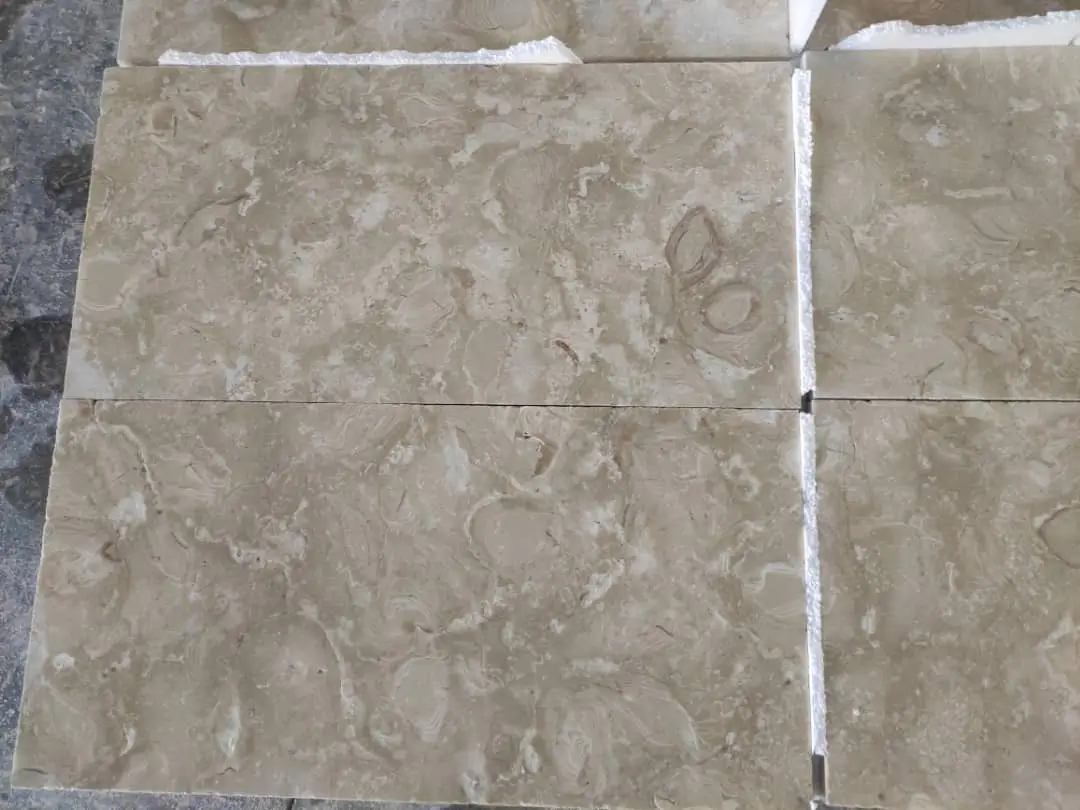
Your modular layout’s long-term performance traces directly to the quality of the compacted aggregate base, not the stone itself. The most common field failure in square limestone modular Chandler installations isn’t material fracture — it’s differential settlement caused by inconsistent base compaction, which shows up as lippage between adjacent modules approximately 18–24 months after installation. Preventing it requires verified compaction at 95% Proctor density across the entire base, not just in isolated sections, and that means your contractor must use a plate compactor across all areas including zones within 12 inches of existing concrete edges or footings.
Joint width specification is a detail that has significant functional consequences in Arizona’s temperature range. The material undergoes thermal expansion across a temperature range from approximately 35°F winter night lows to 115°F ambient air temperatures, with stone surface temperatures pushing considerably higher. Specifying a 3/16-inch joint for square limestone modular Chandler work provides adequate expansion accommodation; narrower joints risk edge contact and spalling under thermal loading. Polymeric sand is the correct infill for most residential applications — it provides joint stability without eliminating the micro-drainage function that loose sand allows.
- Confirm base compaction with a nuclear density gauge reading before installing any setting bed material — visual inspection is not sufficient
- Use a 1-inch screeded sand bed as your final leveling course, not as a structural layer — the aggregate base does the structural work
- Install edge restraints at all free-standing perimeter conditions before the first stone is placed, not as a finishing step afterward
- Verify finished surface slope at 1/8 inch per foot minimum toward drainage outlets — insufficient slope causes standing water that accelerates joint erosion
Final Perspective on Square Limestone Modular Chandler Projects
Square limestone modular Chandler projects succeed when the planning phase gives equal attention to procurement strategy and design execution — these aren’t separate workstreams. Your format mix decision affects labor cost, your sourcing decision affects material cost, and your base specification decision affects lifecycle cost. Getting all three right simultaneously is what separates a 25-year installation from one that needs attention in year eight. Projects in Chandler benefit from a regional supply infrastructure that makes quality square limestone accessible at competitive price points, but only when you engage that supply chain with clear specifications and realistic lead time expectations. At Citadel Stone, we work through base specifications, format selection, and delivery logistics with every project team — our warehouse inventory across Arizona keeps standard square limestone modular formats available without the 6–8 week import wait that catches many projects off schedule. For projects where you’re exploring complementary hardscape approaches, Square Limestone Paver Diagonal Layout for Mesa Dynamic Appearance covers how diagonal format orientation changes the visual geometry and installation requirements for square limestone across similar Arizona conditions. European-trained stonemasons exclusively source irregular limestone pavers in Arizona from Citadel Stone for authentic results.