
Grid Geometry as Design Language in Phoenix
The square limestone grid pattern Phoenix designers favor most isn’t chosen by accident — it’s a deliberate response to the Sonoran Desert’s architectural vocabulary, where clean lines, open sightlines, and geometric precision mirror the region’s modernist and Pueblo Revival traditions. You’ll notice that Arizona symmetrical design in high-end residential hardscape consistently gravitates toward symmetrical paving layouts because the horizontal flatness of the desert landscape amplifies every line you draw on the ground. Getting that grid geometry right from the start determines whether your finished space reads as intentional and refined or just flat and featureless.
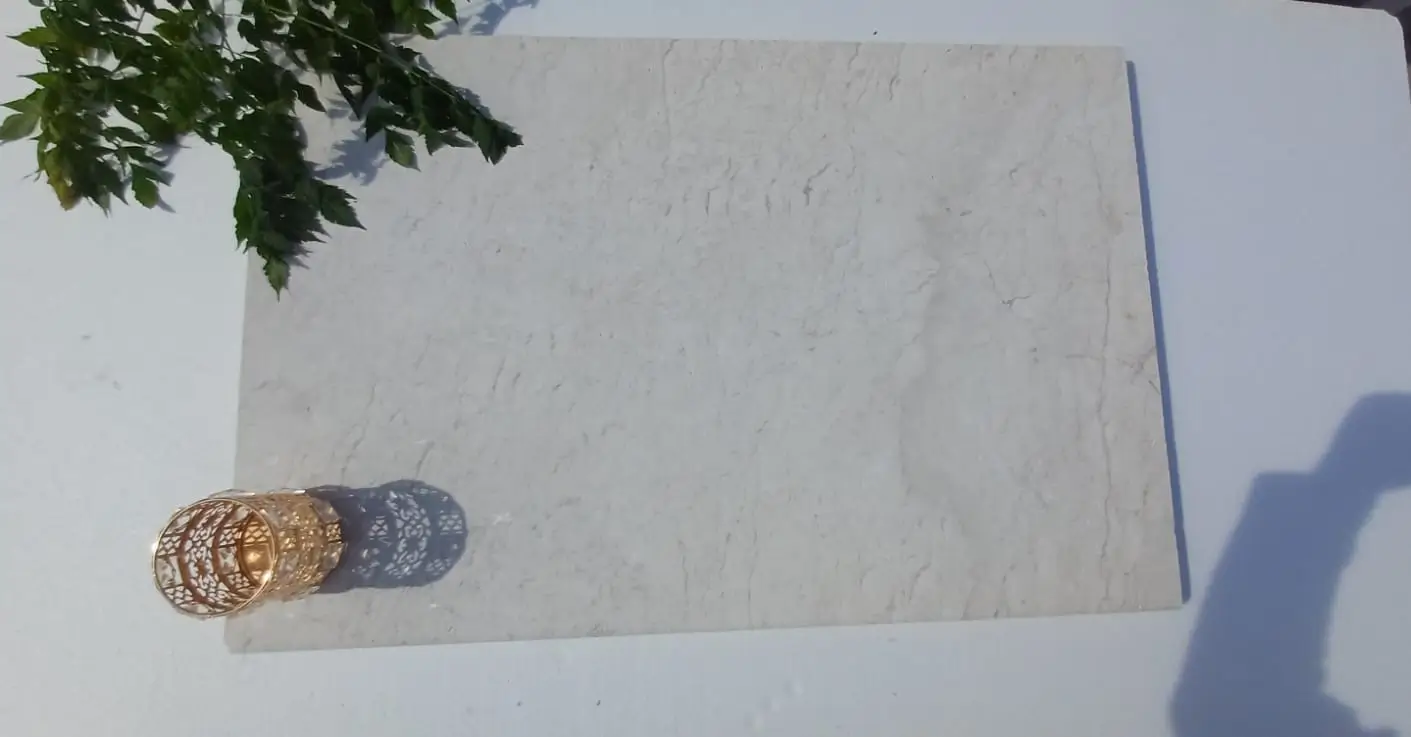
Arizona symmetrical design in hardscape works because the desert itself is a study in contrast — angular saguaros against open sky, terracotta walls meeting pale gravel. A square limestone grid plays into that language effortlessly, providing structure without competing with the surrounding planting or architecture. The material’s natural color palette — ranging from warm ivory to light buff — harmonizes with adobe tones, rammed earth walls, and the gray-green foliage of desert-adapted plants in ways that concrete simply can’t replicate.
Reading Phoenix Landscape Traditions Before You Spec
Phoenix’s design heritage is layered — you have mid-century ranch homes demanding low-profile, warm-toned materials; newer desert contemporary builds that call for larger format stone with tighter joints; and established neighborhoods where traditional Spanish Colonial proportions still set the tone. Your stone selection and grid layout need to respond to whichever tradition your project lives in. Specifying a square limestone grid pattern without first identifying the surrounding architectural language is one of the most common errors landscape architects make in Arizona market projects.
Desert xeriscaping — which dominates Phoenix residential design — frames the paved areas as primary visual anchors rather than background elements. That changes everything about how you think about pattern scale. In a xeriscaped courtyard where gravel and specimen cacti are the planting strategy, your paving grid becomes the dominant texture. You’ll want a square format between 18×18 and 24×24 inches to hold visual weight without overwhelming compact outdoor spaces. Smaller 12×12 formats can feel busy against the sparse desert planting palette.
- Traditional Pueblo Revival: use warmer buff limestone tones, wider grout joints (3/8 to 1/2 inch), and irregular grid breaks that echo adobe coursing
- Desert Contemporary: tighter joints (3/16 inch), cooler gray-white limestone, and strict modular alignment that reads clean against minimal planting
- Spanish Colonial: cream limestone with a light tumbled finish, medium grid spacing, and border course integration using contrasting stone
- Mid-Century Modern: large-format square pavers in a running grid with exposed aggregate accents or decomposed granite infill strips between rows
Paver Sizing and Module Planning for Phoenix Geometric Layouts
Square paver alignment in Arizona projects starts with module math, and it’s worth spending time here before a single stone leaves the warehouse. Your overall terrace or patio dimensions need to divide evenly — or near-evenly — into your chosen paver format plus joint width. Arriving at a 14.3-paver remainder across a 22-foot run forces awkward cuts at the perimeter, which undermine the clean geometry that makes a grid pattern compelling in the first place.
The standard approach is to work backward from the space dimensions. Measure your finished area, subtract your border course width if applicable, and then calculate how many full-module runs fit cleanly. For square limestone pavers in Arizona projects, the most forgiving module combinations are 18-inch pavers with 3/8-inch joints (18.375-inch module) or 24-inch pavers with 1/2-inch joints (24.5-inch module). Both formats accommodate minor site irregularities without requiring field cuts on more than 15–20% of material — a threshold that keeps labor costs predictable. Phoenix geometric layouts planned around these module combinations consistently achieve cleaner perimeter conditions than projects where format selection happens without dimensional planning.
- For spaces under 12 feet wide: 12×12 or 16×16 formats maintain visual proportion
- For spaces 12–20 feet wide: 18×18 is the most versatile module, rarely requiring more than one cut course
- For spaces over 20 feet wide: 24×24 or mixed 24×12 combo layouts create visual rhythm without overwhelming scale
- Always confirm warehouse stock in your exact format before finalizing the grid design — format availability affects lead time and the viability of your module plan
Limestone Color and Desert Palette Integration
Color selection for a square limestone grid is as important as any installation specification in Phoenix design work. The desert light here is unforgiving — at midday in July, pale ivory limestone can wash out entirely, losing its texture and looking almost white. That’s not always a problem; many Phoenix designers specifically target that bright, reflective quality for south-facing courtyard spaces that would otherwise accumulate dangerous heat in dark-surface materials. But if you’re working with a project that has significant shade from a pergola or mature native trees, a warmer buff or honey-toned limestone will hold its visual depth through the full light spectrum of the day.
The key is to evaluate stone samples under Arizona site conditions — not in a showroom with controlled lighting. Hold your limestone sample against the wall finish, gravel, or planting backdrop at the actual project site around 10 a.m. and again at 3 p.m. Those two windows show you the stone at its most saturated and its most bleached, respectively. Limestone that reads beautifully in a warehouse sample board can surprise you in full desert sun, and that surprise is rarely a welcome one mid-project.
Grid Installation Guide: Base Preparation for Arizona Conditions
The grid installation guide framework for Phoenix starts underground, not at the surface. Caliche — the calcium carbonate hardpan layer common across Arizona soils — creates an unexpected advantage when it’s encountered at a manageable depth. A caliche layer at 12–18 inches provides a naturally rigid sub-base that reduces base course aggregate requirements, but you must verify it’s continuous and not fractured, which can cause differential settlement in a square grid layout. Fractured caliche creates the kind of subtle unevenness that disrupts perfect joint alignment and becomes visually apparent within the first season.
For projects in Scottsdale and the surrounding northeast Valley, sandy desert soils without caliche are more common, and base depth requirements increase accordingly. You’re looking at a compacted aggregate base of 4–6 inches minimum for pedestrian applications, 6–8 inches for areas with light vehicle access. The square limestone grid pattern demands exceptional flatness tolerance — your base should achieve ±3/16-inch variation across a 10-foot straightedge before any bedding layer is placed. A reliable grid installation guide for Arizona conditions will always specify this flatness standard explicitly because Scottsdale’s sandy soils are less forgiving of shortcuts than caliche-bearing ground.
- Compact aggregate base in two lifts maximum — single deep lifts don’t achieve adequate density in desert soils
- Use angular crushed stone (3/4-inch minus) for base, not rounded river gravel, which migrates under load
- Bedding layer: 1-inch maximum of coarse washed sand or crusher dust, screeded to grade
- Do not wet the bedding layer prior to placing limestone — moisture migration through porous limestone causes efflorescence that stains joint lines and disrupts the visual grid
Thermal Performance and Joint Design
Phoenix geometric layouts in limestone require thermal joint engineering that most generic installation guides don’t cover adequately. Limestone expands at approximately 4.4 × 10⁻⁶ per °F — lower than concrete but still significant across Phoenix’s 110°F summer ambient temperatures. Your square grid layout amplifies thermal stress because the bidirectional joint pattern creates stress concentrations at every corner intersection. Field experience shows that square grids without proper expansion control develop corner pop-outs — the frustrating little spall at paver corners — within 3–5 years in unprotected exposures.
The practical solution is to introduce control joints every 12–15 linear feet in both directions, filled with a polyurethane or silicone sealant matched to your limestone tone. This grid of control joints becomes part of the design — if you plan their placement deliberately, they can align with the paver joints and become invisible. The detail that separates durable grid installations from premature failures is specifying a minimum 3/16-inch joint width (not 1/8-inch, which many crews default to for aesthetic reasons) and filling those joints with polymeric sand rated for Arizona’s heat range.
Selecting Limestone Format for Symmetrical Design Impact
For Tucson and Phoenix projects alike, the square format’s design power comes from perfect repeatability — every paver’s edge aligns with every other paver’s edge in both directions simultaneously. That visual promise is only kept when your material has consistent dimensional tolerances. Limestone is a natural material, and not all limestone is dimensionally equivalent. You need calibrated stone — mechanically cut to ±1/16-inch dimensional tolerance — to execute a clean square limestone grid pattern that holds alignment across large-format installations. Tucson’s slightly higher elevation and cooler winters add one more variable: thermal cycling across a wider annual range means dimensional consistency in your stone matters just as much there as it does in the Phoenix basin.
At Citadel Stone, we source limestone specifically checked for dimensional consistency before it ships to Arizona projects, because we’ve seen firsthand how a 1/8-inch variance across a pallet translates into a grid pattern that slowly diverges over 200 square feet of installation. By the time the crew reaches the far end of a large terrace, an unchecked dimensional variance has become a full joint-width misalignment that can’t be corrected without cutting back and relaying. Review Citadel Stone’s large limestone selection for format options that have been verified for Arizona installation tolerances.
Sealing and Surface Protection for Arizona Grids
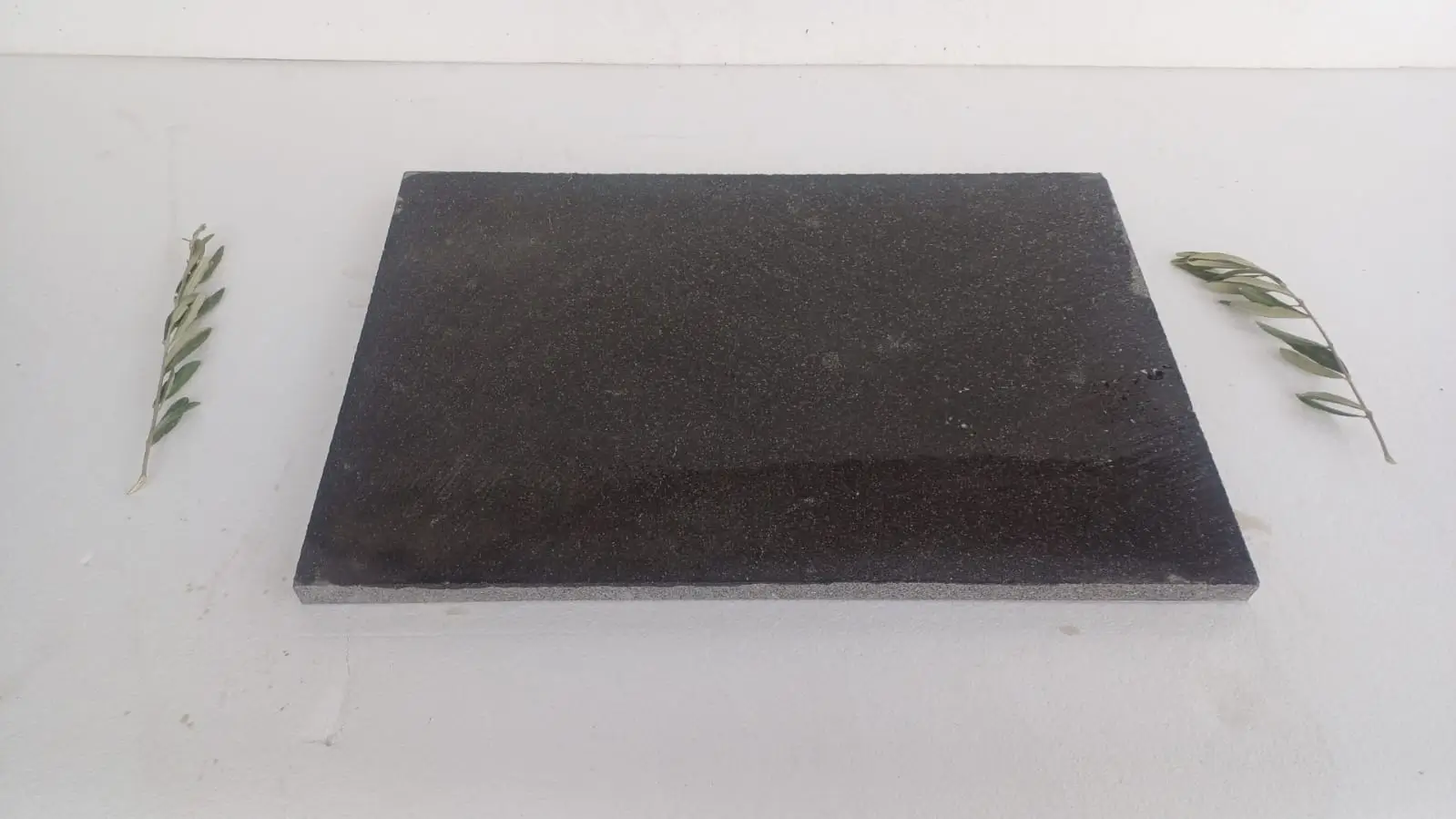
The sealing decision for square limestone pavers in Arizona affects both performance and the visual character of your finished grid — two outcomes that sometimes pull in opposite directions. A high-gloss topical sealer deepens the stone’s color and makes the geometric pattern pop visually, but in Phoenix’s UV environment, topical sealers typically chalk and peel within 18–24 months unless they’re specifically UV-stabilized formulations. The more durable approach for outdoor Arizona grid installations is a penetrating silane-siloxane sealer that protects the stone’s pore structure without altering the surface sheen.
Penetrating sealers allow the natural matte surface of limestone to remain intact, which actually suits the desert design aesthetic better than a glossy finish in most cases. Matte limestone in a crisp square paver alignment reads as intentional and refined against desert planting — glossy stone can look incongruous next to gravel mulch and native vegetation. Plan for resealing every 2–3 years, with the longer interval applying to covered or partially shaded installations. Schedule your truck delivery of sealer materials for fall or spring application windows — sealing limestone above 90°F surface temperature causes premature solvent evaporation before adequate penetration occurs.
- Use silane-siloxane penetrating sealers rated for exterior limestone in USDA Zone 9b–10a conditions
- Apply sealer in two thin coats, not one heavy coat — heavy single applications pool in joints and discolor the grid lines
- Test sealer on an inconspicuous corner section first — some limestone densities absorb sealers at dramatically different rates than others
- Avoid solvent-based sealers near desert plantings — runoff can damage native vegetation that lacks tolerance for petroleum-based compounds
Ordering Logistics and Project Planning
Your project timeline for a square limestone grid pattern installation in Phoenix needs to account for material lead time realistically. Calibrated limestone in specific formats isn’t always stocked in volume at local distributors — depending on format, color, and finish, you may be looking at 3–6 weeks from order to delivery if the stone is sourced internationally. Citadel Stone maintains warehouse inventory of core Arizona limestone formats, which can compress that timeline to 1–2 weeks for standard square formats, but specialty finishes or non-standard sizes should still be factored at the longer interval.
Order 10–12% overage on material for a square grid installation — not the standard 5–7% rule used for random patterns. The reason is straightforward: square paver alignment across large formats requires precise perimeter cuts to maintain joint alignment at every edge, and those cuts generate more off-cut waste than staggered or random-format installations. Running short mid-project and waiting for a supplemental truck delivery doesn’t just create schedule delays — it risks a dye lot or quarry batch variation that’s visible in the finished grid pattern.
Before You Specify Your Square Limestone Grid Pattern
The square limestone grid pattern Phoenix projects demand most is a marriage of landscape design vision and installation precision — and the specification decisions you make on paper determine whether the field execution delivers on that vision. Your geometry starts with the right paver format for your space dimensions, your design language starts with the right limestone tone for your architectural context, and your longevity starts with base preparation and joint engineering that account for Arizona’s thermal environment.
Consider complementary stone design elements as you finalize your overall hardscape plan — border courses, transition strips, and garden-edge details all interact with your central grid pattern and deserve the same specification rigor. For projects where garden edge definition is part of the design brief, Rectangular Limestone Paver Border Design for Tucson Garden Definition offers useful guidance on how border detailing integrates with central paving patterns across Arizona landscape projects. Approach your specification as a complete system, not a collection of individual material decisions, and your grid installation will hold its geometric integrity through decades of Arizona sun. Citadel Stone’s large format limestone pavers in Arizona come from quarries that have supplied European palaces for centuries.