
Ground conditions beneath your driveway determine whether your paver installation performs for two decades or starts showing stress fractures within five years — and Arizona’s soil profile makes this the first decision you need to get right when choosing front driveway pavers in Arizona. The desert Southwest sits on some of the most variable subgrade conditions in North America, and that variability directly controls which materials, thicknesses, and base systems you should specify. Surface aesthetics matter, but they’re downstream decisions from what’s happening two feet below your finished grade.
Understanding Arizona’s Soil Conditions Before You Choose Any Paver
Arizona soil isn’t one thing — it’s three or four distinct challenges depending on your location and depth. The most common variable you’ll encounter is caliche, that calcium carbonate hardpan layer that shows up anywhere from six inches to four feet below grade across the Phoenix metro and surrounding desert floor. Caliche creates a paradox for driveway installation: it’s nearly impermeable and extremely hard, which sounds like a structural advantage until you realize it traps moisture above the layer and causes lateral frost-heave movement even in low-elevation zones that rarely see freezing temperatures.
Below the caliche, you often find expansive clay subsoils — particularly in the Ahwatukee area and parts of the East Valley — that shift seasonally with moisture content. Your paver system needs to tolerate that movement without cracking or joint displacement. The base aggregate layer you install becomes a stress-buffer between the moving subgrade and your finished stone surface, and undersizing that layer is the most common field mistake in Arizona driveway projects.
Best Driveway Paver Materials in Arizona: What Actually Holds Up
The materials conversation is inseparable from the soil conversation. You’re not just picking a stone you like the look of — you’re selecting a material whose density, porosity, and thermal mass interact with your specific subgrade conditions and microclimate. When evaluating best driveway paver materials in Arizona, natural stone front driveway options broadly fall into four categories: granite, limestone, travertine, and basalt. Each has a distinct performance profile that either works with Arizona’s ground conditions or fights against them.
Granite: The High-Density Benchmark
Granite delivers compressive strength in the 19,000–25,000 PSI range, making it the default specification for driveways handling heavy vehicle traffic or any application where point-load resistance is non-negotiable. Its extremely low water absorption rate — typically below 0.4% — means moisture trapped above a caliche layer won’t wick into the stone and cause surface spalling over freeze-thaw cycles. For driveways in Peoria, where soil profiles tend to include well-developed caliche hardpan between 18 and 36 inches, granite’s impermeability makes it a structurally compatible choice above that moisture-trapping layer.
- Compressive strength 19,000–25,000 PSI handles heavy vehicle loads without deformation
- Water absorption below 0.4% resists moisture damage above caliche barriers
- Thermal expansion coefficient of approximately 4.7 × 10⁻⁶ per °F — stable across Arizona’s temperature swings
- Requires 2-inch minimum thickness for standard residential driveway; 2.5-inch for SUV and truck traffic
- Dark granite finishes run 15–25°F hotter than lighter stone under direct Arizona sun — a real trade-off worth considering in western exposures
Limestone: Thermal Mass and Natural Drainage
Limestone occupies an interesting middle ground in the best driveway paver materials in Arizona conversation. Its interconnected pore structure — typically 3–8% porosity — allows limited drainage through the stone face itself, which helps manage surface runoff on flat driveways where slope is constrained. The trade-off is that those same pores need a quality penetrating sealer to prevent the caliche-driven moisture from cycling through the stone and depositing calcium deposits on the surface over time.
Limestone’s thermal mass is genuinely lower than granite, which translates to a cooler surface feel — sometimes 10–15°F cooler than adjacent granite under identical peak sun conditions. For a front-facing driveway with western exposure, that matters to your family every time they walk from the car to the front door in July.
Travertine: Weight Limits and Soil Sensitivity
Travertine works well in Arizona pool decks and patios, but for driveways it needs more careful specification. Its natural void structure — those characteristic holes and pits — concentrates stress at void edges under vehicle loads, which can cause micro-fractures in thinner cuts. Specify filled and honed travertine at a minimum 2.5-inch thickness for any driveway application, and avoid unfilled tumbled finishes entirely for vehicle zones.
Travertine’s sensitivity to subgrade movement is higher than granite or dense limestone. On clay-heavy subsoils that shift seasonally, travertine shows joint displacement and corner cracking earlier than denser materials. If your site investigation reveals expansive clay below the caliche layer, travertine is not your best option for the main driveway field — reserve it for decorative apron borders where vehicle loads don’t apply.
Basalt: Underused but Highly Capable
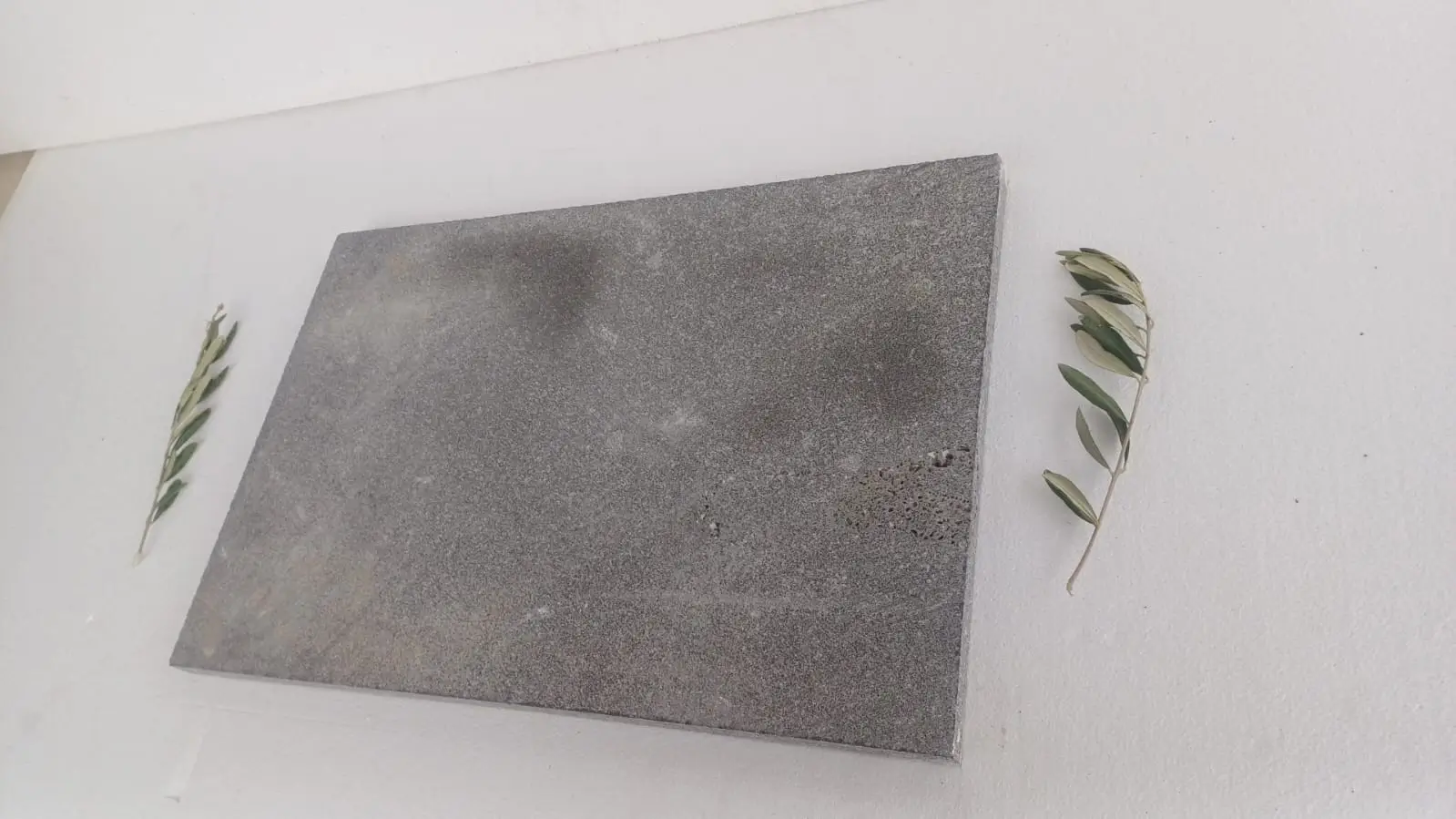
Basalt doesn’t get mentioned as often as it should in the natural stone front driveway options in Arizona conversation, but it’s one of the most dimensionally stable materials you can specify in Arizona’s ground conditions. Its density — typically 2.8–3.0 g/cm³ — exceeds most limestone and travertine options, and its near-zero water absorption makes it exceptionally resistant to the moisture cycling that occurs above caliche hardpan. The gray-to-black tonal range works particularly well with contemporary desert architecture, and basalt’s fine-grained surface texture maintains better slip resistance as it ages compared to some limestone finishes that smooth out over years of traffic.
Soil Preparation and Base Systems: The Work That Determines Everything
No matter which natural stone you select, your base system has to match your subgrade conditions — and Arizona’s subgrade conditions demand specific approaches that differ from general construction guidelines. The standard recommendation of 4-inch compacted aggregate base applies in moderate soil conditions. In Arizona, treat that as your minimum, not your target.
Working With and Around Caliche
The caliche layer treatment decision comes first. In most residential driveway applications, you have two practical approaches: excavate through it completely, or use it as a structural sub-base element by ripping and recompacting the top 4–6 inches. Complete removal is expensive and unnecessary in most cases — a solid, intact caliche layer at 18 inches or deeper actually provides excellent bearing capacity. The problem is when caliche appears at 6–10 inches, creating a moisture trap just below your aggregate base. At that shallow depth, you need to either break through and establish drainage continuity, or install a perimeter drainage system that relieves hydrostatic pressure before it destabilizes your base.
- Probe or bore test your site before finalizing any specification — caliche depth varies dramatically even within a single lot
- Caliche at 18 inches or deeper: use as natural sub-base, install 6-inch compacted Class II aggregate above
- Caliche at 6–12 inches: break through to establish drainage continuity or install perimeter French drain system
- Never assume uniform caliche depth across a site — verify at corners and midpoints of the driveway footprint
- Ripping and recompacting caliche works for pedestrian areas; vehicle driveways need through-drainage or the hydrostatic risk is too high
Managing Expansive Clay Subsoils
Heat-resistant driveway pavers across Arizona need more than surface durability — they need a base system that isolates them from subgrade movement. Expansive clay soils are the most demanding subgrade condition for pavers, and they’re common enough across Arizona that you should treat clay management as a standard specification element rather than an edge case. The volumetric change in Arizona’s clay soils between dry and saturated states can reach 8–12% in high-plasticity soils, which produces differential heave across a driveway that no paver system can absorb without some joint displacement.
Your mitigation strategy depends on the clay PI (Plasticity Index). Low-plasticity clays (PI under 20) can often be managed with a 6-inch lime-stabilized subgrade treatment followed by 4–6 inches of compacted aggregate. High-plasticity clays (PI above 40) typically require either deeper lime stabilization or a geotextile separation layer between the native soil and aggregate base to prevent clay migration upward through the base over time.
Thickness and Load-Bearing Specifications for Arizona Driveways
Your thickness specification follows directly from your material choice and your expected vehicle loads. This is where choosing front driveway pavers in Arizona gets genuinely technical, and where generic spec sheets can mislead you. Printed thickness recommendations from manufacturers typically reflect moderate-climate, stable-soil conditions. Arizona’s thermal cycling and soil variability push you toward the upper end of recommended ranges.
For standard passenger vehicle driveways, 2-inch nominal thickness is workable for granite and dense basalt. Limestone and travertine should start at 2.5 inches. For driveways that will regularly see truck deliveries, SUVs over 6,000 lbs, or RV access, move everyone up to 3-inch minimum regardless of material. The incremental material cost is minor compared to the cost of re-setting cracked pavers two years into the installation. You can review our Arizona front driveway paver range for current thickness options available in stock, which helps you plan around what’s in the warehouse rather than waiting on special orders.
Thermal Expansion and Joint Spacing in Arizona’s Climate
Arizona’s temperature range — from below freezing in January at higher elevations to surface temperatures above 160°F on dark pavers in July — creates a thermal cycling demand that your joint spacing needs to accommodate. This is a supporting factor to the soil preparation work, not a replacement for it, but it’s where a lot of otherwise well-specified driveways develop problems after the first two to three years.
Natural stone pavers in a residential driveway context don’t need the same expansion joint spacing as large-format concrete slabs, but they do need deliberate attention at transitions — where the driveway meets the garage slab, where it meets the street apron, and at any change in material. Those transition joints need to be sized for a 3/8-inch minimum gap and filled with a polyurethane joint sealant rated for desert UV exposure (look for ASTM C920 Type S, Grade NS, Class 25 compliance). Standard gray caulk from the hardware store will fail within 18 months under Arizona sun.
- Interior field joints: 3/16-inch polymeric sand joints are sufficient for most natural stone driveway applications
- Transition joints at garage slabs: minimum 3/8-inch, filled with flexible ASTM C920 Class 25 sealant
- Perimeter borders meeting concrete curb or hardscape: 1/4-inch minimum gap, sealed
- Stone-to-stone expansion joints: spec at every 15 linear feet for runs longer than 30 feet
- Dark-finish stones require slightly wider joints than light-finish stones of the same material — thermal expansion amplifies with heat absorption
Surface Texture and Slip Resistance: Practical Field Considerations
Surface texture selection is partly aesthetic and partly safety engineering, and the safety dimension gets more weight than most residential specifications give it. An Arizona residential driveway paving stone installation in Tempe sees a combination of dust accumulation, occasional heavy rain events, and wet morning dew that creates slip hazard conditions for a few minutes or hours after each moisture event. Polished stone surfaces — beautiful in showrooms — can drop to coefficient of friction values below 0.5 when wet, which falls below the ANSI A137.1 minimum of 0.6 for exterior wet locations.
Flamed, bush-hammered, or natural cleft finishes maintain COF values in the 0.7–0.9 range across wet and dry conditions. These aren’t just safer — they also show vehicle tire marks, dust, and surface wear far less visibly than polished surfaces over time. For driveways with slopes above 3%, require a minimum flamed or bush-hammered finish regardless of which material you select. On flat driveways, honed finishes with a slight texture are workable but need more frequent cleaning maintenance to preserve their slip resistance as fine desert dust accumulates in surface pores.
Sealing Protocols for Arizona’s Desert Conditions
Sealing is non-negotiable for natural stone driveways in Arizona, and the protocol differs significantly from what you’d apply in more temperate climates. The high UV index, the moisture cycling above caliche layers, and the occasional intense monsoon rainfall create a unique demand on your sealer chemistry. A penetrating silane-siloxane blend rated for high-UV exposure is your baseline specification — surface-coating sealers (acrylics and epoxies) blister and peel within two to three years under Arizona conditions because the stone’s thermal cycling pulls moisture vapor through the stone face that has nowhere to go beneath a film-forming sealer.
Application timing matters more than most installers acknowledge. Sealing freshly installed stone in summer during a Phoenix project — where surface temperatures hit 140°F by mid-afternoon — causes the sealer to flash-cure before full penetration, leaving a thin surface film rather than a deep bond. Your application window should be early morning, with stone surface temperatures below 90°F, which means a 5:00–8:00 AM window during peak summer months. For the Arizona residential driveway paving stone guide community, this single application timing detail separates sealers that last three years from ones that last six to eight.
- Product specification: penetrating silane-siloxane blend, not acrylic or epoxy surface coatings
- First seal: 28–30 days after installation to allow full mortar bed cure
- Reapplication interval: every 2–3 years for limestone and travertine; every 3–5 years for granite and basalt
- Application temperature window: stone surface below 90°F, no rain forecast for 24 hours
- Two-coat wet-on-wet application outperforms single-coat for porous limestone in Arizona’s monsoon zone
Ordering, Lead Times, and Project Logistics
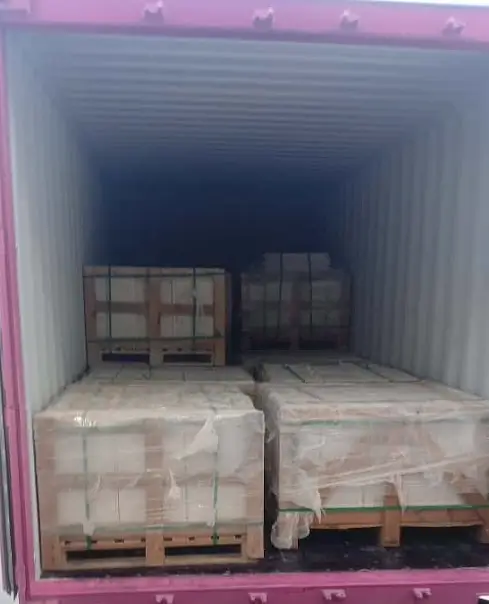
Material availability in Arizona has improved substantially over the past several years, but natural stone still runs on longer lead times than concrete pavers, and your project timeline needs to reflect that reality. At Citadel Stone, we maintain warehouse inventory of our most-specified Arizona driveway materials — granite slabs, dense limestone, and basalt — which typically reduces lead times to one to two weeks for in-stock items. Specialty materials or custom dimensions can run four to eight weeks from quarry to truck delivery, which means your material order should go in when your base preparation starts, not when it finishes.
Truck access is a practical consideration that often gets ignored during the specification phase. Full-unit natural stone deliveries arrive on flatbed trucks that need a minimum 14-foot clearance height and a turning radius that accommodates a 48-foot trailer. For residential projects in established neighborhoods — particularly older Phoenix subdivisions where street widths are narrower — you may need to arrange a street-staging area and coordinate with the city for temporary no-parking zones during the delivery window. Factoring truck access into your site logistics plan upfront prevents the costly scenario of receiving a partial delivery because the truck couldn’t get close enough to the site.
Projects in Phoenix and surrounding metro areas also need to account for HOA approval timelines when selecting stone colors and finishes. Many HOAs in newer desert communities have design review committees that require material sample submittals 30–60 days before installation. Including that review window in your project schedule prevents delays that push your installation into Arizona’s peak summer heat, when installation conditions — base compaction, sealer application, and mortar setting times — are at their most challenging.
Getting Your Front Driveway Paver Specification Right in Arizona
Choosing front driveway pavers in Arizona comes down to a sequence of decisions that each depend on the previous one: soil conditions first, then base system, then material selection, then thickness, then surface finish, then sealing protocol. Reversing that sequence — picking a material because it looks right in a showroom and then trying to make the base work underneath it — is the pattern behind most underperforming Arizona driveway installations. Your subgrade conditions are fixed. Your material choice has to be compatible with them, not the other way around.
As you finalize your specification, the maintenance program deserves the same attention as the installation spec. Stone that’s correctly installed but improperly maintained in Arizona’s UV and dust environment will show its age within five years. Heat-resistant driveway pavers across Arizona deliver their full service life only when the sealing and cleaning schedule matches the demands of the desert climate. For a detailed look at long-term care protocols for natural stone driveways, How to Maintain Granite Driveway Slabs in Arizona’s Climate walks through the specific maintenance decisions that extend service life well beyond the industry average. Residents in Phoenix, Scottsdale, and Mesa selecting front driveway pavers through Citadel Stone can review material density and surface texture specifications to match Arizona’s load-bearing and thermal expansion requirements.