
Caliche hardpan, expansive clay pockets, and a subgrade that shifts dramatically between wet and dry seasons — these are the real forces driving limestone cobblestone maintenance Arizona climate decisions, and they matter far more than the heat alone. Your surface is only as stable as what’s underneath it, and in Arizona, the ground has a way of reminding you of that every monsoon season. Getting ahead of subgrade behavior is what separates a cobblestone installation that looks great in year fifteen from one that’s rocking and cracking by year four.
Arizona Soil: What It Does to Your Cobblestone
The soil profile under most Arizona properties isn’t uniform, and that variability is your biggest maintenance challenge. Caliche — that dense, calcium carbonate-cemented layer — sits anywhere from eight inches to three feet below grade depending on your location. It doesn’t drain, it doesn’t compress, and it creates a perched water table during monsoon events that pushes moisture laterally right underneath your cobblestone base.
In Chandler, the soil profile often mixes caliche with sandy loam, which creates uneven compaction zones. Where the sandy material exists, the base settles; where caliche dominates, it stays rigid. That differential movement is what causes cobblestones to tip and joint sand to migrate, and it’s the root cause of most maintenance calls you’ll encounter in that corridor.
- Caliche layers block vertical drainage, concentrating moisture at the base course interface
- Expansive clay soils heave and contract with seasonal moisture fluctuations, cracking poorly set cobbles
- Sandy loam zones settle under load, creating low spots that collect standing water after rain events
- Mixed profiles create differential movement that stresses joint mortar and bedding sand simultaneously
Base Preparation: The Maintenance Decisions Start Here
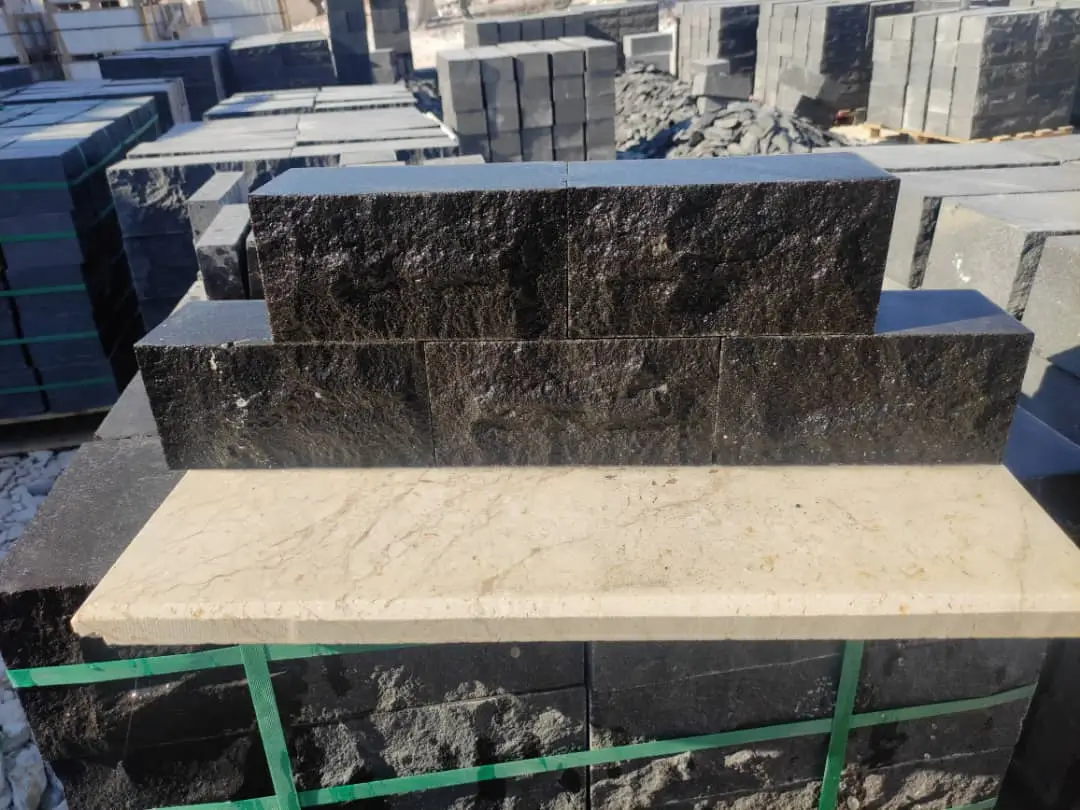
Your maintenance burden over the next decade is largely determined before a single cobblestone goes down. A properly prepared base under limestone cobblestone in Arizona should include a minimum 6-inch compacted aggregate base — and 8 inches in areas where soil reports indicate clay content above 20%. Skipping this step because the caliche layer looks solid is one of the most common field mistakes; caliche fractures under point loads and seasonal cycling, and once it does, the surface above has no stable platform.
Scarifying or fracturing the caliche before placing your aggregate base is standard practice, but the depth matters. A shallow scarify that only addresses the top two inches creates a false sense of stability — the undisturbed caliche below continues to redirect moisture laterally. You need to break it deep enough to allow vertical drainage to resume, then backfill with clean, well-graded 3\/4-inch crushed aggregate that compacts to 95% standard Proctor density.
- Install a geotextile fabric between native soil and base aggregate in clay-heavy profiles to prevent soil migration
- Slope your base course a minimum of 1.5% away from structures — caliche zones create drainage pooling that undermines bedding sand over time
- In areas with known expansive clay, consider a lime-stabilized subgrade treatment before aggregate placement
- Verify compaction with a nuclear density gauge, not just a plate compactor pass — visual inspection misses subsurface voids in mixed soil profiles
Cleaning Limestone Cobble Surfaces the Right Way
Cleaning limestone cobble surfaces in Arizona involves a different chemistry consideration than most homeowners expect. The alkaline nature of Arizona’s hard water — which runs high in calcium carbonate and magnesium — leaves a mineral scale on limestone that looks like white haze but isn’t efflorescence. Treating it with acid-based cleaners strips the stone’s surface and opens up micro-porosity, which then absorbs more scale in the next cycle. You end up in an escalating maintenance loop that’s completely avoidable.
The correct approach is a pH-neutral stone cleaner applied with a stiff nylon brush, followed by a clean water rinse. For heavier organic staining from monsoon debris — ironwood pods, desert bird droppings, decomposed organic matter — a diluted hydrogen peroxide solution at 3% concentration lifts the stain without attacking the calcite matrix. Save the enzymatic cleaners for porous travertine; limestone cobblestone’s denser structure responds better to mechanical action than chemical dwell time.
- Pressure wash at 1,200 PSI maximum — anything higher erodes joint sand and opens the stone surface
- Never use muriatic acid on limestone; it reacts immediately with calcium carbonate and causes irreversible surface damage
- Clean in the early morning before surface temperatures rise — cleaner evaporates too quickly on hot stone and leaves residue streaks
- Address iron staining from irrigation systems with an oxalic acid-based poultice, not a spray-on treatment
Sealing Natural Stone Cobbles: Timing and Product Selection
The sealing options available to natural stone cobbles AZ homeowners rely on come down to a choice between penetrating impregnators and topical sealers, and the answer in Arizona’s climate is always the penetrating impregnator. Topical sealers trap moisture vapor in a surface that sees extreme thermal cycling — daytime surface temperatures can exceed 160°F in exposed summer conditions — and that trapped vapor creates delamination, bubbling, and a milky appearance that’s expensive to reverse. A silane-siloxane penetrating sealer, applied at a 10-year resealing interval, is the industry standard for limestone cobblestone in desert climates.
Timing the first seal application correctly is critical. New limestone cobblestone installations need to cure for a minimum of 28 days before sealing — the stone needs to off-gas any residual moisture from the bedding sand and any curing compounds. Sealing too early traps that moisture and creates the same vapor problems as a topical sealer. For existing installations, reseal after the summer monsoon season ends in early October, when soil moisture levels have stabilized and surface temperatures are back in a workable range.
- Apply sealer at surface temperatures between 50°F and 90°F — outside this range, penetration depth is compromised
- Two thin coats outperform one heavy coat; allow 20–30 minutes between applications
- Test sealer coverage rate on a small inconspicuous area first — absorption rates vary between quarry batches of the same material
- Avoid solvent-based sealers in enclosed or semi-enclosed spaces where vapor concentration becomes a safety concern
How Monsoon Season Affects Limestone Paving Upkeep
Limestone paving upkeep across Arizona landscapes shifts its character completely between June and September. The monsoon doesn’t just bring rain — it brings intense UV radiation on wet stone, rapid thermal cycling from afternoon storms following 110°F mornings, and wind-blown fine sediment that packs into joints and accelerates biological growth. Your maintenance calendar needs to reflect that reality.
The most damaging maintenance failure during monsoon season is ignoring joint sand loss. Every significant rain event with surface flow across your cobblestone carries fine material out of the joints. Once joint sand drops below 80% capacity, the cobblestones begin to rock under foot traffic, and the edges of individual stones start chipping from micro-movement. Check joint sand levels after every storm that produces visible surface runoff, and top up with polymeric sand — not plain silica sand, which washes out in the next rain event.
For projects in Peoria, where the soil profile tends toward fine desert sand with lower clay content, monsoon water moves through the base course quickly, which is actually favorable — but it also means base settlement can occur rapidly in the first two or three monsoon seasons as the profile finds equilibrium. Plan for a post-monsoon leveling inspection in years one through three.
Joint Maintenance: The Detail Most Homeowners Miss
Here’s what most specifiers miss when reviewing limestone cobblestone maintenance Arizona climate protocols: joint integrity and subgrade stability are directly linked. Healthy joints loaded with compacted polymeric sand act as a stress-distribution membrane across the surface. They prevent individual cobblestones from rocking, which prevents the bedding sand beneath them from pumping out, which prevents the aggregate base from destabilizing. Neglect the joints and you’re not just dealing with a cosmetic issue — you’re starting a progressive structural failure.
Polymeric sand should be re-applied every two to three years in Arizona conditions, more frequently in areas with high foot traffic or surface water flow. The activation process — which requires a careful water application to set the polymer binders — needs to happen at the right temperature. Activating polymeric sand when surface temperatures exceed 95°F results in uneven curing and a surface that looks solid but hasn’t fully bonded. Early morning application in the cooler months gives you the best results.
For detailed product selection and ongoing care protocols, Citadel Stone cobblestone care Arizona provides technical guidance directly relevant to desert climate installations and our team is available to walk through your specific site conditions.
Desert Stone Surface Care: Building a Seasonal Maintenance Schedule
Desert stone surface care on Arizona properties is most effective when it’s scheduled around the climate calendar rather than a generic annual routine. Arizona has two distinct maintenance windows: the pre-monsoon window from March through May, and the post-monsoon window from October through November. Everything else — heavy cleaning, resealing, joint sand replacement, base inspection — should happen in one of these two windows.
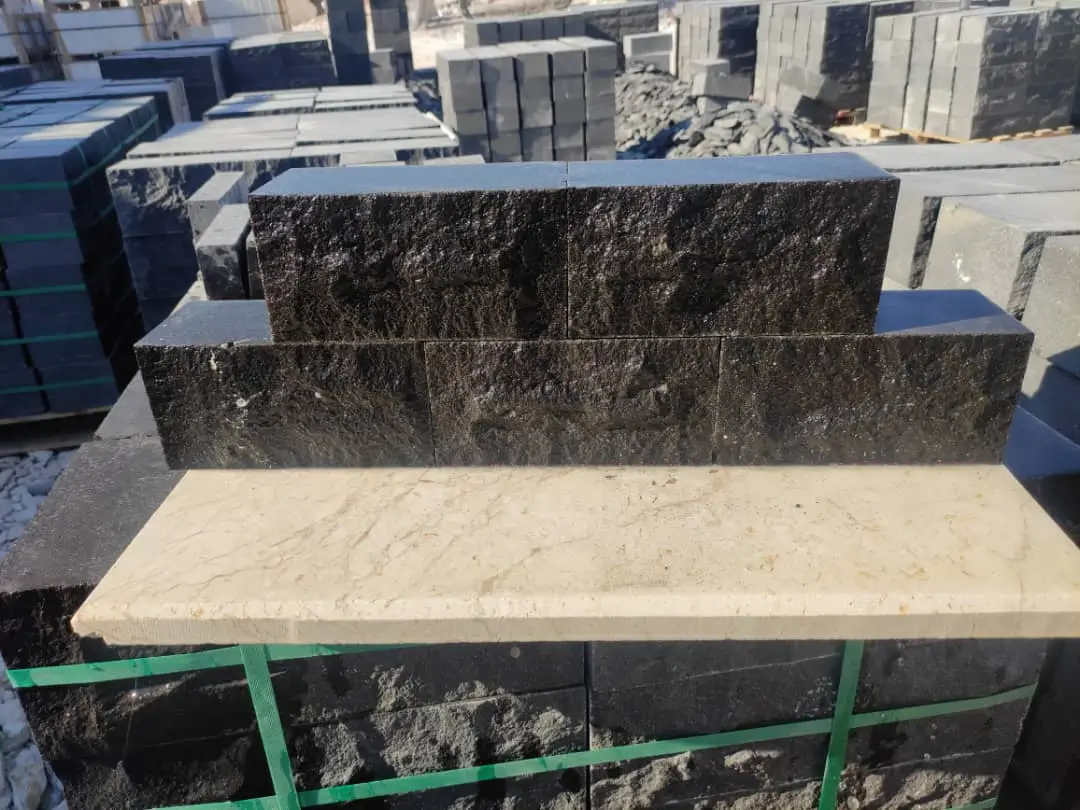
Pre-monsoon maintenance focuses on sealing condition, joint integrity, and drainage pathways. You want to enter the monsoon with fully sealed stone, solid joints, and clear drainage channels so that every storm event is shedding water cleanly rather than penetrating the surface or undermining the base. Post-monsoon maintenance is your damage assessment and repair window: inspect for rocking cobblestones, refill joints, check base settlement, and address any surface staining before it mineralizes through a dry winter.
- March–May: inspect sealer, clean surface, re-apply polymeric sand where needed, confirm drainage slopes are clear
- June–September: light cleaning only, monitor joint sand after storms, avoid heavy maintenance during peak heat
- October–November: full surface inspection, base settlement check, reseal if in the 10-year cycle window, address any lifted or rocking stones
- December–February: light maintenance, irrigation system shutdown to reduce winter moisture loading on the base
Thermal Performance and Surface Temperature Management
Limestone cobblestone’s thermal mass is an asset and a management consideration simultaneously. The material absorbs heat through the day and radiates it after sunset, which affects both foot comfort and maintenance timing. Surface temperatures on exposed limestone cobblestone in summer can reach 150°F to 165°F by mid-afternoon — not unusual for any dark-toned natural stone in Arizona conditions — but limestone’s relatively lighter tone compared to basalt or dark granite keeps it in the lower range of that spectrum.
In Tempe, urban heat island effects compound radiant heat from stone surfaces, which increases the thermal cycling stress on both the stone and the bedding layer. Limestone cobblestone handles this well due to its relatively low coefficient of thermal expansion, but you’ll still need expansion joints every 12 to 15 linear feet in large uninterrupted field installations to prevent cumulative stress cracking at the perimeter. At Citadel Stone, we recommend reviewing our technical specifications for joint spacing before finalizing layout plans on any installation exceeding 500 square feet.
Ordering and Lead Time Planning for Arizona Projects
Your maintenance and repair project timeline depends on material availability, and that’s worth planning around. Citadel Stone maintains warehouse inventory in Arizona specifically to reduce lead times for local projects — in most cases you’re looking at one to two weeks from order to delivery rather than the six to eight week import cycle that custom-order stone requires. For large repair jobs where you need to match existing cobblestone, bring a sample piece to confirm lot matching before placing the order.
Truck access to your property is worth confirming early in the planning process. A standard delivery truck requires a minimum 12-foot clearance width and a turnaround radius that many residential driveways can’t accommodate. If truck access is constrained, discuss a crane-lift or forklift delivery option when placing your order — the logistics affect both your cost and your project scheduling.
Expert Summary
The through-line of every limestone cobblestone maintenance Arizona climate decision comes back to what’s happening underground. Seal your stone, maintain your joints, and clean with the right chemistry — but none of that work holds if your subgrade is moving. Caliche management, proper base compaction, and drainage geometry are the structural decisions that define whether your surface maintenance is routine upkeep or emergency repair. Build the base right and the surface care genuinely is straightforward.
Beyond limestone cobblestone, your Arizona property may include complementary hardscape elements that have their own distinct maintenance requirements. How to Maintain Non Slip Paving Slabs in Arizona’s Climate covers another dimension of stone surface care that’s worth reviewing if you’re managing a mixed hardscape. In Flagstaff, Peoria, and Yuma, Citadel Stone limestone cobblestone is known for its low surface porosity, which reduces moisture absorption during Arizona’s monsoon season and simplifies routine maintenance.