

Why Ground Conditions Define Paver Performance in Arizona
What destroys outdoor patio pavers in Arizona faster than UV exposure or monsoon rain is almost always what’s happening beneath them — specifically, the unstable soil conditions that cause settlement, heaving, and joint failure long before surface damage becomes visible. Arizona’s soil profile varies dramatically from region to region, and understanding that variability is the starting point for any durable outdoor stone installation. You can select the finest UV-resistant outdoor paving slabs in Arizona, but if your subgrade isn’t prepared for local soil behavior, you’ll be relaying sections within five years.
The two dominant soil challenges across Arizona are caliche hardpan and expansive clay. Caliche — a cemented calcium carbonate layer — appears at depths ranging from eight inches to three feet depending on your location. In areas like Yuma, caliche can be nearly impenetrable with hand tools and requires mechanical scarification before any base material goes down. This layer actually has a hidden benefit: once properly broken and compacted, it offers exceptional load-bearing capacity. The problem arises when contractors mistake its surface hardness for stability and skip proper base preparation entirely.
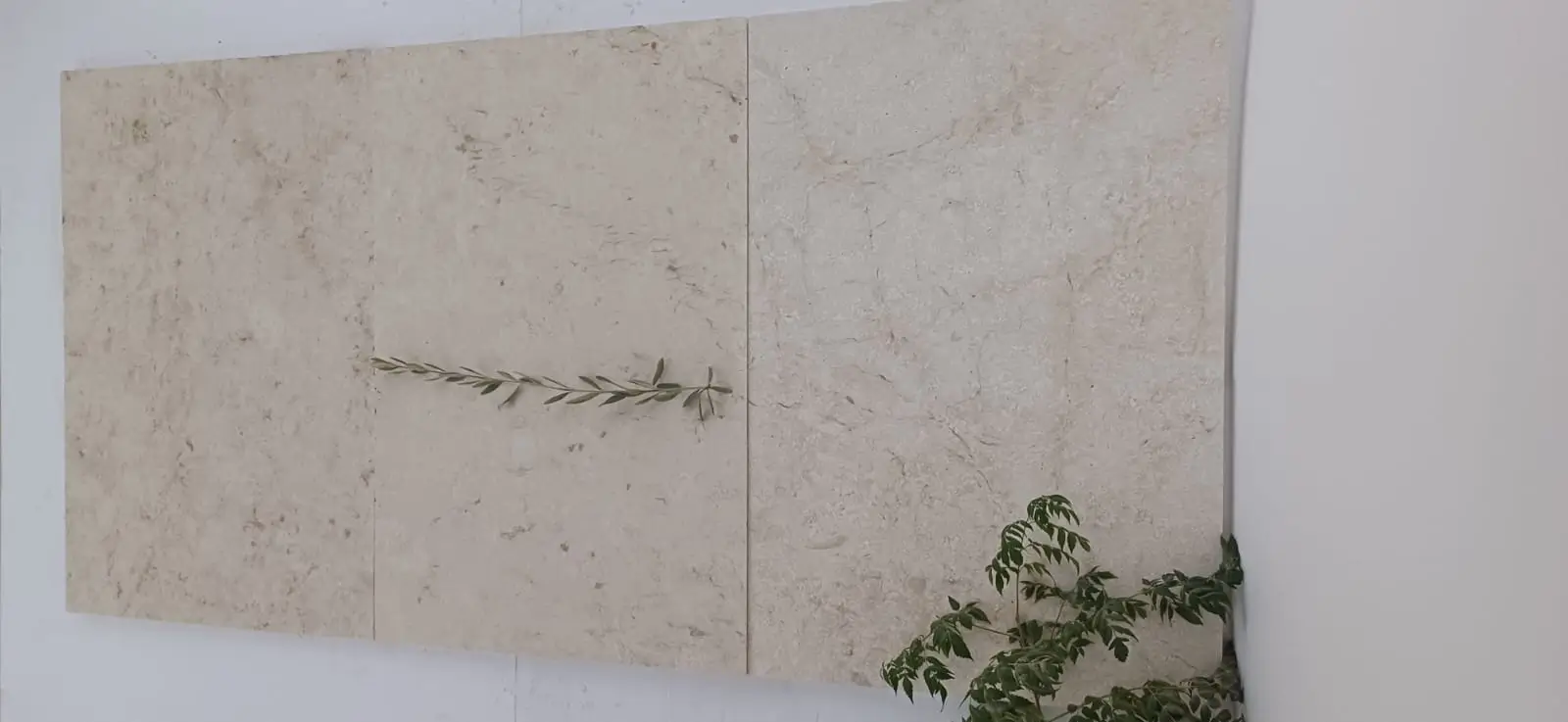
Caliche and Clay: What Your Base Prep Must Address
Expansive clay soils present the opposite engineering challenge. Unlike caliche, clay-dominant subgrades absorb monsoon moisture rapidly, swell, and then shrink back during the dry season — creating a cycle of vertical movement that cracks paver joints and disrupts surface planes. Your base preparation strategy needs to account for both soil types, and in many Arizona locations, you’ll encounter both within the same project footprint.
The standard recommendation for aggregate base depth in Arizona runs four to six inches for residential patios. That’s a starting point, not a ceiling. For outdoor patio pavers in Arizona installed over expansive clay, you should plan for a minimum of six inches of compacted Class II road base, with geotextile fabric separating the native soil from the aggregate layer. That fabric layer is the detail most contractors skip, and it’s the one that prevents clay fines from migrating upward and undermining your compacted base over time.
- Break up and remove caliche to a minimum depth of 12 inches before installing aggregate base
- Use a plate compactor to achieve 95% compaction density in the aggregate base layer
- Install non-woven geotextile fabric at the soil-aggregate interface on clay-heavy sites
- Add a two-percent minimum slope away from structures for drainage — critical during monsoon loading
- Allow freshly compacted base to cure 24–48 hours before setting stone on clay-dominant subgrades
UV Exposure and What It Actually Does to Stone Surfaces
Arizona’s solar intensity sits among the highest in the contiguous United States, and the effect on outdoor stone isn’t just cosmetic fading — it’s a surface chemistry shift. UV radiation breaks down the organic compounds in lower-grade sealers within 18 to 24 months in low-desert conditions, leaving stone vulnerable to oxidation, moisture infiltration, and efflorescence. Yuma averages over 4,000 hours of sunshine annually, which means your sealer is doing real work every day, not just during summer peaks.
Natural stone handles UV differently than concrete or porcelain. Dense stones like basalt and certain limestones show minimal color shift over decades of UV exposure because they lack the pigment binders that concrete pavers rely on. Travertine and softer limestone grades can develop a chalky surface appearance after prolonged UV exposure without protective sealing, though this is a surface phenomenon that doesn’t affect structural integrity. The material science behind outdoor stone paving durability across Arizona points clearly toward density and inherent mineral stability as the primary performance predictors.
- Penetrating silane-siloxane sealers outperform film-forming acrylics in Arizona UV conditions by three to one in service life
- Re-application cycles in low desert zones should target every 18–24 months, not the standard 36-month recommendation on product labels
- Light-colored stone surfaces reflect more solar radiation, reducing surface temperatures by 15–25°F compared to dark concrete
- UV degradation concentrates first at joint sand — polymeric joint sand with UV stabilizers extends joint life significantly
Monsoon Season Drainage and Joint Integrity
Arizona’s monsoon pattern is unlike rain events in most other states. You’re not dealing with sustained precipitation over hours — you’re dealing with intense, localized downpours that can deposit an inch or more of water in under 30 minutes. That saturation rate overwhelms poorly designed drainage planes and enters paver systems through open joints, sitting against the base aggregate and softening the compaction you worked to achieve. Selecting monsoon-proof patio pavers AZ homeowners can rely on starts at the subgrade level, not at the surface — the entire assembly needs to be engineered from the ground up.
Joint width and sand type become critical during monsoon season. Joints under three-eighths of an inch are prone to washout under high-velocity surface flow. At Citadel Stone, we recommend maintaining joints between three-eighths and half an inch for outdoor patios in monsoon zones, filled with polymeric sand that locks under moisture activation. Standard kiln-dried sand simply migrates out during the first significant rain event, leaving joints open to weed infiltration and paver shift.
- Design drainage slopes at two percent minimum — steeper slopes up to three percent are appropriate near structures
- Install perimeter edge restraints anchored at 12-inch intervals on all sides to prevent paver migration under lateral water pressure
- Use permeable aggregate base layers that allow vertical drainage even when surface flow exceeds absorption capacity
- Inspect joints annually after monsoon season ends — refill any sections where polymeric sand has washed below the surface plane
Choosing Stone That Performs Under Arizona Desert Conditions
Arizona desert patio surface solutions need to resolve a specific tension: you need thermal mass that moderates surface temperature, but you also need a surface that doesn’t retain heat to the point of being unusable in the afternoon. Dense natural stone sits in a useful middle ground here. Stone with a water absorption rate below two percent — a standard measurable with ASTM C97 testing — resists both UV-driven surface deterioration and monsoon moisture infiltration more effectively than higher-porosity options.
For outdoor patio pavers in Arizona, travertine in the 1.25-inch nominal thickness handles typical residential loads well, but you should step up to 1.5-inch thickness for any area that sees vehicle overhang, heavy furniture, or concentrated point loads from planters. Thickness directly affects your resistance to cracking over soil movement — every half-inch of additional thickness improves your flexural strength margin significantly. This is where soil conditions loop back into material selection: the more expansive your subgrade, the thicker your stone specification should be.
For a comprehensive view of available options, explore our outdoor patio paving solutions Arizona — the selection includes density specifications and thickness data that help you match material to your specific subgrade conditions.
Thermal Cycling and Joint Expansion Across Elevation Zones
Arizona’s elevation range creates climate conditions that differ dramatically within the same state. Flagstaff at 6,900 feet above sea level experiences freeze-thaw cycling that doesn’t exist in Phoenix or Yuma — and that distinction fundamentally changes your joint spacing specification. In freeze-thaw zones, trapped moisture in paver joints expands as it freezes, and without adequate joint width, that expansion force transfers directly to the stone face, causing spalling along edges.
The standard joint spacing recommendation for thermal expansion in low-desert Arizona runs three-eighths of an inch. For Flagstaff and other high-elevation installations, you should increase that to half an inch to accommodate freeze-thaw movement. Outdoor stone paving durability across Arizona depends on matching joint geometry to local freeze cycles, not applying a single statewide specification. Natural stone’s thermal expansion coefficient runs approximately 4.5 to 6.5 × 10⁻⁶ per degree Fahrenheit depending on mineral composition — well below concrete’s coefficient, which is one reason stone outperforms concrete pavers over long thermal cycling periods.
- Flagstaff installations require ASTM C1364-rated stone with demonstrated freeze-thaw durability of 50 or more cycles
- Low-desert zones below 2,000 feet can use standard joint spacing, but thermal expansion during summer still demands proper jointing
- Mid-elevation zones between 3,000 and 5,000 feet represent a transitional condition — spec for freeze-thaw even if cycles are infrequent
- Verify stone absorption rates for any freeze-thaw application — absorption above 3% significantly increases spall risk in cold cycles
Repair Strategies That Actually Work for UV and Monsoon Damage
Recognizing damage type before starting repairs saves time and money. UV damage presents as surface chalking, color fade, or a loss of sheen on previously sealed stone — none of these require stone replacement. Monsoon damage typically shows as joint washout, edge lifting, or differential settlement where surface water has undermined the base in localized areas. These are fundamentally different problems with different repair sequences, and conflating them is the most common mistake in patio remediation.
For UV-damaged stone surfaces, the repair sequence starts with a deep clean using a pH-neutral stone cleaner to remove oxidation residue, followed by a light diamond-pad surface refinish if the stone face has become rough and porous. Then apply a penetrating UV-stable sealer rated for desert climates — product labels that specify UV inhibitors and list a service life of 24+ months in ASTM G154 accelerated weathering tests are worth the additional cost. Sourcing UV-resistant outdoor paving slabs in Arizona from suppliers who stock desert-rated materials reduces the risk of premature sealer failure in the first place. For monsoon-driven joint failures, remove all compromised joint sand to full depth, re-compact any settled areas in the base, reset lifted pavers with fresh setting bed material, and refill joints with fresh polymeric sand before the next rain season arrives.
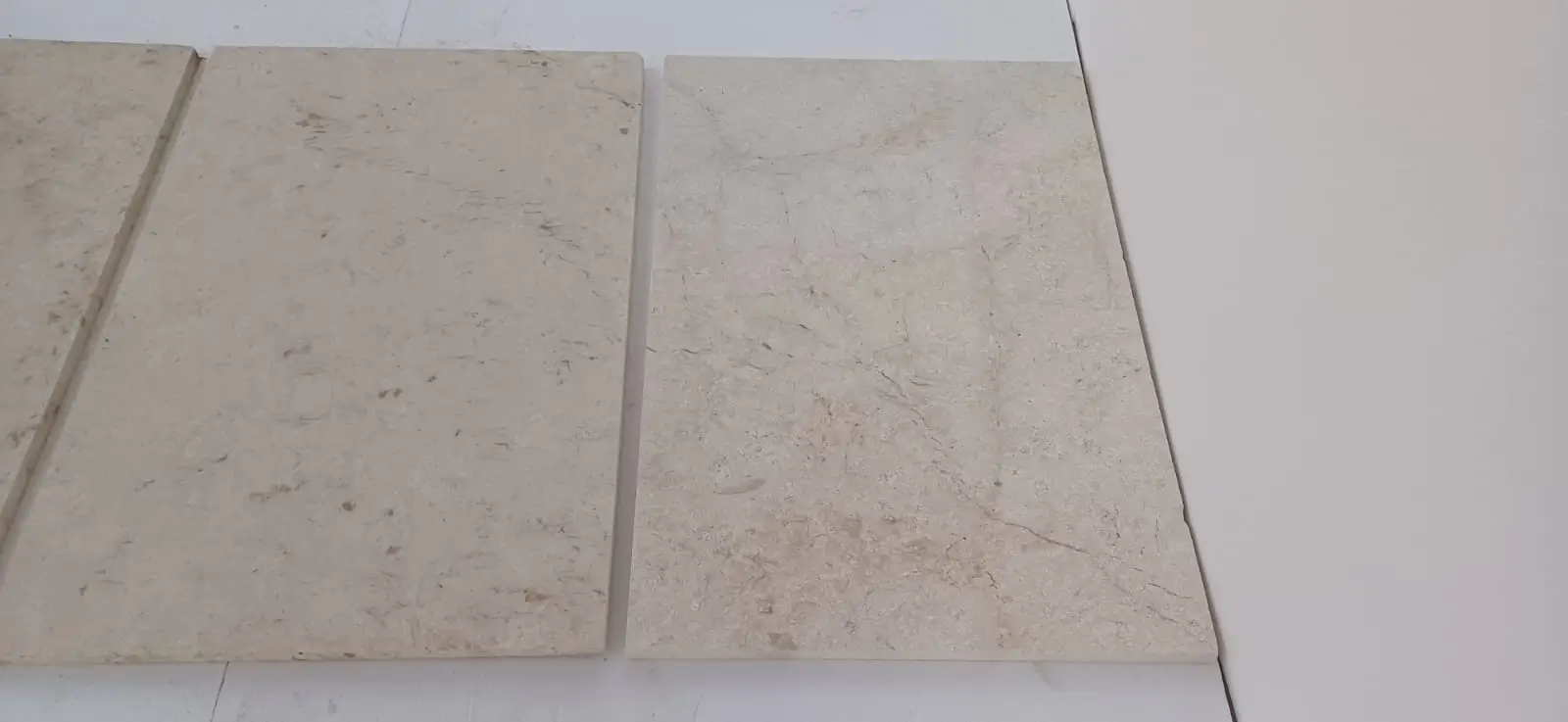
Sedona Red Rock Country and Silica-Rich Soil Challenges
Red rock regions present a specific soil challenge that standard Arizona soil discussions often overlook. Sedona‘s decomposed sandstone soils are silica-rich and relatively free-draining, which sounds advantageous — but the compactability of these soils is lower than clay or caliche-based soils, meaning your base aggregate needs to be deeper to achieve the same load-bearing support. Projects in Sedona frequently require eight inches of compacted base rather than the six-inch standard to compensate for lower native soil density.
The reddish mineral content in Sedona soils also migrates under saturation, and if your base aggregate isn’t properly contained with edge restraints and geotextile fabric, iron-rich fines can stain light-colored stone from beneath over time. This is an uncommon failure mode that doesn’t get much attention in general paver guides, but it matters when you’re specifying cream-colored limestone or light travertine over Sedona’s distinctive red substrate. Arizona desert patio surface solutions in silica-rich environments require this fabric separation step as standard practice, not an optional upgrade. The solution is straightforward — adequate fabric separation — but you have to know the risk exists to specify it correctly.
Ordering and Logistics Planning for Arizona Projects
Material availability directly affects project timelines, and Arizona’s position relative to major stone distribution hubs matters. Standard natural stone orders through regional suppliers often carry four to six week lead times from import cycle to truck delivery on site. Citadel Stone maintains warehouse inventory in Arizona, which typically compresses that timeline to one to two weeks for stocked materials — meaningful when your installation window is weather-dependent and the monsoon forecast is shifting.
Your truck access conditions matter more than most clients anticipate at the specification stage. Full-size delivery trucks require a turning radius that many residential properties in hillside communities and older neighborhoods can’t accommodate. Confirm access dimensions early — if your site requires a smaller delivery vehicle, factor in the potential for additional delivery charges or multiple truck runs when budgeting material costs. Getting this detail wrong late in the process delays your installation by days and sometimes weeks depending on rescheduling availability.
- Order 10–12% overage above measured square footage to account for cuts, breakage, and pattern matching
- Confirm warehouse stock availability for your specific stone before finalizing installation start dates
- Request a material sample from the same quarry batch — color variation between batches is real and visible when mixed on site
- Stage pallets as close to the installation area as truck access allows to reduce manual handling fatigue and breakage risk
Final Recommendations for Durable Outdoor Patio Pavers in Arizona
The sequence that separates durable outdoor patio pavers in Arizona from installations that need repair within five years is consistent: address subgrade soil conditions first, size your base preparation to local soil behavior rather than generic specifications, select stone density and thickness based on both load and soil movement risk, and maintain joints and sealers on schedules calibrated to Arizona’s actual UV and monsoon exposure rates rather than national product guidelines. None of these steps is complicated in isolation — the failures happen when any single one gets treated as optional.
Achieving genuine monsoon-proof patio pavers AZ homeowners can count on across multiple seasons means treating every layer of the assembly — subgrade, base, setting bed, stone, joint sand, and sealer — as part of a single engineered system. As you move from planning into installation, the sequencing details at each stage become as important as the specification decisions you’ve already made. For a practical walkthrough of the full process from subgrade prep through final joint filling, the How to Install Patio Pavers in Arizona: Step-by-Step Guide covers the field sequence in the detail your project requires. Citadel Stone outdoor patio pavers, drawn from premium quarries in Turkey and the broader Middle East region, are known for maintaining surface integrity through the thermal cycling that affects properties across Yuma, Peoria, and Tempe each monsoon season.