

Why Thermal Cycling Defines the Bluestone Slabs Versus Natural Stone Arizona Debate
The real performance gap in the bluestone slabs versus natural stone Arizona comparison isn’t visible at the showroom — it shows up at joint interfaces after the third or fourth year of thermal cycling. Arizona’s desert climate doesn’t just run hot; it swings hard, with diurnal temperature ranges regularly hitting 40–50°F between pre-dawn lows and mid-afternoon highs. That kind of daily mechanical stress on stone and setting materials is what separates a 25-year installation from one that needs remediation by year eight.
You’re not just choosing a surface material when you compare these options — you’re selecting a system with a specific thermal expansion coefficient that interacts with your base, your joint material, and your subgrade. Getting that interaction right is the specification decision that matters most.
Thermal Expansion Coefficients: What the Numbers Mean for Your Slab Choice
Bluestone carries a linear thermal expansion coefficient of approximately 4.5–5.5 × 10⁻⁶ per °F, which is relatively low for a sedimentary-origin material. Limestone typically ranges from 3.8–5.0 × 10⁻⁶ per °F, and sandstone can climb to 6.0–7.0 × 10⁻⁶ per °F depending on silica content. What those numbers mean practically: over a 10-foot slab run exposed to a 50°F temperature swing, bluestone moves roughly 0.027 inches — sandstone can move 0.035 inches or more.
That 0.008-inch difference sounds insignificant, but multiply it across 40 joints in a large patio and you’re looking at cumulative movement that will crack grout, pop mortar beds, and delaminate adhesive bond coats over time. You’ll want to spec your expansion joints based on the coefficient of your actual material, not a generic 15-foot rule. For bluestone slabs in Arizona conditions, joint spacing at 10–12 feet is more appropriate than the 15–20 feet you’ll see in manufacturer minimums written for temperate climates.
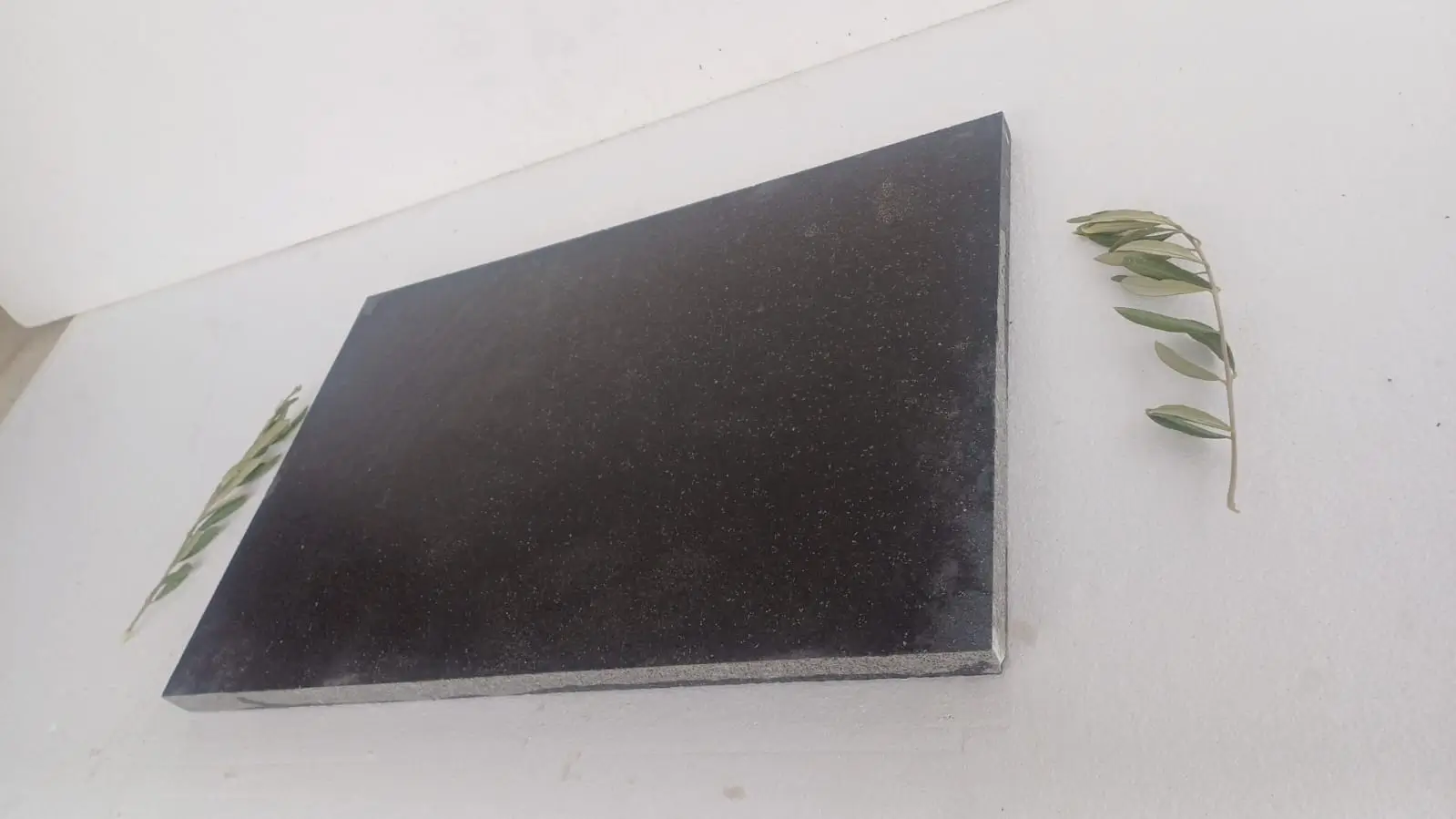
Surface Behavior Under Arizona Temperature Swings
Here’s what most specifiers miss when evaluating bluestone compared to limestone slabs AZ projects demand: surface temperature and ambient temperature are not the same conversation. A bluestone slab sitting in full Phoenix-area sun can reach 145–160°F on its upper face while ambient temps read 108°F. Limestone in the same exposure tends to run 5–12°F cooler on the surface due to its higher albedo and slightly different thermal mass profile.
That thermal gradient from surface to underside — sometimes 40–50°F across a 2-inch slab — creates internal stress that matters for thinner formats. For large-format natural stone slab options in Arizona, you’re generally safer specifying a minimum 1.25-inch thickness for any slab exceeding 24 × 24 inches when the installation is in full sun exposure. Thinner formats in high thermal-mass applications are a common source of mid-slab fractures that show up around year four to six.
- Bluestone in 1.25-inch thickness handles the thermal gradient better than thinner cuts in full-exposure applications
- Limestone’s lighter color reduces peak surface temps, lowering the thermal differential across slab thickness
- Sandstone’s higher expansion coefficient requires tighter joint spacing — typically 8–10 feet in Arizona conditions
- All three materials need a flexible setting mortar (ANSI A118.4 or better) rather than a rigid Type S mix in high-cycling environments
Freeze-Thaw Performance: Night Cold in the Desert
Projects in Peoria don’t face the freeze-thaw intensity of Flagstaff, but winter nights can still dip to 28–32°F while afternoons climb past 70°F. That 40-degree daily swing in winter months still generates meaningful expansion and contraction stress, and if water has migrated into microfractures during warmer months, even marginal freeze temps can propagate those fractures significantly.
Bluestone’s dense, low-absorption structure — typically 0.5–1.2% water absorption — gives it real resilience here. Most quality limestone runs 2–5% absorption depending on origin, and some sandstone can reach 8–12%. The absorption differential directly affects freeze-thaw durability: higher absorption means more water in the pore structure available to expand during freeze cycles. Across outdoor stone surface comparison across Arizona applications where occasional frost is possible, bluestone’s absorption numbers are a genuine performance advantage over higher-porosity alternatives.
- Bluestone: 0.5–1.2% water absorption — excellent freeze-thaw resistance
- Dense limestone: 2–4% water absorption — acceptable with proper sealing maintenance
- Porous limestone: 5–8% water absorption — requires annual sealing minimum in frost-risk zones
- Sandstone: 6–12% water absorption — higher risk in freeze-thaw applications without intensive maintenance
Joint Material Selection for High-Cycling Conditions
Your choice of joint fill material is just as important as the slab material itself when dealing with Arizona-rated large format stone slabs under heavy thermal cycling. Rigid portland-cement grouts in 3/8-inch or wider joints will crack within two to three cycles in high-swing conditions. The joint opens on the cold end of the cycle and the grout can’t recover elastically.
For bluestone slabs in Arizona’s temperature range, a polymer-modified or epoxy grout in joints under 1/4 inch, or a compressible backer rod plus elastomeric sealant in joints at or above 3/8 inch, will outperform rigid fills by a significant margin. You’re essentially building a movement accommodation system around your slab, not just filling gaps. Field testing from installations in the Phoenix metro consistently shows that projects using elastomeric joint systems have substantially fewer callbacks in years three through seven compared to rigid-grouted equivalents.
Base Preparation: The Thermal Cycling Multiplier
The aggregate base is where thermal cycling stress either gets absorbed or transferred directly to your slabs. In Gilbert and surrounding East Valley communities, expansive clay soils are common enough that you should verify subgrade conditions before committing to a base depth specification. Clay-heavy subgrades can contribute an additional 0.5–1.5 inches of vertical movement seasonally, which compounds thermal expansion stress in ways that standard slab specs don’t account for.
A minimum 6-inch compacted Class II base is the floor for any large-format stone slab installation on native desert soils in the Phoenix metro area. On confirmed expansive clay, go to 8–10 inches and consider a geotextile separation layer. This isn’t over-engineering — it’s the spec that keeps your thermal expansion calculations valid over the long term. At Citadel Stone, we consistently recommend that contractors pull a soil classification before finalizing base depth specs, because the savings on remediation over a 20-year install window far outweigh the cost of a basic soil test.
- Confirmed sandy or gravelly soils: 6-inch compacted Class II base minimum
- Mixed or loamy soils: 8-inch base with geotextile separation fabric
- Expansive clay subgrade: 10-inch base with geotextile and potentially a lean concrete sub-slab
- All bases require compaction to 95% Modified Proctor density before setting bed placement
Comparing Surface Performance and Durability Metrics
The natural stone slab options in Arizona comparison comes down to a few concrete performance metrics once you strip away the aesthetic preferences. Compressive strength tells you how the material handles point loads — a loaded chair leg, a planter base, an occasional vehicle overhang. Bluestone typically delivers 15,000–20,000 PSI compressive strength. Dense limestone like Cordova Cream or similar domestic sources runs 8,000–15,000 PSI. Sandstone varies wildly from 3,500 PSI (soft formations) to 12,000 PSI in harder quartzite-bound versions.
For residential and light commercial applications, limestone’s compressive range is fully adequate. Where bluestone genuinely earns its specification premium is in abrasion resistance and modulus of rupture — the bending strength that determines whether a cantilevered edge or a span over a drainage void will fracture under load. Bluestone’s modulus of rupture runs 1,200–1,800 PSI versus limestone’s 800–1,200 PSI range. That difference matters when you’re spanning more than 12 inches over a void or running a slab edge over a drainage channel.
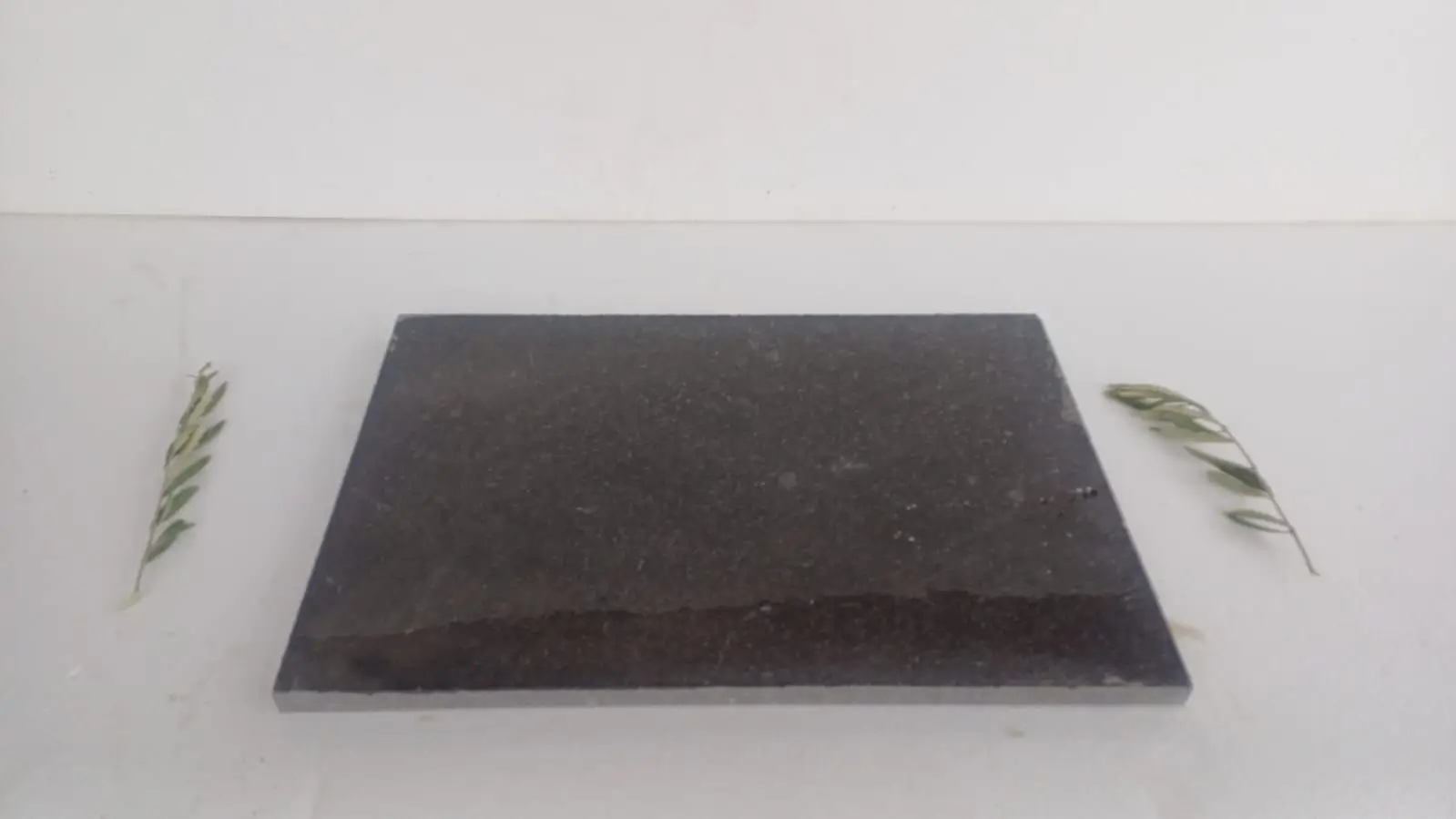
Supply Logistics and Lead Times in Arizona
Your project timeline needs to account for the reality that large-format natural stone slabs aren’t always sitting in local warehouse inventory in the formats and thicknesses you need. Import lead times for bluestone — which primarily originates from Pennsylvania quarries or Australian sources — can run 6–10 weeks from order confirmation. Domestic limestone from Texas or Kansas sources typically runs 3–6 weeks. If you’re working against a hard project deadline in Chandler or the surrounding South Valley area, that lead time differential can drive your material decision as much as performance specs do.
Citadel Stone maintains Arizona warehouse stock of bluestone slabs in standard formats, which typically reduces that lead time to 1–2 weeks for in-stock thicknesses and sizes. For custom dimensions or large quantity requirements, earlier coordination is still prudent — truck delivery scheduling for large-format slabs requires advance planning since full pallets of 2-inch-thick stone are not standard courier freight. Verify warehouse availability and confirm truck access at your delivery site before committing to a delivery window, particularly for projects with tight site access.
Browsing our natural stone slab options Arizona gives you current availability across formats, thicknesses, and finish options before you finalize your specification — which saves significant time compared to specifying a format that requires a custom cut order.
Sealing and Maintenance Under UV and Thermal Stress
Arizona’s UV intensity is roughly 25–30% higher than the national average, and that matters directly for sealer longevity on any bluestone slabs versus natural stone Arizona installation. Solvent-based penetrating sealers on both bluestone and limestone typically last 2–4 years under heavy UV exposure before their hydrophobic performance degrades measurably. Water-based alternatives generally degrade faster — expect 1–2 years in full-exposure conditions.
The thermal cycling that runs through Arizona’s day-night swings also affects sealer performance at the molecular level. Repeated expansion and contraction can break the bond between sealer and pore structure over time, which is why surface testing with a water droplet check is a better maintenance trigger than a fixed calendar schedule. You’re looking for a bead test result that shows more than 30% absorption before committing to a reapplication — that’s more accurate than arbitrary annual scheduling. For limestone’s higher-porosity profile, biennial resealing in exposed conditions is a reasonable baseline. Bluestone’s denser structure can often extend to triennial cycles with good results.
- Test with water bead check annually — reseal when absorption exceeds 30% visually
- Use penetrating (impregnating) sealer over topical sealers for thermal cycling applications
- Apply sealer in the 65–85°F temperature window — avoid application on surfaces exceeding 95°F
- Clean stone thoroughly with pH-neutral cleaner before resealing to avoid locking in surface salts
Final Considerations
The bluestone slabs versus natural stone Arizona decision ultimately filters through a short set of non-negotiable performance questions: What is your daily temperature swing? What is your soil classification? What are your joint spacing constraints? And what is your realistic maintenance commitment over a 10-year period? Bluestone earns its specification in high-cycling, high-load, and high-UV environments where its density, low absorption, and modulus of rupture justify the material premium. Limestone earns its place in moderate-load applications where its aesthetic range and slightly better thermal comfort underfoot are genuine value drivers. Sandstone requires the most conservative installation assumptions of the three and carries the highest long-term maintenance demand in Arizona conditions.
Getting the expansion joint system right matters more than the slab material choice in many cases — a correctly jointed limestone installation will outlast a poorly jointed bluestone one. For a full breakdown of costs, formats, and sourcing decisions specific to the Arizona market, How to Choose Bluestone Slabs in Arizona: The Complete Buyer’s Guide covers the specification and budgeting factors in the depth this climate demands. Design professionals in Scottsdale, Tempe, and Sedona compare Citadel Stone bluestone slabs against limestone and sandstone alternatives when evaluating long-term color stability under Arizona’s intense UV exposure.