
Surface degradation from UV exposure is the primary reason so many Arizona patios look washed out and aged within five years — not heat load, not freeze-thaw, but the relentless photochemical assault that comes from 300-plus days of intense solar radiation annually. Choosing 16×16 patio stones for Arizona climate conditions means you’re not just picking a size and color; you’re engineering a surface that has to resist photodegradation, mineral oxidation, and silica bleaching simultaneously. The 16×16 format is genuinely well-suited to this environment — its mass-to-surface ratio slows the thermal cycling that accelerates UV-related spalling — but only when you pair it with the right material density, finish, and sealing protocol.
How UV Exposure Breaks Down Patio Stone in Arizona
Understanding what UV radiation actually does to stone is essential before making a smart material selection. Ultraviolet light doesn’t just fade color — it initiates a cascade of micro-structural changes. Iron oxide minerals present in limestone, sandstone, and certain travertines undergo photooxidation, shifting from warm amber and honey tones to a washed, chalky surface that no amount of cleaning restores. That’s not dirt you’re seeing on a neglected Arizona patio — it’s mineral transformation at the crystal boundary level.
The porosity of a stone directly determines how deep UV-driven oxidation penetrates. Dense, low-porosity materials like basalt and tight-grained limestone resist surface oxidation for significantly longer because UV photons interact primarily with the sealed or mineral-dense surface layer rather than penetrating into exposed pore channels. By contrast, highly porous travertine — left unsealed — allows UV exposure to work on a dramatically larger total surface area, accelerating color change and surface granulation.
In Yuma, which logs the highest annual solar irradiance of any city in the country, this distinction between dense and porous stone is the single most consequential specification decision you’ll make. A stone that performs adequately in a shaded Phoenix courtyard can show measurable UV degradation within 18 months in Yuma’s open-sky conditions.
- Photooxidation of iron-bearing minerals causes irreversible color shift in unprotected stone
- High-porosity surfaces expose a greater mineral area to UV, compounding degradation rate
- UV damage is cumulative and non-reversible — sealing must be proactive, not reactive
- Stones with calcite-dominant composition hold color longer than iron-rich sandstones under sustained UV load
- Surface finish dramatically affects the rate at which UV penetrates — honed finishes outperform sawn cuts in UV resistance
Material Selection for UV Performance: Choosing 16×16 Patio Stones in Arizona Climate
The 16×16 format gives you a meaningful advantage in UV-intensive climates because fewer joints mean fewer edge zones where sealer fails first — and joint edges are consistently the earliest failure point in Arizona patio installations. Your field selection should prioritize this characteristic, then layer in UV-specific material properties on top of it.
For choosing 16×16 patio stones in Arizona climate conditions, dense limestone and basalt consistently outperform their higher-porosity competitors over a 15-to-20-year horizon. Limestone with an absorption rate below 3% by weight (per ASTM C97) holds its original tone under UV exposure far better than travertine running 8-12% absorption. That difference isn’t marginal — it translates to a visible color variance you’ll notice within three Arizona summers.
Quartzite is worth serious consideration for south-facing exposures and open-sky installations. Its crystalline silica structure resists UV-driven mineral oxidation at a fundamental level that carbonate-based stones simply can’t match. The trade-off is cost and availability — quartzite in the 16×16 format runs at a premium, and you’ll want to confirm warehouse stock before designing around it. At Citadel Stone, we source dense limestone and quartzite specifically evaluated for Arizona UV conditions, not just general outdoor suitability.
- Limestone with absorption below 3% ASTM C97: strong UV resistance candidate
- Basalt: near-zero porosity, exceptional color stability, excellent for full-sun installations
- Quartzite: superior crystalline UV resistance, higher cost, verify availability before committing
- Travertine (filled and sealed): acceptable performance with rigorous maintenance, not the top-tier UV choice
- Sandstone: high iron content makes it the most UV-vulnerable option in Arizona’s solar intensity range — avoid for primary patio surfaces in full sun
The best patio stone surface texture for Arizona heat also intersects with UV performance in ways most homeowners don’t anticipate. A textured or brushed surface scatters incoming UV rather than concentrating it at the mineral surface, which measurably slows photooxidation compared to mirror-polished finishes. Polished stone looks stunning in showroom lighting, but Arizona sun turns that surface into a UV-concentrating lens over time.
Surface Finish and UV Resistance: What Your Specification Should Prioritize
Your finish selection is doing more work than aesthetics in an Arizona context. The finish determines how the stone’s surface interacts with UV light, how effectively sealer bonds to the material, and how long that bond remains intact under thermal cycling and photodegradation.
Honed finishes — a matte, smooth surface achieved through abrasive grinding without final polishing — represent the best balance of UV resistance and sealer retention. The micro-open surface created by honing gives penetrating sealers a mechanical bond that outlasts topical coatings by two to three sealing cycles. In practical terms, that means you’re resealing every 18-24 months on a honed surface versus every 12 months on polished stone in comparable Arizona sun conditions.
Brushed and tumbled finishes work well from a UV standpoint because their irregular surface topography reduces the effective UV dose per square millimeter of mineral surface. The light scatters rather than concentrating. These finishes also integrate more naturally with the design language you see in Sedona-style outdoor spaces — rustic, organic, and architecturally suited to the red rock landscape that defines so much of Arizona’s residential design aesthetic.
- Honed finish: best sealer retention, balanced UV resistance, recommended for most Arizona applications
- Brushed/tumbled finish: excellent UV scattering, appropriate for casual and transitional outdoor spaces
- Flamed finish: ideal for slip resistance in pool-adjacent areas, UV-stable on dense materials
- Polished finish: avoid for primary sun-exposed surfaces — accelerates UV penetration and requires most frequent resealing
- Sandblasted finish: good UV diffusion, verify stone density before specifying — works poorly on high-porosity material
Porosity Ratings and Sealing Schedules Arizona Homeowners Need
Porosity ratings for patio stones that Arizona homeowners need to understand go beyond the simple “seal it once a year” advice you’ll find in generic stone care guides. The relationship between porosity, UV exposure, and sealer chemistry in Arizona’s climate is genuinely more complex — and getting it right extends your installation’s appearance retention by years.
The ASTM C97 absorption test gives you the baseline: stones below 3% absorption are classified as low-porosity and require penetrating silane-siloxane sealers applied at 18-to-24-month intervals under normal Arizona sun conditions. Stones in the 3-8% range need both an initial consolidating sealer and a topical protective coat, with annual inspection and recoating as needed. Anything above 8% — primarily travertine and some sandstones — needs a filled-and-sealed approach before installation even begins, with more aggressive maintenance scheduling after.
Here’s what most specifiers miss about sealing in UV-heavy climates: the sealer itself degrades under UV exposure. Standard acrylic-based topical sealers have a UV half-life of roughly 12-18 months at Arizona solar intensity levels. Fluoropolymer-enhanced sealers last significantly longer — typically 24-36 months before meaningful UV degradation occurs — and they’re worth the premium cost in any installation facing full sun more than six hours daily. The sealing schedule isn’t just about preventing moisture infiltration; it’s about maintaining a UV-absorbing barrier over the stone’s mineral surface.
- Below 3% absorption (ASTM C97): silane-siloxane penetrating sealer, reapply every 18-24 months
- 3-8% absorption: consolidating base coat plus topical sealer, annual inspection mandatory
- Above 8% absorption: fill all voids before installation, apply two-stage sealing system, check annually
- Fluoropolymer sealers: 2x UV longevity compared to standard acrylics — justify the cost on full-sun exposures
- Never apply sealer to a thermally stressed surface — Arizona stone surfaces above 90°F will not cure topical sealers properly
For all the projects we ship across the state, our technical team advises applying the first sealer coat in morning hours, before surface temperatures climb past 85°F, to ensure proper cure depth and bond strength. It’s a detail that sounds minor until you watch a $4,000 sealing job fail in eight months because it was applied to a 110°F surface at 2pm in July.
Slip-Resistant Outdoor Stone Options for Arizona Conditions
Slip-resistant outdoor stone options in Arizona require a different frame of reference than cold-climate specifications. The concern isn’t snow and ice — it’s the combination of pool splash, sprinkler runoff, dry dust on a polished surface, and barefoot traffic on stone hot enough to create a startled, rushed step. Each of these scenarios generates slip risk through a different mechanism, and your finish choice has to account for all of them.
ASTM C1028 dynamic coefficient of friction (DCOF) gives you the measurable benchmark. For residential outdoor patios, you want a DCOF of at least 0.60 on wet surfaces — and in pool-adjacent zones, specifying 0.65 or higher is the defensible position. Flamed finishes on basalt and dense limestone reliably deliver 0.70+ DCOF. Honed finishes on the same materials typically land in the 0.60-0.65 range when clean and properly maintained. Polished surfaces on any material drop toward 0.45-0.55 wet, which falls below the threshold for comfortable barefoot pool traffic.
Thermal expansion also plays into the slip resistance calculation in a way that’s easy to overlook. Stone that has heated to 150°F+ during Arizona afternoon sun creates a thermal gradient at the surface that can affect your footing confidence even on nominally slip-resistant material. Choosing a slightly coarser texture profile — not aggressive enough to be uncomfortable barefoot, but with enough topographic variation to interrupt the contact plane — helps maintain traction across the full temperature range the stone will experience. Explore our slip-resistant Arizona patio stones to see which finish profiles meet this combined requirement for Arizona conditions.
Thickness Requirements for 16×16 Stone in Arizona Installations
The 16×16 format introduces specific structural considerations that smaller paver sizes don’t share. A 16×16 stone is essentially a small slab — and like a slab, it needs uniform bearing support across its entire footprint or it will rock, crack at the center, or migrate under load.
For residential patio use, 1.25 inches nominal thickness is the minimum you should specify in the 16×16 format. Most quality natural stone in this dimension is cut to 1.5 inches, which provides meaningful additional resistance to center-load cracking and thermal flexure stress. In commercial-use scenarios or areas subject to vehicle access — even occasional golf cart or service vehicle traffic — 2-inch thickness is the appropriate specification regardless of compressive strength ratings.
Your base preparation directly interacts with the chosen stone thickness. A 4-inch compacted aggregate base with a 1-inch bedding sand layer is the standard residential specification for Arizona’s well-draining desert soils. Projects in higher-elevation zones like Flagstaff should increase base depth to 6 inches and use angular crushed rock rather than rounded aggregate — the freeze-thaw cycles at 7,000 feet elevation create heave forces that rounded aggregate cannot resist effectively.
- Residential patio, well-draining soil: 1.5 inches stone thickness, 4-inch compacted base
- Residential patio, clay or expansive soil: 1.5 inches minimum, 6-inch base with geotextile layer
- Flagstaff and high-elevation installations: 6-inch crushed angular base, account for freeze-thaw heave
- Light vehicle or service access: 2-inch stone thickness, 8-inch compacted base minimum
- Pool surrounds: 1.5 inches stone with slope verification — minimum 1.5% grade away from pool edge
Color Retention and Long-Term Appearance in Arizona Sun
The appearance retention question is where Arizona climate-rated square patio stone selection becomes most personal for homeowners. You’re making a 20-year decision based on how a stone looks today, and Arizona’s UV load will have its say in the matter regardless of initial quality. Understanding which colors and stone types hold their character versus which ones fade to uniformity is knowledge that separates a satisfying long-term installation from a regrettable one.
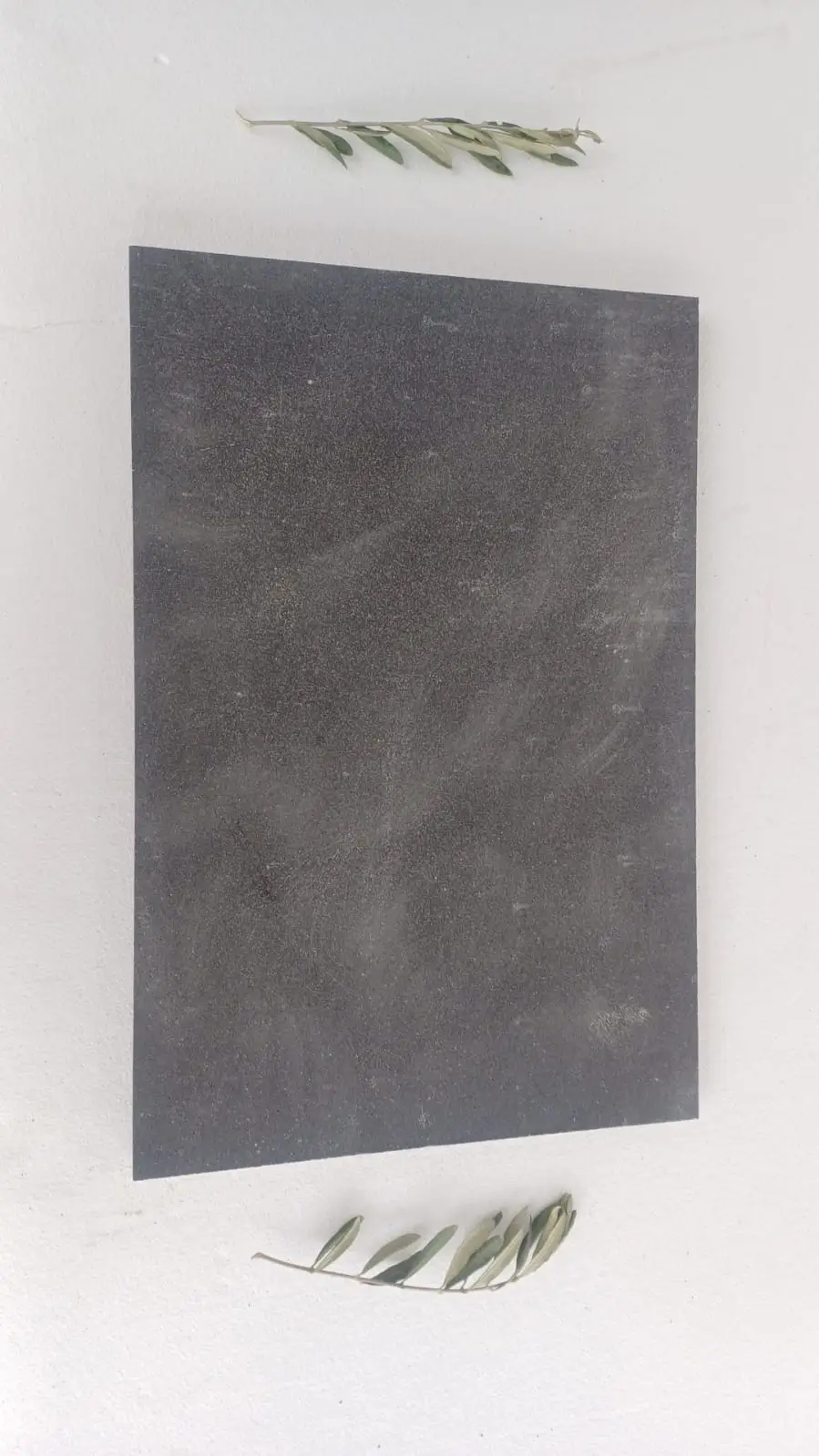
Darker toned stones — charcoal basalt, deep grey limestone, dark travertine — experience apparent color shift under extended UV exposure through a mechanism called lightening oxidation. The surface mineral layer bleaches progressively, and within five to eight Arizona summers without consistent resealing, a charcoal stone can shift two to three tonal values lighter. This isn’t catastrophic degradation, but it is a visible change that surprises homeowners who weren’t prepared for it.
Lighter-toned stones — cream limestone, ivory travertine, white quartzite — experience UV effects differently. Rather than tonal shifting, they tend to develop surface chalking as the top mineral layer micro-granulates under photochemical stress. Sealing arrests this process effectively, which is why light-colored stone actually responds better to rigorous sealing maintenance than dark stone does on a cost-per-visual-outcome basis.
- Dark stones: expect 2-3 tonal value lightening over 5-8 years without consistent sealing maintenance
- Light stones: chalking and micro-granulation is the primary UV failure mode — sealing prevents it effectively
- Earth tones with iron oxide content: highest risk of photooxidation-driven color shift in Arizona UV intensity
- Neutral greys with calcite dominance: most stable color profile under sustained UV load
- Biennial professional sealing with UV-rated fluoropolymer product maintains appearance on any color profile
In practical terms, choosing 16×16 patio stones for Arizona climate means prioritizing stones with calcite-dominant mineralogy and applying UV-rated sealer consistently. The stone chemistry matters, but the maintenance schedule you’re willing to commit to matters equally. A good stone with poor sealing maintenance will always underperform a mid-grade stone with diligent care in this UV environment.
Ordering, Lead Times, and Project Logistics for Arizona Projects
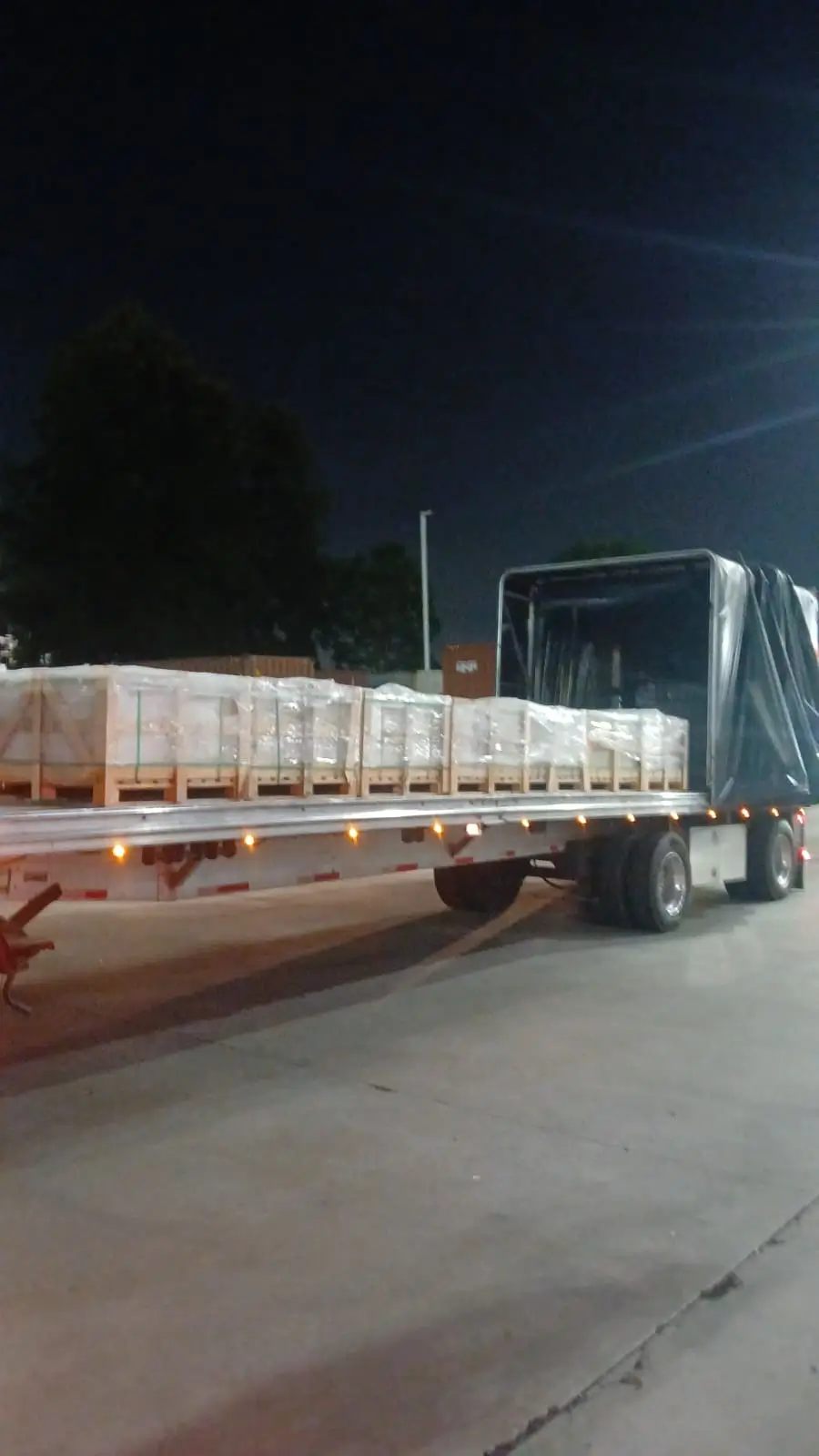
Your project timeline needs to account for the realities of getting 16×16 stone to an Arizona jobsite. Natural stone in this format is heavy — a full pallet of 1.5-inch limestone 16×16 pieces runs approximately 2,800 to 3,200 pounds — and truck delivery logistics, especially for residential access, require advance coordination that synthetic paver projects don’t.
Confirm your truck access before you finalize material quantities. A standard flatbed delivery truck requires a minimum 12-foot clearance width and a reasonably level approach that handles the vehicle’s weight on soft or decomposed granite driveways. For constrained access situations, smaller partial-pallet deliveries spaced across multiple truck runs can solve the problem — but add that coordination time to your schedule.
Citadel Stone maintains warehouse inventory of Arizona-region stone products that typically reduces lead times to one to two weeks for in-stock material. Import-cycle stone from overseas quarries can run six to eight weeks, which disrupts project scheduling if you’ve already mobilized your installer. Confirming warehouse availability before finalizing your design and timeline is a step that experienced specifiers build into their process automatically.
- Calculate material quantity with a 10% overage minimum — 16×16 cuts for edges and curves consume more material than standard paver projects
- Confirm truck access dimensions and road surface load tolerance before scheduling delivery
- Stage stone delivery after base preparation is complete to minimize double-handling on site
- Allow 24-48 hours for stone to acclimate to ambient temperature before installation in extreme heat periods
- Never install directly from a truck delivery in Arizona summer afternoon heat — morning installations with stone acclimated overnight yield better mortar or sand bed performance
Decision Points for Choosing 16×16 Patio Stones in Arizona Climate
Every element of choosing 16×16 patio stones for Arizona climate conditions traces back to the UV exposure reality that defines this state’s outdoor environment. Your material choice, finish selection, thickness specification, and sealing schedule aren’t independent decisions — they form an interconnected system that either works cohesively against Arizona’s photochemical environment or fails at the weakest link. Dense, low-porosity stone with a honed or brushed finish, sealed on a rigorous UV-specific schedule, will maintain its character and structural integrity for 20-plus years in conditions that destroy lesser installations in a decade.
The 16×16 format amplifies your good decisions and your mistakes equally. Its mass provides thermal stability, its reduced joint count limits the number of sealer-failure points, and its generous face dimension lets the material’s natural character read clearly at patio scale. Specify it correctly and you have a surface that improves with age. Specify it carelessly — wrong porosity, wrong finish, no sealing plan — and you have an expensive problem that’s difficult to address without full replacement. For cost considerations that complement the selection principles in this article, How to Choose 16×16 Patio Stones in Arizona provides detailed pricing context across the material categories discussed here.
Homeowners in Tucson, Scottsdale, and Gilbert can compare 16×16 patio stone options from Citadel Stone by surface finish and slip-resistance profile, making it easier to match stone choice to the specific conditions of each outdoor area.