

Why Thermal Cycling Defines Arizona Paver Performance
Installing pavers in Arizona desert conditions means engineering for thermal cycling that nobody in a moderate climate plans for — joint failure patterns on poorly designed installations almost never trace back to material quality, but to temperature swings that routinely hit 40–55°F between midnight and mid-afternoon. That range compresses and expands every structural interface in your installation on a daily basis. That’s not a summer problem — that’s a year-round mechanical stress cycle your base, joints, and stone all experience simultaneously.
Natural stone pavers expand at roughly 3.0–5.5 × 10⁻⁶ in/in/°F depending on mineralogy. Over a 10-foot run of stone and a 50°F daily swing, that’s roughly 0.065 to 0.11 inches of movement per day. Over weeks and years, uncorrected joint spacing turns that predictable movement into cumulative lateral force — and the first thing to fail is always the edge restraint or the smallest-format pavers at perimeter runs.
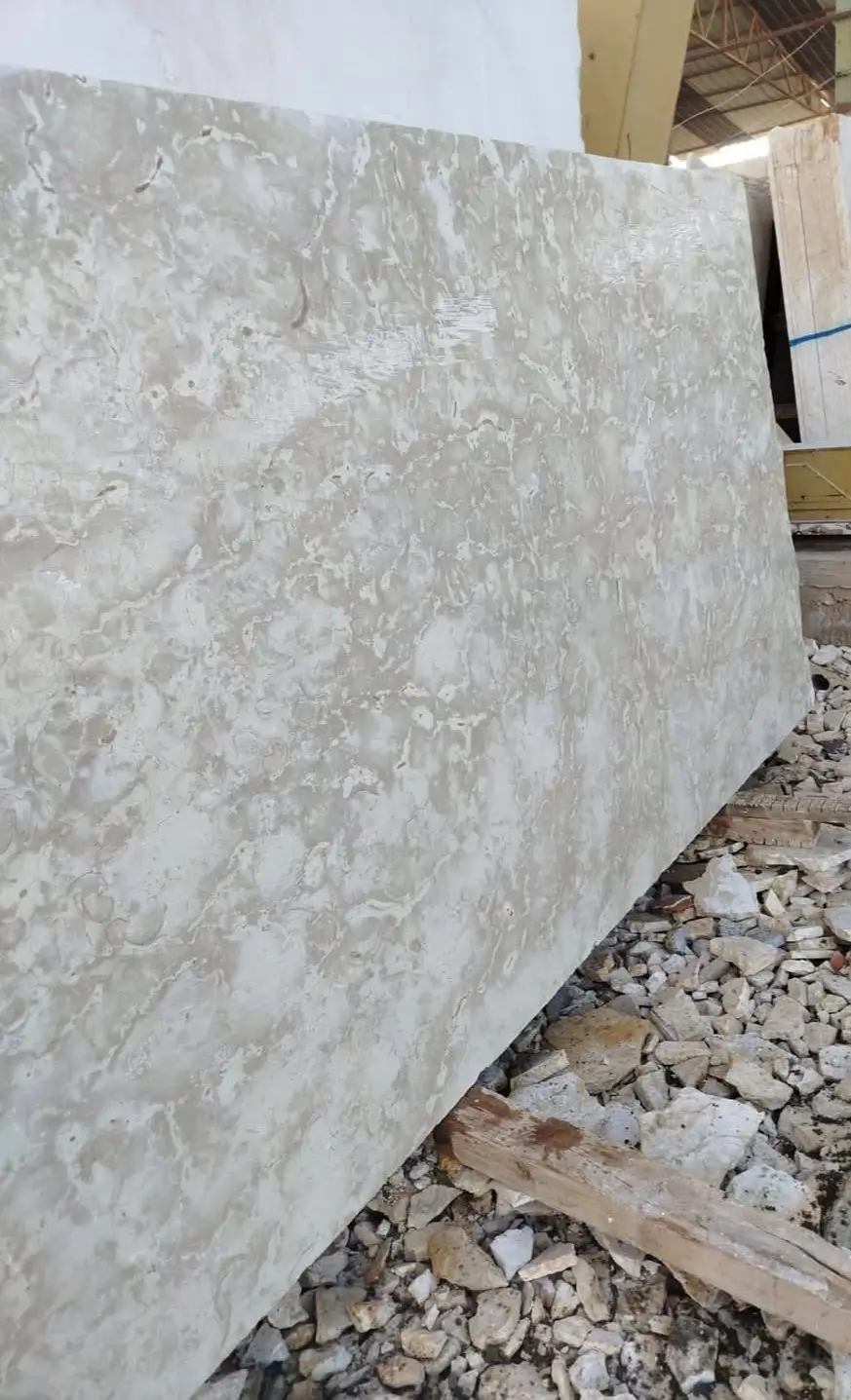
Ground Preparation for Arizona Desert Installations
Solid natural stone paver base prep in Arizona starts with understanding what’s actually below grade — not just what a soil report says in general terms, but what’s happening at your specific depth increments. Arizona soils vary wildly between caliche hardpan, decomposed granite, expansive clays, and sandy desert fill, often within the same project footprint. Caliche in particular can fool you: it’s dense enough to feel like a reliable sub-base, but it’s also brittle and impermeable, which means water pools above it and amplifies freeze-thaw and thermal moisture cycling at the stone-sand interface.
Your excavation depth needs to account for both the structural base and the thermal buffer zone. For pedestrian applications, plan on 6–8 inches of compacted base material. For vehicular or mixed-use surfaces, step that up to 10–12 inches. That extra depth isn’t just about load — it creates a buffer that slows the rate of thermal transmission to your sub-base, which reduces differential movement between the top inch of stone and the bottom of your bedding layer.
- Excavate to a minimum of 8 inches below finished paver surface for pedestrian-only applications in Arizona
- Test sub-base soils at 6-inch depth increments — don’t assume uniform bearing capacity across the full excavation
- Break through caliche hardpan to allow drainage; standing water above impermeable caliche accelerates heave cycles
- Compact native soil to 95% Proctor density before adding any imported base material
- Slope your sub-grade at 1–2% away from structures — drainage geometry starts at the bottom, not at the surface
Projects in Yuma often run into exceptionally fine, loosely consolidated desert sand at grade, which compacts well but requires additional stabilization passes before aggregate placement — skipping even one compaction pass here creates a settlement plane that shows up as surface waviness within 18 months.
Aggregate Base Specification for Thermal Movement
The aggregate base layer is your primary thermal buffer, and the material specification here matters more than most contractors acknowledge. Crushed aggregate with angular particles — not river rock — creates the interlock that resists lateral creep under repeated thermal cycling. Arizona’s thermal environment turns loose, rounded base material into a slow-moving layer that migrates under daily expansion and contraction cycles.
Specify Class II road base or equivalent angular crushed aggregate at 3/4-inch minus gradation. Place it in 3-inch lifts and compact each lift to a minimum 95% relative compaction using a plate compactor. Don’t try to compact a 6-inch lift in one pass — the bottom half won’t reach adequate density, and you’ll have an invisible soft zone that amplifies movement at the stone level.
- Use angular, mechanically crushed aggregate — angular faces lock together under thermal movement pressure where rounded aggregate cannot
- Limit individual lifts to 3 inches maximum before compaction, regardless of total base depth
- Verify compaction with a nuclear density gauge rather than relying on visual or probe checks alone
- Maintain moisture content during compaction: too dry and the aggregate won’t lock; too wet and you’ll displace fines
- In expansive clay zones, add a geotextile separation fabric between sub-grade and aggregate to prevent fines migration over time
Bedding Layer, Joint Sand, and Thermal Gap Calculations
Your bedding layer runs 1 inch of coarse, washed concrete sand — not stone dust, not decomposed granite, not polymeric fine material. Stone dust retains moisture and migrates under thermal cycling; it’s the wrong material for Arizona despite being common on job sites. Coarse concrete sand (ASTM C33 gradation) compacts to a stable bed, accommodates minor settlement, and doesn’t wick moisture up into your paver base during monsoon events.
Thermal gap calculations are where ground preparation for outdoor pavers in AZ gets specific. Your joint width should be a minimum of 1/8 inch for materials with lower thermal expansion rates like limestone and basalt, and a minimum of 3/16 inch for materials with higher expansion rates like some sandstones and tumbled travertines. In practice, most Arizona installations benefit from erring toward the larger gap — polymeric joint sand accommodates movement far better than a stone-to-stone contact point that chips and spalls.
The paver installation steps across Arizona that matter most at this stage: screed your bedding sand to a true, consistent 1-inch depth using screed rails — never freehand. Variations of even 3/8 inch in bedding depth translate directly into surface plane inconsistencies that become trip hazards and water collection points. Set your screed rails at the calculated finished elevation accounting for 5–10% bedding compaction after paver placement.
- Coarse washed concrete sand (ASTM C33) for bedding — not stone dust, not decomposed granite
- Maintain consistent 1-inch bedding depth across the entire field; use screed rails without exception
- Plan joint widths at 1/8 inch minimum for low-expansion stone, 3/16 inch for higher-expansion materials
- Never walk on screeded sand after leveling — protect the surface with temporary boards if you need to cross the field
- In monsoon zones, consider a permeable polymeric sand designed for high-rainfall infiltration events
Selecting Natural Stone Pavers for Arizona Thermal Conditions
Material selection for installing pavers in Arizona desert climates requires thinking about two performance metrics that most product sheets underemphasize: thermal mass and absorption rate. High thermal mass materials — dense limestone, basalt, and travertine — absorb heat slowly and release it slowly, which is beneficial for moderating surface temperature but means the stone itself cycles through a longer heating and cooling curve than the air above it. That curve creates differential stress between the face and the core of each paver, and thinner materials (under 1.5 inches) in large formats (over 24 inches) are the most vulnerable to stress fractures under repeated cycling.
Pavers in Arizona with water absorption rates below 3% — which includes most quality dense limestones and basalts — outperform higher-absorption materials dramatically in thermal cycling environments. Moisture infiltration into the stone’s pore structure amplifies expansion pressure during heating cycles. A paver at 6% absorption that starts the day with residual moisture from overnight dew or irrigation will expand measurably more than a 2% absorption paver under identical solar loading.
At Citadel Stone, we’ve tracked field performance data on multiple stone types across Arizona’s climate zones and consistently find that dense limestone and basalt hold their joint integrity longer than lighter, more porous alternatives — particularly in installations where irrigation systems wet adjacent soil nightly. Our warehouse stock reflects that preference: we prioritize materials with documented absorption rates under 3% for Arizona installations specifically because field performance confirms the advantage.
- Target water absorption below 3% for maximum thermal cycling resistance in Arizona conditions
- Specify minimum 1.5-inch thickness for all formats over 18 inches to resist face-to-core stress fracturing
- Dense limestone and basalt outperform travertine in high-absorption-risk zones (irrigation zones, pool surrounds)
- Sandstone is the highest-risk material for Arizona thermal cycling — porosity typically runs 8–15%, creating significant moisture-amplified expansion
- Honed or sawn finishes seal better and absorb less residual moisture than tumbled finishes of the same stone type
For a solid overview of material options and installation logistics, Arizona paver installation Citadel Stone provides additional technical guidance on material selection matched to Arizona’s specific climate zones.
Paver Layout, Pattern, and Edge Restraint for Thermal Movement
Layout pattern affects how thermal movement distributes through an installed field. Running bond and herringbone patterns distribute lateral forces in multiple directions, which actually reduces concentrated stress at any single joint line. Stack bond (grid pattern) creates long, continuous joint lines that act as fault lines under repeated thermal cycling — the movement accumulates along those lines rather than distributing across the field. For Arizona desert installations where daily cycling is relentless, herringbone at 45 degrees to the primary axis is structurally the strongest choice for large fields.
Edge restraint is non-negotiable, and the spec here is stricter than most residential work suggests. Standard aluminum edging is adequate for northern climates with seasonal movement, but Arizona’s daily cycling means your edge restraint works every single day rather than seasonally. Use a heavy-gauge aluminum restraint (0.062-inch minimum wall thickness) or poured concrete edging for any installation that will see foot traffic and solar exposure simultaneously. Spike spacing should be 12 inches on center maximum — not the 18–24 inches printed on most product instructions, which are calibrated for lower-movement environments.
- Herringbone at 45 degrees distributes thermal movement most effectively across large paved fields
- Running bond is acceptable for narrow applications (walkways under 6 feet wide) where movement is linear and predictable
- Avoid stack bond for any Arizona application larger than 100 square feet — joint line alignment concentrates movement stress
- Edge restraint spike spacing: 12 inches on center maximum, driven to full depth on first installation
- At transitions between different materials (stone to concrete, stone to asphalt), install a compressible foam backer rod before joint sealing to accommodate differential movement
Installation Steps and Sequencing for Arizona Conditions
Following a reliable Arizona desert-rated stone paving foundation guide means adapting standard installation practice to extreme conditions through sequencing decisions that account for heat and sun exposure. Stone laid at 105°F surface temperature behaves differently than stone laid at 75°F. The bedding sand dries faster in high heat, which shortens your working window before the screeded surface becomes too dry to grip the paver base properly. Work in early morning hours when possible, and mist the screeded bedding sand lightly if surface temperature exceeds 95°F before paver placement.
In Sedona, where red rock country projects often involve significant elevation changes and exposed ridge installations, thermal cycling extremes are amplified by both altitude and intense solar radiation on south-facing surfaces — increasing your expansion joint frequency to every 10 feet rather than the standard 15 feet on those exposed orientations is strongly advisable.
- Install in morning hours (before 10 AM) when ambient temperature is below 90°F for best bedding sand working conditions
- Lightly mist screeded bedding surface if surface temperature exceeds 95°F before paver placement begins
- Set pavers from the outside edge inward, working toward the center of the field to avoid disturbing already-set courses
- Use rubber mallet only — steel mallets chip stone faces and create micro-fractures that accelerate moisture infiltration
- Check plane with a 6-foot straightedge every 10 square feet; correct deviations exceeding 3/16 inch immediately before the adjacent course locks the plane
- Install expansion joints at 10-foot intervals on south and west exposures; 15-foot intervals on north and east exposures
Truck delivery scheduling matters more than most project managers account for. Your stone typically arrives on a flatbed truck, and unloading sequence should match your installation sequence — don’t stack material randomly if you’re working a specific pattern. Confirm with your supplier that the truck can access your site with adequate overhead clearance and turning radius before scheduling delivery. An inaccessible delivery adds significant time and cost when material needs to be hand-carried from street to installation area.
Jointing, Sealing, and Long-Term Thermal Maintenance
Joint sand selection for Arizona installations should default to polymeric sand with a documented flexible binder formulation — not the standard rigid-binder polymeric sand designed for northern climates. Rigid-binder products set hard and resist freeze-thaw heave effectively, but Arizona’s daily thermal cycling works the joint sand through a different mechanism: constant micro-movement that fatigues a rigid binder over 3–5 years, causing crumbling and joint erosion. Flexible-binder polymeric sand accommodates that daily cycling without fatiguing, and field installations using flexible formulations typically hold joint integrity for 8–12 years before refreshing is needed.
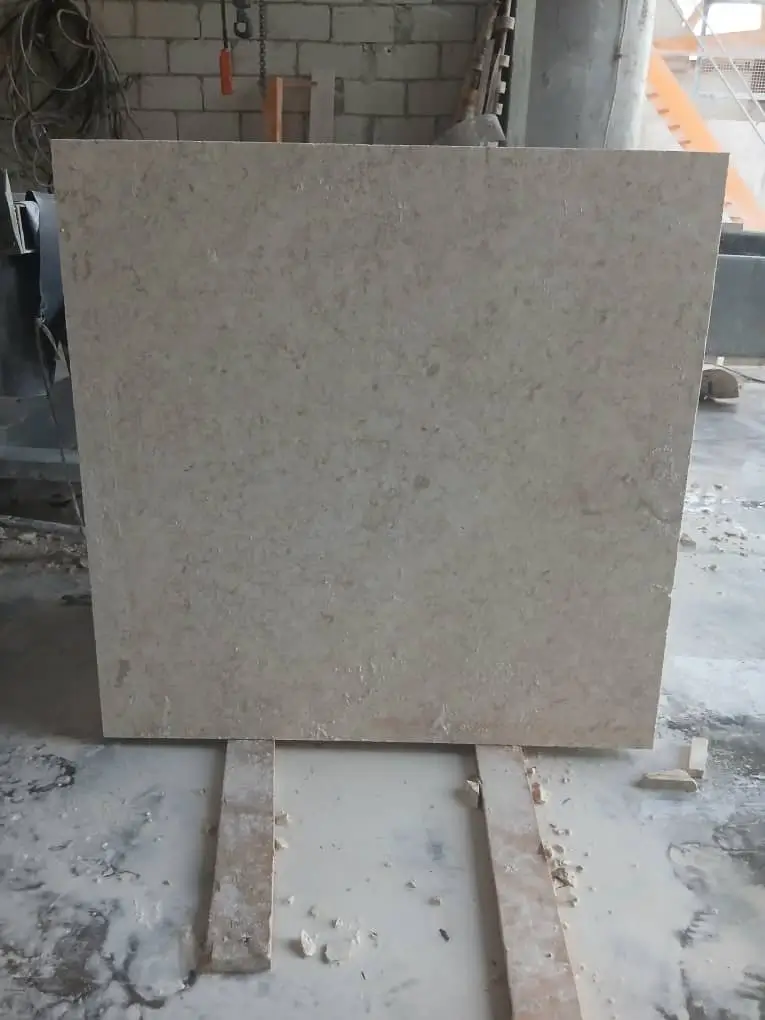
Sealing protocol for natural stone pavers in Arizona requires thinking about UV degradation alongside moisture management. A penetrating silane-siloxane sealer applied at 12–18 months after installation — not immediately — allows the stone to complete its initial moisture cycling and acclimation before you lock in the pore structure. Applying sealer to freshly installed stone on a Phoenix-area project during summer traps residual moisture from the bedding process, which then cycles through the pore structure under heat and creates surface blush and bond failure in the sealer layer within one to two seasons.
- Use flexible-binder polymeric sand — not rigid-binder formulations — for Arizona’s daily thermal cycling environment
- Wait 12–18 months before applying initial penetrating sealer to allow stone acclimation and moisture cycling
- Apply sealer in early morning when surface temperature is below 80°F for proper penetration and cure
- Reseal on a 3-year schedule in high-UV exposures (south and west orientations); 5-year schedule for shaded and north-facing installations
- Inspect joint sand integrity annually after monsoon season — monsoon events stress polymeric joints significantly through saturation and rapid drying cycles
Arizona Paver Installation: Specification Discipline Over Product Selection
Installing pavers in Arizona desert conditions is a fundamentally different engineering challenge than installing the same materials in moderate climates — not because of maximum temperatures, but because of the relentless thermal cycling that works every base layer, every joint, and every stone interface on a daily basis. Your specification decisions around base depth, aggregate type, joint width, edge restraint spacing, and polymeric sand formulation all exist to absorb and distribute that movement rather than resist it rigidly. Resistance fails; accommodation succeeds.
The installations that perform for 20-plus years in Arizona aren’t the ones with the highest-priced stone — they’re the ones where someone thought carefully about thermal gap calculations, specified adequate base compaction at every lift, and chose joint materials that flex rather than fracture. That’s specification discipline, not product selection. Verify warehouse inventory availability before finalizing your project timeline, since lead times for premium-specification stone can affect your installation window. As you finalize your Arizona hardscape plan, it’s worth reviewing broader material cost and value considerations — Retaining Wall Block Cost vs Value in Arizona covers related Citadel Stone product performance in another dimension of Arizona stone work worth understanding before you commit your full site budget. In Mesa, where caliche hardpan creates consistently firm sub-base conditions, properly prepared installations on angular aggregate bases have shown exceptional long-term joint stability — a direct result of disciplined base compaction paired with flexible jointing materials. Homeowners in Tucson, Mesa, and Chandler rely on Citadel Stone for pavers selected specifically for their low water absorption rates, which help stabilize installations against Arizona’s frequent ground temperature swings.